Why Sludge, Not Water, Is the Real Engineering Problem in 2026
Tailing thickener overflow and underflow streams account for 50–70% of the total wastewater volume at a non-ferrous mineral processing plant, and mineral processing wastewater as a whole represents roughly 10% of global industrial wastewater (per MDPI 2022 review of non-ferrous mineral processing, S5). The water phase is increasingly recycled, but the solids stream it leaves behind — the sludge — is where cost, compliance, and ESG exposure concentrate in 2026. Annual O&M at a representative molybdenum facility splits 22.3% to electricity, 15.7% to flocculant, and 60% to filter press operation (per MDPI Sustainability 2018 Jecheon pilot, S4). Filter press alone, in other words, dominates the budget. Three forces make the sludge problem sharper in 2026 than it was even three years ago: tightening discharge limits under EPA's 40 CFR Part 440 effluent guidelines for ore mining and dressing, escalating landfill surcharges on high-moisture mining sludge, and growing interest in circular mine water where valorized char or stabilized solids replace landfill disposal. The clarifier overflow is no longer the bottleneck; the dewatered cake is.
Sludge Sources and Characteristics Across the Process Train
Mineral processing generates at least four distinct sludge streams, each with different settling and dewatering behavior. Comminution circuit sludges are dominated by fine ore particles with high specific surface area; they settle slowly, demand high polymer dose, and carry the bulk of silicate and oxide fines. Flotation tailing sludges carry residual xanthate, dithiophosphates, and suspended fines rejected from the concentrate circuit — these sludges are chemically active and often require reagent destruction before dewatering. Chemical precipitation sludges fall into two families: hydroxide sludges (loose, gelatinous, slow-settling, hard to dewater) and sulfide sludges (dense, granular, fast-settling). Per the S5 review, "metal sulfide sludge produced through sulfide precipitation settles faster and is treated more easily than sludge produced through hydroxide precipitation" (S5, MDPI 2022). Thickener and clarifier underflow is the integrated stream that consolidates the above; typical dry solids range from 5–25% w/w in thickener underflow down to 1–5% in clarifier underflow, with the 60–75% DS cake target set by downstream disposal economics. A working mass balance starts from these four streams and a target cake moisture — everything else (polymer dose, equipment size, disposal route) follows from that.
Conditioning: Flocculant Selection, Dose Optimization, and Sludge Recycling

Conditioning is where engineering leverage is highest. The objective is to bridge fine particles into settleable flocs via high-molecular-weight anionic polyacrylamide and to neutralize surface charge so the flocs resist shear. The Jecheon molybdenum pilot mapped the full dose-response surface (S4, MDPI Sustainability 2018) and the data are worth quoting directly because they show that the two engineering objectives — clearest water and best dewatering — pull in different directions.
| Flocculant dose (v/v %) | Treatment mode | Turbidity (NTU) | Zeta potential (mV) | pH | EC (mS/cm) |
|---|---|---|---|---|---|
| 0.6% | Flocculant only | 71 ± 12 | −16.8 ± 0.8 | 8.84 | 1.17 |
| 0.7% | With sludge recycling (SR) | 76 ± 8 | −16.1 ± 1.1 | 8.77 | 1.12 |
| 0.8% | Flocculant only | 71 ± 3 | −19.4 ± 0.8 | 8.79 | 1.10 |
| 1.1% | Flocculant only | 68 ± 4 | −18.7 ± 1.3 | 8.71 | 1.10 |
| 1.1% | With sludge recycling (SR) | 57 ± 6 | −9.09 ± 0.2 | 8.08 | 1.10 |
The table exposes a clean tradeoff. The 1.1% SR condition gives the lowest turbidity (57 ± 6 NTU) and the zeta potential closest to zero (−9.09 mV), which means the cleanest recycle water back to the process. The 0.7% SR condition, by contrast, produces the sludge with the best dewaterability per the pilot's filtration and viscosity data, at lower polymer cost. Operators who optimize on water clarity will pick 1.1% SR; operators who optimize on cake dryness and polymer OPEX will pick 0.7% SR. The S4 study concluded that 0.7% SR "was the most effective option in terms of dewaterability" (S4). Sludge recycling — returning a fraction of conditioned sludge to the static mixer ahead of flocculation — is the underused lever: it seeds floc growth, reduces polymer demand, and stabilizes floc structure against shear (sonication in the S4 PSD study destroyed 0.8% and 1.1% flocs but left 1.1% SR flocs intact). Given that filter pressing absorbs 60% of site O&M (S4), even a 0.2–0.3 percentage-point reduction in flocculant dose pays back the engineering effort many times over. For facilities considering electrocoagulation for metal-laden mineral wastewater as a parallel conditioning step, the dose-response framing is identical — current density replaces polymer dose, and the same clarity-vs-dewaterability tradeoff applies.
Mechanical Dewatering Equipment: Filter Press vs. Centrifuge vs. Belt Press vs. Lamella Thickener
No single dewatering unit wins on every axis. The 2026 procurement decision is a four-way tradeoff among cake dryness, throughput, footprint, and polymer OPEX, with the lamella thickener sitting upstream as a volume-reduction pre-stage rather than a true dewatering device.
| Equipment | Operation | Typical cake DS | Solids recovery | Footprint / throughput | Polymer demand | 2026 fit |
|---|---|---|---|---|---|---|
| Plate-and-frame filter press | Batch | 60–75% | >95% | 1–500 m² filtration area; high capex, low throughput per m² | Low–moderate | Best when landfill levy, transport cost, or valorization requires maximum dryness |
| Decanter centrifuge | Continuous | 25–35% | 70–85% | Compact; high throughput per unit; sensitive to feed variability | Highest of the four | Best for remote sites with constrained footprint and steady feed |
| Belt filter press | Continuous | 20–30% | 80–90% | High throughput; sensitive to belt tracking and wash water quality | Moderate | Best for high-volume tailings where 25–30% DS is acceptable downstream |
| Lamella / high-rate sedimentation tank | Continuous (upstream) | 3–8% (thickened underflow) | 60–80% volume cut | Surface loading 20–40 m³/m²·h; small footprint relative to conventional thickeners | Low (residual) | Best as a pre-stage to any of the above; cuts downstream dewatering load by 60–80% |
The plate-and-frame filter press remains the only unit that consistently hits the 60–75% DS target demanded by 2026 landfill and transport economics; a plate and frame filter press for mineral sludge dewatering sized in the 1.0–1.5 m³/h range is the typical anchor CAPEX line in a procurement package. A high-efficiency lamella sedimentation tank for sludge thickening upstream can reduce the volumetric load reaching the press by 60–80% and is the single most cost-effective add-on for a press-constrained site. The 2026 trend, well documented in the S1 Heliyon review of commercial separation technologies (SAVMIN, SPARRO, DESALX, Biogenic Sulphide), is integration — pairing a thickener/clarifier train with the dewatering unit, not selecting dewatering in isolation (S1, Heliyon 2024).
Chemical Sludge and Residual Reagent Destruction in One Step
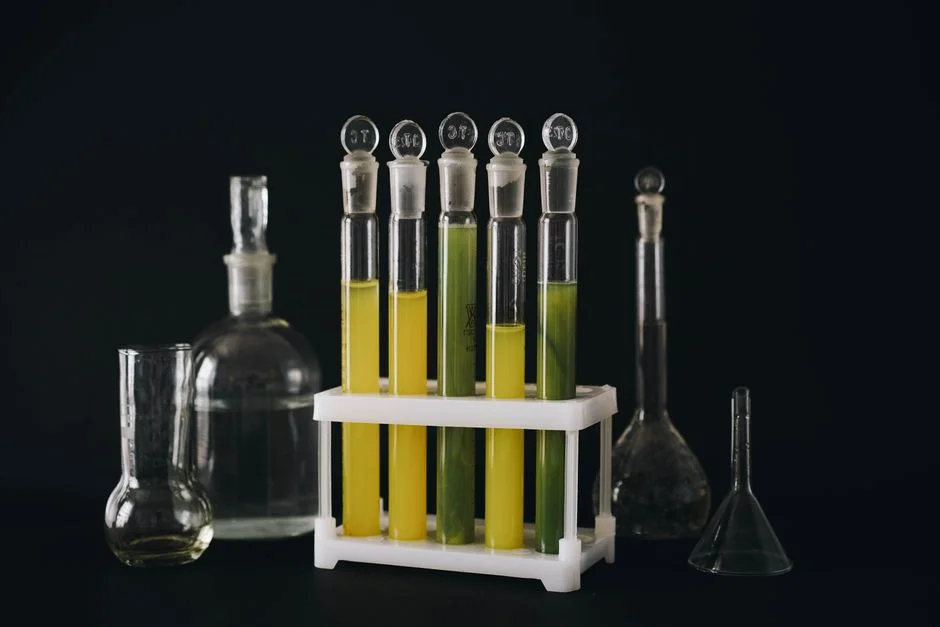
Flotation circuits leave two problems in the sludge: heavy metals and residual xanthate. Both can be addressed in a single conditioning stage. Fenton-style advanced oxidation breaks down xanthate efficiently — at pH 3, 24 mg/L H₂O₂, and 18 mg/L Fe²⁺, 97.6% of the xanthate in real mineral processing wastewater was removed and the effluent met discharge standards (S5, MDPI 2022). The same Fe²⁺ loading is consistent with the iron doses used in ferric-floc conditioning, so the reagent system is largely shared. Sulfide precipitation via H₂S captures Cd²⁺, Cu²⁺, Pb²⁺, and Zn²⁺ as dense MeS solids (S5 reactions 6 and 7); these sulfide sludges settle and dewater markedly better than hydroxide sludges (S5). The catch is regulatory: uncontrolled-pH sulfide sludge can fail TCLP and trigger RCRA hazardous-waste classification, so stabilization with cement or pozzolanic encapsulation before landfill is the standard 2026 practice. An automatic polymer and reagent dosing system for the H₂O₂/Fe²⁺ stage removes the manual-pH-error failure mode that undermines Fenton performance in field deployments.
2026 Compliance, Cost, and Valorization: Where the Sludge Goes Next
Compliance in 2026 runs through three channels. First, 40 CFR Part 440 sets the federal effluent limits for ore mining and dressing; local POTW pretreatment programs add a metal-by-metal ceiling on top. Second, lined-landfill operators are increasingly refusing cake above ~60% moisture because leachate generation drives up their treatment surcharge, so the dewatering target has become a disposal-contract clause, not just an internal KPI. Third, PFAS scrutiny is extending to any polymer-containing sludge; a written polymer inventory and dose ledger is now standard in a defensible compliance file. The 2026 mining pretreatment compliance guide for 40 CFR Part 440 walks through the regional permit-specific numbers. On cost, anchor the S4 60/15.7/22.3 split to a 1.0–1.5 m³/h filter press CAPEX envelope: roughly 55–70% of the 10-year OPEX lands on filter press consumables (cloths, pump wear, cycle time), so the largest single OPEX lever is cake dryness, not press purchase price. Sludge recycling, per S4, reduces both polymer dose and cake volume simultaneously. On valorization, the most cited 2026 data point is from textile wastewater sludge pyrolysis (S2, RSC Adv 2026) and is transferable as a target for mineral sludge char: at 700 °C the char showed 44.40 wt% C, HHV 18.21 MJ/kg, BET 55.23 m²/g, and water-holding capacity 64.82 wt% (S2). Mineral sludge will trend lower on carbon and higher on ash, but the same envelope holds. The S1 review flags the open question: adsorption-based valorization is promising but under-studied on reusability, toxic-sludge management, and full-scale economics (S1). Treat valorization as a 2026 R&D option, not a committed disposal route.
| Disposal / valorization route | 2026 regulatory status | Cost posture | 2026 data anchor | Open question |
|---|---|---|---|---|
| Secure lined landfill | Refusing >60% moisture cake in several US jurisdictions | Highest 10-year OPEX via surcharges | Filter press 60% of annual O&M (S4) | Long-term PFAS classification of polymer-laden cake |
| Stabilization + monofill | TCLP-driven; cement/pozzolan encapsulation standard | Moderate; capex-heavy | Sulfide sludge requires pH control (S5) | RCRA reclassification risk on sulfide-bearing waste |
| Pyrolysis to adsorbent char | Emerging; no federal standard yet | Capex-heavy; OPEX attractive if char off-take exists | 700 °C char: 44.40 wt% C, HHV 18.21 MJ/kg, BET 55.23 m²/g (S2) | Reusability and toxic-sludge management (S1) |
| On-site backfill / paste | Permitted by mine plan in most jurisdictions | Lowest direct cost; tied to mining schedule | Cake DS 60–75% achievable with plate press (S4, S1) | Metal leachability over 10–30 year horizon |
Decision framework for a 2026 procurement committee: if the bottleneck is compliance and cake transport, specify a plate-and-frame filter press with a lamella pre-thickener and 0.7% SR conditioning; if the bottleneck is footprint and remote operation, specify a decanter centrifuge with higher polymer budget; if the bottleneck is volume reduction in a high-tonnage tailings stream, lead with a belt press and a lamella upstream. Layer valorization only after the disposal route is locked, and treat it as a 5–10 year option rather than a 2026 cost saver. For a broader equipment buyer's-guide perspective, the mining wastewater treatment equipment buyer's guide covers the upstream clarification choices that feed this train.
Frequently Asked Questions
What is the typical flocculant dose range for mineral processing wastewater sludge treatment?
Field data from the Jecheon molybdenum pilot (S4, MDPI 2018) bracketed the dose between 0.6% and 1.1% v/v flocculant/wastewater, with 0.7% sludge recycling (SR) giving the best dewaterability and 1.1% SR giving the lowest turbidity (57 ± 6 NTU) and zeta potential nearest zero (−9.09 mV). Operators should size dose against their primary KPI — clarity or cake dryness — not against a single number.
What cake moisture should a 2026 dewatering system target?
60–75% dry solids is the working target for mining sludges leaving a plate-and-frame filter press (per S4 and S1); decanter centrifuges typically deliver 25–35% DS and belt presses 20–30% DS, both of which face increasing landfill surcharges in 2026 for moisture above ~60%. The 1.0–1.5 m³/h filter press class is the most common anchor for procurement.
Can residual xanthate be destroyed in the same stage as sludge conditioning?
Yes. Fenton-style oxidation at pH 3, 24 mg/L H₂O₂, and 18 mg/L Fe²⁺ achieved 97.6% xanthate removal from real mineral processing wastewater (S5, MDPI 2022), and the Fe²⁺ dose is compatible with downstream flocculation chemistry. Pairing this with sulfide precipitation for heavy metals gives a single conditioning stage that addresses both reagent destruction and solids conditioning, but sulfide cake requires pH stabilization before landfill to avoid RCRA exposure.
Is pyrolysis-based sludge valorization ready for 2026 deployment at a mine site?
It is an option, not a default. The most-cited 2026 reference (textile wastewater sludge, S2, RSC Adv 2026) shows 700 °C char at 44.40 wt% C, HHV 18.21 MJ/kg, BET 55.23 m²/g, and 64.82 wt% water-holding capacity — a credible adsorbent or supplementary carbon target. The S1 Heliyon review, however, flags reusability, toxic-sludge management, and full-scale economics as under-studied gaps, so treat valorization as a 5–10 year option layered on a defensible disposal route, not as a replacement for it.