What Counts as Coal Mining Wastewater in 2026
Specifying coal mining wastewater treatment equipment starts with naming the stream: a coal operation in 2026 typically generates four distinct wastewater sources, each with its own contaminant profile and discharge rule. Acid mine drainage (AMD) emerges from exposed pyritic rock and run-of-mine stockpiles, carrying pH 2–4, total suspended solids (TSS) 50–500 mg/L, sulfate 500–5,000 mg/L, iron 10–500 mg/L, and manganese 1–50 mg/L. Coal washing effluent — the water recirculating through the preparation plant — runs neutral to slightly alkaline (pH 7–9) but carries TSS 1,000–5,000 mg/L, COD 200–800 mg/L, and residual reagents from flotation circuits. Pit dewatering produces a more variable stream dominated by pumpage volume rather than contaminant load. Slurry and coal preparation plant overflow adds fine coal, clay, and process chemicals to the mix.
| Stream | pH | TSS (mg/L) | COD (mg/L) | Key Contaminants |
|---|---|---|---|---|
| Acid mine drainage (AMD) | 2–4 | 50–500 | 50–300 | Fe 10–500 mg/L, Mn 1–50 mg/L, sulfate 500–5,000 mg/L |
| Coal washing effluent | 7–9 | 1,000–5,000 | 200–800 | Fine coal, clay, flotation reagents |
| Pit dewatering | 6–8 | 100–1,000 | 30–150 | Variable, volume-driven |
| Slurry / prep plant overflow | 6.5–8.5 | 2,000–10,000 | 300–1,200 | Colloidal clay, residual reagents |
Compliance pressure tightened materially through 2025–2026. Operators in China must hit GB 20426-2006 discharge limits for the coal industry; US sites remain governed by 40 CFR Part 434 effluent guidelines; EU operations answer to Directive 2006/21/EC on mining waste; Australian sites work against state DRE and the ANZG guidelines. Identifying which stream dominates your site's flow is the first decision rule, because each one routes to a different front-end of the treatment train — and a dissolved air flotation system sized for coal-washing solids will not handle raw AMD without prior neutralization.
Core Unit Operations in a Mine Water Treatment Train
Mine water treatment uses a staged train where the sequence of operations determines overall efficiency. Equalization comes first: a holding tank dampens flow and load swings so downstream chemistry stays in range. pH correction follows, typically with lime slurry or NaOH dosing that lifts AMD from pH 2–4 to the 6.5–8.5 band that downstream biology or RO membranes require. Coagulation, flocculation, and dissolved air flotation form the third stage — a dissolved air flotation system in the 4–300 m³/h range uses 20–50 µm micro-bubbles to strip suspended solids and entrained oil from coal washing water, hitting SS removal above 90% on the right feed (HydropureWater catalog, 2026).
The fourth stage is solids-liquid separation, typically a lamella clarifier running at surface loading rates of 20–40 m³/m²·h, which removes bulk floc and cuts downstream polymer demand by roughly 30% compared with conventional clarifiers (HydropureWater catalog, 2026). For streams carrying dissolved metals, COD, or ammonia, the fifth stage is biological: an MBR membrane bioreactor system delivers sub-micron filtration (<1 μm) at 60% smaller footprint than conventional activated sludge, with capacities from 10 m³/day for small camps to 2,000 m³/day for mid-size operations. Where discharge TDS or sulfate limits apply, an industrial RO system polishes the effluent to reuse grade, achieving 70–95% recovery depending on feed chemistry. Finally, a plate and frame filter press in the 1–500 m² filtration-area range dewaters the lime sludge and biological waste to a 30–40% dry solids cake suitable for transport or landfill.
Comparing the Main Equipment Options in 2026
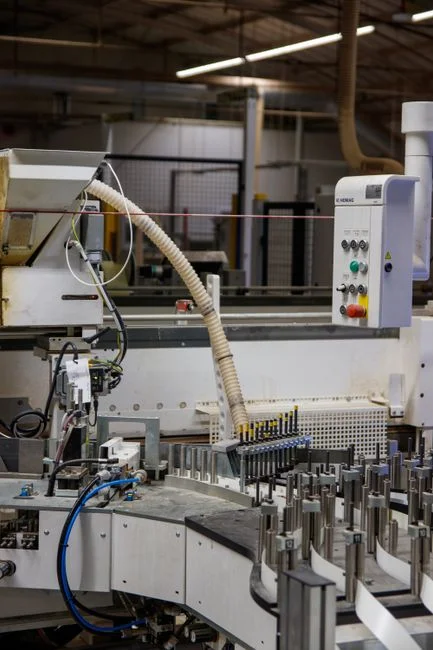
Five equipment classes dominate 2026 coal-mine bids based on capacity and removal performance. Rather than read five datasheets, use the matrix below to shortlist by capacity, removal performance, footprint, capital band, and operating cost. The packaged integrated unit (WSZ class, 1–80 m³/h, ~1.1 kW at the 10 m³/h end) suits exploration camps and small pits; DAF pre-treatment (4–300 m³/h) is the workhorse for coal-washing streams; lamella clarification handles high-TSS bulk removal; MBR delivers biological polishing on a small footprint; RO closes the train where reuse or tight TDS limits apply.
| Equipment | Capacity | Key Removal | Footprint | CAPEX (USD) | OPEX ($/m³) | Best Fit Stream |
|---|---|---|---|---|---|---|
| Packaged integrated (WSZ) | 1–80 m³/h | SS >93% | Small (skid) | 45,000–120,000 | 0.28–0.55 | Pit dewatering, small camps, exploration |
| DAF pre-treatment | 4–300 m³/h | SS >90%, oil <5 mg/L | Medium | 60,000–350,000 | 0.15–0.35 (chem) | Coal washing effluent, slurry overflow |
| Lamella clarifier | 20–500 m³/h | TSS <30 mg/L effluent | Compact (20–40 m/h SLR) | 40,000–180,000 | 0.10–0.25 | Post-coagulation bulk separation |
| MBR biological | 10–2,000 m³/day | COD 85–95%, NH₃-N <5 mg/L | 60% smaller than CAS | 90,000–900,000 | 0.20–0.55 | AMD after neutralization, washing water reuse |
| RO polishing | 5–2,000 m³/h | TDS >95% rejection | Medium-large | 150,000–2.5M | 0.85–1.80 (mbr+RO) | Zero-liquid-discharge, high-TDS reuse |
CAPEX and OPEX figures are 2026 market bands drawn from HydropureWater bid history and corroborated against the zl-mkws001 packaged baseline (Henan Zhonglan, 2026 spec sheet). The DAF row assumes integrated flocculation ahead of the flotation cell. The MBR row references the footprint-reduction claim in HydropureWater's MBR catalog data, 2026.
Matching Equipment to Site Scale and Compliance Target
Project equipment selection depends on flow volume, the dominant wastewater stream, and the final effluent destination. Small sites under 50 m³/h with basic surface discharge to a permitted waterway can specify a WSZ underground integrated unit sized at 10 m³/h and 1.1 kW, targeting SS removal above 93% against GB 8978-1996 first-level standards (Henan Zhonglan, 2026). For mid-size operations in the 50–500 m³/h range handling a mix of AMD and washing water, the train runs DAF + lamella + MBR with lime dosing upstream; expect 85–95% COD reduction and iron/manganese below 2 mg/L in the clarified effluent.
Large sites above 500 m³/h pursuing zero-liquid-discharge must add RO concentrate management — crystallization or evaporation ponds — and accept higher OPEX in exchange for eliminating surface discharge. For short-duration pit work or exploration camps, a trailer-mounted WSZ or containerized MBR can be mobilized in days rather than months. A GX rotary bar screen at the headworks protects downstream pumps from rags and coarse debris, and an automatic chemical dosing system tied to pH and flow signals keeps reagent use inside the 5–10% accuracy band that protects downstream membranes. For a fuller discussion of regional risk, see this assessment of industrial wastewater treatment in coal-mining regions like KPK.
2026 CAPEX and OPEX Benchmarks for Mine Water Equipment
2026 budget benchmarks cluster into three CAPEX tiers and two OPEX bands based on system complexity. A packaged skid at 10–50 m³/h lands between $45,000 and $120,000 — anchored to the zl-mkws001 reference at 10 m³/h and 1.1 kW. A mid-scale train (DAF + lamella + MBR) at 100–500 m³/h typically costs $250,000 to $1.4M, with biological reactors and membrane cassettes making up roughly half. A large train with RO polishing at 500–2,000 m³/h runs $1.5M to $6M; the RO skids and concentrate handling are the dominant cost lines.
| Train Class | Capacity | CAPEX (USD, 2026) | OPEX ($/m³) | OPEX Drivers |
|---|---|---|---|---|
| Packaged skid | 10–50 m³/h | 45,000–120,000 | 0.28–0.55 | Power 0.4–0.6 kWh/m³, polymer |
| Mid-scale DAF+MBR | 100–500 m³/h | 250,000–1.4M | 0.55–0.95 | Lime, polymer, MBR air scour, CIP chemicals |
| Large train with RO | 500–2,000 m³/h | 1.5M–6.0M | 0.85–1.80 | Lime/NaOH (largest single line), membrane replacement 3–5 yr, energy 0.6–1.2 kWh/m³ |
OPEX is dominated by lime or NaOH for AMD neutralization (often 30–50% of consumables cost), polymer for sludge conditioning, RO membrane replacement at 3–5 year intervals, and energy in the 0.4–1.2 kWh/m³ band depending on biological loading and whether RO is in line. Biological-only trains cluster at $0.28–$0.95/m³; RO-inclusive trains run $0.85–$1.80/m³.