Industrial Wastewater Treatment Cost Sharjah UAE
Industrial wastewater treatment cost Sharjah UAE plants should budget starts near AED 500,000 for a 50 m³/h DAF unit and passes AED 2 million for a 200 m³/h MBR plant. Payback is often 3–5 years on water reuse and avoided fines.
Sharjah’s Industrial Wastewater Challenge: Why Compliance Isn’t Optional
In 2025, industrial wastewater treatment in Sharjah requires strict adherence to UAE Federal Law No. 24/1999 and Sharjah Municipality’s stringent effluent standards. Facilities in the chemical, food processing, and oil & gas sectors face significant penalties, including fines ranging from AED 50,000 to AED 500,000 per violation and potential 30-day plant shutdowns, for non-compliance. For instance, a Sharjah-based food processing plant was fined AED 250,000 in 2023 for exceeding oil and grease limits, discharging 120 mg/L against a permissible limit of 10 mg/L. Most plants we size for these three sectors miss oil and grease before they miss COD.
Use a maximum of 30 mg/L for Total Suspended Solids (TSS) and 150 mg/L for Chemical Oxygen Demand (COD) on sewer discharge. DAF or MBR is then sized for over 95% contaminant removal. The investment in these systems can range from AED 500,000 for a 50 m³/h DAF unit to over AED 2 million for a 200 m³/h MBR plant. That spend is often recouped within 3–5 years through water recycling and the avoidance of fines and operational disruptions.
Chemical plants in Sharjah deal with hazardous effluents. Food and beverage facilities carry high organic loads. Oil & gas operations spend their design effort on hydrocarbons so the plant can stay in continuous operation.
Sharjah’s Wastewater Treatment Standards: What Your Effluent Must Achieve
Sharjah sewer discharge is planned to a pH between 6 and 9, TSS at a maximum of 30 mg/L, and COD at 150 mg/L. Biochemical Oxygen Demand (BOD) is typically capped at 50 mg/L, and oil and grease at 10 mg/L. These standards are comparable to, though often less stringent than, some European Union (EU) or US Environmental Protection Agency (EPA) limits, which may impose stricter controls on parameters like BOD or heavy metals. For instance, while Sharjah may permit up to 150 mg/L COD for sewer discharge, EU standards often target below 50 mg/L.
Sampling frequency for compliance monitoring is also critical, with daily testing often required for TSS and COD, and weekly or monthly testing for heavy metals and other specific pollutants. Pre-treatment is mandatory for sewer discharge, encompassing essential steps like pH adjustment, oil and water separation, and solids screening, as stipulated by Sharjah Municipality. Facilities discharging directly to marine environments face significantly more stringent limits, often requiring TSS below 10 mg/L and COD below 50 mg/L. Sharjah is increasingly aligning with international trends in monitoring emerging contaminants such as per- and polyfluoroalkyl substances (PFAS) and microplastics.
The federal and emirate numbering used by permit reviewers is set out in UAE Wastewater Discharge Standards 2026: Industrial Compliance & Treat. Sharjah Municipality limits in the table below are unchanged, because no fetched official page replaced them.
According to the European Commission, the revised Urban Wastewater Treatment Directive, Directive (EU) 2024/3019, entered into force on 1 January 2025. It requires EU countries to collect and treat wastewater in all urban areas of more than 1,000 inhabitants, adds tertiary nutrient removal and quaternary micropollutant removal financed through extended producer responsibility, and makes treatment plants energy-neutral by 2045. The Commission puts the benefit at €6.6 billion in economic benefits per year by 2045, across 30,354 urban wastewater treatment plants in operation in the EU.
The revised directive covers EU urban wastewater, not a Sharjah industrial sewer permit. The EU column in the table stays at the original typical values, including COD ≤ 50, because that Commission page did not publish a replacement milligram limit. The EPA column is also unchanged after a check of the US EPA Effluent Guidelines overview, which confirms those are national wastewater discharge standards developed by the EPA on an industry-by-industry basis.
| Parameter | Sharjah Municipality (Sewer Discharge) | EU Standards (Typical) | EPA Standards (Typical) | Sampling Frequency (Sharjah) |
|---|---|---|---|---|
| pH | 6 – 9 | 6 – 9 | 6 – 9 | Daily |
| TSS (mg/L) | ≤ 30 | ≤ 25 | ≤ 30 | Daily |
| COD (mg/L) | ≤ 150 | ≤ 50 | ≤ 125 | Daily |
| BOD (mg/L) | ≤ 50 | ≤ 20 | ≤ 30 | Weekly |
| Oil & Grease (mg/L) | ≤ 10 | ≤ 5 | ≤ 15 | Weekly |
| Heavy Metals (e.g., Cr, Ni, Cu) | Varies by metal, generally stricter than sewer discharge limits | Stricter limits, e.g., Cr(VI) ≤ 0.1 mg/L | Stricter limits, e.g., Cr(VI) ≤ 0.05 mg/L | Monthly/Quarterly |
| Fecal Coliform (CFU/100mL) | Not typically regulated for industrial discharge to sewer | Strict limits for treated wastewater reuse/discharge | Strict limits for treated wastewater reuse/discharge | N/A |
MBR Plant Cost Sharjah Municipality Compliance
MBR plant cost for Sharjah Municipality sewer compliance at 100 m³/h is AED 1,200,000 - 3,000,000 in the sector table and AED 1,200,000 - 2,500,000 in the capacity table. OPEX on that duty is listed as 1.0 - 3.0 in the sector table and as AED 1.0 to AED 3.0 per cubic meter in the worked example. Energy is typically between 0.8–1.2 kWh/m³. Payback on the 100 m³/h MBR row is 4 - 6 years, against 3–5 years on the DAF rows.
What does an MBR plant cost under Sharjah rules?
An MBR aimed at Sharjah Municipality sewer limits, BOD ≤ 50 mg/L and TSS ≤ 30 mg/L, is the 100 m³/h case priced at AED 1,200,000 - 2,500,000. The DF series figure in this guide is over 99% BOD removal, with up to 60% footprint reduction. Most food plants we size in Sharjah run that MBR at the lower flux so a clean stays on a weekly cycle. The Sharjah Municipality Industrial Wastewater Discharge Permit is typically renewed every 1–3 years.
How Industrial Wastewater Treatment Systems Work: Engineering Deep Dive
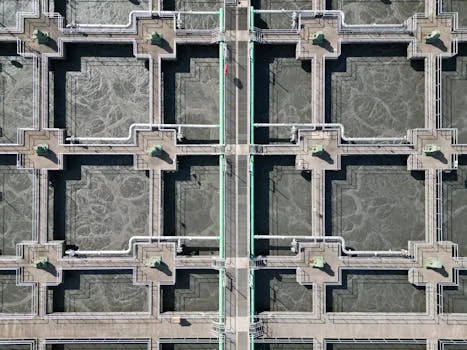
An effective industrial wastewater treatment train starts with screening and grit removal so large solids and grit do not damage downstream equipment. An equalization tank then buffers flow rate and contaminant concentration. Stable flow matters more than a fancy panel when the factory dumps a tank at shift change. Most plants we size for batch kitchens and wash bays are limited by that dump, not by the average hour.
Primary treatment on oily or solids-heavy lines is usually dissolved air flotation. HydropureWater's DAF machines remove 90–98% of TSS and 85–95% of FOG within a flow rate range of 4 to 300 m³/h. Microbubbles attach to suspended solids and FOG and lift them to a skimmer. According to Wikipedia, DAF is a water treatment process that clarifies wastewaters by removing suspended matter such as oil or solids, and it is widely used on industrial effluents from oil refineries, petrochemical and chemical plants, natural gas processing plants, and paper mills. Most Sharjah industrial parks we commission run that DAF near 0.3–0.5 kWh/m³ until the emulsion gets stubborn.
HydropureWater's DF series MBR units reach over 99% BOD removal by joining biology with membrane filtration. The result is a smaller footprint (up to 60% reduction) and a higher quality effluent, though typically with a higher capital expenditure (CAPEX). A conventional activated-sludge tank still has a place when the permit is a sewer limit and the plot is not tight.
Conventional activated sludge, for example HydropureWater's WSZ series, is the package route when biology and a buried layout matter more than membrane grade. The Underground Package Sewage Treatment Plant (WSZ Series) is that package. Procurement lines sometimes state the package duty as (min 500 l/hr capacity, treated effluent tss ≤50 mg/l, o&g ≤15 mg/l, bod5 ≤30 mg/l). price Most factory trains we size in Sharjah sit far above that 500 l/hr floor.
Tertiary reuse, when the Municipality allows it, uses reverse osmosis. RO can achieve up to 95% water recovery and remove 99.5% of dissolved contaminants. Automated chemical dosing systems adjust pH and precipitate dissolved heavy metals before discharge or reuse. Dose on a measured pH, not on a fixed timer, or the metal limit will drift overnight.
For more detailed insights into these technologies, explore how DAF systems remove 95%+ suspended solids and oils and MBR membrane bioreactors for Sharjah’s high-BOD wastewater.
Chemical Dosing System Price Sharjah Oil Gas
Chemical dosing system price on a Sharjah oil and gas site is included in the AED 600,000 - 2,000,000 CAPEX shown for a 100 m³/h DAF train. The sector table lists that train as API separators plus DAF, with MBR only if the permit still fails. OPEX for the oil and gas row is 1.0 - 2.5 AED/m³. Most oil terminals we set up spend dosing money on pH control and a demulsifier before they buy another tank.
What is chemical dosing price for Sharjah oil gas?
There is no separate catalogue price in this guide for a dosing skid alone. HydropureWater's automatic chemical dosing systems sit inside the oil and gas train and precipitate metals such as chromium and nickel at over 95% removal of hazardous constituents when the chemistry is right. DAF ahead of dosing still targets 90–98% of TSS and 85–95% of FOG. Budget the skid inside the 100 m³/h train, not as a second plant.
Choosing the Right Treatment Technology for Your Sharjah Facility
Technology selection for a Sharjah facility follows the sector and the effluent, not a single catalogue skid. Chemical effluent often carries heavy metals, mixed organics and a swinging pH. A combination of DAF systems and chemical dosing is the usual fit on that water. DAF units remove suspended solids and FOG before any biological step.
Chemical dosing, using systems like HydropureWater's automatic chemical dosing systems, can precipitate dissolved heavy metals such as chromium and nickel. The worked figure is over 95% removal of hazardous constituents when the jar test is honoured. Most chemical plants we size fail the first audit on pH, then on nickel. Fix the probe before you buy a bigger tank.
Food and beverage effluent brings high BOD and organic load from dairy production and brewing. MBR systems fit that load when recycling is the goal and the sewer cap is tight. HydropureWater's MBR integrated wastewater treatment solutions cut BOD and can produce effluent for water recycling after approval. A brewery week is not a dairy week, so size equalisation on the worse day.
Oil and gas work starts with hydrocarbon removal. API separators are often the first line of defense, and DAF then takes emulsified oils and suspended solids. The limit that bites is petroleum hydrocarbons, not a generic COD average. Textile dye and heavy metal lines need coagulation and flocculation, then MBR, and can reduce color by up to 90%.
Pharmaceutical plants, with complex and potentially toxic effluents, often require multi-stage treatment. The practical train is DAF, MBR, advanced oxidation and RO when APIs and heavy metals share the pipe. Membrane filtration is the last gate, not the first. Do not promise reuse until a toxicity result, not just COD, is in hand.
| Industry Sector | Primary Contaminant Focus | Recommended Technology | Typical CAPEX Range (AED) | Typical OPEX Range (AED/m³) | Footprint Consideration | Key Compliance Risk |
|---|---|---|---|---|---|---|
| Chemical | Heavy Metals, Organic Compounds, Acidity/Alkalinity | DAF + Chemical Dosing (e.g., pH adjustment, metal precipitation) | 750,000 - 2,500,000 (for 100 m³/h) | 1.5 - 4.0 | Moderate | Hazardous substance discharge, pH excursions |
| Food & Beverage | BOD, COD, TSS, Oil & Grease, Nutrients | MBR Systems (for high BOD/COD) or DAF + Biological Treatment | 1,200,000 - 3,000,000 (for 100 m³/h MBR) | 1.0 - 3.0 | Small to Moderate (MBR) | High organic load, odor |
| Oil & Gas | Hydrocarbons (Oil & Grease), TSS, Heavy Metals | API Separators + DAF + (potentially) MBR | 600,000 - 2,000,000 (for 100 m³/h DAF) | 1.0 - 2.5 | Moderate to Large | Hydrocarbon discharge, emulsified oils |
| Textiles | Dyes, Heavy Metals, TSS, High COD | Coagulation/Flocculation + MBR or Advanced Oxidation | 900,000 - 2,800,000 (for 100 m³/h MBR) | 1.8 - 4.5 | Moderate | Color discharge, heavy metal toxicity |
| Pharmaceuticals | Complex organic compounds, APIs, Heavy Metals, TSS | Multi-stage treatment: DAF, MBR, Advanced Oxidation, RO | 1,500,000 - 4,000,000+ (for 100 m³/h) | 2.5 - 6.0+ | Moderate to Large | Persistent organic pollutants, toxicity |
Cost Breakdown: CAPEX, OPEX, and ROI for Sharjah Industrial Wastewater Systems

CAPEX for a Sharjah industrial system covers equipment, civil works, automation and permitting. A 100 m³/h DAF system might have an equipment cost of around AED 750,000. An additional AED 250,000 is often allocated for installation and ancillary works. Those two lines bring total CAPEX to approximately AED 1 million.
For a 100 m³/h MBR plant, OPEX can range from AED 1.0 to AED 3.0 per cubic meter treated, with energy consumption being a significant factor, typically between 0.8–1.2 kWh/m³. DAF systems generally have lower energy demands, around 0.3–0.5 kWh/m³. Water recycling offers substantial savings, with treated water potentially valued at AED 10–20/m³ for non-potable uses like irrigation or cooling. Crucially, avoiding fines, which can range from AED 50,000 to AED 500,000 annually per violation, provides a direct financial benefit.
Government incentives, such as potential grants from initiatives like the Sharjah Green Fund, can further improve the economic viability. Payback periods for well-designed systems often fall within 3–5 years. Read the industrial wastewater treatment cost Sharjah UAE rows as equipment plus civil works, not as a skid-only quote. For broader cost benchmarks in the UAE, refer to cost benchmarks for UAE wastewater treatment projects.
- Flow at the real hour, not the brochure hour, for the 50 m³/h, 100 m³/h or 200 m³/h row.
- Sewer limits versus marine limits of TSS below 10 mg/L and COD below 50 mg/L.
- Oil and grease load, because the 2023 food case missed 10 mg/L at 120 mg/L.
- Energy, from 0.3–0.5 kWh/m³ on DAF to 0.8–1.2 kWh/m³ on MBR.
- Reuse value at AED 10–20/m³ set against a fine of AED 50,000 to AED 500,000.
| System Capacity | Technology | Typical CAPEX Range (AED) | Typical OPEX Range (AED/m³) | Estimated Payback Period (Years) | Potential Annual Water Recycling Savings (AED) |
|---|---|---|---|---|---|
| 50 m³/h | DAF | 500,000 - 1,000,000 | 0.5 - 1.5 | 3 - 5 | 1,000,000 - 2,000,000 |
| 100 m³/h | DAF | 750,000 - 1,500,000 | 0.5 - 1.5 | 3 - 5 | 2,000,000 - 4,000,000 |
| 100 m³/h | MBR | 1,200,000 - 2,500,000 | 1.0 - 3.0 | 4 - 6 | 2,000,000 - 4,000,000 |
| 200 m³/h | DAF | 1,200,000 - 2,200,000 | 0.5 - 1.5 | 3 - 5 | 4,000,000 - 8,000,000 |
| 200 m³/h | MBR | 2,000,000 - 4,000,000 | 1.0 - 3.0 | 4 - 6 | 4,000,000 - 8,000,000 |
Note: Savings are estimated based on 24/7 operation at 80% capacity and a recycling value of AED 15/m³.
Sharjah Compliance Checklist: 10 Steps to Avoid Fines and Shutdowns
A Sharjah compliance file that survives an audit has ten documented steps, and the first step is a real influent and effluent test. Skip a step and the fine discussion starts before the process discussion does.
- Conduct a Comprehensive Wastewater Audit: Regularly test influent and effluent streams for key parameters including TSS, COD, BOD, pH, heavy metals, and oil & grease. Utilize accredited laboratories such as Bureau Veritas or SGS for accurate analysis.
- Install Continuous Monitoring Systems: Equip your facility with continuous monitoring for critical parameters like pH, TSS, and flow rate. Implement data logging capabilities to facilitate reporting to Sharjah Municipality and track performance trends.
- Implement Robust Pre-treatment: Ensure effective screening and equalization processes are in place to manage flow variations and remove gross solids, preventing surcharges and protecting downstream equipment.
- Select Appropriate Treatment Technology: Based on your industry sector and effluent characteristics, choose a treatment solution proven to meet Sharjah’s discharge standards (refer to the technology comparison section).
- Obtain Necessary Permits: Secure the Sharjah Municipality Industrial Wastewater Discharge Permit, which typically requires renewal every 1–3 years, and ensure all operational conditions are met.
- Provide Staff Training: Ensure all operational and maintenance staff are thoroughly trained on the specific treatment system, including routine operations, maintenance procedures (e.g., membrane cleaning for MBRs), and chemical dosing calibration.
- Schedule Regular Third-Party Testing: Conduct quarterly independent testing of your effluent quality to verify compliance with UAE Federal Law No. 24/1999 and to provide an additional layer of assurance.
- Maintain Detailed Documentation: Keep meticulous records of all maintenance activities, operational logs, testing results, and compliance reports. This documentation is essential for Sharjah Municipality audits.
- Develop Emergency Response Plans: Establish clear protocols for managing wastewater treatment system emergencies, including spill response plans and ensuring backup power for critical treatment units.
- Explore Water Recycling Incentives: Investigate available programs and rebates, such as those potentially offered by the Sharjah Green Fund or other governmental bodies, to offset costs and enhance the economic benefits of water reuse.
Who Should Budget From This Guide
Sharjah factory engineers, EPC estimators and procurement managers use these bands when the discharge point is the municipal sewer or a marine outfall. A 100 m³/h food plant and a 100 m³/h oil terminal do not share a price. Most bid packs we review price the skid and forget sludge haulage, which moves OPEX more than the blower does.
Municipal package plants with domestic sewage only, and sites outside Sharjah that discharge under another emirate’s permit, should look elsewhere. Abu Dhabi cost structure is a different tariff and a different permit. Do not copy a sewer band onto a marine outfall.
Next step: send the latest composite results, the discharge point and the reuse target, then request a budgetary quotation for this Sharjah duty.
Frequently Asked Questions

What are the Sharjah Municipality’s effluent limits for industrial wastewater?
Sharjah Municipality sewer limits, under UAE Federal Law No. 24/1999, are TSS ≤ 30 mg/L, COD ≤ 150 mg/L, BOD ≤ 50 mg/L, oil & grease ≤ 10 mg/L, and a pH range of 6–9. Marine discharge is tighter, often with TSS limits around 10 mg/L. Daily testing is the working rhythm for TSS and COD, with metals checked monthly or quarterly.
How much does an industrial wastewater treatment plant cost in Sharjah?
Capital expenditure for an industrial wastewater treatment plant in Sharjah runs from approximately AED 500,000 for a 50 m³/h DAF system to over AED 2 million for a 200 m³/h MBR plant. Operational expenditure typically falls between 0.5 and 2 AED per cubic meter of treated water. Technology, the power tariff and chemical use move that OPEX more than the nameplate flow does.
What’s the best wastewater treatment technology for a Sharjah chemical plant?
A Sharjah chemical plant is usually served by dissolved air flotation plus chemical dosing, not by biology alone. DAF removes suspended solids and FOG, and dosing precipitates dissolved metals such as chromium and nickel. HydropureWater's automatic chemical dosing systems hold pH so a slug does not punch through the sewer limit. Most chemical lines we commission fail on a weekend pH swing, not on the average metal result.
Can treated industrial wastewater be reused in Sharjah?
Yes, treated industrial wastewater can be reused in Sharjah for landscape irrigation, cooling tower makeup and toilet flushing. Reuse needs tertiary treatment, often reverse osmosis, and explicit Sharjah Municipality approval. RO on a reuse train can reach up to 95% water recovery and remove 99.5% of dissolved contaminants. Non-potable value in the cost table is AED 10–20/m³, with the savings note using AED 15/m³.
What happens if my Sharjah facility fails a wastewater compliance test?
According to UAE Federal Decree No. 34/2021, fines can range from AED 50,000 to AED 500,000 per violation. Severe or repeat cases can bring an operational shutdown for up to 30 days, and persistent non-compliance can lead to permanent closure. Keep the lab sheet, the permit and the last calibration record ready, because the fine discussion starts with those three files.
Related Equipment
- DAF systems for Sharjah industrial wastewater — view specifications, capacity range, and technical data
- MBR systems for high-BOD wastewater in Sharjah — view specifications, capacity range, and technical data
- chemical dosing systems for pH adjustment and heavy metal removal — view specifications, capacity range, and technical data
Need a customized solution? Request a free quote with your specific flow rate and pollutant parameters.