Why Brownsville Fabricated Metals Plants Are Caught by 40 CFR Part 433
Fabricated metals shops in Cameron County, TX fall under the federal Metal Finishing categorical standards at 40 CFR Part 433 the moment they perform any of six listed operations: electroplating, electroless plating, anodizing, chromate conversion coating, chemical etching, or chemical milling. The regulation is process-defined, not sector-defined, although the EPA notes that covered operations are most often found in plants reporting under SIC Major Groups 34 through 39 — fabricated metal products, industrial/commercial machinery, and electronic/electrical equipment (source: EPA Metal Finishing Effluent Guidelines, epa.gov/eg/metal-finishing-effluent-guidelines). A shop that runs a single chromate conversion coating line and three benchtop assembly stations is a categorical industrial user; the categorical standards apply to the entire site.
The trigger is one-sided. If a plant performs any of the six operations, then discharges from the 46 operations listed at 40 CFR 433.10(a) are covered by the Part 433 standards. The EPA enforces categorical pretreatment limits on any indirect discharger whose waste streams pass through the categorical operations, even if the regulated pollutants originate in non-plating rinses. This is the "one-trigger rule" that catches plants that think they are too small to be regulated.
There is also a forward-looking compliance issue that Brownsville chrome platers cannot ignore. In the 2021 Preliminary Effluent Guidelines Program Plan 15, EPA announced a rulemaking to address PFAS discharges from a subset of metal finishing and electroplating facilities — the so-called "chrome finishing facilities" performing chromium plating, chromium anodizing, chromic acid etching, and chromate conversion coating. EPA found that PFAS are used at some of these operations to suppress hexavalent chromium emissions. The active rulemaking carries docket number EPA-HQ-OW-2022-0869 (source: EPA, epa.gov/eg/metal-finishing-effluent-guidelines). Plants in Brownsville that plate or anodize with chrome should be tracking that docket now, not after a final rule lands.
The Brownsville Regulatory Stack: Federal, State, and Local Limits
Three independent authorities each layer a limit on top of a Cameron County fabricated metals discharger. The federal floor is 40 CFR Part 433, with daily maximum and monthly average numerical limits for copper, nickel, zinc, total chromium, lead, cadmium, and total cyanide. Part 433 sets the ceiling that no POTW may relax; it can only be made more stringent (40 CFR 403.5).
The state layer is the Texas Pretreatment Program, delegated to the Texas Commission on Environmental Quality under EPA Region 6 authorization. TCEQ enforces categorical standards and, through TPDES permits, can impose additional site-specific or watershed-based limits where the receiving POTW or downstream waterbody requires them. Texas does not operate a general state discharge permit for industrial sewer users; compliance is enforced through POTW-issued industrial user permits and TCEQ oversight.
The local layer is the Brownsville Public Utilities Board Industrial Pretreatment Program. BPUB IPP issues discharge permits, conducts sampling, performs inspections, and can impose local mass-load limits, best management practices, or surcharges that are tighter than the 40 CFR 433 categorical standards. The first action for any Cameron County discharger is to request the BPUB local limits letter and any site-specific permit conditions — local mass limits in pounds per day are common, and they can be more restrictive than the federal concentration limits alone.
Plants outside the Brownsville city limits but inside Cameron County — in Harlingen, Los Fresnos, Port Isabel, or unincorporated areas — discharge to a different POTW and therefore a different local program. The same 40 CFR 433 floor applies, but the local limits letter comes from a different utility. Confirm your receiving POTW before designing equipment.
Source-Control Wins: Segregating Waste Streams at the Bench
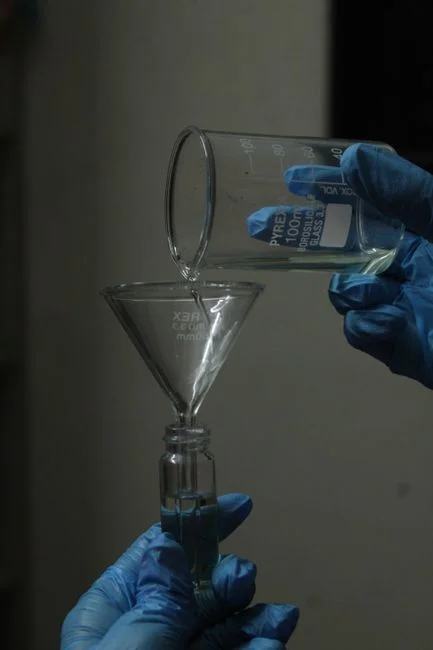
The cheapest compliance gains happen before any treatment equipment is purchased. Segregating concentrated rinse dumps — drag-out tank dumps, spent acid, spent chromate — from dilute rinse water reduces the volumetric load to the treatment system by 60–80% and cuts NaOH, polymer, and bisulfite consumption proportionally (HydropureWater field data, 2026).
Counter-current rinsing with conductivity-controlled rinse tanks is the standard source-control upgrade. Drag-out is recovered into a still-rinseable process bath rather than carried forward to waste. The bench-level habit that prevents the most catastrophic incidents is strict stream separation: hexavalent chromium and cyanide must never share a drain, sump, or treatment reactor. Mixing the two releases hydrogen cyanide gas — a workplace fatality risk that the EPA's categorical standards were specifically written to prevent.
Hardline segregation at the bench means dedicated drip trays under chrome plating lines, double-walled process tanks with leak detection, and isolated sumps for acid waste, nickel-bearing waste, and chrome-bearing waste. The pipe labels and valve alignment that an operator can read in an emergency are part of the compliance system, not separate from it.
The Brownsville Pretreatment Process Train: Step by Step
The standard process train for a Cameron County metal finisher discharging to the Brownsville PUB sewer runs in seven steps. Each step is a separate engineered unit operation; the order is not optional.
- Flow equalization. An 8–24 hour equalization basin dampens pH and concentration swings from batch dumps. Industrial designs typically size the basin at roughly 2× the peak hourly wastewater flow to absorb shift-end dumps without shocking downstream chemistry.
- Hexavalent chromium reduction (if applicable). Reduce Cr(VI) to Cr(III) using sodium bisulfite (NaHSO₃) or ferrous sulfate (FeSO₄) at pH 2.0–3.0, with a 15–30 minute reaction time. Reduction must be complete before precipitation — Cr(VI) does not form an insoluble hydroxide at the operating pH window.
- pH adjustment and hydroxide precipitation. Raise pH to 9.0–9.5 using NaOH or Ca(OH)₂. Copper, nickel, lead, and cadmium drop out as insoluble hydroxides. Zinc is amphoteric and re-dissolves above pH 10.5, so the upper window is tight; do not over-dose caustic when zinc is present.
- Coagulation and flocculation. Dose a polymeric flocculant — typically an anionic polyacrylamide at 0.5–5 mg/L — in a slow-mix chamber to grow settleable or floatable flocs.
- Clarification. A lamella clarifier alternative for sites without FOG works for clean metal hydroxide streams. Where FOG, emulsified oils, or surfactants co-exist with metals — common in shops that share floor drains with parts washers — a DAF clarifier for metal hydroxide sludge is the better selection. DAF typically achieves 90–95% TSS removal and produces a thicker sludge (3–5% dry solids) than gravity settling (HydropureWater field data, 2026).
- Sludge dewatering. A plate-and-frame filter press for the metal hydroxide cake produces a non-hazardous cake (subject to TCLP testing) at 25–35% dry solids for landfill disposal.
- Polish filtration. A multi-media polish filter before the sewer sampling point captures any carryover solids and protects the sampling line from fouling.
Caustic, bisulfite, and polymer doses are managed on a PLC-controlled pH and polymer dosing skid with inline pH probes in a closed control loop. Manual dosing is not defensible at the flow rates and discharge limits a Brownsville categorical user faces.
| Step | Unit Operation | Key Design Parameter | Typical Range |
|---|---|---|---|
| 1 | Flow equalization | HRT | 8–24 h |
| 2 | Cr(VI) reduction | Reaction pH | 2.0–3.0 |
| 3 | Hydroxide precipitation | Reactor pH | 9.0–9.5 (≤10.5 if zinc present) |
| 3 | Precipitation reactor | HRT | 15–30 min |
| 4 | Flocculation | Polymer dose | 0.5–5 mg/L |
| 5 | Clarification (DAF or lamella) | Overflow TSS | <30 mg/L |
| 6 | Filter press | Cake dryness | 25–35% DS |
| 7 | Multi-media polish | Effluent TSS | <10 mg/L |
Process Parameters and Target Effluent Concentrations
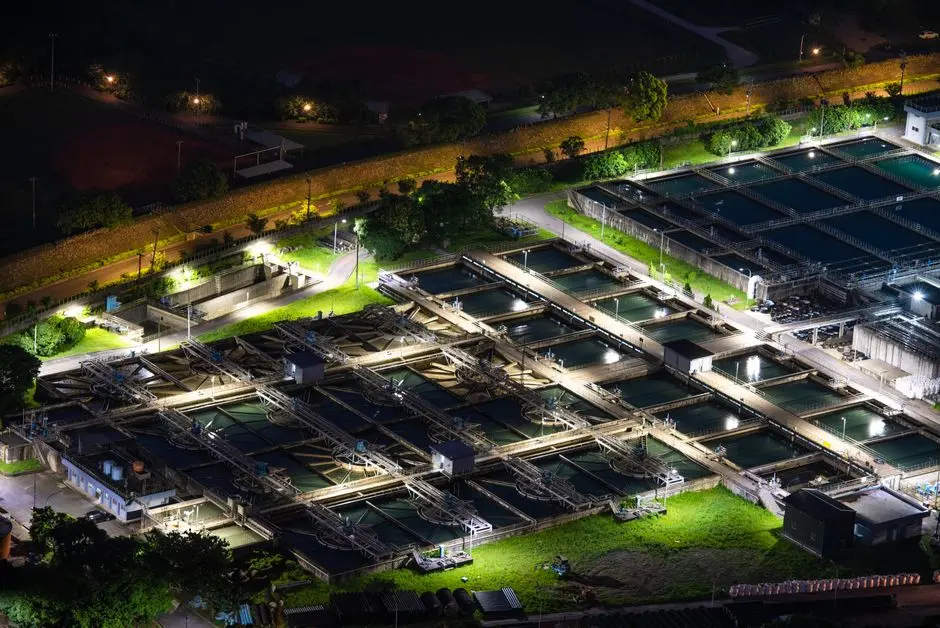
The precipitation reactor is the single most important control point in the train. Hold pH at 9.0–9.5 for mixed-metal wastewater; push to 9.5–10.0 only when zinc is the dominant species and the polish step is rated to capture re-dissolved zinc slip. Caustic dose runs at 1.0–1.5× the stoichiometric demand — NaOH or Ca(OH)₂ — controlled by an inline pH probe on a PLC loop, not by an operator's eye on a strip chart.
After precipitation and clarification, a well-tuned system routinely hits Cu < 0.5 mg/L, Ni < 0.5 mg/L, Zn < 1.0 mg/L, total Cr < 0.5 mg/L, and Pb < 0.2 mg/L — comfortably below the 40 CFR Part 433 daily maximums of 3.38, 3.98, 2.61, 2.77, and 0.69 mg/L respectively (per 40 CFR 433.12). Hydraulic residence time in the precipitation reactor should not drop below 15 minutes; 20–30 minutes is the safer design point for fluctuating feed streams.
Clarified overflow TSS should track below 30 mg/L to protect downstream sewer solids loading limits and to keep the multi-media polish filter on a sensible backwash cycle. Anything consistently above 30 mg/L is a flocculation or hydraulic-distribution problem upstream, not a clarifier sizing problem.
| Parameter | Target / Range | 40 CFR 433 Daily Maximum |
|---|---|---|
| Reactor pH (mixed metals) | 9.0–9.5 | — |
| Reactor pH (zinc-dominant) | 9.5–10.0 | — |
| Cu, effluent | < 0.5 mg/L | 3.38 mg/L |
| Ni, effluent | < 0.5 mg/L | 3.98 mg/L |
| Zn, effluent | < 1.0 mg/L | 2.61 mg/L |
| Total Cr, effluent | < 0.5 mg/L | 2.77 mg/L |
| Pb, effluent | < 0.2 mg/L | 0.69 mg/L |
| Clarified TSS | < 30 mg/L | — |
Brownsville-Specific Permitting and Sampling Requirements
Compliance does not end at the effluent pipe. The BPUB Industrial Pretreatment Program requires a baseline monitoring report (BMR) within 180 days of becoming a categorical industrial user, certifying the plant's knowledge of its waste streams and its analytical results against 40 CFR 433 limits. After baseline acceptance, the permit sets a self-monitoring schedule.
Typical BPUB self-monitoring frequencies: 1× per month for the categorical standards parameters, 1× per quarter for local limits, and 1× per year for the priority pollutant scan. Sampling must be 24-hour flow-proportional composites using an automatic sampler specification for IPP compliance; grab samples are not defensible for the categorical reporting. Recordkeeping retention is 3 years minimum on-site, available for BPUB and TCEQ inspection (per 40 CFR 403.12(o)).
Slug load reporting is the part operators forget. Any discharge > 5× normal daily flow, or any pH below 5 or above 12, must be reported to BPUB within 24 hours (per 40 CFR 403.12(b)). A pH excursion from a caustic over-dose that never reaches the sewer still has to be logged as an internal non-conformance; one that does reach the sewer triggers notice. The slug control plan is part of the permit, not a separate document.
For a parallel sector comparison, the 40 CFR 405–471 categorical compliance framework walks through the same permit mechanics for transportation equipment cleaning, and the regional pretreatment playbook for a similar metals-adjacent sector shows how the local POTW layer works in a different jurisdiction. For clarifier selection specifically, the DAF versus lamella clarifier selection guide covers the same FOG-versus-no-FOG decision tree.
Frequently Asked Questions
Does a small fabricated metals shop in Brownsville really have to comply with 40 CFR 433?
Yes. The federal Metal Finishing categorical standards at 40 CFR Part 433 apply to any plant that performs electroplating, electroless plating, anodizing, chromate conversion coating, chemical etching, or chemical milling — there is no flow-based threshold. The rule is process-defined, not sector-defined, and it applies regardless of the plant's SIC or NAICS code. A one-line chromate conversion coating operation makes the entire site's discharges subject to Part 433.
What pH should I hold in the precipitation reactor if I have zinc in my waste stream?
Hold 9.0–9.5 for mixed-metal wastewater, and do not exceed pH 10.5. Zinc is amphoteric: it precipitates as Zn(OH)₂ between roughly pH 8.5 and 10.5, then re-dissolves as zincate above that window. Most hydroxide precipitation operational failures on zinc-bearing waste are over- caustic episodes, not under-caustic episodes, and the cure is a tighter upper bound on the PLC setpoint rather than a higher dose rate.
Do I need cyanide destruction if I no longer use cyanide plating baths?
You need it only if cyanide is present in any waste stream that reaches the treatment train, including legacy drag-out, contaminated rinse water, or parts washed off baths used in other tenant spaces in a shared building. The 40 CFR 433 cyanide limits (1.20 mg/L daily maximum, 0.65 mg/L monthly average) are enforced when cyanide is in the categorical wastestream; if your BMR documents zero cyanide, BPUB may waive routine cyanide monitoring while retaining the right to require it after any process change.
How does a DAF clarifier differ from a lamella clarifier for metal hydroxide sludge?
A DAF clarifier floats sludge with micro-bubbles, which is the right choice when FOG, emulsified oils, or surfactants are present alongside the metals — common in shops that share floor drains with parts washers. A lamella clarifier settles sludge on inclined plates and is the lower-cost option for clean metal-hydroxide streams with no FOG. For a fabricated metals site with mixed inputs, the DAF clarifier for metal hydroxide sludge paired with a PLC-controlled pH and polymer dosing skid is the more defensible selection.