Why Automatic Sampling Matters for Compliance in 2026
Regulated wastewater discharges require representative sampling, and a manually grabbed bottle is no longer accepted as the default evidence in most jurisdictions. EPA NPDES permits, the EU Urban Waste Water Treatment Directive (91/271/EEC), and the major national pretreatment programs all default to a 24-hour flow-weighted composite as the defensible artifact for permit comparison. A 24-hour composite averages diurnal peaks, storm surges, and shift discharges into a single laboratory aliquot, which is exactly what most discharge limits are written against.
The framing from established sampler suppliers is unambiguous: wastewater sampling is "often a legal requirement" and is used "to protect surface water, to monitor wastewater treatment processes or to identify dischargers into a sewage system" (Endress+Hauser, 2026). Without an automatic station, operators fall back on grab samples that miss peak loads by definition — a slug discharge that arrives at 02:00 is invisible to a daytime technician.
Buyers in 2026 should treat the sampler as part of the evidence chain, not an accessory. ISO 5667-10 governs wastewater sampling quality and explicitly covers automatic sampler design, sample handling, and chain-of-custody; pairing the equipment specification with the standard shortens permit-review cycles. The remainder of this guide turns that compliance requirement into a specifiable artifact.
How an Automatic Wastewater Sampler Works
An automatic wastewater sampler is a refrigerated, programmable station that draws water on time, flow, or event triggers to produce a defensible composite or discrete sample for regulatory analysis. The architecture has four functional blocks, and each one drives a line item on the procurement sheet.
Intake. A strainer at the channel or wet-well wall keeps debris out of the suction line. The intake hose runs to a defined sampling point — typically at mid-depth, away from the surface scum and the settled solids layer. Lift is the single most underspecified parameter: vendors publish it, but rarely in marketing copy. Always confirm vertical lift against the worst-case wet-well level.
Pump. A peristaltic pump (the dominant architecture in modern units) or a vacuum module pulls a defined volume per cycle into a measuring chamber, then dispenses it into a bottle. Peristaltic designs are preferred for dirty wastewater because the tubing — not the pump mechanism — contacts the sample, and tubing is a consumable that any operator can replace in the field. Pull volumes are programmable per bottle or per cycle, and modern controllers log every pull with a timestamp for chain-of-custody.
Distribution. The sample is routed either to a single composite jar or to a multi-bottle carousel that supports discrete time-stamped grabs. Composite is the compliance default; multi-bottle is the forensic choice when the operator needs to identify when a peak occurred, not just that one did.
Refrigeration and control. A cooled compartment holds the composite near 4 °C to slow biological activity between pull and lab delivery. Stationary units built for the 2026 market use HFC-free refrigeration, eliminating hydrofluorocarbons as a greenhouse-gas risk (Endress+Hauser, 2026). The controller handles scheduling, flowmeter signal acceptance, sensor input for event triggers, and onboard data logging — usually over Modbus TCP, 4–20 mA, or Ethernet/IP to the plant SCADA.
Three Sampling Modes: Time, Flow-Proportional, and Event-Triggered
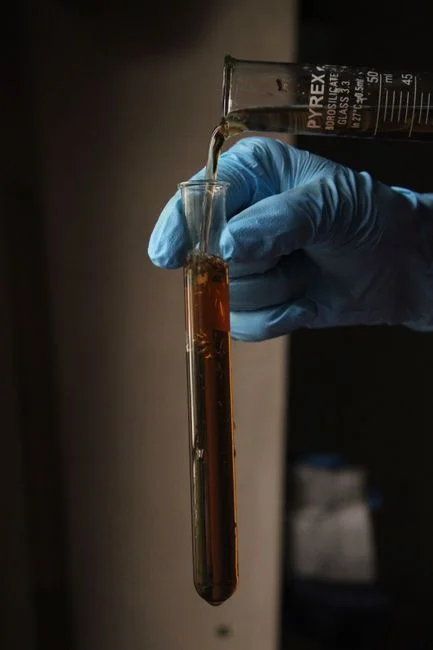
Mode selection is the single most important buying decision. The mode determines what the resulting sample actually represents, and what a regulator or downstream engineer can infer from the data.
Time-controlled sampling is the routine-compliance workhorse. The operator programs an interval (e.g., every 15 minutes) and a pull volume; the sampler does the rest. This mode is "absolutely reliable" for routine composites and is the simplest path to a defensible 24-hour average for NPDES or UWWTD reporting (Endress+Hauser, 2026).
Flow-proportional sampling ties pull frequency to a 4–20 mA flowmeter signal. The more flow passes the meter, the more pulls the sampler takes. This is the right mode for mass-load accounting — kilograms of nitrogen per day, not just mg/L — and for influent billing between a municipality and a significant industrial user. Without flow-proportional mode, peak-flow periods are under-sampled and load estimates systematically drift low.
Event-triggered sampling pairs the sampler with online sensors (pH, conductivity, ammonium, or toxicity) and auto-pulls when a threshold is crossed. This is the forensic mode: it captures evidence of a peak load, a slug discharge, or a process upset. Placed upstream in a sewer, an event-triggered station can detect a load surge early enough for the utility to redirect flow to a retention basin before the plant's inlet (Endress+Hauser, 2026). The data is evidentiary, not statistical.
Stationary units (typified by the Liquistation CSF48 platform) anchor permanent installations at treatment-plant inlets, outfalls, and industrial pretreatment points. Portable units (typified by the Liquiport CSP44) handle mobile river surveillance, spill response, and short-term monitoring campaigns where no fixed power or shelter exists. Both support all three modes; the difference is enclosure, power, and bottle capacity.
| Mode | Trigger Source | Best Use Case | Compliance Value |
|---|---|---|---|
| Time-controlled | Internal clock, programmed interval | Routine 24-hour composite for permit reporting | Defensible average concentration; simplest to validate |
| Flow-proportional | 4–20 mA flowmeter signal | Mass-load accounting, industrial billing, diurnal studies | Defensible daily load (kg/d); corrects for peak dilution |
| Event-triggered | Online sensor threshold (pH, NH₄, conductivity, toxicity) | Peak-load evidence, spill response, sewer hotspot monitoring | Forensic; identifies when a violation occurred, not just that one did |
Automatic vs. Passive Wastewater Samplers
The term "wastewater sampler" covers two architecturally different instruments, and confusing them is a common procurement mistake. Passive samplers, including the in-situ devices developed for antibiotic monitoring research, are deployed directly in the wastewater stream and accumulate analyte over days or weeks through diffusion or partitioning into a receiving phase (Environmental Science & Technology, 2013). They are inexpensive, deployment-friendly, and excellent for long-integration trend studies — but they do not produce a discrete, time-stamped, volume-defined sample that a regulator can compare against a discharge limit.
Active automatic samplers, by contrast, deliver a defined volume on a known schedule, into a sealed and refrigerated bottle, with a logged timestamp and chain-of-custody record. This is the artifact that EPA, EU, and most pretreatment programs accept as evidence. For permit-grade work — the reason most 2026 buyers are specifying a station in the first place — an active refrigerated sampler is the only defensible choice. For broader plant chemistry, pairing the unit with a automatic pH control overview and a suspended solids online monitoring guide gives the operator a continuous reading plus a daily composite, which is the modern evidentiary baseline.
The trade-off is clean: passive = low-cost, long-integration trend; active = defensible point-in-time compliance. The two are complementary, not interchangeable.
2026 Spec Matrix: What to Compare Side by Side
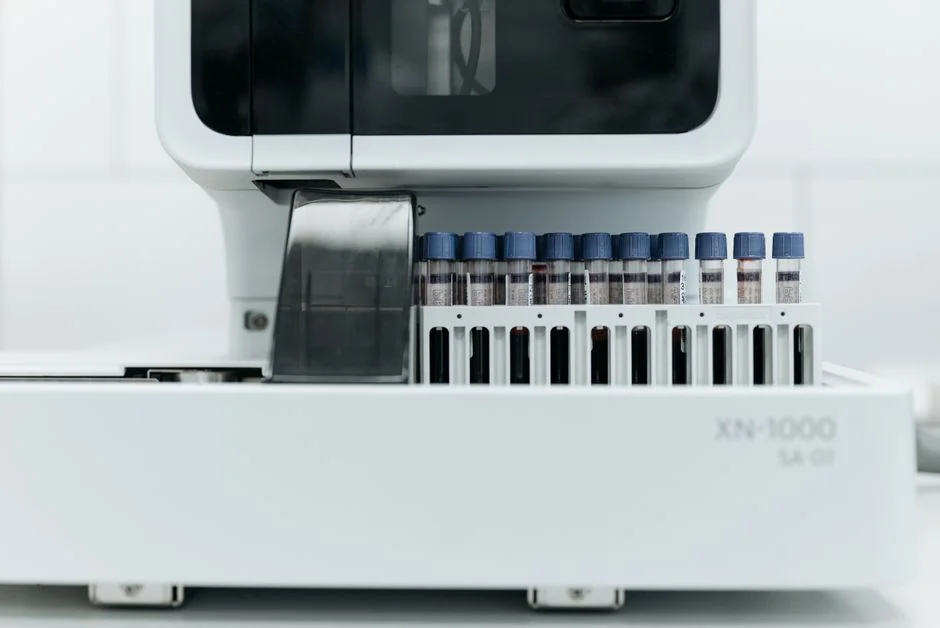
The spec matrix below is the highest-value block in this guide. Most vendor product pages list features in prose; the matrix turns those features into a side-by-side decision artifact you can paste into a bid sheet.
| Parameter | Entry / Portable | Mid-Range Stationary | High-End Stationary |
|---|---|---|---|
| Form factor | Portable, battery or 12/24 VDC | Wall- or post-mounted, AC powered | Cabinet-mounted, AC powered, vandalism-proof enclosure |
| Modes supported | Time, event | Time, flow-proportional, event | Time, flow-proportional, event (multi-trigger, sensor fusion) |
| Sample volume per pull | Programmable, tens of mL | Programmable, 20–350 mL typical range | Programmable, 20–500 mL with per-bottle control |
| Bottle configuration | 1 × composite jar (10–14 L typical) or small multi-bottle set | 1 × 24 L composite, or 12 × 2 L, or 24 × 1 L carousel options | 1 × 24 L composite, or 24 × 1 L discrete, or mixed configurations |
| Cooling | None or passive insulation | Compressor-cooled to ~4 °C, HFC-free | Compressor-cooled to ~4 °C, HFC-free, with redundant temperature logging |
| Intake lift | Modest, 4–6 m typical | 6–8 m typical | 8+ m, with optional booster for deep wet wells |
| Intake hose | 10–12 mm ID PVC or PE | 10–13 mm ID, with strainer | 12–16 mm ID, with heated line option for cold climates |
| Flowmeter input | None or pulse only | 4–20 mA or pulse | 4–20 mA, pulse, Modbus, with bidirectional flow support |
| Communication | Local HMI only | Modbus RTU/TCP, optional cellular | Modbus TCP, Ethernet/IP, OPC UA, SCADA integration, cloud-ready |
| Data logging | Pull log to internal memory | Pull log + diagnostic log, USB export | Pull log, diagnostic log, full chain-of-custody, time-synced (NTP) |
| Enclosure | IP54 typical | IP65, lockable | IP65/IP66, vandal-resistant, lockable, outdoor-rated |
| Typical use | Short-term studies, incident response, river surveillance | Municipal WWTP influent, industrial pretreatment, outfall monitoring | Critical outfalls, large WWTPs, hotspots, regulatory enforcement sites |
Three points worth restating because they are routinely missed on vendor literature. First, HFC-free refrigeration is a 2026 procurement criterion — hydrofluorocarbons have a global-warming potential orders of magnitude higher than CO₂, and a refrigerated sampler that leaks refrigerant creates a long-tail environmental liability (Endress+Hauser, 2026). Second, intake lift is underspecified: ask vendors for the curve at minimum suction voltage. Third, communication is no longer optional — any 2026 station that cannot export to SCADA will be replaced within a decade.
Cooling, Chain of Custody, and Why HFC-Free Matters in 2026
Cooling is not a comfort feature; it is evidentiary. A 24-hour composite held above 8 °C begins to nitrify, lose BOD, and shift its metals speciation between pull and analysis. The accepted preservation range is near 4 °C, and modern stationary units maintain that band across the full sampling cycle. The bottle configuration also matters for chain-of-custody: a single 24 L composite jar is the simplest artifact but it cannot answer "when did the peak happen"; a 24 × 1 L carousel reconstructs the diurnal pattern in the lab. Most mid-range and high-end stations ship with both options, and operators often run with one configuration and switch seasonally.
HFC-free refrigeration is the 2026 selection criterion that is buried in vendor literature. The supplier framing is direct: stationary samplers are "equipped with modern cooling technology" and "avoid hydrofluorocarbons (HFC) to protect the environment and reduce the greenhouse gas potential" (Endress+Hauser, 2026). For a procurement officer under a Scope 1/2 inventory or a municipal climate-action plan, this is no longer a footnote. A vandal-resistant, lockable enclosure also reduces evidence-tampering risk at exposed sites — a practical concern at utility outfalls and remote sewer locations.
2026 Buyer's Checklist and Lifecycle Cost Framing
Use the checklist below as the closing decision framework. Each line item is a defensible spec; together they form a bid sheet that any qualified vendor can answer without clarification.
- Required sampling mode(s): time, flow-proportional, event-triggered, or a combination. Confirm the unit supports all of them in firmware without hardware retrofit.
- Flowmeter signal availability: 4–20 mA, pulse, or Modbus from the existing flowmeter; confirm electrical isolation and cable distance.
- Intake location and lift: vertical lift from low-water level, hose run length, and ambient temperature for heated-line options.
- Bottle configuration: composite jar size, multi-bottle count, and material (HDPE vs. glass) for the analytes of interest.
- Cooling type: HFC-free, target band (typically 2–6 °C), and time to recover band after door opening.
- Enclosure rating: IP65 minimum for outdoor service, vandal-resistant for exposed sites.
- Data logging and SCADA: on-board pull log, Modbus/OPC UA export, and integration with the plant SCADA per SCADA and digital-twin integration for water utilities.
- Regulatory evidence: conformance with ISO 5667-10 for sampling quality, NPDES for U.S. permits, and EU UWWTD 91/271/EEC for European plants; confirm local pretreatment program documentation.
- Service and consumables: intake strainer, peristaltic tubing replacement interval, bottle replacement, and calibration schedule.
Lifecycle framing matters because the station itself is a small share of plant capital. As directional reference, total packaged water-treatment infrastructure typically runs in the low-single-digit $ per MGD of design capacity across a 20-year horizon (see cost benchmarks per MGD for water treatment infrastructure); an automatic sampler is a small fraction of that envelope, but it protects the entire compliance program from invalidation. A 20-year horizon also means the 2026 buyer is specifying equipment that will see the EU F-Gas phase-down accelerate, additional HFC restrictions, and tighter Scope 1/2 reporting. Specify HFC-free now, and the station will not need a refrigerant retrofit in 2032.
For process integration, pair the sampler with an automatic chemical dosing system for downstream coagulation control, and consider multi-media filtration pretreatment where the sample line is exposed to high TSS. Both extend the operational envelope without changing the compliance architecture.
Frequently Asked Questions
What is an automatic wastewater sampler used for?
It produces a defensible 24-hour flow-weighted composite or a time-stamped discrete sample for regulatory discharge reporting, process monitoring, and surface-water protection. The resulting artifact is what regulators compare against permit limits.
What is the difference between composite and grab sampling?
A composite sample aggregates many small pulls over a defined period (typically 24 hours) into one bottle, producing a flow- or time-weighted average. A grab sample is a single instantaneous dip taken at one moment, and by definition it cannot represent peaks that occur off-shift.
How does flow-proportional sampling work?
The sampler receives a 4–20 mA or pulse signal from an upstream flowmeter and increases pull frequency as flow rises. The result is a daily mass-load estimate (kg of pollutant per day) rather than just a concentration (Endress+Hauser, 2026).
What is event-triggered sampling?
Online sensors (pH, ammonium, conductivity, or toxicity) feed the sampler, and a threshold crossing auto-triggers a pull. This captures peak-load evidence, supports spill response, and — when placed upstream in a sewer — can flag a load surge early enough to redirect flow to a retention basin before the plant's inlet (Endress+Hauser, 2026).
Do automatic samplers need refrigeration?
Yes. Cooling the composite to approximately 4 °C preserves organics, ammonia, and metals between the last pull and laboratory analysis. HFC-free refrigeration is the 2026 norm for stationary stations, eliminating hydrofluorocarbons as a long-tail greenhouse-gas risk (Endress+Hauser, 2026).
Which standards govern wastewater sampling?
ISO 5667-10 covers wastewater sampling quality, design, and chain-of-custody. In the U.S., EPA methods under 40 CFR Part 136 govern the analytical side and the sampling requirements are anchored in NPDES permits. In the EU, the Urban Waste Water Treatment Directive 91/271/EEC sets the monitoring obligation. Always confirm the local pretreatment program for additional documentation.