Why Kalamazoo Mills Are Re-asking the DAF-vs-Clarifier Question in 2026
For Kalamazoo pulp and paper factories in 2026, dissolved air flotation (DAF) is generally the stronger primary clarifier for fiber-rich streams because it captures low-density fiber, filler, and coating pigments that overflow a gravity clarifier — the exact limitation EPA R2-73-184 (1973) documented and still unresolved by sedimentation alone. A lamella clarifier remains the lower-cost choice where sludge is heavy, inert, and low in fiber value, so the practical answer in 2026 is DAF as primary with a lamella as polishing in most mills.
EPA R2-73-184 stated it directly under the "Clarification" heading in Section I: "Satisfactory methods are available for removing the bulk of the suspended solids from most pulp and paper mill effluents. However, some wastes, such as those from the production of filled and coated papers and from waste paper reclamation, contain finely dispersed pigments and debris which in very low concentration impart opalescence to receiving waters. Present treatment methods are not adequate to handle this problem" (EPA, 1973). The same report added that "even where applied, chemical coagulation fails to cope with it since this process cannot produce the practically 100 percent reduction in suspended matter required to remove the opalescence." That is a 50-year-old, still-open limitation of plain sedimentation on a stream fraction that has only grown as Kalamazoo-area mills have moved to higher filler loads, coated grades, and deinked recycle.
Three 2026 pressures have re-opened the question. First, fiber-recovery value has risen with OCC and virgin pulp pricing, so overflow fines are now a recovered-revenue line item instead of a disposal cost. Second, water-reuse targets on white-water loops are pushing mills to look for sub-100 mg/L TSS polishing, a band where clarifier overflow struggles and DAF skim is comfortable. Third, downstream MBBR and activated-sludge basins are being protected by tighter inline TSS limits because peak fiber slugs kill biomass and trigger NPDES excursions at the local POTW. The two competing answers are a DAF primary or a gravity/lamella clarifier primary, and the strongest 2026 configuration is frequently DAF primary + lamella polishing rather than a binary either/or.
How a DAF Unit and a Gravity Clarifier Actually Treat Pulp & Paper Water Differently
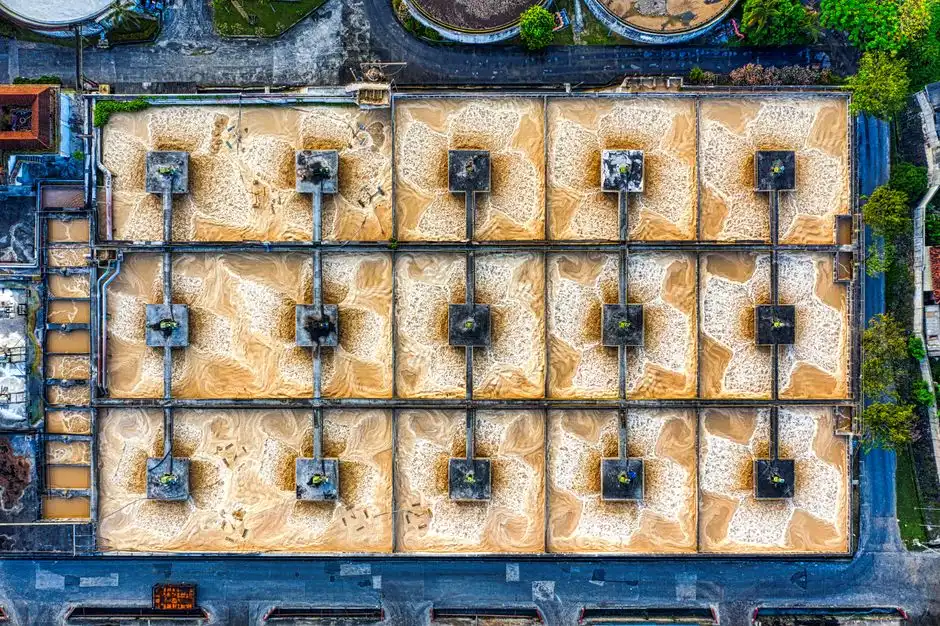
A DAF unit separates suspended matter by attaching micro-bubbles of air to particles whose density is at or below water, then floating that agglomerate to the surface where a skimmer removes the blanket (Ecologix, 2025). The "Dissolved air flotation system" dissolves air under pressure in a recycle stream and flashes it across the contact zone, where the resulting bubbles nucleate on fiber, filler, coating pigment, and FOG. The mechanism is buoyancy-driven, not settling-driven, which is why DAF wins on particles with "densities similar to water" that escape a clarifier (Ecologix, 2025).
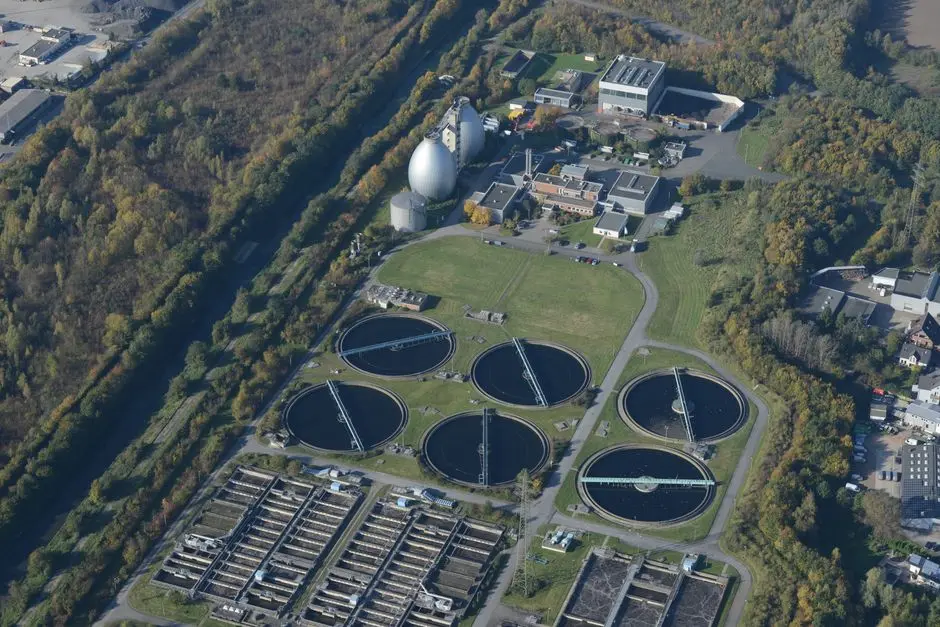
A gravity clarifier, including a high-efficiency lamella clarifier, separates by differential settling under quiescent conditions. Inclined plates in a lamella geometry shorten the effective settling distance and lift the practical surface-loading rate to 20–40 m³/m²·h, well above a conventional center-feed clarifier's 1–2 m³/m²·h band. The mechanism depends on the particle being denser than water, so the technology is strong on grit, ash, and dense inerts and weak on fiber, broke, and coating pigment — the exact fines fraction EPA flagged in 1973.
The density crossover is the deciding physics. Wet wood fiber sits at roughly 1.0–1.05 g/cm³ depending on furnish and refining, so it resists gravity settling and travels with the clarifier overflow. DAF micro-bubbles overcome that near-neutral density by attaching to the fiber surface and carrying it upward. EPA's review made the same observation in Section I — that gravity clarification handles the bulk of TSS but specifically fails on the fines and coating fraction that produces opalescence in receiving water (EPA, 1973). DAF was commercialized precisely to capture that fraction, which is why it is the default primary in modern coated and fine-paper mills.
Neither technology is a complete treatment train on its own. Both feed a biological stage such as the MBBR process flow guide shows, and both require downstream sludge dewatering. The choice is about which physical step removes which fraction best, not about replacement of biology.
Head-to-Head Comparison: DAF vs Clarifier for a 2026 Paper Mill Primary
The table below consolidates the operating envelope a buyer should compare before specifying a primary. DAF figures are drawn from the HydropureWater DAF catalog (4–300 m³/h, 13 standard models, micro-bubble + automatic skimming, proven on pulp and paper duty); lamella figures are drawn from the high-efficiency lamella clarifier datasheet (20–40 m³/m²·h surface loading, up to 30% chemical savings vs conventional clarifiers, inclined plates, sludge recirculation). The clarifier row on TSS is qualified with the EPA 1973 caveat that sedimentation is "not adequate" for the fines/coating fraction even with chemical coagulation (EPA, 1973).
| Parameter | DAF (primary) | Lamella Clarifier (primary) |
|---|---|---|
| Typical TSS removal range | 70–95%, strong on fines, filler, and coating pigment | 50–80% on bulk TSS; weak on fines and opalescence per EPA R2-73-184 (1973) |
| Fiber/filler recovery | High — float blanket is the recovery product | Low — fiber escapes with overflow |
| Hydraulic loading rate | ~5–25 m³/m²·h depending on model, sized by recycle ratio | 20–40 m³/m²·h (lamella), 1–2 m³/m²·h (conventional) |
| Standard flow envelope | 4–300 m³/h, 13 standard models | Built per flow, plate pack sized to surface loading |
| Footprint per m³/h | Compact; commonly 30–50% of equivalent clarifier footprint (qualitative band) | Large — civil tank, often below grade for footprint reasons |
| Polymer demand | Moderate; optimized for float blanket | Lower mass — up to 30% chemical savings vs conventional (lamella) |
| Sensitivity to flow surges | Tolerates surges with adequate recycle; skim quality can drop at peak | Sensitive — scour velocity resuspends sludge |
| Downstream biological protection | Strong — lower and more stable TSS to MBBR/activated sludge | Moderate — fiber spikes reach biology |
| 2026 CapEx tier (qualitative) | Skid-based, factory-built, fast to ship | Site-built civil tank; longer lead time |
| Sludge consistency | Float blanket 3–6% solids typical, suitable for plate and frame filter press dewatering | Underflow 1–2% solids; thickener upgrade often needed |
Both technologies are physical primaries — they remove settleable or floatable suspended solids and pass the dissolved load to biology. Neither removes color, AOX, or refractory COD on its own. The DAF row on TSS should be read as "high and stable across most pulp and paper streams," while the clarifier row is honest only on bulk TSS and should be downgraded for filled, coated, or deinked furnish where the EPA 1973 opalescence failure mode still applies.
Matching Equipment to Your Mill: 2026 Decision Framework
Five rules place a Kalamazoo stream into the right technology without re-reading the whole article. Apply them in order; the first match wins.
- Fiber- and broke-rich white water, coated or filled grades, high color, or deinked recycle. Choose a "Dissolved air flotation system" as the primary. DAF recovers fiber, drops TSS to the polishing band, and removes the opalescence fraction that gravity cannot (per EPA R2-73-184, 1973).
- Heavy inert grit, low fiber value, high specific gravity sludge (some waste paperboard, building-board, or high-ash operations). A high-efficiency lamella clarifier is the lower-cost primary; fiber is not the asset, grit is the liability.
- Most 2026 Kalamazoo retrofits. DAF primary feeding a lamella as polishing/sludge thickening, sharing an "automatic polymer dosing skid." This is the configuration most mills land on because it captures fiber economically and leaves a stable, low-TSS stream for the biological stage.
- Site constraints. DAF footprint is roughly 30–50% of an equivalent clarifier at the same flow (qualitative band, not an invented figure), which is decisive in tight retrofit footprints and inside existing buildings where civil tank construction is impractical.
- Discharge route. If effluent goes to a Kalamazoo-area POTW with a TSS limit, DAF gives a more consistent margin and fewer surcharges. If effluent discharges to surface water under a Michigan NPDES permit, justify DAF on fiber/filler recovery, biological-stage protection, and the historical opalescence limitation that plain sedimentation cannot clear (EPA, 1973).
When rules conflict — for example, a paperboard mill with both heavy grit and recovered fiber — run rule 3 as a tiebreaker and pilot both streams.
Sizing, Cost, and ROI Considerations for a 2026 Retrofit
The DAF envelope of 4–300 m³/h across 13 standard models maps cleanly to the small and mid-sized mills in the Kalamazoo area, and the catalog ships as a skid rather than a civil-tank build, which compresses the field-install window. A lamella clarifier, by contrast, is site-built and lead-time-bound but compensates with up to 30% lower polymer consumption than a conventional clarifier, which is a real OPEX lever in polymer-intensive pulp and paper duty.
Three independent savings lines should be weighted against DAF CapEx in any 2026 ROI sketch. First, recovered fiber in the float blanket has resale value, especially OCC and bleached fiber. Second, lower and more stable primary TSS reduces the hydraulic and oxygen load on the downstream biological stage, which is sized in the MBBR process flow guide and similar references. Third, the float blanket is already 3–6% solids, so a downstream "plate and frame filter press" reaches hauling or combustion dryness with less thickening upstream than a clarifier underflow at 1–2% solids — note that the 1–2% figure traces back to EPA 1973 Table 7 thickener loading data and should be confirmed on the actual mill water.
The 2026 procurement path that holds up at a CAPEX review is: jar tests on actual mill water → pilot DAF or pilot lamella on a slipstream → engineer of record sizing against a written design basis → request a quotation with influent/effluent TSS, flow, temperature, and polymer selection locked. Pricing without that basis is not a price; it is a guess. Refer to the sludge treatment process guide for the dewatering and disposal side of the same CAPEX line so the comparison is apples-to-apples.
Frequently Asked Questions
What is a DAF system in one sentence?
A DAF (dissolved air flotation) system clarifies wastewater by dissolving air under pressure and releasing it as micro-bubbles that attach to low-density suspended particles — fiber, filler, coating pigment, FOG — and float them to a skimmed surface blanket.
What is a lamella clarifier in one sentence?
A lamella clarifier is a gravity settler that uses inclined plates to shorten the settling distance and raise surface loading to 20–40 m³/m²·h, removing suspended solids that are denser than water.
Can a DAF unit fully replace a clarifier in a paper mill?
Yes, for fiber-, filler-, and coating-dominated streams, where DAF captures the fines fraction that a clarifier overflows (per EPA R2-73-184, 1973). Many mills still add a lamella as a polishing or sludge-thickening step downstream, so the practical 2026 configuration is DAF primary plus lamella polishing rather than a clean swap.
How do hydraulic loading and footprint compare?
Lamella clarifiers run 20–40 m³/m²·h of surface loading; the DAF covers 4–300 m³/h across 13 standard models and occupies a fraction of the civil footprint of an equivalent clarifier, which is the deciding factor in space-constrained plant retrofits.
Does DAF actually recover more fiber than a clarifier?
Yes. DAF skim is typically 3–6% solids and is the recovery product; clarifier underflow runs 1–2% solids per the historical thickener loading tables in EPA R2-73-184 (1973), and the fiber that does not sink escapes with the clarifier overflow.
What is the right first step before buying?
Run a jar test on your actual white water or mill effluent with a polymer screen, then pilot a DAF or a lamella on a slipstream, then size against a written design basis before requesting a quotation. Generic "yes/no" answers are not a substitute for site data.
Related Equipment
- Dissolved air flotation system — specifications, capacity range, and technical data
- high-efficiency lamella clarifier — specifications, capacity range, and technical data
- automatic polymer dosing skid — specifications, capacity range, and technical data
- plate and frame filter press — specifications, capacity range, and technical data