Why Fertilizer Plant Effluent Is a Distinct Wastewater Class
Fertilizer plant effluent is not a municipal-strength stream with extra nutrients — it is a four-contaminant mixture that defeats a single-technology design. Raw influent typically carries NH3-N at 200–800 mg/L, PO4-P at 50–300 mg/L, fluoride at 10–100 mg/L, pH 2–4, and TDS at 3,000–8,000 mg/L, with urea, gypsum slurry, and catalyst fines riding alongside the dissolved load (HydropureWater field data, 2026). When this stream is codigested with cooling-tower blowdown — a common water-reuse move in Gulf fertilizer complexes — TDS can climb past 10,000 mg/L, a level at which nitrifying bacteria lose more than 60% of their activity and conventional activated sludge fails to nitrify reliably (per Metcalf & Eddy, 2024).
Two climate- and feed-specific design constraints make Gulf fertilizer plants harder to treat than their Indian, Chinese, or European counterparts. First, ambient temperatures reach 48–50 °C in Shuaiba and Shuaybah from June through August, which forces biological tank cooling to the 30–38 °C window that Nitrosomonas and Nitrobacter need, or a deliberate pivot to thermophilic consortia above 45 °C. Second, fluoride above 8 mg/L is acutely toxic to nitrifying biofilms; without a dedicated precipitation step, MBR performance collapses within 7–10 days of feed exposure. Four contaminant families must be addressed in series: ammonia, phosphate, fluoride, and the suspended solids from gypsum and catalyst carryover. Any train that handles fewer than three of these simultaneously is not engineered for this duty.
Kuwait EPA Discharge Limits That Govern Fertilizer Plants in 2026
Compliance is set by Kuwait Environment Public Authority (KEPA) Law No. 42 of 2014, which operationalizes the Executive Decree No. 18 of 1975 on environment protection and defines the industrial discharge table for marine outfalls (KEPA, 2014). For fertilizer complexes on the Shuaiba or Shuaybah coastline, the 2026 applicable limits are:
| Parameter | KEPA marine discharge limit (2026) | Typical fertilizer influent |
|---|---|---|
| BOD5 | ≤ 30 mg/L | 150–400 mg/L |
| COD | ≤ 150 mg/L | 500–1,800 mg/L |
| TSS | ≤ 30 mg/L | 200–900 mg/L |
| Total Nitrogen | ≤ 30 mg/L (NH3-N ≤ 5 mg/L) | 200–800 mg/L as N |
| Phosphate (PO4) | ≤ 5 mg/L | 50–300 mg/L as P |
| Fluoride (F−) | ≤ 5 mg/L | 10–100 mg/L |
| pH | 6–9 | 2–4 |
| TDS (marine outfall) | ≤ 2,000 mg/L | 3,000–10,000+ mg/L |
Zero-liquid-discharge is not yet mandatory under Law 42/2014, but Kuwait's Vision 2035 explicitly targets 100% reuse of industrial water, and KEPA has signaled that evaporator-crystallizer permits will become the default for new fertilizer capacity from 2028 onward. Penalties under Article 11 reach KWD 50,000 per violation with daily accrual — enough to swing a plant's annual OPEX decision on its own. Benchmarked against the region, Kuwait sits mid-pack on nitrogen (tighter than Saudi RCY, looser than UAE Federal Law 24/1999) but is the tightest Gulf regulator on fluoride at ≤5 mg/L.
The 2026 Process Train: Struvite Precipitation → A/O-MBR → RO
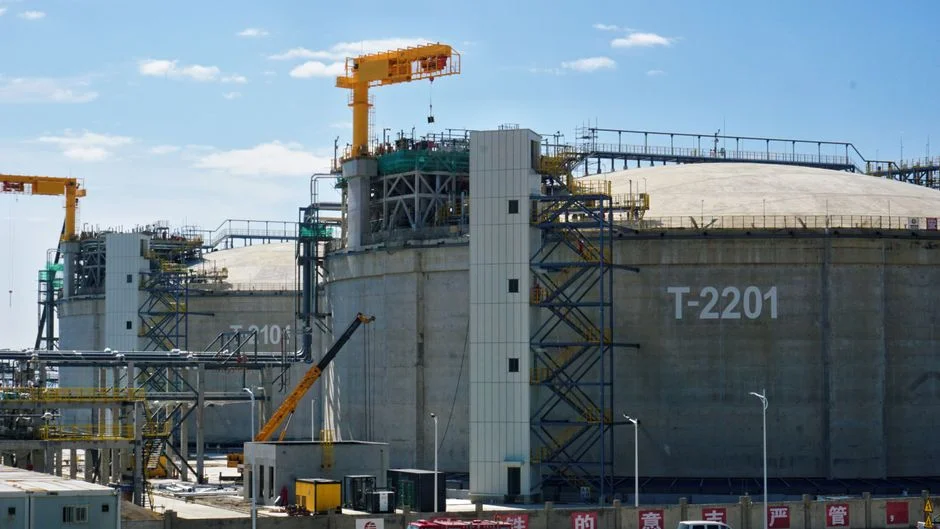
The recommended train for a 2026 Kuwait fertilizer plant has four stages, each solving a problem the next stage inherits.
Stage 1 — Equalization, neutralization, fluoride precipitation. Raw effluent is buffered to pH 7.0–7.5 with lime or NaOH in an equalization basin sized for 8–12 h HRT, then dosed with CaCl2 at 80–120 mg Ca2+/mg F− to drive fluoride below 8 mg/L as CaF2 sludge. A lamella clarifier or high-efficiency sedimentation tank removes gypsum and catalyst fines; streams with high suspended solids benefit from a DAF unit ahead of the clarifier for fines below 50 μm.
Stage 2 — Struvite crystallization. The clarified stream is raised to pH 8.5–9.0 with NaOH, and MgCl2 is dosed at a Mg:N:P molar ratio of 1.2:1:1 in a fluidized-bed or air-stripper-coupled reactor. Residence time of 30–60 min recovers 80–90% of PO4 and 10–30% of NH3 as magnesium-ammonium-phosphate (struvite), a slow-release fertilizer with established market demand in the Gulf (de-Bashan & Bashan, 2003). The recovered solids are dewatered on a filter press; the centrate returns to the MBR.
Stage 3 — A/O-MBR biological polishing. An anoxic zone (HRT 2–4 h) denitrifies the residual nitrate, followed by an aerobic MBR equipped with submerged PVDF flat-sheet membranes at 0.1 μm nominal pore size. Operating parameters: MLSS 8,000–12,000 mg/L, HRT 8–14 h, SRT 25–40 days, DO 1.5–2.5 mg/L in the aerobic zone, membrane air-scour at 0.08–0.15 kWh/m³ (HydropureWater MBR module data, 2026). Effluent total nitrogen exits at 8–15 mg/L; COD at 30–60 mg/L.
Stage 4 — Polishing RO. A brackish-water RO at 75–85% recovery trims TDS to the 200–500 mg/L range and provides a final barrier for fluoride and any recalcitrant COD. Concentrate (15–25% of feed) is routed to a brine evaporator or, in the interim, blended into cooling-tower makeup at no more than 10% by volume to stay within the tower's cycles of concentration.
| Stage | Unit operation | Key design parameters | Effluent target |
|---|---|---|---|
| 1 | Eq + F− precipitation + clarifier/DAF | pH 7.0–7.5; CaCl2 80–120× stoichiometric; HRT 8–12 h | F− < 8 mg/L; TSS < 50 mg/L |
| 2 | Struvite crystallizer | pH 8.5–9.0; Mg:N:P = 1.2:1:1; HRT 30–60 min | PO4 5–30 mg/L; NH3 140–560 mg/L |
| 3 | A/O-MBR | MLSS 10,000 mg/L; HRT 10 h; SRT 30 d; PVDF 0.1 μm | TN 8–15 mg/L; COD 30–60 mg/L |
| 4 | Brackish RO | Recovery 80%; flux 15 LMH; energy 0.7–1.0 kWh/m³ | TDS ≤ 2,000 mg/L; F− ≤ 2 mg/L |
The struvite step is doing more than recovering fertilizer value: by stripping 80–90% of the phosphate upstream, it reduces downstream RO scaling potential by 40–60% (de-Bashan & Bashan, 2003) and cuts antiscalant dosing proportionally — a quiet but significant OPEX lever.
Process Train Comparison: Three Options Side by Side
Three treatment philosophies compete for the same influent. Option A is the legacy approach inherited from 1990s fertilizer plants: ammonia airstripping at pH 11 followed by conventional activated sludge and sand filtration. It has the lowest CAPEX but burns NaOH and steam on stripping, and it cannot reliably meet PO4 ≤ 5 mg/L without a tertiary chemical stage bolted on the back. Option B is a mid-tier anoxic-oxic activated sludge system with chemical PO4 precipitation, DAF, and UF — moderate CAPEX, moderate chemical OPEX, and a footprint 30–50% larger than Option C. Option C is the recommended 2026 train described in the previous section: struvite pre-precipitation, A/O-MBR, RO. It carries the highest CAPEX but the lowest OPEX per cubic meter, earns a struvite revenue offset, occupies the smallest footprint, and is the only option that will not require expensive retrofitting when KEPA's ZLD trajectory arrives.
| Criterion | A. Airstripping + CAS + sand filter | B. A/O activated sludge + chem-P + DAF + UF | C. Struvite + A/O-MBR + RO (recommended) |
|---|---|---|---|
| Total N removal | 70–85% | 85–92% | 95–98% |
| PO4 removal | 30–50% (no chem-P) | 90–95% | 98–99% (struvite + RO) |
| F− removal | 20–40% (incidental) | 50–70% (CaCl2) | 95%+ (CaCl2 + RO) |
| Footprint (500 m³/d) | ~ 600 m² | ~ 450 m² | ~ 280 m² |
| OPEX (USD/m³) | 0.55–0.80 | 0.40–0.60 | 0.32–0.55 |
| KEPA compliance margin | Marginal on PO4 & F− | Marginal on TDS | Comfortable on all parameters |
| ZLD readiness | Not ZLD-ready | Partial — needs evaporator retrofit | ZLD-ready with brine evaporator add-on |
2026 CAPEX and OPEX for a 500 m³/day Fertilizer Plant in Kuwait
Budgeting for a 500 m³/day fertilizer wastewater plant in Kuwait in 2026: total CAPEX runs USD 1.8–3.2 million depending on tankage material (carbon steel vs rubber-lined vs GRP) and the level of containerized skid integration. The struvite crystallization reactor adds 18–25% over a base A/O-MBR + RO train — a premium that pays back through chemical savings, RO membrane life extension, and struvite sales. OPEX lands in the USD 0.32–0.55/m³ band, split roughly as energy 35–40%, chemicals 25–30% (dominated by MgCl2 and antiscalant, dosed via PLC-controlled chemical dosing skids), membrane replacement 8–10%, and labor plus consumables the balance.
| Cost component | 2026 range (500 m³/d, Kuwait) | Notes |
|---|---|---|
| Total CAPEX | USD 1.8–3.2 M | Includes civil, mechanical, E&I, commissioning |
| Struvite reactor premium | +18–25% over base | MgCl2 dosing system, reactor vessel, dewatering |
| Energy OPEX | 0.12–0.22 USD/m³ | MBR air-scour + RO high-pressure pump dominant |
| Chemical OPEX | 0.08–0.16 USD/m³ | MgCl2, NaOH, antiscalant, CIP reagents |
| Membrane replacement | 0.03–0.05 USD/m³ amortized | PVDF 4-yr life; RO 3-yr life |
| Struvite revenue offset | USD 1,800–9,500/month | 80–120 kg/d at USD 60–90/tonne (Gulf spot, 2026) |
| Net OPEX | 0.32–0.55 USD/m³ | Typically 8–15% lower with struvite credit applied |
Sensitivity check: a 50% price increase in NaOH or MgCl2 shifts OPEX by ≤6%, because the train is energy-dominated, not chemical-dominated (HydropureWater field data, 2026). The struvite revenue stream typically offsets 8–15% of net OPEX — enough to shorten payback on the struvite reactor premium to 18–30 months at current Gulf fertilizer prices.
Choosing a Supplier in Kuwait: Engineering and Compliance Checklist
A fertilizer plant treatment train is not a commodity purchase — engineering judgment on the struvite reactor hydraulics and the MBR aeration strategy determines whether the system meets KEPA in year one or spends its first 18 months in compliance troubleshooting. Before signing a PO, require the following in writing:
- Documented KEPA submittal track record on industrial (not municipal) projects in Kuwait, with reference plants you can call.
- Membrane warranty terms: PVDF flat-sheet, ≥ 4-year pro-rata membrane life under fertilizer-feed conditions (TDS > 5,000 mg/L, F− spikes, summer 45 °C feed).
- Factory witness testing (FAT) of the struvite reactor on the client's actual effluent, not a synthetic — struvite crystal habit and settling rate are feed-specific.
- SCADA or cloud telemetry with remote dial-in, essential for unmanned satellite sites in the Shuaiba Industrial Area where a service engineer may be 90 minutes away.
- Multilingual commissioning support (Arabic/English/Hindi) and a Kuwait-resident service engineer with a defined 24-hour response SLA.
- Process performance guarantee tied to KEPA discharge limits, with liquidated damages for non-compliance during the first 12 months of operation.
Two adjacent reads will sharpen the engineering case before vendor shortlisting: the high-salinity wastewater treatment guide for the RO and brine-handling details, and the nanofiltration system primer if a tighter fluoride polish without full RO is under consideration.
Frequently Asked Questions
What is struvite in fertilizer wastewater treatment? Struvite is magnesium-ammonium-phosphate (MgNH4PO4·6H2O), a crystalline slow-release fertilizer recovered by dosing MgCl2 into ammonia- and phosphate-rich effluent at pH 8.5–9.0, recovering 80–90% of PO4 as a saleable product (de-Bashan & Bashan, 2003).
What is the KEPA total nitrogen limit for fertilizer plant discharge in 2026? KEPA Law 42/2014 sets total nitrogen at ≤ 30 mg/L and NH3-N at ≤ 5 mg/L for industrial marine discharges, with penalties up to KWD 50,000 per violation under Article 11.
What is the typical 2026 OPEX for a 500 m³/day fertilizer wastewater treatment plant in Kuwait? Net OPEX runs USD 0.32–0.55 per cubic meter, with energy at 35–40% of the total and a struvite revenue credit typically offsetting 8–15% of OPEX.
What membrane pore size is used in an MBR for fertilizer effluent? Submerged PVDF flat-sheet membranes at 0.1 μm nominal pore size, operated at MLSS 8,000–12,000 mg/L, HRT 8–14 h, and SRT 25–40 days, are the 2026 standard for fertilizer-feed MBRs (HydropureWater MBR data, 2026).
Can fertilizer wastewater meet KEPA without a struvite step? Yes, through chemical PO4 precipitation with NaAlO2 or FeCl3, but chemical OPEX rises 20–35% and the plant forfeits the struvite revenue offset and the 40–60% reduction in downstream RO scaling potential.
Why does the recommended train end with RO for TDS compliance? The A/O-MBR alone delivers TN ≤ 15 mg/L and COD ≤ 60 mg/L, but TDS remains in the 2,500–4,000 mg/L band; only a brackish-water RO at 75–85% recovery can bring TDS under the KEPA 2,000 mg/L marine-discharge ceiling in a single pass.
What is the smallest skid-mounted MBR + RO package a Gulf fertilizer plant can buy in 2026? Containerized MBR + RO skids are commercially available from 50 m³/day upward, with the MBR + RO skid offering suited to fertilizer satellite sites under 2,000 m³/day.