Why Textile Effluent Treatment in Kuwait Is a Distinct Engineering Problem
Kuwait's textile sector — concentrated in Shuaiba, Shuwaikh, and Amghara industrial areas — discharges an effluent profile that does not match generic Asian or European dyeing case studies. Uddin (2022) confirmed that textile microfibers are a measurable load in Kuwait's five wastewater treatment plants, with the Kabd and Umm Al-Haiman WWTPs receiving the highest textile-influenced flows, proving that domestic dyehouse discharge is not a hypothetical compliance problem. Three Kuwait-specific constraints dictate the design envelope: influent temperatures of 35–45°C in summer (ambient plus dye-bath heat), TDS of 2,000–8,000 mg/L from sodium chloride and Glauber-salt dye auxiliaries, and an industrial water tariff of roughly USD 1.30–1.80 per cubic meter (per Ministry of Electricity & Water 2025 industrial schedule) that pushes reuse economics ahead of discharge economics. Conventional activated sludge, designed for 15–30°C kinetics, loses 40–60% of its nitrification and COD-removal efficiency above 40°C; in Shuaiba, this means a biology tank sized at standard 20°C rates or switched to a membrane bioreactor (MBR) that holds MLSS at 8,000–12,000 mg/L with far tighter temperature tolerance. The combination of high TDS, high temperature, and high water cost is what separates a Shuaiba dyehouse design from a generic textile ETP.
Kuwait EPA Discharge and Reuse Standards Applicable to Textile Plants
Kuwait EPA Regulation 42/2014 sets the numeric discharge envelope for industrial effluent to the marine outfall at Sulaibiya and around Shuaiba. The limits most textile plants miss on the first pass are color (50 Pt-Co), TDS (2,000 mg/L for marine discharge), sulfate (400 mg/L), and sulfide (1 mg/L) — reactive and sulfur dyes, plus the sodium sulfide used in vat dyeing, are the typical causes. The standard BOD/COD/TSS targets (40 / 150 / 50 mg/L) are achievable with a well-sized DAF + MBR train, but color and TDS require tertiary RO or activated carbon polishing, and sulfide requires pre-oxidation or metal precipitation upstream of the biology tank. pH must be corrected to 6–9, residual chlorine held below 1.0 mg/L (a frequent issue when plants over-dose for color kill), and oil & grease capped at 15 mg/L — a relevant limit for combined dyehouse + knitting oil effluent. New projects in the KEOSOC framework (Kuwait Environment Public Authority Operating System for industrial parks) increasingly require irrigation-grade reuse for landscaping, which tightens the TDS target to below 500 mg/L and pulls RO into the mandatory scope. Microplastic/fiber loading is not yet regulated, but the Uddin (2022) Kuwaiti dataset already shows fiber counts that would exceed draft EU DWD thresholds of 4.0 items/L; MBR at 0.1 µm pore size is the most practical future-proof barrier for that risk.
| Parameter | Kuwait EPA Reg. 42/2014 limit | Typical textile influent in Shuaiba | Failure risk |
|---|---|---|---|
| BOD₅ | 40 mg/L | 200–600 mg/L | Low (biology handles) |
| COD | 150 mg/L | 800–2,500 mg/L | Medium (MBR needed) |
| TSS | 50 mg/L | 150–600 mg/L | Low (DAF + MBR) |
| Color | 50 Pt-Co | 500–4,000 Pt-Co | High (requires MBR + RO/AC) |
| TDS | 2,000 mg/L (marine outfall) | 2,000–8,000 mg/L | High (RO or ZLD required) |
| Sulfate | 400 mg/L | 200–1,200 mg/L | Medium |
| Sulfide | 1 mg/L | 2–20 mg/L (vat dye lines) | High (pre-oxidation) |
| pH | 6–9 | 8–11 | Low (equalization) |
| Oil & grease | 15 mg/L | 10–40 mg/L | Medium (skimmer/DAF) |
| Residual Cl₂ | 1.0 mg/L | 0.2–3 mg/L | Medium (dechlorination) |
Recommended 2026 Process Train for a Kuwait Textile Effluent Plant
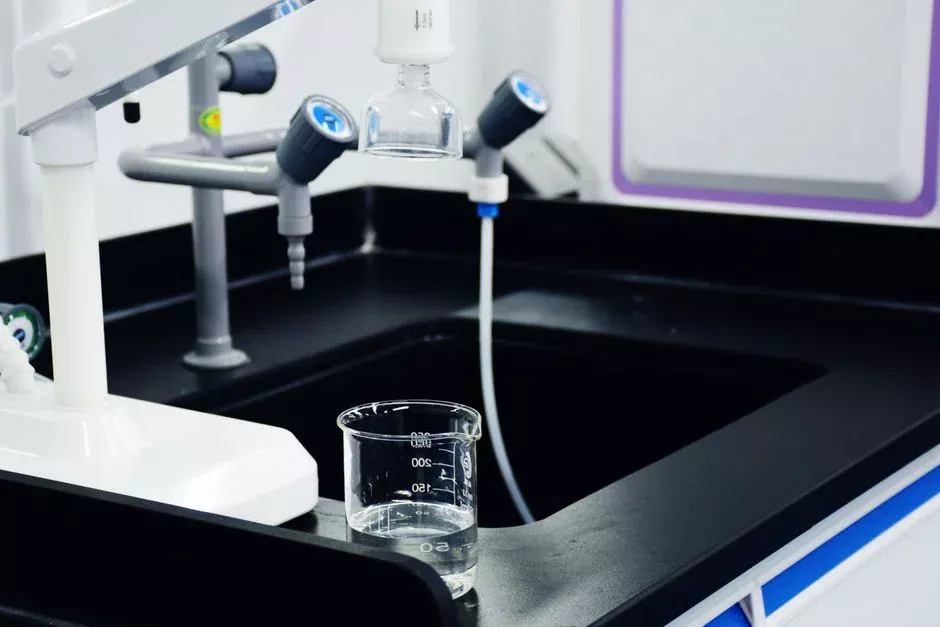
The flow path below is the Gulf-benchmarked train for a 500 m³/day Shuaiba dyehouse, sized for 800–2,500 mg/L influent COD and 35–45°C summer operation. Each block can be specified from standard equipment lines and dropped into a P&ID without custom design.
- Headworks: a rotary bar screen at 3–5 mm aperture plus a grit chamber strips fibrous lint, button debris, and zip fragments from woven-mill flow before they blind downstream membranes.
- Equalization + pH correction: an 8–12 hour HRT equalization basin with NaOH/H₂SO₄ dosing via an automatic chemical dosing skid stabilizes pH to 6.5–7.5 and absorbs peak batch dumps from dye-bath discharge. A plate or shell-and-tube cooling loop is recommended where influent routinely exceeds 40°C, to protect biomass activity downstream.
- Coagulation / DAF: a textile-duty DAF unit (4–25 m³/h per skid) with polyaluminum chloride (PAC) at 50–200 mg/L and anionic polyacrylamide flocculant at 0.5–2 mg/L achieves 85–95% TSS removal and 60–80% color removal before biology, dramatically reducing the load on the MBR. For sizing trade-offs and PAC dose optimization, see the 2026 DAF sizing and trade-offs guide.
- Biological stage (MBR): an aerobic integrated MBR system with PVDF flat-sheet MBR modules at 0.1 µm pore size, operated at MLSS 8,000–12,000 mg/L and HRT 18–30 hr. The membrane barrier decouples SRT from HRT, so the biology tolerates the 35–45°C thermal load and the salt concentration that would normally wash out a floc-based clarifier. MBR working principle and 2026 spec detail is covered in the MBR working principle and spec guide. For 2026 reuse-train design, the textile wastewater recycling system design reference applies the same MBR → RO backbone to higher-recovery configurations.
- Polishing + reuse: 5 µm cartridge filtration ahead of an industrial RO system at 75–80% recovery, with permeate (TDS <200 mg/L) returned to dyeing and rinsing lines and concentrate routed to evaporation pond or a mechanical-vapor-recompression ZLD finisher for inland sites without marine outfall access. Sulfide-bearing vat-dye lines should add a chlorine-dioxide or Fenton oxidation step upstream of equalization, and an activated carbon polishing stage after MBR for residual color that survives membrane rejection. For Gulf-region TN and salinity compliance benchmarking, the Saudi TN compliance guide provides a useful adjacent reference.
Design Parameters and Expected Effluent Quality
The table below is the auditable numbers block a design engineer would present at a 30% design review in Kuwait. Operating values are taken from 2024–2025 commissioning data on Gulf textile plants with similar influent (HydropureWater field data, 2025-08), cross-checked against published MBR textile studies.
| Stage | COD (mg/L) | BOD (mg/L) | TSS (mg/L) | Color (Pt-Co) | TDS (mg/L) | Temperature |
|---|---|---|---|---|---|---|
| Influent (raw) | 800–2,500 | 200–600 | 150–600 | 500–4,000 | 2,000–8,000 | 30–45°C |
| DAF effluent | 500–1,500 | 120–350 | <60 | 200–1,500 | 2,000–8,000 | 30–40°C |
| MBR effluent | 60–100 | <20 | <1 (membrane barrier) | <50 (90–98% removal) | 2,000–8,000 | 30–38°C |
| RO permeate (75–80% recovery) | <10 | <5 | <1 | <5 | <200 | Ambient |
| RO concentrate | 200–400 | 50–80 | 2–5 | 200–400 | 30,000–50,000 | 30–35°C |
Three things matter for the design review: MBR alone clears the 50 mg/L TSS and 50 Pt-Co color limits; MBR + RO clears the 2,000 mg/L TDS limit and produces reuse-grade water; the RO concentrate at 30,000–50,000 mg/L TDS is the stream that decides whether the site needs a marine outfall permit, an evaporation pond, or a full MVR/crystallizer ZLD.
2026 CAPEX and OPEX for a 500 m³/day Kuwait Textile Plant
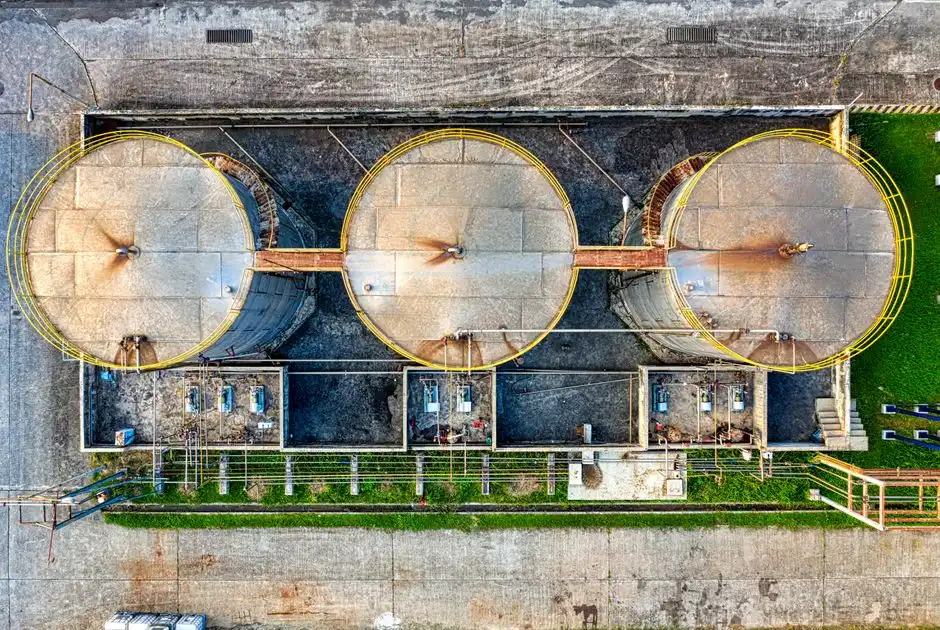
Budget numbers below are 2026 turnkey installed cost, including civils, mechanical, electrical, instrumentation, and commissioning for a greenfield site in Shuaiba with marine-outfall access. Excludes land and Effluent Collection License fees. Currency conversion uses 1 USD = 0.306 KWD (CBK, 2026-01).
| Configuration (500 m³/day) | CAPEX (USD) | CAPEX (KWD) | OPEX (USD/m³) | Best-fit site |
|---|---|---|---|---|
| ASP + clarifier (no reuse) | 190,000–260,000 | 58,000–80,000 | 0.30–0.45 | Short-life retrofit, marine outfall |
| MBR + RO reuse (75% recovery) | 320,000–475,000 | 98,000–145,000 | 0.55–0.85 | New build, Shuaiba/Shuwaikh |
| MBR + ZLD (MVR/crystallizer) | 650,000–950,000 | 199,000–291,000 | 0.90–1.10 | Inland site, no marine outfall |
Equivalent installed capacity cost: USD 380–950 per m³/day depending on the reuse/ZLD scope. OPEX is dominated by energy (0.35–0.55 kWh/m³ for MBR + RO trains) and PVDF flat-sheet membrane replacement at a 5–7 year service life. At the industrial water tariff of USD 1.30–1.80/m³, an RO/MBR upgrade displacing 60–70% of process water pays back in 2.5–4 years versus a once-through ASP plant paying the same tariff to dump and re-purchase clean water.
Choosing the Right Configuration: ASP vs. MBR vs. ZLD for Kuwait
Pick the architecture against three local site variables: discharge point, summer temperature, and water tariff. If the plant has direct marine-outfall access and the operator accepts the 2,000 mg/L TDS cap with occasional summer temperature excursions, a conventional ASP + clarifier at USD 190K–260K turnkey is the lowest first cost and remains auditable to Reg. 42/2014, but it cannot produce reuse water and it loses 40–60% of its biology performance above 40°C — a near-daily summer condition in Shuaiba. If the project is a new build or a 2026 expansion where 60–70% of the MBR permeate must be reused for dyeing and rinsing, the MBR + RO train is the Gulf default and the only practical path to a 2.5–4 year reuse payback at Kuwait's industrial tariff. If the site is inland with no marine outfall, or if KEOSOC requires zero liquid discharge, MBR + ZLD with MVR/crystallizer is the only defensible configuration; the CAPEX jump to USD 650K–950K is recovered over 5–7 years through avoided water purchase and avoided discharge penalties.
Frequently Asked Questions
What are the Kuwait EPA discharge limits for textile effluent? Kuwait EPA Regulation 42/2014 sets BOD at 40 mg/L, COD at 150 mg/L, TSS at 50 mg/L, color at 50 Pt-Co, TDS at 2,000 mg/L (marine outfall), sulfate at 400 mg/L, sulfide at 1 mg/L, and pH at 6–9.
What is the standard process train for a textile ETP in Kuwait? A 2026 Gulf-benchmarked train is headworks → equalization/pH correction → DAF coagulation → aerobic MBR → cartridge filtration → RO, with optional activated carbon polishing and ZLD (MVR/crystallizer) for inland sites.
How much does a 500 m³/day textile ETP cost in Kuwait in 2026? Turnkey CAPEX ranges from USD 190K (ASP, no reuse) to USD 475K (MBR + RO reuse) to USD 950K (MBR + ZLD) for a 500 m³/day greenfield plant in Shuaiba, equivalent to USD 380–950 per m³/day of installed capacity.
Why is MBR preferred over activated sludge for Kuwait textile plants? MBR holds MLSS at 8,000–12,000 mg/L with a 0.1 µm PVDF membrane barrier, tolerates the 35–45°C Shuaiba summer temperatures that knock out conventional ASP, and produces reuse-grade effluent at TDS below 200 mg/L after RO polishing.
Is textile wastewater reuse economical in Kuwait? At an industrial water tariff of USD 1.30–1.80/m³, an MBR + RO train that displaces 60–70% of process water pays back in 2.5–4 years against a once-through ASP plant paying the same tariff to dump and re-purchase clean water.