Why Activated Carbon Is the Standard for Dye Wastewater Polishing
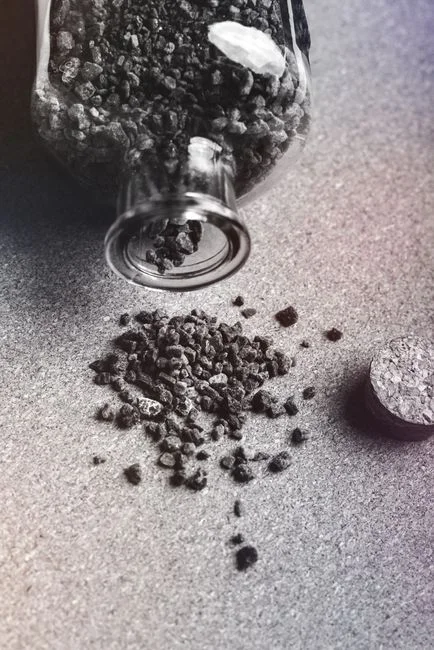
An activated carbon filter for dye manufacturing wastewater is a pressure or gravity vessel packed with granular activated carbon (GAC) — typically wooden, coal, or coconut-shell–based, with a BET surface area of 800–1,200 m²/g — used as a tertiary polishing step after coagulation and biological treatment. Properly specified systems achieve >90% decolorization of reactive, direct, and acid dyes (per Henan Yujia selection guide) while reducing COD by 50–70%, with bed life of 6–12 months at typical textile effluent loadings of 5–25 m³/h per m² of bed area.
Biological treatment alone cannot meet 2026 discharge limits for most dye streams. After a well-operated activated sludge or MBR stage, residual true color in the effluent still reads 200–800 Pt-Co because azo, anthraquinone, and phthalocyanine chromophores resist aerobic breakdown. Refractory COD sits at 150–400 mg/L, dominated by unbiodegraded dye intermediates and dye-fixing auxiliaries. Anaerobic treatment cracks the azo –N=N– bond but releases colorless aromatic amines that re-oxidize into colored quinones and azo-coupling products during downstream aerobic polishing — a recurring compliance headache in Indian and Bangladeshi CETPs. GAC polishing solves three problems in one vessel: residual true color, refractory COD, and odor from sulfonate-reducing side reactions. That multi-target performance is why AC remains the workhorse rather than ozone or Fenton, both of which add reagent cost and dissolved solids for the same color removal.
How Activated Carbon Adsorbs Dye Molecules: Pore Size, Surface Area, and Surface Chemistry
BET surface area is the headline specification, but pore-size distribution is what actually controls dye uptake. Reactive dye molecules weigh 600–1,500 Da and have hydrated diameters of 1.5–4 nm, far too large to enter micropores (<2 nm) where most of the 800–1,200 m²/g surface area lives. Mesopores (2–50 nm) are the workhorse adsorption volume for direct and reactive dyes. Wooden activated carbon carries 60–80% of its pore volume in the mesopore range, compared with 30–50% for coal-based grades (per Henan Yujia, 2024) — which is why wood-based carbon dominates dye service even though it costs 10–20% more per ton.
Surface chemistry is the second lever. Steam activation at 750–950°C (per Pharmaguideline, 2024) leaves a mildly basic surface that favors anionic acid dyes via electrostatic attraction. Chemical activation with ZnCl₂ at 600–800°C yields an acidic, oxygen-rich surface that adsorbs cationic/basic dyes more strongly. Two practical QC tests should appear on every carbon certificate the engineer accepts: iodine number, which should read 800–1,100 mg/g for dye service, and molasses number, which should stay below 100 to confirm mesopore richness rather than purely microporous structure. A carbon with iodine number 1,050 but molasses number 220 looks impressive on the data sheet and will underperform on reactive dyes by 30–40% in real service — a common cause of premature bed exhaustion.
Choosing the Right Carbon Type for Your Dye Class
Matching carbon raw material to the dominant dye class is the single most cost-defensible decision the engineer makes. The matrix below covers the six dye classes that show up in textile and dye-manufacturing effluent.
| Dye class | Preferred carbon | BET (m²/g) | Mesopore volume | Expected decolorization |
|---|---|---|---|---|
| Reactive (anionic, MW 600–1,500 Da) | Wooden / agricultural GAC | 900–1,200 | 70–80% | 90–95% |
| Direct (large anionic, multiple sulfonates) | Wooden GAC | 900–1,200 | 70–80% | 88–94% (10–20% higher dose) |
| Acid (anionic, wool/nylon) | Steam-activated coconut shell | 1,000–1,200 | 40–55% | 90–96% |
| Disperse (hydrophobic, non-ionic, polyester) | Coal-based GAC | 900–1,100 | 45–55% | 85–92% |
| Cationic / basic | Chemically activated (ZnCl₂) carbon | 800–1,000 | 60–75% | 85–90% |
| Vat and sulfur (insoluble, large particle) | High-BET coal-based GAC | 1,000–1,150 | 50–60% | 80–90% (usually removed upstream by coagulation) |
Mixed dye streams are the norm rather than the exception in printing and dyeing houses that run 8–12 dye classes per week. A wooden-based GAC with 70%+ mesopore volume is the safest default for mixed loads; it sacrifices 5–10% performance on acid dyes compared with coconut shell but handles 80% of the typical dye mix without the engineer having to swap media seasonally.
GAC vs PAC vs Biological Activated Carbon vs Carbon Fiber: A Side-by-Side Comparison
The equipment choice for a 50–500 m³/day dye plant is rarely obvious because PAC vendors pitch dosing simplicity while ACF vendors pitch kinetics. The honest comparison is below.
| Parameter | GAC pressure filter | PAC dosing | Biological AC (BAC) | Activated carbon fiber (ACF) |
|---|---|---|---|---|
| Media form | 1.0–1.5 m bed, 8×30 mesh | Powder, 50–500 mg/L dose | GAC colonized by biofilm | Felt / cloth modules |
| Hydraulic loading | 10–30 m/h | Inline contact, 30–60 min | 8–20 m/h | 5–15 m/h |
| Decolorization | 85–95% | 70–85% | 85–95% (extended life) | 90–98% |
| CapEx ($/m³/day) | 80–180 | 20–50 | 100–220 | 300–600 |
| OpEx ($/m³ treated) | 0.04–0.11 | 0.08–0.20 | 0.03–0.09 | 0.15–0.35 |
| Sludge produced | None (regenerable) | 200–800 mg/L PAC sludge | Backwash waste only | None |
| Regeneration | On-site every 12–24 months | None — single use | Every 24–36 months | Off-site, expensive |
| Footprint | Medium | Small | Medium | Compact |
GAC pressure filters win on total OpEx for any plant above 50 m³/day because regeneration at USD 0.08–0.18/kg beats virgin PAC consumption of 0.05–0.20 kg/m³ at USD 1,800–3,200/ton. PAC makes sense only for sub-50 m³/day flows or seasonal campaigns where capital deployment is undesirable. BAC extends bed life 2–3× by letting acclimated biofilm biodegrade desorption products, but it requires backwash every 3–5 days and stable influent. ACF delivers the fastest kinetics but the media cost (5–10× GAC) confines it to <20 m³/h polishing of high-purity reuse streams. For the typical 200–500 m³/day Chinese or Indian dye plant, two GAC pressure vessels in lead-lag, preceded by a multi-media filter upstream of the activated carbon bed, remain the lowest-risk design.
Process Train Design: Where the Activated Carbon Filter Belongs
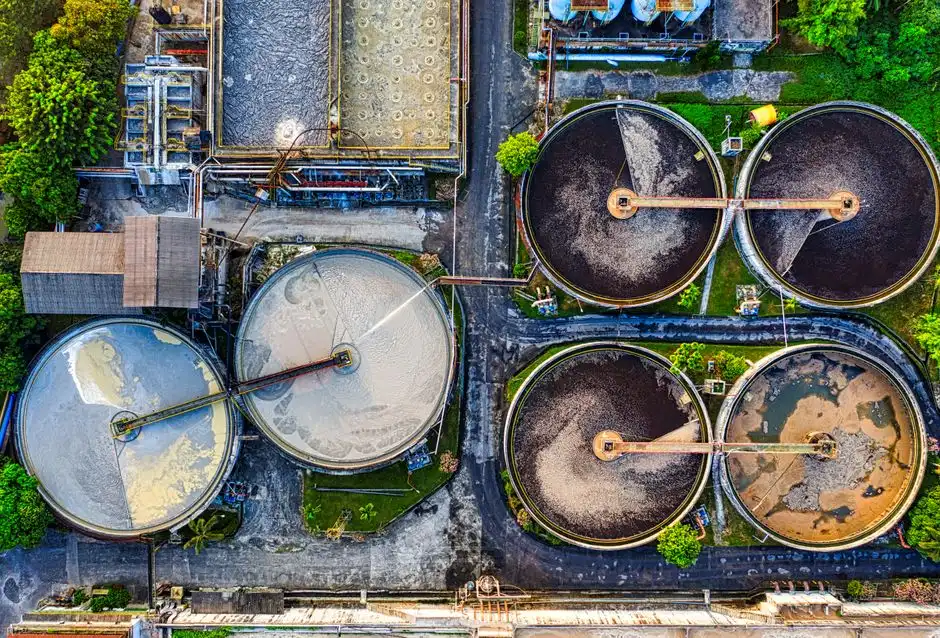
A 2026 train for 200–800 m³/day of dye effluent runs: equalization → coagulation/flocculation → DAF clarification upstream of biological treatment → anaerobic (UASB or hydrolytic acidification) → aerobic (activated sludge or MBR) → multi-media filter → activated carbon filter → optional RO for water reuse → discharge. This sequence is non-negotiable for two engineering reasons.
First, biodegradable COD must be removed biologically, not on carbon. If biodegradable COD reaches the AC bed, it consumes 1 kg of carbon per 1–1.5 kg of COD adsorbed, versus <0.3 kg/kg for the recalcitrant aromatic fraction that biology cannot touch. Running AC ahead of biology burns through USD 5,000–8,000 of carbon per week on a 200 m³/day plant. Second, suspended solids carryover of 20–80 mg/L from a clarifier or MBR will blind the AC bed within weeks. A sand–anthracite–garnet multi-media filter polishing the stream to <5 mg/L TSS extends AC bed life 2–4× and reduces pressure drop. Two GAC vessels in series with lead-lag operation allow the engineer to exhaust the lead bed fully before switching — a 15–25% capacity gain over parallel-only operation. The complete sequence and the supporting unit operations are covered in more detail in the complete 2026 process guide to printing and dyeing wastewater treatment.
Sizing the Filter: EBCT, Hydraulic Loading, and Backwash Frequency
Empty bed contact time is the master design variable. For color-only polishing of an already biotreated effluent, 20–40 minutes is sufficient. When COD removal is also a target — which is the normal case — 30–60 minutes EBCT is required. For the most recalcitrant reactive-dye streams containing hydrolyzed Reactive Black 5 or unbiodegraded vinyl sulfone reactive groups, 60–90 minutes EBCT is the only setting that meets both color and COD targets simultaneously. Hydraulic loading on a pressure GAC filter should sit between 10–30 m/h; gravity filters are limited to 5–15 m/h. Exceeding these ranges causes channeling, short-circuits the bed, and reduces effective EBCT by 30–50%.
| Parameter | Color polish only | Color + COD polish | Reactive-dye heavy stream |
|---|---|---|---|
| EBCT (min) | 20–40 | 30–60 | 60–90 |
| Bed depth (m) | 1.0–1.5 | 1.2–1.8 | 1.5–2.0 |
| Hydraulic loading (m/h) | 15–30 | 10–25 | 8–15 |
| Backwash interval | 5–7 days | 3–5 days | 2–4 days |
| Backwash duration | 15 min, 30% expansion | 15–20 min, 35–45% expansion | 20 min, 40–50% expansion |
| Expected bed life | 10–14 months | 6–12 months | 3–5 months |
Worked sizing example: 200 m³/h flow at 30-minute EBCT → bed volume = 200 × 0.5 = 100 m³ → vessel diameter at 10 m/h superficial velocity = √(200 ÷ (10 × 0.785)) = 5.05 m → round to 5.7 m. Straight-side height = 100 ÷ (π/4 × 5.7²) = 3.92 m → specify 4.0 m straight side, total vessel height ≈ 5.2 m. Build two vessels for lead-lag. Backwash every 3–5 days with filtered effluent to avoid mineral precipitation, and track bed life by 10% breakthrough of inlet color — the point at which the outlet Pt-Co reading reaches 10% of the inlet value is when the lead bed should be taken offline for regeneration.
2026 Discharge Standards, Regeneration Economics, and Total Cost of Ownership
The compliance anchors for 2026 are tightening across the three largest dye-producing regions.
| Region / standard | Color limit | COD limit (direct discharge) | Notes |
|---|---|---|---|
| China GB 4287-2012 (textile wastewater) | ≤80 Pt-Co | ≤100 mg/L (CODCr) | Indirect discharge to municipal sewer: ≤500 mg/L COD, ≤200 Pt-Co color |
| EU BREF for Textiles (2023 update, applied 2026) | <100 ADMI (≈150 Pt-Co) | <160 mg/L | Visible color assessed at 1:20 dilution; COD normalized to 0 g/L indigo |
| India CPCB textile effluent | ≤Pt-Co 400 (CETP inlet); ≤Pt-Co 100 individual | ≤250 mg/L (CETP) | TDS ≤2,100 mg/L; stricter for individual plants under ZLD frameworks |
Carbon replacement cost runs USD 1,800–3,200 per ton of GAC delivered to site, with consumption between 0.05–0.20 kg per m³ of treated dye wastewater depending on influent loading and carbon type. On-site thermal regeneration costs USD 0.08–0.18 per kg of carbon, compared with USD 1,500–2,200 per ton of virgin carbon — a 10–20× saving that pays back the regeneration furnace in under 18 months for any plant above 100 m³/day. Total OpEx for a 200 m³/day system, including carbon amortization, backwash water (3–5% of throughput), regeneration energy (0.8–1.2 kWh per kg carbon), and labor, lands at USD 0.04–0.11 per m³ treated. A multi-media filter upstream of the activated carbon bed is the single most cost-effective life-extension investment: by trimming inlet TSS from 30 mg/L to under 5 mg/L, it typically doubles bed life on reactive-dye streams and is the difference between 3-month and 6-month replacement cycles. The downstream dewatering step for any PAC-dosed sludge is covered in the filter press for textile dyeing sludge dewatering guide.
Frequently Asked Questions
GAC or PAC — which is right for a 300 m³/day reactive-dye plant? Choose GAC pressure filtration in two lead-lag vessels. PAC dosing at 150–300 mg/L looks cheaper on CapEx (USD 20–50/m³/day vs USD 80–180) but generates 45–90 kg/day of PAC-loaded sludge that must be dewatered and disposed of, and OpEx runs 2–3× higher within the first year.
My carbon bed is exhausting in 2–3 weeks instead of 6–12 months. What is the most likely cause? Mismatched carbon type is the leading cause: a coal-based microporous carbon on a reactive-dye stream wastes 60% of its surface area. Check the carbon certificate for iodine number 800–1,100 mg/g and molasses number <100, and verify the supplier actually shipped wooden or agricultural-based GAC rather than coal. Second most likely cause is high TSS carryover — install a multi-media filter upstream to polish below 5 mg/L.
What is the 2026 color and COD limit for direct discharge in China, EU, and India? China GB 4287-2012 sets ≤80 Pt-Co and ≤100 mg/L COD for direct discharge; EU BREF (2023 update applied in 2026) requires <100 ADMI color and <160 mg/L COD; India CPCB sets ≤100 Pt-Co (individual plant) and ≤250 mg/L COD at the CETP inlet. AC polishing is the unit operation that gets the plant under all three limits simultaneously.