An Ethanol Plant Wastewater Treatment Plant Supplier Delivers a Staged Biological-Plus-Membrane Train for Stillage at 25,000–80,000 mg/L COD
An ethanol plant wastewater treatment plant supplier delivers a staged biological-plus-membrane train — equalization, DAF pre-treatment, anaerobic digestion (UASB/EGSB), anoxic/aerobic polishing, and RO or ZLD — designed for ethanol stillage at 25,000–80,000 mg/L COD. Mature suppliers provide packaged skid systems, on-site commissioning, and biogas-yield guarantees; expect CAPEX of USD 1.2–6.5 million for 50–500 m³/day plants in 2026. The wrong supplier on this kind of wastewater does not just waste money — it stalls an entire ethanol facility when aeration tanks sour, sulfate-reducing bacteria outcompete methanogens, and effluent COD blows past the permit line.
Why Ethanol Plant Wastewater Breaks Generic Treatment Designs
Thin stillage leaving the centrifuge carries 25,000–45,000 mg/L COD at 50–70 °C; whole stillage, before centrifugation, runs 50,000–80,000 mg/L COD with 8,000–20,000 mg/L total suspended solids and a pH between 3.5 and 5.0 (HydropureWater field data, 2026). A BOD/COD ratio of 0.50–0.65 puts this stream firmly in the biodegradable range — but it is roughly 50–200× stronger than the 250–500 mg/L COD that municipal and generic industrial WWTP designs are sized for. Activated-sludge tanks built around food or brewery effluent will lose their biomass on day one.
Three parameters break the standard design. First, temperature: stillage at 50–90 °C will denature mesophilic biomass and warp polymer tanks unless plate heat exchangers bring it below 38 °C before the anaerobic stage. Second, sulfate at 2,000–6,000 mg/L (HydropureWater field data, 2026) feeds sulfate-reducing bacteria, which compete with methanogens for acetate and can cut biogas yield by 20–40% if the reactor is not sulfate-tolerant. Third, total Kjeldahl nitrogen at 800–2,500 mg/L (HydropureWater field data, 2026) means the discharge cannot rely on incidental nitrification; it needs a real anoxic/aerobic or A²/O stage sized for 95%+ ammonia removal. Any supplier who quotes a "standard food-industry WWTP" without asking for these numbers is unqualified for the bid.
The Standard Process Train for Ethanol Wastewater in 2026
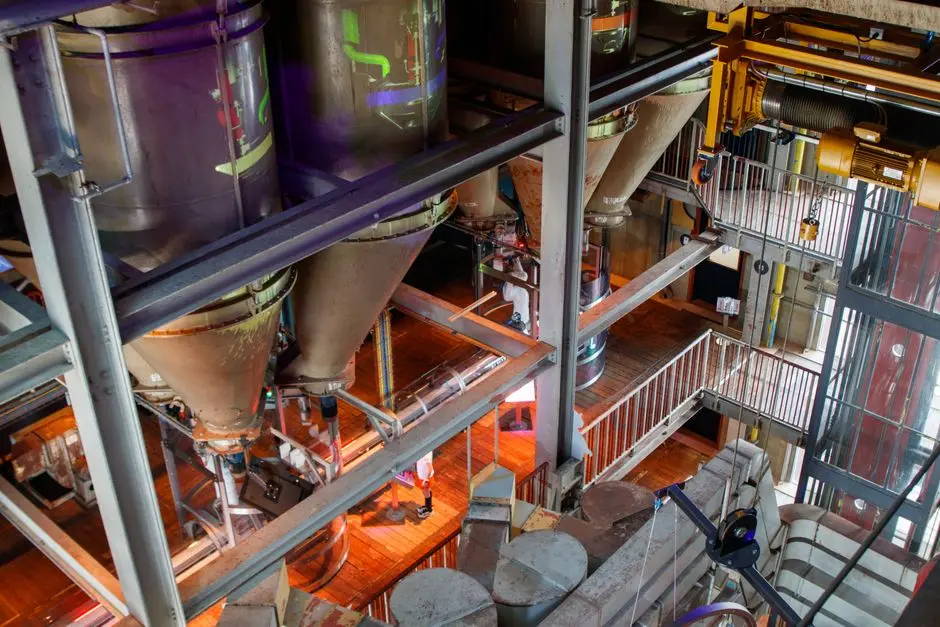
Most operating dry-mill and wet-mill plants in 2026 run a six-stage train. Mature suppliers spec it the same way; weak suppliers leave stages out to win the bid.
- Equalization and cooling. A 12–24 hour retention tank with a plate heat exchanger brings the stream to a stable 35–38 °C and dampens COD shock loads from batch fermenter dumps.
- DAF pre-treatment. A DAF pre-treatment system removes 90–95% of TSS from 1,000–5,000 mg/L feed, strips oil/grease, and reduces downstream fouling on the anaerobic reactor.
- Anaerobic digestion (UASB or EGSB). Upflow anaerobic sludge blanket or expanded granular sludge bed reactors deliver 75–90% COD removal at HRT of 2–6 days, with biogas yield of 0.30–0.45 m³ CH₄ per kg COD removed (HydropureWater field data, 2026).
- Anoxic/aerobic (A/O or A²/O) polishing. Nitrification-denitrification knocks the 800–2,500 mg/L TKN load down by 95%+, with mixed-liquor suspended solids typically held at 3,000–6,000 mg/L.
- MBR polishing. A packaged MBR membrane bioreactor using PVDF flat-sheet MBR modules at 0.1 μm drives effluent to under 50 mg/L COD and under 5 mg/L TSS — levels that protect the downstream RO from organic fouling.
- RO or full ZLD. Reverse osmosis recovers 95–98% of the water for boiler-feed reuse; sites with no discharge option add an MVR evaporator and crystallizer to push recovery above 99%.
| Stage | Equipment | Typical Removal / Output | Design Risk if Skipped |
|---|---|---|---|
| 1. Equalization + cooling | EQ tank, plate heat exchanger | Flow dampened, T < 38 °C | Biomass shock, reactor kill |
| 2. DAF pre-treatment | DAF unit | 90–95% TSS removal | Sludge blanket, fouling |
| 3. Anaerobic | UASB / EGSB | 75–90% COD; 0.30–0.45 m³ CH₄/kg COD | Lost biogas revenue, overloaded aerobic stage |
| 4. Anoxic/aerobic | A/O or A²/O basin | 95%+ NH₃-N removal | Total-N permit exceedance |
| 5. MBR polishing | MBR skid with PVDF modules | COD < 50 mg/L, TSS < 5 mg/L | RO membrane fouling |
| 6. RO / ZLD | Industrial RO + MVR + crystallizer | 95–98% recovery; > 99% with ZLD | Discharge permit failure, water cost |
Influent and Effluent Parameters a Supplier Must Guarantee
A serious supplier will commit to stage-by-stage numbers in the bid. Vague language like "efficient treatment" or "compliance-ready" is a sign the proposal has not been engineered. The table below maps the typical envelope an experienced vendor guarantees for a corn- or sugarcane-ethanol plant.
| Parameter | Raw thin stillage | Post-anaerobic | Post-MBR | Post-RO |
|---|---|---|---|---|
| COD (mg/L) | 25,000–45,000 | 2,500–7,000 | < 50 | < 10 |
| BOD (mg/L) | 15,000–28,000 | 1,000–2,800 | < 10 | < 5 |
| TSS (mg/L) | 8,000–20,000 | 1,000–3,000 | < 5 | < 1 |
| Total nitrogen (mg/L) | 800–2,500 | 600–2,000 | < 15 | < 5 |
| Ammonia-N (mg/L) | 200–800 | 200–800 | < 1 | < 0.5 |
| Sulfate (mg/L) | 2,000–6,000 | 800–2,000 | 800–2,000 | < 50 |
| pH | 3.5–5.0 | 6.8–7.4 | 6.8–7.4 | 6.5–7.5 |
| Temperature (°C) | 50–70 | 35–38 | 25–32 | 25–30 |
| Biogas CH₄ content | — | 60–70% | — | — |
Reference targets: EPA 40 CFR Part 437 for the ethanol manufacturing category, and EU BAT-AEL ranges for food, drink, and milk processing. Any vendor proposal that does not reconcile to these envelopes is not engineered — it is estimated.
CAPEX and OPEX Bands by Plant Capacity (2026)
Budgets for ethanol-condensate WWTPs scale roughly linearly with flow, with a step-up at 300 m³/day and a ZLD premium on top. The bands below reflect 2026 turnkey skid-and-instrumentation pricing and exclude civil works, taxes, and import duties.
| Plant capacity | CAPEX (USD, 2026) | OPEX (USD/m³ treated) | ZLD premium | Main cost drivers |
|---|---|---|---|---|
| 50 m³/day | 1.2–1.8 M | 0.8–1.4 | +30–40% | UASB, MBR, RO skid |
| 150 m³/day | 2.4–3.5 M | 0.9–1.6 | +35–45% | EGSB, MBR, 2-stage RO |
| 300 m³/day | 4.0–5.2 M | 1.0–1.8 | +40–55% | EGSB, A²/O, MBR, RO |
| 500 m³/day | 5.5–6.5 M | 1.2–2.4 | +45–60% | Parallel EGSB, MBR, RO, MVR |
Biogas changes the math. At 0.35 m³ CH₄ per kg COD removed and roughly 6 MWh per 1,000 m³ biogas, a 300 m³/day plant generates 1.5–2.5 MW of thermal equivalent — enough to offset 30–60% of the plant's electricity bill when burned in a CHP unit. The industrial RO system line item alone is typically 18–25% of total CAPEX and is the first place procurement should benchmark. Pricing varies ±25% by region; Asia (China, India) typically quotes 25–40% below US/EU pricing for the same engineered scope.
10-Point Supplier Screening Checklist
Take this list into vendor meetings and score every bidder. Reject any supplier who cannot answer "yes" to at least 8 of 10.
- References. At least three ethanol or biofuel plants of comparable capacity commissioned in the last five years — request operating data, not brochures.
- COD removal guarantee. A written, per-stage COD removal guarantee (anaerobic ≥ 80%, total system ≥ 99%) backed by liquidated damages.
- Sulfate-tolerant anaerobic design. Reactor sized for the actual BOD/sulfate ratio of your stillage — not a generic UASB copied from a brewery project. Review the EGSB troubleshooting guide for typical failure modes.
- RO recovery and membrane life. Recovery guarantee of 95–98% and a membrane replacement interval of 2–4 years with the specified pretreatment.
- ZLD warranty (if applicable). Evaporator compressor warranty ≥ 5 years; crystallizer rated for the expected gypsum and sodium sulfate scaling rate.
- Controls integration. PLC/SCADA tied to the ethanol plant's existing DCS, with 2+ years of on-site service included in the bid price.
- Biogas performance bond. A yield bond tied to m³ CH₄ per kg COD removed — credible range for grain ethanol is 0.30–0.45 m³/kg.
- Engineering documents before contract. Full P&IDs, mass balance, and hydraulic profile delivered with the proposal — not after PO.
- Regulatory track record. Prior projects that have passed EPA inspection (US), EU BAT audit, or CPCB/SPCB inspection (India) at the same capacity band.
- Spare-parts lead time. Verified lead time under 14 days for blowers, MBR membrane modules, RO high-pressure pumps, and dosing parts such as the automatic chemical dosing system. Pre-screen rotary bar screen and plate and frame filter press availability with the same vendor.
Regional Sourcing Considerations in 2026
Chinese and Indian suppliers typically quote 25–40% below US/EU vendors for the same engineered scope, but require stronger commissioning oversight — usually a 6–10 week on-site presence from a third-party engineer. US/EU suppliers hold clear advantages on EPA and EU BAT-AEL documentation, UL/CE certification, and warranty enforcement. For ZLD projects in the US Southwest, the Middle East, or India — where water cost is a real line item — prioritize suppliers with at least two installed MVR evaporators in ethanol or sugar industries; that track record is rare and worth a premium.
Frequently Asked Questions
What is the typical COD of ethanol plant thin stillage? Thin stillage after centrifugation runs 25,000–45,000 mg/L COD at 50–70 °C; whole stillage before centrifugation reaches 50,000–80,000 mg/L COD (HydropureWater field data, 2026). See the sugar mill wastewater recycling guide for related concentration data.
Which anaerobic reactor is best for ethanol wastewater? UASB works for plants under 150 m³/day; EGSB is preferred for 300+ m³/day because of its higher upflow velocity and better tolerance of suspended solids. Both should be sized for the specific BOD/sulfate ratio of the feed.
How much biogas can a 300 m³/day ethanol WWTP produce? At 0.30–0.45 m³ CH₄ per kg COD removed, a 300 m³/day plant typically generates 1.5–2.5 MW of thermal equivalent — enough to offset 30–60% of plant electricity (HydropureWater field data, 2026).
What RO recovery rate should I expect after MBR? With proper MBR pretreatment (COD < 50 mg/L, TSS < 5 mg/L), an industrial RO system on ethanol condensate routinely runs 95–98% recovery. The hollow-fiber MBR engineering guide for food processing covers pretreatment design in detail.
What permit limits apply to ethanol wastewater in the US? EPA 40 CFR Part 437 sets effluent guidelines for the ethanol manufacturing category, with limits on BOD, TSS, and oil & grease; for ZLD sites, the limits do not apply, but the supplier must still document mass-balance closure. For related sectors, see the brewery wastewater reuse compliance guide.