Why Sugar Mill Wastewater in Argentina Needs a Special Process Train
An Argentine ingenio azucarero is not a generic sugar mill — it almost always co-produces ethanol, which means it generates two fundamentally different waste streams that must be reconciled in a single plant. The first is crushing-season wash water: imbibition water, condenser cooling bleed, and floor wash from the April–November zafra, typically running at 2,000–6,000 mg/L COD, 40–55 °C, and acidic pH 4.5–6.0 from organic acid carryover. The second is year-round vinaza from the attached ethanol distillery, with COD in the 80,000–120,000 mg/L range, very high potassium (often 4,000–8,000 mg/L K⁺), and 3,000–6,000 mg/L sulfate (per standard sugar industry effluent references). Treating these as one homogeneous stream is the single most common design error seen in 2025–2026 retrofit proposals across the NOA region.
The seasonal mismatch — a 6–8 month zafra versus a 4–5 month annual shutdown — drives equalization-tank sizing to 12–24 h HRT and forces covered anaerobic reactor design to operate through the inter-zafra period on stored mixed liquor and vinaza. Argentina is the world's 10th-largest sugarcane producer, with around 18 active ingenios concentrated in the NOA sugarcane belt of Tucumán, Salta, and Jujuy (per the textbook chapter on sugar mill effluent treatment and recycling). Because most plants lie outside the federal Matanza-Riachuelo basin, provincial regulation — not just Ley 24.051 — sets the actual discharge envelope. Tucumán's NoaDecreto 2.109/1994 and Buenos Aires's Res. ACUMAR 336/2003 are the two most-cited limits in 2026 procurement documents.
Influent Characterization and 2026 Discharge Limits by Jurisdiction
Lock the design numbers before you spec a single tank. The table below consolidates the influent ranges a 2026 Argentine plant must handle and the three provincial discharge envelopes most often applied in tender documents.
| Parameter | Crushing wash water (zafra) | Vinaza (year-round) | Tucumán NoaDecreto 2.109/1994 | Buenos Aires Res. ACUMAR 336/2003 |
|---|---|---|---|---|
| COD (mg/L) | 2,000–6,000 | 80,000–120,000 | ≤ 250 | ≤ 250 |
| BOD₅ (mg/L) | 150–400 | 40,000–60,000 | ≤ 50 | ≤ 50 |
| TSS (mg/L) | 400–1,200 | 10,000–25,000 | ≤ 50 | ≤ 50 |
| pH | 4.5–6.0 | 3.8–4.8 | 6.0–9.0 | 6.5–10.0 |
| Temperature (°C) | 35–55 | 70–95 | ≤ 45 | ≤ 45 |
| Oil & grease (mg/L) | 50–200 | negligible | ≤ 20 | ≤ 10 |
| Sulfate (mg/L) | < 200 | 3,000–6,000 | — | — |
Tucumán's NoaDecreto 2.109/1994 sets pH 6.0–9.0, TSS ≤ 50 mg/L, BOD₅ ≤ 50 mg/L, COD ≤ 250 mg/L, oil & grease ≤ 20 mg/L, and temperature ≤ 45 °C. Buenos Aires's Res. ACUMAR 336/2003 tightens oil & grease to ≤ 10 mg/L and narrows the pH window to 6.5–10.0, and is the design basis for any plant discharging to the Matanza-Riachuelo basin. Plants in Mendoza should also check Res. ADA 778/1996, and Santa Fe plants Res. ASSA 1089/1982. The defensible 2026 move is to design to the strictest applicable envelope — for an NOA plant with potential reuse to irrigation, that typically means ACUMAR-class oil & grease and a 45 °C thermal ceiling. (Influent ranges per the standard sugar industry effluent treatment chapter; limits per the cited provincial decrees.)
The 2026 Process Train: DAF → Anaerobic UASB/EGSB → MBR → Optional RO
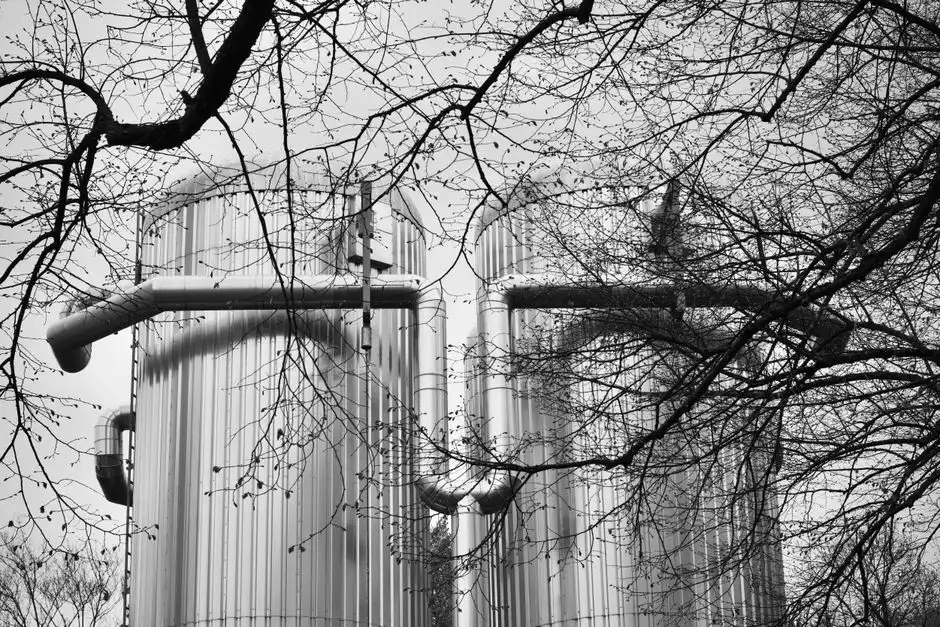
The defensible 2026 process train for an Argentine ingenio runs in six blocks, sized to ride out the 6–8 month zafra peak and absorb vinaza continuously.
- Rotary bar screens and grit removal. 5–10 mm aperture bar screens protect downstream equipment from cane fiber, bagasse fines, and sand carried in with the wash water. Grit chambers sized for 60–90 s detention at peak zafra flow keep the DAF recycle pump and MBR membranes from being sand-blasted.
- Flow equalization and neutralization. 12–24 h HRT, with NaOH or lime dosing to correct pH to 6.5–7.5 (a critical step for the 4.5–6.0 crushing stream). Tanks must be covered for odor control (H₂S from the anaerobic side can be lethal at 100–200 ppm) and sized for 2–3× the average zafra flow to absorb Sunday-night start-up surges and bagasse-boiler trips. Automatic chemical dosing for pH and flocculation control is non-negotiable at this scale.
- Dissolved air flotation (DAF). The workhorse pre-treatment step: a properly sized DAF for sugar mill pre-treatment achieves 80–95% TSS removal and 60–85% oil/grease removal at 4–25 g/m²/h hydraulic loading. DAF also floats suspended cane colloids that would otherwise blind the MBR. Hot condensate (>55 °C) should be cooled below 45 °C before DAF to stay inside the Tucumán and ACUMAR thermal envelope.
- Anaerobic UASB/EGSB. This is the workhorse for vinaza co-treatment and is the reason most generic sugar-mill articles fail the Argentine reader. UASB reactors run at 8–15 kg COD/m³/day organic loading; EGSB reactors with expanded granular sludge blanket run 20–35 kg COD/m³/day. Methane yield sits at 0.30–0.45 m³ CH₄/kg COD removed. The full-scale ARFB1-ARFB2 study reported 94.9% COD reduction at high loading, confirming that high-rate anaerobic is technically and economically the right foundation for any 2026 NOA plant. Granule retention is the make-or-break parameter — see our 2026 EGSB reactor troubleshooting for vinaza reference for failure modes.
- Aerobic MBR (membrane bioreactor). Submerged PVDF flat-sheet membranes at 0.1–0.4 µm pore size, operated at MLSS 8,000–12,000 mg/L, HRT 6–10 h, SRT 25–40 d. An integrated MBR for sugar mill polishing delivers COD < 50 mg/L, BOD < 10 mg/L, TSS < 5 mg/L — well inside both NoaDecreto 2.109/1994 and Res. ACUMAR 336/2003, and ready for irrigation or RO feed. Use DF series PVDF flat sheet MBR modules to keep the scour-air rate at 0.6–1.1 kWh/m³ and the replacement interval above 5 years.
- Optional RO for boiler make-up or ZLD. Where freshwater is scarce or a zero-liquid-discharge configuration is required (Ledesma, some Salta sites), RO polishing on MBR permeate runs at 65–75% recovery and brings conductivity below 50 µS/cm — good enough for low-pressure boiler feed. ZLD adds a 60–90% CAPEX premium, but it eliminates discharge-permit risk entirely.
Vinaza Management: The Make-or-Break Stream at Argentine Ingenios
Vinaza at 80,000–120,000 mg/L COD with 4,000–8,000 mg/L K⁺ and 3,000–6,000 mg/L sulfate cannot be sent to municipal sewer, and direct discharge to aerobic treatment is uneconomic at the required aeration intensity. Concentrated disposal in evaporation ponds is the historical option, but it is increasingly restricted by Tucumán and Salta provincial groundwater rules, and it forfeits the embedded energy. The 2026 defensible solution is a dedicated high-rate EGSB or multi-stage anaerobic reactor operated at 20–35 kg COD/m³/day with biogas utilization on the ethanol plant boiler — typically cutting vinaza COD by 75–85% and producing 8–12 m³ biogas per m³ of vinaza treated. Where land is available and provincial rules allow, post-anaerobic effluent can be diluted 1:5–1:10 with treated wastewater and used for cane fertigation, but the potassium load must be balanced against soil exchange capacity (typically 1.5–2.5 cmolc/kg) to avoid long-term sodicity. Sludge from the EGSB plus aerobic stage is high in organic matter and potassium and should be dewatered on a plate-and-frame filter press for sugar mill sludge to 22–28% dry solids before off-site disposal or composting. (Loading ranges per standard sugar industry references; vinaza characterization per the cited chapter.)
2026 CAPEX and OPEX Benchmarks for an Argentine Sugar Mill Effluent Plant
Procurement managers need defensible USD numbers before they can put a budget in front of finance. The table below reflects 2026 installed CAPEX ranges for a complete DAF + anaerobic + MBR train, civil works included but land excluded.
| Plant size (m³/day) | CAPEX (USD/m³/day installed) | ZLD add-on |
|---|---|---|
| 100–500 (small / pilot) | 350–420 | +60–90% |
| 500–2,000 (mid-size, typical ingenio) | 240–320 | +60–90% |
| 2,000–10,000 (large, multi-line) | 180–260 | +60–90% |
OPEX is dominated by energy. Aerobic aeration alone draws 2.8–4.2 kWh/m³, MBR membrane scouring 0.6–1.1 kWh/m³, and DAF recycle pumping 0.3–0.5 kWh/m³ — a total electrical demand of 4.2–6.5 kWh/m³. At the 2026 Argentine industrial tariff of ARS 18–32/kWh (USD 0.015–0.027/kWh post-2025 deregulation), energy alone runs USD 0.06–0.18/m³. Chemical OPEX (NaOH/lime, coagulant, polymer) typically lands at 0.4–0.9 USD/m³, and sludge hauling plus disposal 0.6–1.4 USD/m³ of dry solids. The single largest OPEX offset is biogas utilization: an EGSB plus CHP on vinaza can displace 30–55% of plant electrical OPEX at current Argentine gas tariffs, which is why a 2026 tender without a biogas utilization line is usually under-spec'd. (Tariff and energy ranges per HydropureWater field data, 2026; OPEX components per standard wastewater engineering references.)
Vendor Selection: Building a Decision Framework for 2026
Convert the above into an actual buying decision with this six-step framework: (1) lock the provincial discharge limit (NoaDecreto 2.109/1994, Res. ACUMAR 336/2003, or stricter), (2) bound flow and load variability across the zafra and inter-zafra period, (3) confirm whether vinaza must be co-treated, (4) set the reuse target (irrigation, boiler make-up, or ZLD), (5) decide on biogas utilization, (6) fix the CAPEX ceiling. Required vendor credentials: ISO 9001 plus ASME stamp on pressure vessels, a real reference list of operating sugar or ethanol-distillery plants, a performance guarantee bonded to effluent COD/BOD/TSS parameters, and Spanish-language O&M documentation with 24/7 AR-time-zone support. At the equipment level, demand a DAF skid factory-tested at design flow, an MBR pilot run on actual mill effluent for 6–8 weeks before purchase, and an anaerobic reactor with documented granule retention rather than a brochure number. The most common 2025–2026 retrofit pitfalls are undersized equalization, no odor control on covered tanks, MBR without adequate pre-screening, and an undersized sludge thickener. For a full reuse-train reference, see our sugar mill wastewater recycling and reuse process design guide, and for sludge line sizing consult our sludge dewatering equipment in Argentina reference.
Frequently Asked Questions
What is the typical COD of sugar mill wastewater? Crushing-season wash water at an Argentine ingenio runs 2,000–6,000 mg/L COD, while year-round vinaza from an attached ethanol distillery runs 80,000–120,000 mg/L COD. The two streams must be characterized and equalized separately before they hit a shared biological train (per standard sugar industry references).
Can vinaza be treated in the same plant as crushing wastewater? Yes, but only after pH correction and flow blending, with a high-rate EGSB or UASB sized for 20–35 kg COD/m³/day as the core unit. Co-treatment without the high-rate anaerobic step is uneconomic and typically fails Res. ACUMAR 336/2003 and NoaDecreto 2.109/1994 simultaneously.
What is the best treatment for sugar mill wastewater in Argentina? The 2026 defensible train is screening → equalization → DAF → EGSB/UASB → MBR, with optional RO polishing for boiler make-up. Anaerobic + aerobic combinations routinely achieve 92–95% COD reduction and 90–94% BOD reduction at 2,000–6,000 mg/L influent COD.
How much does a sugar mill wastewater treatment plant cost in 2026? Installed CAPEX runs USD 180–420 per m³/day depending on plant size — USD 180–260 for a 2,000–10,000 m³/day plant, USD 240–320 for 500–2,000 m³/day, and USD 350–420 for small 100–500 m³/day plants. Add 60–90% for a ZLD configuration. OPEX is dominated by 4.2–6.5 kWh/m³ of electrical demand.
What discharge limits apply to sugar mills in Tucumán vs Buenos Aires? Tucumán's NoaDecreto 2.109/1994 sets COD ≤ 250 mg/L, BOD₅ ≤ 50 mg/L, TSS ≤ 50 mg/L, oil & grease ≤ 20 mg/L, pH 6.0–9.0, and temperature ≤ 45 °C. Buenos Aires's Res. ACUMAR 336/2003 tightens oil & grease to ≤ 10 mg/L and pH to 6.5–10.0. For an NOA plant with irrigation reuse, design to the stricter envelope to avoid retrofit risk.