Why Argentina’s Sludge Dewatering Market Is Growing in 2025
Argentina’s sludge dewatering equipment market is projected to grow at a 6.2% CAGR through 2027, driven by stringent environmental regulations and rising sludge disposal costs. Buenos Aires alone faces disposal costs ranging from USD 80–120 per ton of sludge. This economic pressure, coupled with increasing landfill restrictions in provinces like Córdoba and Santa Fe, is compelling treatment facilities to adopt more efficient dewatering technologies. Argentina’s wastewater treatment capacity has seen a significant 40% increase since 2020, with major infrastructure projects like the Riachuelo system in Buenos Aires now treating approximately 2.1 million cubic meters of wastewater daily. This expansion naturally leads to a greater volume of sludge requiring management. National Law 25.688, along with specific provincial regulations such as Buenos Aires Decree 105/2018, mandates that sludge be stabilized and dewatered to a moisture content below 60% for safe land application or disposal. Industrial sectors, particularly food processing, petrochemicals, and textiles, are the primary contributors, accounting for roughly 65% of the nation's total sludge volume, while municipal wastewater treatment plants (WWTPs) contribute the remaining 35%. The presence of high oil and solids content in industrial wastewater, as observed in some petrochemical operations, can significantly impact polymer consumption and necessitate specialized equipment selection to ensure efficient and cost-effective dewatering.
Sludge Dewatering Equipment Types: Technical Specifications and Performance Benchmarks
Selecting the appropriate sludge dewatering equipment is critical for achieving optimal performance and cost-effectiveness. The primary technologies available in the Argentine market are screw presses, belt presses, and filter presses, each offering distinct advantages based on sludge characteristics and operational requirements. Key considerations include sludge type, flow rate, and desired dry solids content.
| Equipment Type | Typical Throughput (m³/h) | Achievable Dry Solids Content (%) | Typical Energy Consumption (kWh/m³) | Typical Polymer Consumption (kg/ton dry solids) | Maintenance Requirements |
|---|---|---|---|---|---|
| Screw Press | 0.5–1.2 | 20–25 | 0.3–0.5 | 2–4 | Low to Moderate |
| Belt Press | 2–10 | 18–22 | 0.4–0.7 | 3–5 | Moderate |
| Filter Press (Plate & Frame) | 0.5–5 | 25–35 | 0.2–0.4 (excluding pump energy) | 2–4 | Moderate to High (depending on automation) |
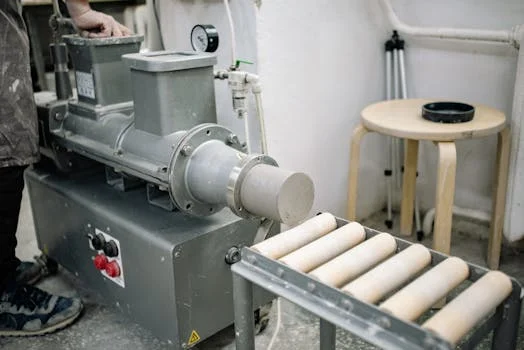
Screw presses are highly favored for municipal sludge due to their robustness and ability to handle high organic content. They typically offer a throughput of 0.5–1.2 m³/h, achieving dry solids content between 20–25% with relatively low energy consumption of 0.3–0.5 kWh/m³. Their enclosed design also minimizes odor and water splash. Belt presses are commonly employed in industrial applications, such as food processing and textile manufacturing, where they can process larger volumes, ranging from 2–10 m³/h. They generally achieve a dry solids content of 18–22% and require polymer consumption of 3–5 kg per ton of dry solids. Filter presses, particularly the high-efficiency plate and frame filter press for industrial sludge dewatering, are best suited for sludges requiring higher dewatering levels, such as those from petrochemical or mining operations, reaching 25–35% dry solids. While their individual cycle times can be longer (2–4 hours), they often achieve lower energy consumption per volume processed and are ideal for achieving very dry cakes. Equipment performance can be influenced by Argentina’s diverse geography; for instance, operations in high-altitude regions like Mendoza might experience slight variations due to atmospheric pressure.
Cost Breakdown: CAPEX, OPEX, and ROI for Sludge Dewatering Equipment in Argentina

Evaluating the total cost of ownership is crucial when selecting sludge dewatering equipment. This includes the initial capital expenditure (CAPEX), ongoing operational expenditure (OPEX), and the projected return on investment (ROI), all within the Argentine economic context. A detailed cost analysis helps in making informed procurement decisions.
| Equipment Type | Estimated CAPEX (USD) | Estimated Annual OPEX (USD) | Typical ROI (Years) |
|---|---|---|---|
| Screw Press | 30,000–80,000 | 15,000–30,000 (incl. energy, polymer, maintenance) | 1.5–3 (Municipal) |
| Belt Press | 50,000–150,000 | 25,000–50,000 (incl. energy, polymer, maintenance) | 2–3.5 (Industrial) |
| Filter Press (Plate & Frame) | 40,000–200,000 | 10,000–25,000 (incl. energy, polymer, maintenance) | 2–4 (High-solids Industrial) |
Capital expenditures for sludge dewatering equipment in Argentina for 2025 range from USD 30,000–80,000 for screw presses, USD 50,000–150,000 for belt presses, and USD 40,000–200,000 for filter presses. Operational expenditures are influenced by local energy costs (USD 0.12–0.18 per kWh) and polymer costs (averaging USD 2–4 per kg). Maintenance accounts for 5–10% of CAPEX annually. ROI is driven by savings in sludge disposal fees, which can be as high as USD 120/ton in Buenos Aires. Financing options from Banco de Inversión y Comercio Exterior (BICE) or provincial subsidies can improve investment viability.
Compliance and Permitting: Argentina’s Sludge Dewatering Regulations
Navigating Argentina's regulatory framework ensures compliance and avoids penalties. National Law 25.688 provides guidelines for environmental protection and sustainable resource management, including sludge management. Provincial regulations impose specific requirements; Buenos Aires Decree 105/2018 mandates a 90% solids capture rate and limits chemical usage.
Supplier Selection Framework: How to Evaluate Sludge Dewatering Equipment Vendors in Argentina
A structured evaluation framework ensures procurement decisions are based on technical capabilities, financial offerings, logistical support, and vendor reliability. Key evaluation criteria include technical performance, financial considerations, logistics and support, and supplier reputation and experience.
| Evaluation Criteria | Weight (%) | Key Considerations |
|---|---|---|
| Technical Performance & Compliance | 40 | Achievable dry solids content, throughput capacity, solids capture rate, compliance with Law 25.688 and provincial standards. |
| Financial Considerations | 30 | CAPEX, projected OPEX, ROI projections, financing options. |
| Logistics & Support | 20 | Equipment lead time, local spare parts availability, after-sales service. |
| Supplier Reputation & Experience | 10 | Track record in Argentina, client references, case studies. |
Case Study: Screw Press Sludge Dewatering System for a Buenos Aires Municipal WWTP
A recent installation at a municipal WWTP serving 50,000 PE in Buenos Aires exemplifies the successful application of screw press technology. The plant faced challenges including high organic content in its sludge (approximately 65% volatile solids), limited space, and stringent local compliance requirements. The chosen solution was a screw press system with a designed throughput of 1.0 m³/h, achieving a dry solids content of 22% and a solids capture rate exceeding 95%. This resulted in a substantial reduction in sludge disposal costs, dropping from an average of USD 95/ton to USD 65/ton—a saving of approximately 30%. Polymer consumption was reduced by 25% due to efficient conditioning. The system achieved a payback period of just 18 months.
Frequently Asked Questions
What is the problem with sludge in Argentina?
Escalating disposal costs and increasing landfill restrictions.
What equipment is used to dewater sludge?
Screw presses, belt presses, and filter presses.
How much does sludge dewatering equipment cost in Argentina?
USD 30,000–80,000 for screw presses, USD 50,000–150,000 for belt presses, and USD 40,000–200,000 for filter presses.
What are the compliance requirements for sludge dewatering in Argentina?
National Law 25.688 requires sludge to be dewatered to below 60% moisture content.
How do I choose a sludge dewatering equipment supplier in Argentina?
Evaluate technical expertise, financial competitiveness, local support, and reputation.
Related Equipment
- high-efficiency plate and frame filter press for industrial sludge dewatering — view specifications, capacity range, and technical data
- PLC-controlled chemical dosing system for optimal polymer conditioning — view specifications, capacity range, and technical data
Need a customized solution? Request a free quote with your specific flow rate and pollutant parameters.