Package Wastewater Treatment Plants in South Korea: 2025 Engineering Guide with Costs, Compliance & Supplier Checklist
South Korea’s 2025 package wastewater treatment plants prioritize compact, underground designs to address urban space constraints, with over 60% of new municipal projects adopting MBR or A/O systems for effluent reuse. Key requirements include compliance with MOE Notification No. 2021-183 (≤10 mg/L BOD, ≤15 mg/L TSS for discharge), energy efficiency below 0.6 kWh/m³, and modular capacities from 1 to 80 m³/h. Costs range from ₩30M to ₩500M ($23K–$380K USD) depending on technology and footprint, with underground MBR systems averaging 20–30% higher upfront but 15% lower lifecycle costs due to reduced land use and operational simplicity.
Why South Korea’s Wastewater Treatment Market Demands Package Plants
Urban density in Seoul, Busan, and Incheon drives the current demand for underground and prefabricated systems, with 2023 Korea Ministry of Environment (MOE) data indicating that 78% of new wastewater treatment plants (WWTPs) in metropolitan areas utilize a footprint of less than 50,000 m². As land prices in Tier-1 cities continue to escalate, municipal engineers are pivoting away from traditional sprawling civil works toward modular underground A/O package plants for South Korea’s urban projects. This shift is not merely aesthetic; it is a financial necessity driven by the high cost of land acquisition.
The regulatory timeline is the primary catalyst for technology upgrades. MOE Notification No. 2021-183, which becomes fully enforceable by 2025, tightens discharge limits for BOD (≤10 mg/L), TSS (≤15 mg/L), and total nitrogen (≤10 mg/L for sensitive areas like the Han River basin). These standards are significantly more stringent than previous decades, necessitating high-efficiency biological processes. For instance, the Busan Suyeong sewage treatment plant’s 100 MLD underground MBR conversion successfully freed 4.2 hectares of land for a residential park, reducing land acquisition costs by an estimated ₩120B ($92M USD).
Industrial sectors, including food processing, semiconductors, and textiles, are also under pressure. According to a 2024 report by the Korea Environment Corporation, facilities in designated industrial zones face 2025 deadlines for Zero-Liquid Discharge (ZLD) or high-grade effluent reuse. This regulatory environment makes package plants—which can be deployed rapidly and scaled modularly—the preferred choice for facility managers who must maintain production while ensuring environmental compliance.
Package WWTP Technologies for South Korea: MBR vs. A/O vs. SBR
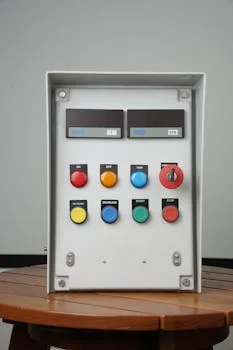
Membrane Bioreactor (MBR) technology accounts for approximately 65% of the underground wastewater treatment market share in South Korea as of 2024, primarily due to its ability to produce high-quality effluent suitable for reuse. By integrating microfiltration or ultrafiltration membranes directly into the biological process, MBR systems achieve BOD levels below 5 mg/L and near-complete removal of suspended solids. Data from the Jungnang Water Resource Recovery Facility indicates that MBR systems for effluent reuse in South Korea’s industrial and municipal sectors operate with an energy intensity of 0.5–0.7 kWh/m³, balancing performance with operational costs.
Conversely, Anoxic/Oxic (A/O) systems remain the standard for industrial applications where effluent reuse is not the primary objective. A/O plants offer a lower capital expenditure (Capex), ranging from ₩25M to ₩150M for standard industrial capacities, compared to the ₩40M to ₩300M range for MBR. While the effluent quality (10–20 mg/L BOD) is lower than MBR, it remains compliant with standard MOE discharge limits for non-sensitive zones. Sequencing Batch Reactors (SBR) serve a niche market, typically for small residential communities with fewer than 500 population equivalents (PE), where flow variability is high. While SBRs reduce footprint by 30-50% compared to conventional A/O, they require higher operator skill levels to manage the timed cycles effectively.
| Parameter | MBR (Membrane Bioreactor) | A/O (Anoxic/Oxic) | SBR (Sequencing Batch) |
|---|---|---|---|
| Footprint (m²/m³/day) | 0.15 – 0.25 | 0.40 – 0.60 | 0.25 – 0.35 |
| Energy Use (kWh/m³) | 0.5 – 0.7 | 0.4 – 0.6 | 0.5 – 0.8 |
| Effluent BOD (mg/L) | < 5 | 10 – 20 | 10 – 15 |
| Effluent TSS (mg/L) | < 1 | 15 – 30 | 10 – 20 |
| Capex (₩M per 10 m³/h) | ₩80 – ₩120 | ₩45 – ₩70 | ₩60 – ₩90 |
When evaluating these technologies, engineers must consider the long-term utility of the effluent. As South Korea moves toward a circular water economy, the ability of MBR to meet "Class A" reuse standards often justifies the 20-30% premium in upfront costs. This is particularly relevant when how South Korea’s MBR systems stack up against Europe’s leading market, where nutrient removal and micropollutant control are becoming standard design requirements.
Underground vs. Above-Ground Package WWTPs: Design, Costs, and Trade-Offs
Underground package WWTPs offer land savings of 30–50% compared to traditional surface facilities, making them the default choice for projects in Seoul and Busan. Beyond land savings, underground designs provide aesthetic benefits, such as the Saemul Park in Anyang, where the Bakdal WWTP was completely submerged to allow for a public park above. the thermal stability of being underground reduces energy consumption for heating biological tanks by 10–15% during South Korea’s harsh winters. However, these benefits come with a 20–40% increase in Capex due to excavation, reinforced concrete structures, and advanced ventilation/odor control systems.
Above-ground package plants are more suitable for industrial sites with available space or temporary construction camps. These systems offer significantly faster installation timelines—typically 6 to 8 weeks compared to the 12 to 16 weeks required for underground permitting and construction. The primary disadvantage of above-ground systems in urban South Korea is the risk of noise and odor complaints. 2023 Seoul Metropolitan Government data shows that odor-related grievances are the leading cause of project delays for surface-level facilities located within 500 meters of residential zones.
| System Type | Capex (₩/m³ capacity) | Opex (₩/m³/year) | Permitting (Months) | Main Advantage |
|---|---|---|---|---|
| Underground MBR | ₩4.5M – ₩6.0M | ₩1,500 – ₩2,500 | 8 – 12 | Max land reuse / Reuse water |
| Underground A/O | ₩3.0M – ₩4.2M | ₩1,000 – ₩1,800 | 8 – 10 | Odor control / Stable temp |
| Above-Ground MBR | ₩3.5M – ₩4.8M | ₩1,400 – ₩2,300 | 4 – 6 | Fast deployment / High quality |
| Above-Ground A/O | ₩2.0M – ₩3.2M | ₩800 – ₩1,500 | 3 – 5 | Lowest Capex / Easy access |
Site-specific geological factors also influence the decision. A case study from the Jangyoo plant utilized Menard Vacuum™ technology to consolidate soft alluvial soils, adding a 20-30% cost premium to the civil works but reducing long-term settlement risks by over 90%. Engineers must weigh these structural costs against the operational simplicity of above-ground units when the project site is located on unstable ground.
South Korea’s 2025 Compliance Checklist for Package WWTPs
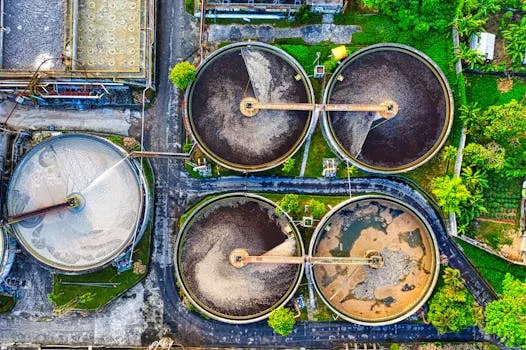
MOE Notification No. 2021-183 mandates strict discharge limits for 2025, including BOD levels at or below 10 mg/L and TSS at or below 15 mg/L. For plants located in "Water Quality Control Zones" (such as the Paldang Reservoir area), Total Nitrogen (TN) must not exceed 10 mg/L and Total Phosphorus (TP) must remain below 1 mg/L. Compliance also requires the integration of advanced disinfection systems compliant with South Korea’s MOE Notification No. 2021-183 to ensure pathogen removal before discharge or reuse.
Permitting timelines vary by sector. Municipal projects generally require 6 to 12 months for environmental impact assessments (EIA) and structural approvals, while industrial permits can be secured in 3 to 6 months. In cities like Seoul, additional local ordinances require enhanced odor control for any above-ground plant, often mandating two-stage chemical scrubbing or biofiltration. Incheon has implemented mandatory effluent reuse requirements for new industrial developments, forcing procurement teams to prioritize MBR over conventional A/O.
Monitoring is a critical component of 2025 compliance. Any plant serving more than 1,000 PE must install continuous online sensors for pH, Dissolved Oxygen (DO), and turbidity. This data must be transmitted quarterly to the MOE’s Water Information System (WIS). Failure to report or exceeding discharge limits can result in fines ranging from ₩5M to ₩50M per violation, emphasizing the importance of reliable automation and emergency response plans in the design phase.
Cost Benchmarks for Package WWTPs in South Korea: 2025 Data
Capital expenditure (Capex) for above-ground A/O package plants in the 1–20 m³/h range typically falls between ₩30M and ₩150M ($23K–$115K USD). For more advanced underground MBR systems with capacities of 5–50 m³/h, prices range from ₩50M to ₩300M ($38K–$230K USD). These benchmarks include the primary treatment units, internal piping, and basic control panels, but exclude extensive site excavation or external civil works. Comparing these figures to other regions, such as comparing South Korea’s underground WWTP trends to Southeast Asia’s market, reveals that Korea’s costs are higher due to stricter automation and seismic design requirements.
Operational expenditure (Opex) is heavily influenced by energy prices and sludge disposal fees. MBR systems average ₩1,200–₩2,500/m³, factoring in membrane cleaning chemicals and replacement every 5–8 years. A/O systems are more economical at ₩800–₩1,800/m³. However, when considering the Total Cost of Ownership (TCO) over 10 years, MBR often proves more efficient for industrial users who can offset water procurement costs through effluent reuse.
| System (20 m³/h) | Capex (₩M) | Annual Opex (₩M) | 10-Year TCO (₩M) |
|---|---|---|---|
| Above-Ground A/O | ₩80 | ₩28 | ₩360 |
| Above-Ground MBR | ₩140 | ₩35 | ₩490 |
| Underground A/O | ₩120 | ₩30 | ₩420 |
| Underground MBR | ₩200 | ₩38 | ₩580 |
To calculate ROI, facility managers should use the following formula: Payback Period (Years) = Capex / (Annual Savings from Reuse + Avoided Fines - Annual Opex). For a 20 m³/h plant, an underground MBR system typically achieves ROI in 4.2 years if the treated water is used for cooling towers or landscaping, compared to 3.8 years for an A/O system that only avoids discharge fees.
Supplier Selection Framework for South Korea’s Package WWTP Market
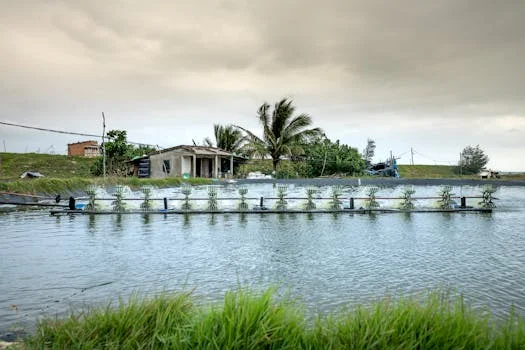
Local South Korean suppliers often provide faster permitting support and have established relationships with regional MOE offices, which can be invaluable for navigating complex local variances. However, international technology providers often lead in modular efficiency and membrane longevity. According to a 2024 Korea Water Resources Association survey, the most successful projects are those that combine high-performance international core components (like membranes) with local engineering for site integration and service support.
Due diligence is essential when selecting a supplier. Procurement teams should mandate MOE-certified effluent quality reports from third-party labs and verify that the supplier has a local service network capable of a response time of less than 4 hours. For underground projects, specifically request case studies that demonstrate experience with waterproofing and ventilation in similar Korean soil conditions. Red flags include a lack of Korean-language technical documentation, no local references, or an inability to provide energy efficiency guarantees below 0.6 kWh/m³ for MBR systems.
| Supplier Criteria | High-Tier Provider | Mid-Tier Provider | Budget Provider |
|---|---|---|---|
| MOE Certification | Full Compliance | Basic Compliance | Pending/None |
| Energy Efficiency | ≤ 0.55 kWh/m³ | 0.6 – 0.8 kWh/m³ | > 0.9 kWh/m³ |
| Service Network | 24/7 Local Support | Business Hours | Remote Only |
| Automation Level | Full SCADA / AI | Basic PLC | Manual/Analog |
When reviewing how South Korea’s package WWTP requirements compare to U.S. standards, it becomes clear that the Korean market places a much higher premium on compact footprint and underground integration. Suppliers who cannot provide detailed 3D BIM models for underground placement should be disqualified early in the tender process.
Frequently Asked Questions
Q: What are the key differences between MBR and A/O for South Korea’s effluent standards?
A: MBR achieves <5 mg/L BOD and <1 μm filtration, meeting the highest reuse standards, while A/O typically targets 10–20 mg/L BOD for standard discharge. MBR’s energy use (0.5–0.7 kWh/m³) is approximately 20% higher than A/O, but it eliminates the need for secondary clarifiers, saving significant space.
Q: How long does it take to permit a package WWTP in South Korea?
A: Municipal projects generally take 6–12 months due to EIA requirements. Industrial projects are faster, taking 3–6 months. Underground systems add 2–3 months to the timeline for specialized soil testing and structural safety approvals required by local building codes.
Q: Can package WWTPs be expanded later?
A: Yes, modular systems like MBR and A/O are designed for scaling in 10–20 m³/h increments. However, for underground designs, the concrete vault must be sized upfront to accommodate future modules to avoid prohibitively expensive secondary excavation.
Q: Are there government incentives for package WWTPs in South Korea?
A: Yes, the Korea Environment Corporation (Keco) offers grants covering 30–50% of Capex for projects in water-sensitive zones. Additionally, industrial facilities adopting high-efficiency reuse technologies may qualify for tax credits under the 2024 Green New Deal funding guidelines.
Q: What is the typical lifespan of membranes in a South Korean MBR plant?
A: With proper automated backwashing and chemical cleaning (CIP) every 3–6 months, high-quality PVDF membranes typically last 7 to 10 years. Suppliers should provide a minimum 5-year pro-rated warranty as part of the procurement contract.