Why Sedimentation Technology Choice Determines Plant Efficiency
Among inclined plate settler alternatives, plate packs remove 90–98% TSS at 20–40 m/h with polymer, in about 15–30% of conventional basin area. Tube settlers fit basin retrofits. DAF suits FOG above about 200 mg/L. Circular clarifiers buffer flow spikes. Choose by settleability, FOG, footprint, and variability.
Sedimentation shortfalls drive many downstream failures in industrial wastewater plants. Carryover raises effluent TSS, forces 20–40% higher chemical dosing, and fouls RO and MBR membranes. That primary-stage choice sets chemical use and membrane life for the rest of the train.
A 100 m³/h food plant ran about 800 mg/L TSS and 200 mg/L FOG. After swapping a circular clarifier for an inclined plate unit, coagulant use fell 35% and the biological stage stabilized. Lifecycle cost follows the solids-separation choice more than the pump skid price.
What Is an Inclined Plate Settler?
An inclined plate settler is a high-rate clarifier that stacks parallel plates so particles travel only a short vertical distance before depositing on a plate face. Allen Hazen’s 1904 settling theory still governs sizing: removal depends on projected surface area, not basin volume alone. Effective area is A = N × Ap × cos(θ), where N is plate count, Ap is one plate’s area, and θ is the inclination from horizontal.
Industrial packs usually sit at 55–60°. Steeper than 60° shrinks projected area; shallower than 55° lets sludge stick and scour back into the effluent. Plate spacing of 50–100 mm (often ~80 mm on industrial packs) balances area against clogging from fibers or grit. US EPA guidance on Lamella-type packs notes typical inclination near 55° and sizes units by applying conventional overflow rates to projected plate area rather than tank floor area (US EPA, 2003).
Flow enters a flocculation zone, then rises through the pack toward top launders while solids slide into a hopper. Hydraulic loading of 20–40 m/h is common on industrial packs versus about 1–2 m/h in conventional basins. For packaged industrial duty, review the High-Efficiency Sedimentation Tank (Lamella Clarifier) sizing envelope against your jar-test settling curve.
| Parameter | Standard Specification | High-Efficiency Range |
|---|---|---|
| Plate Angle | 55° – 60° | Fixed 60° for self-cleaning |
| Plate Spacing | 50 mm – 100 mm | 80 mm (Industrial Standard) |
| Surface Loading Rate | 10 – 25 m/h | 20 – 40 m/h |
| Material Construction | FRP / Carbon Steel | SS304 / SS316L Stainless Steel |
| TSS Removal Rate | 85% – 95% | 90% – 98% (with polymer) |
Inclined Plate Settler Alternatives Compared to Four Options
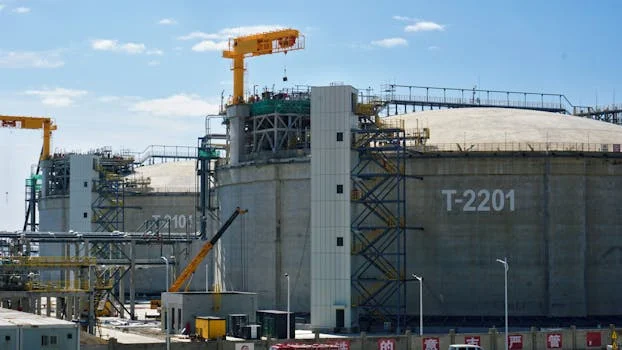
Side-by-side selection turns on TSS removal, loading rate, footprint, sludge density, chemicals, and FOG tolerance. Stainless plate packs favor durability. PVC/ABS tube modules cut CAPEX for municipal-style water. DAF remains the process of record for buoyant FOG. The 2025 industrial benchmarks below frame that trade-off.
| Parameter | Inclined Plate Settler | Tube Settler | DAF System | Circular Clarifier | Conventional Basin |
|---|---|---|---|---|---|
| TSS Removal (%) | 90–98% | 85–95% | 95–99% (light solids) | 70–85% | 60–80% |
| Hydraulic Loading (m/h) | 20–40 | 15–30 | 5–15 | 1–2.5 | 0.5–1.5 |
| Footprint Reduction (%) | 70–85% | 60–75% | 50–60% | 10–20% | 0% (Baseline) |
| Sludge Concentration (%) | 2–4% | 1–3% | 3–5% | 1–2% | 0.5–1.5% |
| Chemical Dosing (kg/m³) | Low (0.01–0.03) | Low (0.01–0.03) | High (0.04–0.08) | Moderate | Moderate |
| CAPEX ($/m³/h) | $800–$1,200 | $600–$900 | $1,000–$1,500 | $1,200–$1,800 | High (Civil costs) |
| OPEX ($/m³ treated) | $0.05–$0.12 | $0.07–$0.15 | $0.10–$0.20 | $0.08–$0.14 | $0.06–$0.10 |
| Maintenance Frequency | Low (Annual) | Medium (Bi-annual) | High (Monthly) | Medium | Low |
| Lifespan (Years) | 20–25 | 10–15 | 15–20 | 30+ (Civil) | 50+ (Civil) |
| Hydraulic Shock Sensitivity | Low | Moderate | High | Very Low | Very Low |
| FOG Tolerance | Poor | Poor | Excellent | Moderate | Poor |
| Best Use Case | High Turbidity/Space | Retrofits | Food/Oily Water | Large Municipal | Low-tech/High-land |
Tube modules win on purchase price, yet PVC/ABS packs age under UV and often need replacement inside 10–15 years. Stainless inclined plates commonly reach 20–25 years with annual washdowns. Fibrous solids clog small tubes faster than 50–100 mm plate gaps. Most plants we size for metal hydroxide or grit-laden streams stay near the lower end of the 20–40 m/h band until jar tests prove otherwise.
Wet-weather pilots are a different duty. A Fort Worth comparison summarized by US EPA (2003) recorded Lamella TSS removal of 53–73% under those CSO-like tests; polymer-aided industrial packs still target 90–98% on settleable process solids. EPA’s wet-weather retrofit work likewise treats plate or tube inserts as a compact way to raise primary capacity inside existing tanks (US EPA, 2000).
When to Choose Each Technology: Five Common Scenarios
Technology choice follows influent chemistry and site constraints more than brochure capacity claims. Use the scenarios below as a first filter before detailed hydraulic design.
- Scenario 1: High-turbidity influent (TSS > 1,000 mg/L). Choose inclined plate settlers. Projected area handles heavy solids without the carryover typical of lightly loaded circular units. A 60° angle keeps dense sludge moving to the hopper.
- Scenario 2: Limited footprint in urban or indoor plants. Choose tube settlers to retrofit existing basins, or inclined plates for new compact builds. Either approach fits in about 20–30% of conventional sedimentation area.
- Scenario 3: FOG-heavy wastewater (food or petrochemical). Choose DAF. Oils and fats float; sedimentation alone misses them. Microbubbles lift FOG for surface skim—view DAF system options for FOG-heavy wastewater when comparing against gravity settlers.
- Scenario 4: Low-maintenance remote sites. Choose inclined plate settlers. Aside from sludge valves, packs have few moving parts and need less attendance than DAF compressors or scraper bridges.
- Scenario 5: High flow variability (seasonal industries). Choose circular clarifiers. Large basin volume absorbs wash-down spikes better than high-velocity lamella channels.
Decision shortcut: FOG above 200 mg/L → DAF. Otherwise, footprint under about 100 m² → inclined plates. Ample land plus wild flow swings → circular clarifier. For flotation versus settling detail, compare DAF systems to other flotation and sedimentation technologies.
How Deep Should an Inclined Plate Clarifier Launder Be?
Inclined plate clarifier launders sit in the clear-water zone above the plate pack; depth is set so drawdown does not pull solids from the top plate gap into the weir. There is no single universal launder depth in millimeters—length and weir loading dominate once the pack height is fixed. Keep a stable clear-water layer above the pack, size launder length for even withdrawal, and confirm freeboard against peak hydraulic load on the vendor drawing.
Cost Analysis: CAPEX, OPEX, and ROI for a 100 m³/h System
Total cost of ownership for a 100 m³/h train depends on material grade, polymer dose, and sludge handling more than nameplate CAPEX alone. Unit rates in the comparison table scale directly to this capacity band.
| Technology | CAPEX (2025 USD) | OPEX ($/m³) | Annual Maintenance |
|---|---|---|---|
| Inclined Plate Settler | $80,000–$120,000 | $0.05–$0.12 | Low (Annual) |
| Tube Settler | $60,000–$90,000 | $0.07–$0.15 | Medium (Bi-annual) |
| DAF System | $100,000–$150,000 | $0.10–$0.20 | High (Monthly) |
| Circular Clarifier | $120,000–$180,000 | $0.08–$0.14 | Medium |
| Conventional Basin | High (civil works) | $0.06–$0.10 | Low |
At 100 m³/h, inclined plate CAPEX of $800–$1,200 per m³/h lands near $80,000–$120,000 for the packaged settler scope. Tube packs look cheaper until UV aging and cleaning labor appear in year five. DAF OPEX of $0.10–$0.20/m³ reflects air saturation energy and higher chemical use. Civil basins look inexpensive per cubic meter treated, yet land and concrete dominate the cash curve.
Selection Checklist and Cost Drivers
Before freezing a P&ID, walk this checklist with jar-test data and a site survey:
- Measure settleable TSS, FOG, and peak-to-average flow ratio on representative samples.
- Confirm available plan area and headroom for pack height plus clear-water zone.
- Pick plate or tube material for pH, chloride, and outdoor UV exposure.
- Budget polymer at 0.01–0.03 kg/m³ for gravity settlers versus 0.04–0.08 kg/m³ for many DAF duties.
- Include sludge solids percent (2–4% typical for plates) in dewatering CAPEX.
- Require a hydraulic drawing that shows launder layout, inlet distribution, and hopper angle.
- Ask any inclined plate settler manufacturer for references on similar TSS and FOG ranges.
Main cost drivers are stainless versus coated steel, polymer and sludge disposal, and whether FOG forces a DAF skid. Spec sheets alone rarely settle the choice—pilot or jar curves do.
Who This Is For / Next Step
This comparison suits plant engineers, EPC process leads, and procurement teams sizing primary clarification for industrial wastewater. Look elsewhere if your load is almost entirely emulsified oil with negligible settleable solids—start with flotation. When you need a duty-sized pack and budget band, request a quote against your flow and jar-test curve via HydropureWater’s inquiry form, or review the High-Efficiency Sedimentation Tank (Lamella Clarifier) for packaged industrial units.
Frequently Asked Questions
When should I choose an inclined plate settler over a tube settler?
Choose inclined plates when you need stainless durability, easier cleaning with fibrous solids, and 20–25 year service life at industrial loadings of 20–40 m/h. Tube settlers fit budget retrofits into existing basins where PVC/ABS modules are acceptable and UV exposure is controlled. If solids are heavy and space is tight on a new build, plates usually win on lifecycle cost.
Can an inclined plate settler remove FOG from food wastewater?
No—gravity plate packs are poor at FOG above roughly 200 mg/L because oils float instead of settle. Use DAF for FOG-heavy food or petrochemical streams, then clarify residual settleable solids downstream if needed. Mixing high FOG into a plate pack risks coating plates and cutting TSS removal well below the 90–98% polymer-aided band.
What surface loading rate should I use for industrial inclined plates?
Design industrial packs in the 20–40 m/h band on projected area when polymer produces a settleable floc, and stay near the low end until jar tests confirm faster rates. Conventional basins without plates typically run about 1–2 m/h. US EPA notes Lamella sizing applies conventional overflow rates to projected plate area at roughly 55° inclination (US EPA, 2003).
How do inclined plate settlers cut plant footprint?
Stacked plates multiply projected settling area inside a small plan area, so footprint often drops 70–85% versus a conventional basin at equal duty. That matters for indoor plants and urban sites where circular clarifiers cannot fit. Always reserve height for the pack, clear-water zone, and hopper—not only floor area.
What CAPEX should I budget for a 100 m³/h inclined plate settler?
Budget about $80,000–$120,000 (2025 USD) for packaged inclined plate scope at $800–$1,200 per m³/h, excluding major civil works. OPEX typically falls in $0.05–$0.12 per m³ treated at low polymer doses of 0.01–0.03 kg/m³. Add sludge handling and any FOG pretreatment before comparing against DAF or circular options.