Why Shopping Mall Wastewater Demands a Dedicated Decanter Centrifuge Design
Shopping mall wastewater is a hybrid matrix that defeats generic industrial sizing: domestic sewage from public restrooms runs at 150–400 mg/L BOD₅, food-court drains push FOG to 50–250 mg/L in the mixed influent, and parking-deck runoff adds 20–80 mg/L petroleum hydrocarbons during storm events. Flow swings are extreme — the lunch peak (11:30–13:30) and dinner peak (17:30–20:00) deliver 2–3× the daily average, and weekend traffic can push the diurnal peak to 3× weekday baselines. A typical mixed influent for a regional mall sits at 0.6–1.2 m³/day per 100 m² of gross floor area (GFA) with a design peak factor of 2.5–3.0, which means a 150,000 m² mall must handle 900–1,800 m³/day average and 2,250–5,400 m³/day peak — numbers that a generic 10 m³/h industrial decanter datasheet will never address.
Off-the-shelf industrial decanter sizing assumes steady feed, low FOG, and no odor constraint. None of that holds in a mall basement. A horizontal-bowl decanter centrifuge is preferred over a belt press or drying bed because the unit is fully enclosed, runs continuously, occupies roughly 6 m² for a mid-mall unit, and produces low odor at 2,500–3,200 G — a fit for below-grade machine rooms under retail floor plates where headroom is 3.5–4.0 m and neighbors are tenants. The underlying engineering principle, as detailed in our decanter centrifuge design guide 2026, is high-G solid-liquid separation: the bowl spins at 2,500–3,500 RPM to generate 2,000–3,200 G, dense biosolids migrate to the bowl wall, and an internal scroll conveys them out at a controlled differential speed while clarified centrate overflows the opposite end.
Where the Decanter Sits in a Mall Wastewater Treatment Train
The decanter does not sit at the head of the train. It belongs at the end, after FOG and most TSS have already been removed and the sludge has been biologically stabilized. The full train for a 50,000–300,000 m² mall reads:
- GX rotary mechanical bar screen at 3–5 mm clear opening — protects downstream pumps from food-court debris, shopper discards, and grit.
- Vortex grit chamber — removes fine sand and parking-deck sediment; retention 2–3 minutes at peak flow.
- Oil/grease trap — sized for 5–10 minute residence at peak; skims free FOG before emulsification in the equalization tank.
- Equalization tank — 6–12 hours of retention at average flow to damp the 2–3× peak-to-average swing from food courts.
- Dissolved air flotation system — removes 60–90% of FOG and TSS, drops mixed sludge TSS from 1,000–2,000 mg/L to a floated concentrate that thickens to 3–5% solids.
- Biological stage — MBR or SBR (commonly delivered as a WSZ underground package sewage treatment plant for footprint-constrained mall basements); FOG is hydrolyzed, BOD₅ drops below 30 mg/L.
- Sludge holding tank — 24–48 hours of retention to homogenize the biological-FOG mixed sludge before dewatering.
- Decanter centrifuge — dewateres mixed sludge from 1.5–2.5% TS to 20–28% DS cake; centrate is polished and disinfected for reuse.
- Cake off-haul, centrate to disinfection/reuse.
Placing the decanter before DAF or directly on raw primary sludge is a frequent error in mall designs we review. Raw mixed primary sludge sits at 8,000–15,000 mg/L TSS with unstable FOG emulsions and variable grit loading; the centrifuge burns 8–12 kg polymer per tonne DS trying to bridge that inconsistency, the centrate returns hazy, and the cake rarely breaks 16% DS. A DAF-thickened biological sludge at 15,000–25,000 mg/L has consistent rheology, lower FOG variability, and predictable polymer demand at 3–6 kg/t DS. The DAF unit is not optional in a mall train — it is the unit operation that makes the downstream centrifuge economical.
Decanter Centrifuge Design Sizing for Three Mall Tiers
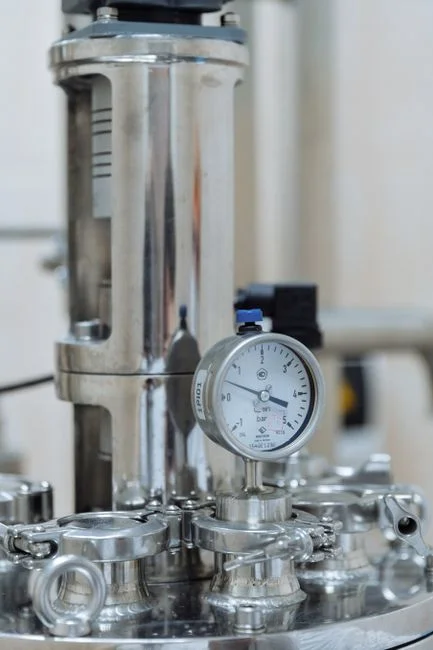
Mall sizing collapses into three tiers. The table below is a defensible copy-paste basis for a design-bid document; flows assume 0.6–1.2 m³/day per 100 m² GFA at average, peak factor 2.5–3.0, and 1.5–2.5% TS mixed sludge from the upstream DAF + biological stage.
| Parameter | Small mall (20,000–50,000 m²) | Mid-size mall (50,000–150,000 m²) | Large regional mall (150,000–300,000 m²) |
|---|---|---|---|
| Design average flow | 120–600 m³/day | 300–1,800 m³/day | 900–3,600 m³/day |
| Peak design flow (2.5–3.0×) | 300–1,800 m³/day | 750–5,400 m³/day | 2,250–10,800 m³/day |
| Food-court seat count (typical) | 200–600 | 600–2,000 | 2,000–5,000 |
| FOG load (8–15 g/seat/day) | 1.6–9.0 kg/day | 4.8–30 kg/day | 16–75 kg/day |
| Mixed-sludge flow to centrifuge (1.5–2.5% TS) | 2–10 m³/day | 6–30 m³/day | 20–80 m³/day |
| Recommended bowl diameter | 220–360 mm | 360–450 mm | 450–550 mm |
| Bowl speed | 3,000–3,500 RPM | 2,800–3,200 RPM | 2,500–3,000 RPM |
| G-force | 2,500–3,200 G | 2,200–3,000 G | 2,000–2,800 G |
| Differential speed (Δω) | 15–25 RPM | 10–20 RPM | 5–15 RPM |
| Volumetric throughput | 3–12 m³/h | 8–25 m³/h | 15–45 m³/h |
| Drive motor (typical) | 11–22 kW main + 4–7.5 kW back-drive | 22–45 kW main + 7.5–15 kW back-drive | 45–90 kW main + 15–30 kW back-drive |
The physics basis is straightforward: G-force scales with the square of bowl speed and bowl diameter (G = 1.118 × 10⁻⁵ × n² × D, with n in RPM and D in mm), which is why the smallest bowls can spin fastest while still landing in the 2,500–3,200 G band that produces 20–28% DS cake on biological-FOG mixed sludge. Operating decanter centrifuges at fast speeds produces high centrifugal force, and that force is what compresses the cake against the bowl wall against a back-pressure of centrate. The 95–97% centrate recovery and 3–5% cake split are direct consequences of that bowl geometry.
Polymer Conditioning and Operating Parameters That Make or Break Mall Sludge
Polymer selection is the single highest-leverage operating decision in a mall centrifuge. Cationic polyacrylamide (C-PAM) with 50–80% charge density and 8–12 MDa molecular weight is the standard for biological-FOG mixed sludge — the cationic charge neutralizes the negatively charged biological floc, and the high molecular weight bridges the small FOG droplets that survived DAF. Anionic or nonionic polymers fail on this matrix; we see dose creep to 10–12 kg/t DS and centrate TSS climbing past 800 mg/L when operators substitute them.
Dose sits at 3–6 kg active polymer per tonne dry solids for properly DAF-thickened sludge. Overdosing above 8 kg/t is the most common mall-plant mistake: the excess polymer re-stabilizes the colloid, the centrate returns hazy at 400–600 mg/L TSS, and the cake becomes gelatinous and hard to convey off the scroll. Dose is delivered through an automatic polymer dosing skid with preparation aging time 30–60 minutes and dilution to 0.05–0.1% active before injection into the centrifuge feed line.
Bowl speed and differential speed are the two runtime knobs. Higher bowl speed raises G and cake dryness, but in mall service it also accelerates abrasive wear from food-court grit and parking-deck sediment that passes the grit chamber. A practical operating envelope is 2,800–3,200 RPM main bowl with Δω at 10–18 RPM for biological-FOG sludge. The control strategy that prevents most failures is a three-layer alarm: torque trip on the scroll (catching grit jams and overfeeding), vibration sensor on the bearings targeting <4.5 mm/s RMS per ISO 10816-3, and a centrate TSS online probe targeting <200 mg/L as the indicator of clean separation. When centrate TSS climbs past 300 mg/L, the first check is polymer dose, the second is differential speed, and only the third is feed rate.
Decanter Centrifuge vs Plate-and-Frame Filter Press for Mall Projects
Both technologies dewater biological-FOG mixed sludge. The selection is driven by basement constraints, not by raw dewatering performance. The table below summarizes the trade-off for a mid-size 100,000 m² mall producing 15–20 m³/day of mixed sludge at 2% TS.
| Parameter | Decanter centrifuge | Plate-and-frame filter press |
|---|---|---|
| Cake dryness | 20–28% DS | 25–35% DS |
| Footprint (unit + cake handling) | ~6 m² | 20–30 m² |
| Operating labor | 0.5 hr/shift (unattended) | 2–3 hr/shift (cloth wash, plate shift) |
| Odor in occupied basement | Low (fully enclosed) | High (open frame, periodic opening) |
| Operation mode | Continuous | Batch (cycle 2–4 hours) |
| Polymer demand | 3–6 kg/t DS | 1–3 kg/t DS (lime/FeCl₃ often added) |
| CAPEX (mid-mall, equipment only) | US$80,000–250,000 (industry range; Made-in-China lists industrial units around US$135,000) | US$40,000–120,000 |
| Building/install cost adder | Low (small footprint, low structural load) | High (larger machine room, floor reinforcement for cake handling, odor ventilation) |
| Best fit | Tight basement, continuous unattended, reuse priority | Maximum cake dryness for off-site incineration, batch operation acceptable |
For a deeper head-to-head, the filter press vs centrifuge comparison covers lifecycle cost. The short version: choose a plate and frame filter press when haul-off cost per wet tonne is the dominant expense and you can absorb the building cost; choose a decanter when basement footprint, odor near retail tenants, and continuous unattended operation drive the decision. For most 50,000–300,000 m² mall basements in dense Asian and European city contexts, the decanter wins on integration.
Centrate and Reuse: Meeting 2026 Mall Water-Reuse Standards
The centrate stream is the compliance asset that most mall designs leave on the table. After the full train — DAF, biological, decanter — and a downstream disinfection step (typically a chlorine dioxide generator at 1–2 mg/L residual for 30 minutes), typical centrate quality is TSS <200 mg/L, BOD₅ <30 mg/L, FOG <10 mg/L, and fecal coliform <200 CFU/100 mL after disinfection. That profile lands inside the 2026 reuse envelopes of China GB/T 18920 (Class B/C urban reuse), Singapore PUB's NEWater for non-potative use, and EU Regulation 2020/741 minimum requirements for Class B (toilet flushing) and Class C (landscape irrigation). Volume recovered is 95–97% of centrifuge feed; only 3–5% leaves as cake. The same centrate stream is also the lever for LEED v4.1 BD+C Water Credit and BREEAM Wat 01 — a 100,000 m² mall running 1,000 m³/day reuse can claim 30–40% of the water-reduction credit envelope on the centrate alone.
For tighter end-uses (cooling-tower makeup, where silica and hardness scale the fill), the centrate needs RO polishing — typically a 80–90% recovery RO skid that drops the centrate volume back into a smaller reuse stream and sends the RO reject back to the head of the train. For landscape irrigation on mall podiums and toilet flushing in mall restrooms, the disinfected centrate is sufficient and avoids the RO capex.
Frequently Asked Questions
How much sludge does a shopping mall produce per day? A mid-size 100,000 m² mall produces 6–30 m³/day of mixed biological-FOG sludge at 1.5–2.5% TS, equivalent to 100–600 kg dry solids per day, with FOG contributing 5–30 kg/day from the food court.
What cake dryness can a decanter centrifuge achieve on mall sludge? Properly conditioned biological-FOG mixed sludge reaches 20–28% DS in a decanter running 2,500–3,200 G, versus 25–35% DS for a plate-and-frame filter press on the same feed.
How much polymer does a mall centrifuge consume? 3–6 kg active cationic polyacrylamide per tonne dry solids for DAF-thickened biological sludge; overdosing above 8 kg/t DS destabilizes the centrate and is the most common operating error.
Where in the treatment train should the decanter be installed? After DAF flotation and biological treatment, never on raw primary sludge — DAF-thickened feed is 15,000–25,000 mg/L TSS with consistent rheology, which the centrifuge dewateres economically.
Can centrifuge centrate be reused for toilet flushing or irrigation? Yes — disinfected centrate at TSS <200 mg/L, BOD₅ <30 mg/L, FOG <10 mg/L meets China GB/T 18920, Singapore PUB, and EU 2020/741 Class B/C urban reuse criteria without RO polishing.
What is the capital cost of a decanter centrifuge for a mid-size mall? US$80,000–250,000 for the unit itself, with a small additional cost for the upstream automatic polymer dosing skid and a downstream chlorine dioxide generator; full train CAPEX is documented in the desludging cost optimization 2026 guide.