Filter Press vs Centrifuge Operating Cost: The Short Answer
The filter press vs centrifuge operating cost gap favours the press: cake solids of 25–45%, polymer at 3–8 kg/ton DS, and power at 0.5–1.5 kWh/m³. A decanter centrifuge fits continuous flow but draws 2–4 kWh/m³ with 8–15 kg/ton DS.
Mechanical dewatering reduces sludge volume by 60–85%, directly cutting transport and landfill costs, which often constitute 50% of total plant operating expenses, according to EPA estimates. In industrial and municipal wastewater treatment, the primary goal of dewatering is to transform a liquid or semi-solid slurry into a stackable "cake" that is easier to handle and dispose of. Without efficient dewatering, facilities pay for the transportation of water rather than solids. Most annual budgets we audit put hauling second only to chemicals.
The process follows a three-stage progression: conditioning, where polymers flocculate the solids; thickening, which removes the bulk of the free water; and mechanical separation. Choosing the technology for that final separation determines the long-term budget and workflow. The filter press vs centrifuge operating cost question is therefore a disposal-fee question first and a machinery question second.
Regulatory compliance drives the dryness target. Earlier guidance cited the EU Urban Waste Water Directive and various state-level EPA guidelines as requiring solids content above 20% for landfill or incineration. According to 40 CFR § 258.28, bulk or noncontainerized liquid waste may not be placed in MSWLF units, and liquid waste is any material determined to contain "free liquids" as defined by Method 9095B (Paint Filter Liquids Test), dated November 2004. Many sites still ask for about 20% solids as a handling rule, so failing a dryness check still means rejected loads and environmental fines. On the EU side, the Sewage Sludge Directive entered into force on 18 June 1986 and limits heavy metals for agricultural use; it sets no cake-solids percentage either, so the binding number is always the local licence or gate rule.
How Filter Presses Work: Process and Performance
A filter press operates as a batch process where sludge is pumped into a chamber stack, trapping solids within filter cloths while the filtrate drains through internal channels. Pressure, often between 100 and 225 PSI, forces liquid through the filter media. As the cycle progresses, solids accumulate in the chambers, forming a dense cake. Once the chambers are full and filtrate flow drops, the plates open to release the dry solids, and operators can extend the squeeze or air blow phases to maximise moisture removal.
The filter press remains the benchmark for cake dryness. Depending on sludge type and polymer conditioning effectiveness, a Plate and Frame Filter Press for Sludge Dewatering achieves cake solids between 25% and 45%, significantly higher than alternative technologies. This is critical for mining, chemical processing, and metal finishing, where disposal costs are calculated by weight. Every extra point of dryness is water you do not haul.
Operational efficiency is another strength of the press. It uses hydraulic pressure and a feed pump rather than high-speed rotational components, so power consumption typically ranges from 0.5 to 1.5 kWh/m³ of processed sludge. Standard polymer dosages are 3–8 kg/ton of dry solids (DS), roughly 30–50% lower than those required for centrifugal separation. That chemical gap can save facilities tens of thousands of dollars annually in OPEX.
Operators who want the pressure cycle and cloth behaviour in more detail can read the plate & frame filter press dewatering note. Most plates we commission in batch chemical plants hold the squeeze until filtrate flow falls, instead of opening at the first slowdown.
How Centrifuges Work: Speed vs Efficiency

Decanter centrifuges employ a continuous separation process, utilising rotational speeds of 2,000–4,000 rpm to generate centrifugal forces that separate solids from liquid based on density differences. A horizontal bowl rotates at high speed while an internal screw conveyor (scroll) rotates at a slightly different speed, pushing solids toward the conical end for discharge while clarified liquid (centrate) exits through the opposite end. This continuous flow suits plants that cannot accommodate batch interruptions. The power bill is the price of that nonstop duty.
While effective at handling high volumes, centrifuges generally struggle to match the cake dryness of pressure-based systems. For municipal sludge, cake solids usually range from 18% to 30%, though advanced polymer conditioning can occasionally push toward 35% for specific industrial sludges. The reliance on G-force rather than mechanical compression leaves more interstitial water trapped in the solids. Most dilute municipal feeds we sample sit near the wet end of that band.
The mechanical demands of high-speed rotation result in higher power draw, often cited between 2 and 4 kWh/m³ of sludge. Polymer demand is also substantially higher, typically 8–15 kg/ton DS, because flocculants must withstand high shear forces inside the bowl. That energy and chemical load makes centrifuges more expensive to operate over their lifecycle.
Filter Press Cake Dryness Comparison: Industrial Sludge
Filter presses consistently achieve 10–15% higher cake dryness than decanter centrifuges across most industrial sludge profiles, with the press at 25–45% and the centrifuge at 18–35% on the same feeds. Engineers must look beyond initial throughput and score "total dryness" and "total recovery" instead. A filter press typically captures 98–99% of solids, leaving a clear filtrate, whereas centrifuges show higher solids carryover in the centrate when polymer dose or bowl speed is mis-calibrated. A soft centrate quietly returns that load to the headworks.
Maintenance profiles differ significantly. A filter press has fewer moving parts, with primary wear items being filter cloths and occasional seal replacements. A decanter centrifuge requires precision alignment and bearing replacements every 12–18 months to prevent vibration failure. While centrifuges have a more compact footprint per cubic meter of throughput, the modular nature of the fully automated plate and frame filter press allows it to be scaled by adding plates for growing facilities.
| Performance Parameter | Filter Press | Decanter Centrifuge |
|---|---|---|
| Cake Dryness (%) | 25% – 45% | 18% – 35% |
| Energy Use (kWh/m³) | 0.5 – 1.5 | 2.0 – 4.0 |
| Polymer Dosage (kg/t DS) | 3 – 8 | 8 – 15 |
| Solids Capture Rate | 98% – 99.5% | 92% – 98% |
| Operation Mode | Batch (Automated) | Continuous |
| Maintenance Focus | Filter Cloths / Seals | Bearings / Gearbox / Scroll |
Automation has closed the labour gap between the technologies. Modern PLC-controlled filter presses perform cake discharge, cloth washing, and cycle restarts without operator intervention. Centrifuges require constant monitoring of vibration and torque sensors to avoid damage. For detailed metrics, plant managers should consult in-depth filter press vs centrifuge performance data.
Centrifuge vs Filter Press Energy Consumption kWh: The Real Gap
Centrifuge energy use runs at 2.0–4.0 kWh/m³ of sludge, against 0.5–1.5 kWh/m³ for a filter press on comparable duty, which is the basis of the 40% power saving claim for presses. The centrifuge spends that energy in a bowl at 2,000–4,000 rpm; the press spends it in a feed pump at 100–225 PSI. According to the European Commission, Directive (EU) 2024/3019, in force since 1 January 2025, asks urban plants to become energy-neutral by 2045, so a continuous high draw is now a design choice you must justify. Most plants we meter show the centrifuge near the high end when operators open the scroll differential to chase dryness.
Log kilowatt-hours against cubic metres of feed, not against the motor nameplate. Tariff times volume times that 1.5–3.5 kWh/m³ spread is usually the second-largest cash line after disposal. Where electricity is expensive, the press wins the operating-cost balance before polymer is even priced.
When to Choose a Filter Press
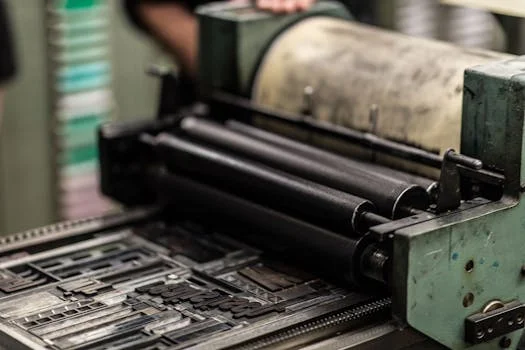
Filter presses are optimal for facilities prioritising high cake dryness to minimise landfill tipping fees, which range from $30 to $80 per ton in most industrial regions. The drier cake cuts total tonnage sent to landfill, and annual savings often exceed equipment costs within a few years. Chemical, pharmaceutical, and food processing plants are the usual cases, because sludge disposal is a major budget item there.
Filter presses also suit plants with variable sludge volumes or batch production cycles, handling fluctuations in solids concentration more gracefully than centrifuges. Facilities with limited power availability or high electricity costs benefit from the low kWh/m³ requirement of a fully automated plate and frame filter press. Most batch chemical plants we balance end up here when the shift schedule already has a gap for cake discharge.
When to Choose a Centrifuge
Decanter centrifuges are effective for large-scale municipal plants processing over 10,000 m³/day where continuous operation and a small equipment footprint are primary design constraints. In high-flow environments, centrifuges simplify overall plant hydraulics. They also suit very dilute sludges (0.5–1.5% solids) where mechanical presses would need extensive pre-thickening stages.
Centrifuges are also advantageous for highly odorous or VOC-containing sludge due to their enclosed design, at the cost of higher polymer demand. Facilities that rank throughput speed above operating cost still have a sound reason to stay with a bowl. Most municipal upgrades we review keep the centrifuge when the building was sized around it and the receiver accepts 18–30% cake.
Total Cost of Ownership: CAPEX vs OPEX Analysis
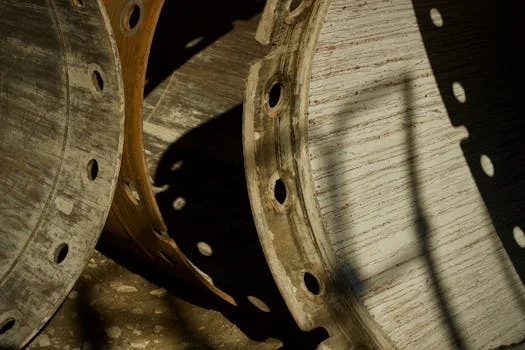
Total cost of ownership analysis shows decanter centrifuges carry 35–50% higher operating expenses than filter presses due to energy and chemical consumption. The initial CAPEX for centrifuges is also 20–30% higher, largely due to high-precision alloys and complex gearbox assemblies. The financial impact compounds in long-term OPEX, where filter presses typically pay for themselves within 18–24 months in regions with high disposal costs.
Maintenance invoices favour the press on routine parts. Centrifuges require specialised service every 6 months, costing $2,000–$5,000, while filter presses require $500–$1,500 per year for cloth replacements and minor hydraulic maintenance. Engineers should review the 2025 sludge dewatering system cost breakdown for a complete financial model. Cloth life, not the frame, is the line to budget every year.
| Cost Category | Filter Press (Estimated) | Decanter Centrifuge (Estimated) |
|---|---|---|
| Initial CAPEX | $100,000 - $250,000 | $130,000 - $320,000 |
| Annual Energy Cost | Base (1.0x) | High (2.5x - 3.0x) |
| Annual Polymer Cost | Base (1.0x) | High (1.5x - 2.0x) |
| Annual Maintenance | $500 - $1,500 | $2,000 - $5,000 |
| 5-Year Total OPEX | Significantly Lower | 35% – 50% Higher |
Six cash lines decide the winner at a real plant: the disposal fee per wet ton at the cake solids you actually produce; the electricity tariff times 0.5–1.5 or 2.0–4.0 kWh/m³; polymer price times 3–8 or 8–15 kg/ton DS; cloth replacement versus bearing, gearbox, and scroll service; labour only if cake discharge is still manual; and rejected-load risk if the cake fails the site liquids test.
Decision Framework: Which Technology Fits Your Plant?
Selecting the correct dewatering technology requires a five-step evaluation balancing sludge flow rates, solids concentration, and long-term disposal costs. The best choice offers the lowest total cost per ton of dry solids processed over 10 years.
- Step 1: Assess Sludge Flow Rate. Determine if your process is batch or continuous. For less than 50 m³/day or shift operations, filter presses are likely preferable.
- Step 2: Test Solids Concentration. Centrifuges handle very dilute sludge (<1.5%), but if sludge is thickened to 3–5%, filter presses provide better efficiency.
- Step 3: Evaluate Disposal Fees. For high landfill or incineration costs (>$50/ton), filter presses are non-negotiable for ROI due to their higher cake dryness.
- Step 4: Calculate Utility Costs. In regions with high electricity rates, filter presses' 40% power saving significantly impacts the bottom line.
- Step 5: Match to Equipment. Use collected data to score each technology. For many industrial applications, in-depth filter press vs centrifuge performance data confirms filter presses offer the most stable long-term investment.
Who This Comparison Is For
This page is for plant engineers and EPC estimators who must pick a dewatering machine on annual cash cost. The tables above are the starting band, not a substitute for a bench test on your own sludge. Look elsewhere if you need a belt-press balance, a thermal-dryer model, or a decanter-focused polymer program; those decisions use different numbers.
Send sludge solids, daily volume, the power tariff, and the real disposal fee through the dewatering cost review form if you want the annual cash gap priced on your own cake target.
Frequently Asked Questions
Which is better: filter press or centrifuge?
It depends on priorities. A filter press reaches cake solids up to 45% with lower power (0.5–1.5 kWh/m³) and polymer (3–8 kg/ton DS), which minimises operating cost when disposal is charged by weight. A centrifuge suits high-flow, continuous municipal applications above 10,000 m³/day where space is limited and feed is dilute. Match the machine to the binding cost line, not the brochure.
Filter press polymer dosage vs centrifuge demand: which runs lower?
The filter press runs lower on nearly all mixed industrial sludges. Standard press doses are 3–8 kg/ton of dry solids, against 8–15 kg/ton DS for a decanter, roughly a 30–50% reduction, because plate filtration does not shear the floc the way a 2,000–4,000 rpm bowl does. Dose work that isolates shear, make-down, and bowl speed belongs on the filter press vs decanter dosage of polymer page. A press fed at 3–5% solids often runs at the low end of its band.
How dry must sludge cake be for landfill disposal?
US municipal landfill rules do not set a nationwide 20% solids cutoff. Under 40 CFR § 258.28, bulk or noncontainerized liquid waste is barred, and free liquids are judged by EPA Method 9095B, the paint-filter liquids test dated November 2004. Many sites still ask for about 20% solids as a handling rule. A filter-press cake at 25–45% passes with more margin than a centrifuge cake at 18–30%.
When is a centrifuge the simpler operating choice?
A centrifuge is simpler above 10,000 m³/day when the plant cannot stop for a batch cycle. Dilute feeds at 0.5–1.5% solids and odorous or VOC-bearing sludge also favour the enclosed bowl. Expect operating expenses 35–50% above a press from power and polymer, plus bearing and scroll service every 12–18 months. The smaller footprint is real, and so is the service schedule.