Why Food Processing Wastewater Is a Compliance Problem in 2026
Raw effluent from a slaughter, dairy, or beverage line will fail a 2026 discharge test on the first grab sample. Per a 2021 review of food-industry effluent characteristics, untreated streams routinely carry BOD5 of 1,000–10,000 mg/L, TSS of 500–5,000 mg/L, oil and grease of 200–1,500 mg/L, and — once proteins and amino acids hydrolyse in the equalization tank — ammonia nitrogen (NH3-N) of 50–200 mg/L. The EU 91/271/EEC ceiling for BOD5 is 25 mg/L; the China GB 21901-2008 ceiling for a red-meat plant is 100 mg/L; EPA 40 CFR Part 408 §408.10 caps BOD5 at 25 mg/L daily max. The gap between raw influent and any of those limits is two to three orders of magnitude, which is why a single grab sample on a Monday morning CIP dump can trigger a notice of violation.
Flow and load variability is the second compliance risk. Batch CIP releases, seasonal fruit and vegetable campaigns, and blood-laden slaughter shifts all generate spikes that a continuously aerated biological tank cannot absorb without an upstream buffer. WHO's 2022 global water-use assessment placed food and beverage at roughly 30% of industrial freshwater withdrawal in low- and middle-income economies, which is one reason regulators are tightening — not loosening — direct-discharge limits in 2026. A "discharge standard" in this context is the legally binding numeric ceiling for BOD, COD, TSS, oil and grease, NH3-N, total phosphorus, fecal coliform, pH, and temperature that applies to the effluent at the plant boundary or at the connection to a municipal sewer.
The 2026 Compliance Frameworks Side by Side: EPA, EU and China
Which column of the limit table you read depends on three things: where the effluent goes (surface water vs. municipal sewer), the plant's sub-sector, and the jurisdiction. EPA 40 CFR Part 408 breaks the food industry into 13 subparts, from §408.10 (red meat) through §408.260 (soft drink bottling), and publishes Best Practicable Control Technology (BPT), Best Conventional Pollutant Control Technology (BCT), and Best Available Technology (BAT) daily-maximum and monthly-average limits for each. The EU Urban Waste Water Treatment Directive 91/271/EEC sets BOD5 ≤ 25 mg/L, COD ≤ 125 mg/L, and TSS ≤ 35 mg/L for discharges from food and agro-food plants above 4,000 p.e., with Commission Implementing Decision (EU) 2020/2184 and the Industrial Emissions Directive 2010/75/EU layering in sub-sector BAT-AEL ranges on top. China's framework splits between GB 21901-2008 (slaughtering and meat processing) and GB 8978-1996 (older or general food plants), with GB/T 31962-2015 governing discharge to a municipal sewer for plants that do not discharge directly.
| Parameter | EPA 40 CFR §408.10 (red meat, BPT daily max) | EU 91/271/EEC (>4,000 p.e.) | China GB 21901-2008 (direct discharge) | China GB 8978-1996 Grade 1 (direct discharge) |
|---|---|---|---|---|
| pH | 6.0–9.0 | — | 6.0–8.5 | 6.0–8.5 |
| BOD5 | 25 mg/L | ≤ 25 mg/L | 100 mg/L | 20 mg/L |
| COD | — (BOD basis) | ≤ 125 mg/L | 300 mg/L | 100 mg/L |
| TSS | 30 mg/L | ≤ 35 mg/L | 200 mg/L | 70 mg/L |
| Oil & grease (animal/vegetable) | 10 mg/L | — | 30 mg/L | 10 mg/L |
| NH3-N | — (per subpart) | — (per 91/271 Annex II) | 25 mg/L | 15 mg/L |
| Total phosphorus | — (per subpart) | ≤ 2 mg/L (1–10,000 p.e.) | — (per local) | 0.5 mg/L |
| Fecal coliform | — (per subpart) | — (per bathing water regs) | — (per local) | — (per local) |
Three rules of thumb for picking the right column. If your plant discharges to surface water in the U.S., you live under 40 CFR Part 408 plus your state's NPDES permit; if you discharge to a municipal POTW in the U.S., the POTW's pretreatment ordinance usually tracks 40 CFR Part 403 and may be tighter than Part 408 on oil and grease and pH. In the EU, 91/271/EEC is the floor and a 2020/2184 BAT-AEL (e.g., COD 25–100 mg/L, total nitrogen 5–25 mg/L for slaughterhouses) is the operative ceiling once the plant is over the IED threshold. In China, GB 21901-2008 applies to slaughter and meat processing; older plants and non-meat sub-sectors fall back to GB 8978-1996 Grade 1 (or Grade 2 for discharge to a sewer), with GB/T 31962-2015 setting the sewer-discharge ceiling where the local authority has adopted it.
Reverse-Engineering the Treatment Train from the Limit
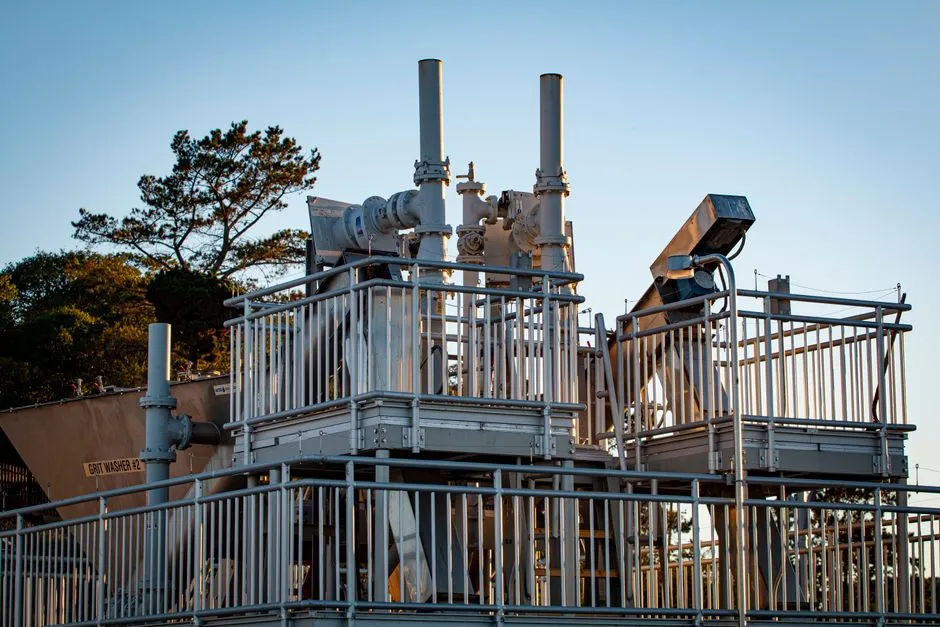
Each row in the table above maps to a specific unit operation. Once you know which parameter is binding, you know which process step is non-negotiable. FOG and colloidal solids above 50 mg/L cannot be met biologically — they must be removed upstream, which is why DAF sits before the aeration tank in every compliant food-industry train. NH3-N above 15 mg/L at the discharge point cannot be met without nitrification, and meeting a 25 mg/L GB 21901 ceiling while keeping TN in check almost always requires a pre-anoxic (A/O) or anaerobic/anoxic/oxic (A2/O) configuration. COD and BOD down to the 100/25 mg/L range are the design point of conventional activated sludge; pushing below 50 mg/L COD is where an MBR becomes the cheaper option per m³ of treatment volume.
| Step | Unit operation | Target parameter | Typical design range | Notes |
|---|---|---|---|---|
| 1 | GX rotary bar screen, 5–10 mm aperture | TSS, debris, bone fragments | Headloss 0.2–0.5 m at peak | Protects downstream pumps and DAF nozzles from ragging |
| 2 | Equalization basin | BOD, FOG, NH3-N variability | 8–24 h HRT | Flattens CIP and shift spikes to keep grab samples in spec |
| 3 | Dissolved air flotation system | Oil & grease, colloidal TSS | 15–25 m³/(m²·h) hydraulic loading; 95–99% FOG removal | Brings O&G from 200–1,500 mg/L down to <30 mg/L before biology |
| 4 | MBR membrane bioreactor system (or conventional A/O) | COD, BOD, NH3-N, TN | MLSS 8,000–12,000 mg/L; HRT 6–10 h; COD < 50 mg/L, BOD < 10 mg/L | MBR cuts footprint ~60% vs. CAS+clarifier at the cost of 15–25% CAPEX uplift |
| 5 | Chlorine dioxide generator | Fecal coliform, residual biocidal activity | 2–5 mg/L ClO₂ dose, 30 min contact | On-site generation avoids the chlorine gas handling risk and trihalomethane formation |
For plants targeting a GB 8978-1996 Grade 1 envelope (COD 100 mg/L, BOD 20 mg/L) or a 2020/2184 BAT-AEL, the MBR step is the single largest lever — it pulls BOD below 10 mg/L and COD below 50 mg/L in one stage, and it removes the secondary clarifier from the compliance risk register. For plants with a softer ceiling (e.g., discharge to a municipal sewer under GB/T 31962-2015), conventional A/O with a clarifier is usually enough, and the saved CAPEX pays for sludge dewatering and chemical dosing skids instead.
Sub-Sector Specifics: Meat, Dairy, Beverage, and Grain
Slaughter and meat processing is the hardest case. Blood and paunch manure push NH3-N past 200 mg/L and BOD5 past 8,000 mg/L, so under 40 CFR Part 408 Subpart A and GB 21901-2008 the only trains that work are A2/O or SBR with sludge return — DAF alone won't move BOD. Dairy plants under 40 CFR Part 408 Subpart C and the EU BAT-AEL in 2020/2184 face lactose and CIP-caustic surges, which is why equalization plus DAF plus MBR is the 2026 reference design for cheese and milk powder lines. Beverage and fruit/vegetable lines under 40 CFR Part 408 Subpart F and GB 31195-2015 see highly seasonal BOD with low NH3-N; DAF plus SBR or MBBR is usually sufficient, although syrup residues still demand flotation for residual FOG. Grain and starch plants under 40 CFR Part 408 Subpart E carry high soluble starch and suspended solids — equalization with hydrolysis, then A2/O or MBR for total nitrogen; if you are scoping a starch line, the starch wastewater nitrogen removal guide and the DAF design for starch wastewater article walk through the load numbers. For beverage and coffee sub-sectors, the fruit juice wastewater CAPEX and OPEX guide and the coffee processing wastewater cost guide give the sub-sector-specific unit cost ranges.
2026 Equipment Selection and CAPEX Snapshot
The CAPEX bands below reflect turnkey supply — equipment, instrumentation, installation, and commissioning — but exclude buildings, land, and the outfall. They are order-of-magnitude figures for a 2026 budget envelope, not vendor quotes (HydropureWater field data, 2026).
| Plant size (treated flow) | Typical sub-sector | Treatment train | CAPEX range (USD, 2026) | Notes |
|---|---|---|---|---|
| 50–200 m³/day | Small slaughter, dairy, or specialty beverage | Bar screen + EQ + DAF + A/O + ClO₂ | $120,000 – $450,000 | Pre-engineered skid or WSZ underground integrated package compresses install to 4–6 weeks |
| 500–2,000 m³/day | Mid-size beverage, dairy, or grain | Bar screen + EQ + DAF + MBR + ClO₂ | $800,000 – $4,500,000 | MBR module (DF series) adds 15–25% CAPEX but removes the clarifier |
| 5,000+ m³/day | Large slaughter, brewery, or starch processor | Bar screen + EQ + DAF + A2/O + MBR + ClO₂ (+ optional RO/ZLD) | $6,000,000 – $25,000,000+ | ZLD-adjacent trains (RO + evaporator) sit at the upper end of the range |
For flows under 200 m³/day, packaged or WSZ underground integrated systems cut civil cost and compress the install schedule to 4–6 weeks. For mid-size plants, the MBR-vs-CAS decision is usually a footprint-versus-CAPEX trade: spending 15–25% more on MBR returns roughly 60% smaller aeration volume and removes the secondary clarifier — a single piece of equipment that disproportionately drives non-compliance events on hydraulic surges. OPEX for chemical dosing (PAM/PAC for DAF sludge, pH correction, defoamer in the MBR tank) is typically sized at 2–5% of CAPEX per year, delivered through a packaged automatic chemical dosing skid with flow-paced control.
Frequently Asked Questions
What is the EPA effluent limit for a red-meat slaughterhouse in 2026? EPA 40 CFR Part 408 §408.10 sets BPT daily-maximum limits at BOD5 25 mg/L, TSS 30 mg/L, and oil and grease 10 mg/L, with BAT limits published for the same subpart. A separate subpart applies to poultry, processed meats, and rendered products.
What are the GB 21901-2008 discharge limits for slaughter and meat processing? For direct discharge, GB 21901-2008 caps COD at 300 mg/L, BOD5 at 100 mg/L, NH3-N at 25 mg/L, animal and vegetable oils at 30 mg/L, and pH at 6.0–8.5. Plants that discharge to a municipal sewer fall under GB/T 31962-2015 limits negotiated with the local authority.
Which treatment delivers the 25 mg/L BOD ceiling under 91/271/EEC? An MBR with submerged PVDF membranes at 8,000–12,000 mg/L MLSS and 6–10 h HRT routinely produces BOD below 10 mg/L and COD below 50 mg/L, comfortably inside the 25 mg/L / 125 mg/L EU envelope without tertiary polishing.
Is DAF mandatory for food processing wastewater? If oil and grease at the discharge point must be below 30 mg/L (GB 21901-2008) or 10 mg/L (40 CFR §408.10), flotation is the only unit operation that reliably delivers 95–99% FOG removal at 15–25 m³/(m²·h) hydraulic loading — biological treatment alone will not move emulsified oils.
How much does a small food wastewater plant cost in 2026? A turnkey 50–200 m³/day packaged plant (bar screen, equalization, DAF, A/O, disinfection) typically lands between $120,000 and $450,000 USD in 2026, with OPEX for chemicals and sludge handling at roughly 2–5% of CAPEX per year (HydropureWater field data, 2026).