Why Cambodia Tightened Food Wastewater Enforcement in 2026
A cassava starch plant in the Phnom Penh Special Economic Zone (SEZ) was administratively shut down for 14 days in Q1 2026 after two consecutive monthly BOD₅ samples returned 180 mg/L and 210 mg/L against the Sub-Decree's 50 mg/L surface-water ceiling, with the Ministry of Environment (MoE) publishing the non-compliance notice on its quarterly register (MoE enforcement register, 2026-Q1). That case is representative: since 2024, the MoE has been publishing quarterly non-compliance notices naming SEZ tenants, and food plants in Phnom Penh SEZ, Sihanoukville SEZ, and the Poipet border zone have been the priority audit targets.
The binding instrument is Sub-Decree No. 27 ANK.BK on Water Pollution Control, which sets the effluent ceilings, the self-monitoring cadence, and the penalty schedule. Plants discharging to Tonle Sap or Mekong tributaries fall into a stricter permit class that requires quarterly self-monitoring reports and third-party lab verification from a MoE-accredited laboratory. Penalties in 2026 include administrative fines ranging from USD 1,000 to USD 25,000 per violation, operational suspension, and — for repeat offenders — withdrawal of the export license that most Cambodian food manufacturers depend on for EU and ASEAN shipments.
Sub-Sector Influent Characteristics in Cambodia
Food wastewater in Cambodia is not one stream — it is six, and the design starts with matching the right train to the right sub-sector. The table below consolidates typical influent ranges for the dominant Cambodian food-processing categories; cassava starch influent ranges are drawn from the Springer review of food-industry wastewater variability (2021), with the Cambodia-specific pH and sulfate values updated from MoE-disclosed permit applications (2025).
| Sub-sector | COD (mg/L) | BOD₅ (mg/L) | TSS (mg/L) | FOG (mg/L) | Salinity / Cl⁻ | pH | Key design driver |
|---|---|---|---|---|---|---|---|
| Cassava starch | 8,000–25,000 | 5,000–15,000 | 2,000–5,000 | 50–150 | Low | 3.5–5.5 | High COD, sulfate 200–800 mg/L, residual CN from linamarin |
| Fish sauce (nuoc mam) | 4,000–8,000 | 2,500–5,000 | 500–1,500 | <50 | 3–8% NaCl / 18,000–48,000 mg/L Cl⁻ | 5.5–6.8 | Salinity inhibits methanogens and conventional activated sludge |
| Rice noodle / rice products | 800–2,500 | 500–1,500 | 600–2,000 | <50 | Low | 6.0–7.5 | Starch carryover, high SS |
| Slaughterhouse / meat | 3,000–8,000 | 1,500–4,000 | 1,000–3,000 | 200–1,000 | Low | 6.5–7.8 | Pathogens, bloodmeal protein, FOG shock loads |
| Beverage / bottling | 1,000–3,000 | 600–1,800 | 200–800 | <50 | Low | 6.5–7.5 | Sugar BOD, seasonal campaign peaks |
| Dairy / ice cream | 1,500–4,000 | 900–2,500 | 300–900 | 150–500 | Low | 6.0–7.5 | Fat, casein protein, cleaning CIP surfactant |
The cassava starch column deserves attention: at 25,000 mg/L COD, a 100 m³/day plant discharges the equivalent BOD load of a municipality of roughly 30,000 people every day, and the acidic pH (3.5–5.5) means equalization must include caustic dosing before any biological stage. The fish-sauce column is the inverse problem — moderate COD, but the 3–8% NaCl range rules out a standard UASB-plus-cassette-MBR train.
2026 MoE Effluent Discharge Limits You Must Hit
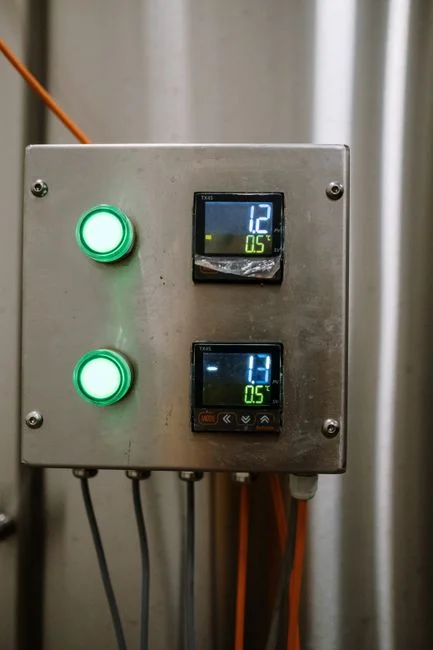
The Sub-Decree differentiates three discharge classes, and the design target depends on which one your permit covers. The table below consolidates the 2026 limits applied by MoE inspectors in Phnom Penh, Sihanoukville, and Poipet.
| Parameter | Surface water (Tonle Sap, Mekong tributaries) | Public sewer / sewered SEZ | On-site irrigation reuse |
|---|---|---|---|
| BOD₅ | ≤50 mg/L | ≤200 mg/L | ≤30 mg/L |
| COD | ≤100 mg/L | ≤500 mg/L | ≤80 mg/L |
| TSS | ≤50 mg/L | ≤200 mg/L | ≤30 mg/L |
| Oil & grease | ≤10 mg/L | ≤20 mg/L | ≤5 mg/L |
| Total nitrogen | ≤20 mg/L | ≤40 mg/L | ≤15 mg/L |
| pH | 6.0–9.0 | 6.0–9.0 | 6.0–8.5 |
| Temperature | <40°C | <40°C | <35°C |
| Fecal coliform | — | — | ≤200 MPN/100 mL |
Quarterly self-monitoring reports must be filed through the MoE online portal, accompanied by results from a MoE-accredited laboratory. Plants discharging to Tonle Sap or Mekong tributaries also face a 24-hour composite-sampling protocol; grab samples are no longer accepted for permit renewal (MoE guidance note, 2025-11).
Process Flow: The 2026 Standard Train for Cambodian Food Plants
The process train below is what reaches BOD ≤50 mg/L and COD ≤100 mg/L on cassava, beverage, rice-noodle, and slaughterhouse influent. For fish-sauce and high-salinity streams, swap the MBR membrane grade — covered in the next section.
- Rotary bar screen (3–5 mm aperture) — first defense for rags, fruit/vegetable debris, and packaging fragments; protects downstream pumps and prevents ragging in DAF nozzles. A rotary bar screen for headworks protection is the standard 2026 spec.
- Dissolved air flotation (DAF) — removes FOG, suspended solids, and floatable colloids; typical 80–95% TSS removal and 90%+ oil removal, per the Springer review of food-industry wastewater (2021). A DAF unit for FOG and suspended solids removal sized at 15–25 m³/m²·h hydraulic loading handles most Cambodian sub-sectors.
- Equalization tank (24–48 h HRT) — with pH correction via NaOH dosing for the cassava-starch acid swing. Critical for Cambodia where batch production (one washdown, one cook, one cleanup) creates shock loads that would kill downstream biology if not damped.
- Anaerobic stage — UASB for 50–500 m³/day plants (organic loading rate 5–10 kg COD/m³·d), IC reactor for >500 m³/day (OLR 15–25 kg COD/m³·d). Both achieve 70–85% COD reduction with a biogas yield of 0.30–0.45 m³ CH₄ per kg COD removed (Springer, 2021).
- Aerobic / MBR stage — MBBR or conventional activated sludge for plants >1,000 m³/day; an integrated MBR system for polishing anaerobic effluent with PVDF flat-sheet membranes for sites under 1,000 m³/day or where reuse is targeted. MBR effluent typically runs TSS <5 mg/L and BOD₅ <10 mg/L.
- Disinfection — a chlorine dioxide generator for effluent disinfection at 1.5–2.5 mg/L ClO₂ residual, mandatory for slaughterhouse and dairy plants, recommended for any surface-water discharge.
- Sludge dewatering — a plate-and-frame filter press for sludge dewatering to ≥22% dry solids for off-site disposal; a PLC-controlled coagulant and pH dosing skid handles the polymer conditioning upstream.
Special Cases: Salinity, Sulfate, and Anaerobic Effluent Polishing

Three failure modes account for most Cambodian food-plant non-compliances, and the standard train does not handle them without modification.
Fish-sauce / nuoc-mam salinity. At Cl⁻ >5,000 mg/L, methanogens in a conventional UASB are inhibited by 40–60%; the design fix is to drop the OLR to ≤3 kg COD/m³·d and follow anaerobic with a halophilic activated-sludge stage or a marine-grade PVDF flat-sheet MBR modules for compact or saline influent rated to 8,000 mg/L Cl⁻ continuous exposure. Reverse osmosis is required only when the discharge permit sets chloride limits — most MoE permits do not.
Cassava cyanide and sulfate. Linamarin breakdown during cassava processing releases residual free cyanide, typically <1 mg/L in raw wastewater and <0.1 mg/L after UASB. The greater operating risk is sulfate at 200–800 mg/L, which sulfate-reducing bacteria convert to H₂S inside the anaerobic reactor — a common odor complaint in Battambang and Kampong Cham starch plants. Iron dosing (FeCl₃ at 20–40 mg/L) or sulfide-scavenging ahead of the UASB suppresses this.
Compact SEZ footprints. Plants on tight Phnom Penh SEZ plots routinely replace the secondary clarifier and sand filter with a single submerged MBR tank, cutting civil cost by 30–40% per HydropureWater SEZ-project data (2025).
CAPEX and OPEX: What a 2026 Cambodian Food Plant Actually Pays
Most competitor pages stop at "request a quote." The ranges below are built from HydropureWater field data and comparable SEZ tenders awarded in Cambodia between Q3 2025 and Q1 2026.
| Plant capacity (turnkey EPC) | CAPEX (USD) | OPEX (USD per m³ treated) | Anaerobic premium payback |
|---|---|---|---|
| 50 m³/day | 90,000–180,000 | 0.55–0.80 | Not economic — aerobic only |
| 100 m³/day | 180,000–450,000 | 0.45–0.70 | 3–4 years |
| 500 m³/day | 850,000–1,800,000 | 0.40–0.60 | 2–3 years |
| 1,000 m³/day | 1,800,000–3,500,000 | 0.35–0.55 | 2–3 years |
OPEX at 50 m³/day is dominated by electricity (40–50%), chemicals (15–20%), sludge hauling (15–20%), and labor (15–20%). At >200 m³/day with an anaerobic stage, biogas offsets 25–40% of plant electricity, which shortens the anaerobic-premium payback to 2–4 years depending on the cassava or beverage influent strength. Add 12–18% to the CAPEX ranges for Cambodia-specific costs: containerized sea freight from China or Vietnam, MEF import duties on electromechanical equipment (typically 7–15%), and local civil-works markup (HydropureWater field data, 2026).
For a deeper look at the upstream biological-stage sizing on starch streams, the starch wastewater characteristics and treatment guide walks the cassava influent from equalization through IC sizing, and the starch wastewater biological treatment process guide covers the UASB/MBR interface in detail. Engineers sizing the membrane stage can cross-check the figures against the MBR system design and cost engineering guide.
Selecting an EPC Supplier in Cambodia: A Five-Point Checklist
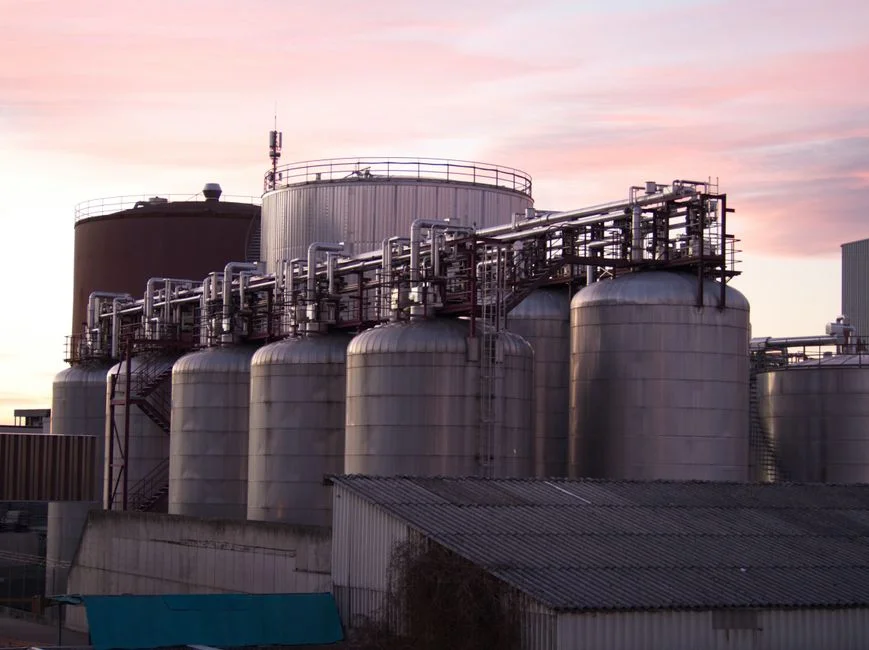
Procurement managers in Cambodia have learned to score EPC bidders on engineering substance rather than price alone. The five-point framework below is what a defensible 2026 vendor shortlist looks like.
- Reference plants. Verify at least three food-sector reference plants operating ≥12 months in Southeast Asia, and request the MoE discharge monitoring reports for each. A supplier without auditable compliance history is a liability.
- Quality certifications. Confirm ISO 9001 and ISO 14001, and request a factory acceptance test (FAT) video for the MBR skid. The FAT video is the single best predictor of on-site commissioning quality.
- Performance warranty. Require a one-year performance warranty tied to guaranteed effluent parameters (BOD₅, COD, TSS at the values in your MoE permit), not just equipment warranty. Equipment warranty covers defects; performance warranty covers the regulator.
- Permit and training support. Confirm that commissioning includes MoE permit application support and operator training in Khmer or English. A supplier who walks away after mechanical handover is not a 2026 supplier.
- Spare-parts logistics. Prefer suppliers with regional stock of membranes, diffusers, and DAF parts in Ho Chi Minh or Bangkok to avoid the 6–8 week shipping holds that mainland-China containerized freight routinely incurs into Sihanoukville and Phnom Penh ports.
Equipment packages that consistently meet the checklist include a PVDF flat-sheet MBR module for the polishing stage, a PLC-controlled coagulant and pH dosing skid for equalization, a plate-and-frame filter press for sludge dewatering, and a chlorine dioxide generator for effluent disinfection — each of which has a documented Cambodia or comparable SEZ installation base in 2024–2026.
Frequently Asked Questions
What BOD and COD limits apply to food factories in Cambodia in 2026? Under Sub-Decree No. 27 ANK.BK, surface-water discharge requires BOD₅ ≤50 mg/L and COD ≤100 mg/L. Sewered industrial-zone discharge is less stringent at BOD₅ ≤200 mg/L and COD ≤500 mg/L. On-site irrigation reuse is tightest at BOD₅ ≤30 mg/L and fecal coliform ≤200 MPN/100 mL.
How is cassava starch wastewater treated? Through a train of rotary screening, DAF pre-treatment, equalization with pH correction, a UASB or IC anaerobic reactor, MBR polishing, and chlorine-dioxide disinfection, achieving 95–99% overall COD removal and bringing effluent to BOD₅ ≤50 mg/L for surface-water discharge.
Can a small 50 m³/day food plant meet MoE standards affordably? Yes — a packaged MBR plus DAF skid with chemical dosing typically lands at USD 90,000–180,000 turnkey in 2026 and meets BOD₅ ≤50 mg/L and TSS ≤50 mg/L on beverage, rice-noodle, and small slaughterhouse streams.
Why does fish sauce wastewater need special treatment? Salinity above 5,000 mg/L Cl⁻ inhibits methanogens and conventional activated sludge; a halophilic MBR or RO is required to maintain compliance on nuoc-mam effluent.
How long does MoE permit approval take in 2026? Initial environmental compliance review takes 45–90 days; complete permit issuance typically runs 4–6 months when the technical file includes a certified process design and the influent/effluent characterization table the MoE requires.