Food factory wastewater in Iraq is typically treated with a screening → DAF → equalization → anaerobic (UASB/IC) → aerobic (MBR/MBBR) → disinfection process train, designed for influent COD of 3,000–10,000 mg/L, BOD 2,000–8,000 mg/L, and FOG 200–500 mg/L. Effluent must meet Iraq MoE/CoR discharge limits of BOD ≤40 mg/L, COD ≤150 mg/L, TSS ≤60 mg/L, and oil & grease ≤10 mg/L for discharge to surface water, with stricter limits (BOD <20 mg/L, TSS <30 mg/L, EC <2,000 µS/cm) where provincial authorities now require reuse-for-irrigation in water-stressed catchments such as Baghdad, Basra, and Karbala.
What Makes Food Factory Wastewater in Iraq a Distinct Engineering Problem
Three sub-sectors dominate Iraqi food manufacturing, and each generates a fundamentally different wastewater signature. Dairy plants in Baghdad, Erbil, and Basra discharge BOD 1,500–3,000 mg/L with FOG 200–800 mg/L and episodic CIP alkaline detergent surges (NaOH 1–3%, nitric-acid rinse). Date processing and tahini facilities in Karbala and Najaf run seasonally from October to February, producing COD 5,000–12,000 mg/L with high TSS from pits, skins, and press residues. Beverage and bottling lines in Baghdad, Erbil, and the Bismayah industrial zone run a lower-strength stream — COD 800–2,500 mg/L with high sugar and a 2–4× diurnal flow swing between bottling shifts and CIP.
The MENA operating envelope compresses the design margin further. Ambient temperature hits 45–50°C in summer and falls to 5–15°C in winter, a 30–40°C diurnal swing that a covered equalization tank must buffer to keep anaerobic biology in the 32–37°C mesophilic window. Grid power is unreliable, with documented outages of 4–8 hours/day in many industrial zones, forcing every design to budget for diesel backup at 150–200% of the average electrical load. Make-up water in Basra and southern Iraq carries 1,500–3,500 mg/L TDS, which raises the blended influent salinity and shifts DAF chemistry toward higher coagulant doses. The reference Italian Aquafil plant ran COD 9,657 mg/L, BOD 7,848 mg/L, and FOG 308 mg/L on 152 m³/day — Iraqi food plants commonly sit at the upper half of this range because of lower water-to-product ratios and batch processing.
Water scarcity is the binding constraint. Iraq's per-capita renewable water has fallen from 5,500 m³/year in the 1970s to under 1,000 m³/year in 2025 (FAO AQUASTAT trend, 2025-08), and provincial authorities are moving from "discharge-and-forget" to "reuse-or-ZLD" for new food plants. Designing only to the discharge envelope is no longer a defensible basis for a 2026 Iraqi permit.
Iraqi Discharge Standards and Compliance Targets for Food Effluent
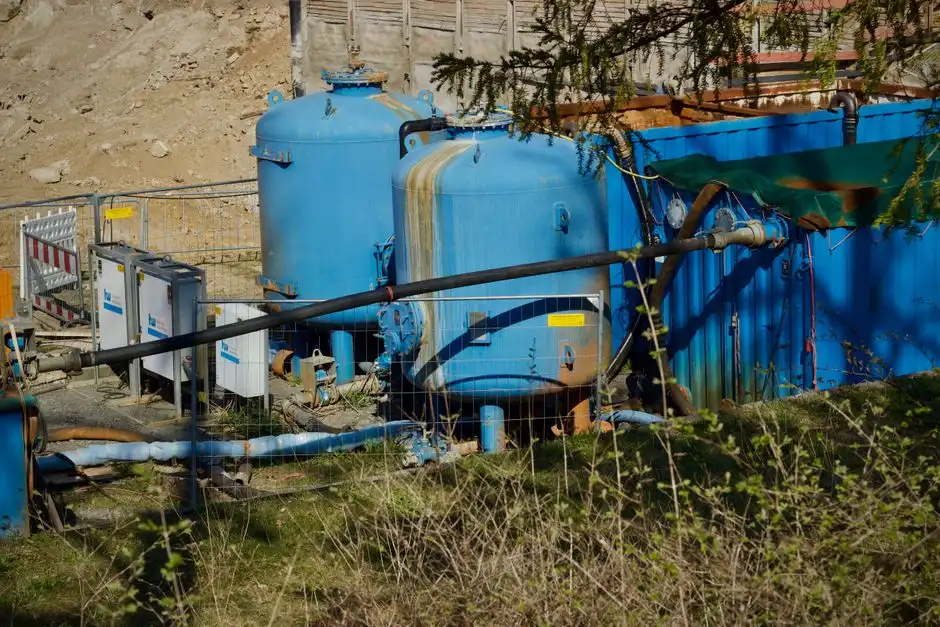
Federal Iraq regulates industrial discharge under Council of Ministers Decision 64/1989 (as amended) and the implementing regulations issued by the Ministry of Environment. For food effluent to surface water, the binding numbers are BOD₅ ≤40 mg/L, COD ≤150 mg/L, TSS ≤60 mg/L, oil & grease ≤10 mg/L, pH 6–9, residual chlorine 0.5–1.0 mg/L, and total nitrogen <15 mg/L for sensitive receivers (per MoE Decision 64/1989 as applied in 2025 industrial-zone permits). The Kurdistan Region's Ministry of Environment applies a broadly aligned envelope but tightens reuse parameters: TDS <2,000 mg/L and total coliform <200 MPN/100 mL are mandatory for any discharge routed to agricultural irrigation in Erbil, Duhok, and Sulaymaniyah governorates (KRG MoE Decision 3/2018, as updated 2024-09).
The 2024–2026 trend is unmistakably toward water reuse. Baghdad, Basra, and Karbala provincial directorates have begun conditioning new food-plant permits on reuse-for-irrigation limits of BOD <20 mg/L, TSS <30 mg/L, and EC <2,000 µS/cm — effectively pulling the design target from MoE Decision 64/1989 surface-water numbers down to reuse-grade. For export-grade projects in the Bismayah and Erbil industrial estates, EPCs default to the EU Industrial Emissions Directive 2010/75/EU BAT-AEL for food/beverage — BOD 25 mg/L, COD 125 mg/L, TSS 50 mg/L — because it pre-empts any later provincial tightening and matches what MENA financing institutions require. For a side-by-side reading, the UAE industrial effluent limits for MENA benchmarking are the most directly comparable GCC reference.
| Parameter | Iraq Federal MoE (CoR 64/1989, surface water) | KRG MoE (reuse/irrigation, 2024 update) | EU BAT-AEL 2010/75/EU (food/beverage) |
|---|---|---|---|
| BOD₅ | ≤40 mg/L | <20 mg/L (irrigation) | 25 mg/L |
| COD | ≤150 mg/L | <100 mg/L (irrigation) | 125 mg/L |
| TSS | ≤60 mg/L | <30 mg/L (irrigation) | 50 mg/L |
| Oil & grease | ≤10 mg/L | ≤5 mg/L | ≤10 mg/L |
| pH | 6–9 | 6.5–8.5 | — |
| TDS | — | <2,000 mg/L | — |
| Total coliform | — | <200 MPN/100 mL | — |
| Total nitrogen | <15 mg/L (sensitive) | <15 mg/L | 15 mg/L |
Reference Process Flow for a 2026 Iraqi Food Wastewater Treatment Plant
Stage 1 — Screening and grit removal. A rotary bar screen for headworks protection with 3–6 mm aperture handles gross solids, followed by a vortex or aerated grit chamber sized at 60 s peak flow retention. Expect 5–15% TSS removal here; the unit exists mainly to protect downstream pumps and DAF nozzles.
Stage 2 — DAF for FOG and colloidal COD. A DAF system for FOG and colloidal COD removal is non-negotiable for Iraqi dairy and date streams. Operate at 15–25 min HRT, 3–5 bar saturation pressure, and air-to-solids ratio (A/S) 0.02–0.05 kg air/kg TSS. The Aquafil reference plant removed 64% of COD and 99% of FOG in primary flotation; the same performance transfers to Iraqi high-FOG dairy and date streams, with float solids typically 3–6% DS. For high-FOG streams that show inconsistent float, follow the DAF O&M guide for high-FOG food streams to keep the saturator and scraper tuned.
Stage 3 — Flow and load equalization. A covered, insulated equalization tank at 12–24 h HRT with submersible mixers (1.5–2.5 W/m³) buffers the 2–4× diurnal swing. Insulation is mandatory in Baghdad's 45°C summer — temperature control here directly protects downstream anaerobic biology and prevents runaway volatile acid accumulation in the UASB.
Stage 4 — Anaerobic (UASB or IC reactor). Run mesophilic at 32–37°C with OLR 5–10 kg COD/m³/day. Expect 70–85% COD removal and 0.30–0.45 m³ CH₄ per kg COD removed. At 6,000 mg/L COD and 200 m³/day, a properly designed UASB/IC produces ~430 m³ CH₄/day — roughly 1.7 MWh thermal equivalent — which materially offsets aeration energy in Iraq's tariff-restricted grid. The cost lever is real: see the OPEX section below.
Stage 5 — Aerobic (MBBR or MBR). A MBR for reuse-quality polishing with 0.1–0.4 µm membrane gives sub-5 mg/L TSS effluent, suitable for the tightening KRG and provincial reuse envelopes. If capital is constrained, an MBBR with 30–40% carrier fill, F/M 0.2–0.3 kg BOD/kg MLSS·day, and 6–10 h HRT is the workhorse, followed by a lamella clarifier at 20–40 m/h surface loading. MBR's 60% footprint advantage over conventional activated sludge is the decisive factor on constrained Baghdad and Erbil sites. For biology issues during ramp-up or upset, the MBBR troubleshooting reference for food plant biology covers the nine most common field problems in 2026.
Stage 6 — Polishing and disinfection. For MBBR trains, a lamella clarifier is followed by a ClO₂ disinfection for reuse-compliant pathogen control sized 50 g/h to 20 kg/h, targeting <200 MPN/100 mL total coliform. For MBR trains, breakpoint chlorination at 5–8 mg/L Cl₂ is typically sufficient.
Stage 7 — Sludge handling. DAF float plus biological waste sludge thickens to 2–4% DS, then dewateres on a plate-and-frame filter press for combined DAF float and biological sludge at 22–28% DS cake. Cake goes to off-site composting or licensed landfill per local rules. Chemical conditioning typically uses PAC 8–15 kg/ton DS and PAM 2–4 kg/ton DS; cost optimization is covered in the PAC and PAM dosing optimization playbook.
Process Selection Matrix: Matching Technology to Iraqi Food Sub-Sector
The right train depends on influent strength, flow, and whether the discharge permit requires irrigation-grade reuse. Below is the decision rule I would hand to a 2026 EPC: choose anaerobic when influent COD >3,000 mg/L AND flow >100 m³/day, because the biogas offsets 25–35% of plant electricity at Iraqi industrial tariffs of USD 0.06–0.10/kWh. Skip anaerobic below that threshold — a DAF + MBR or DAF + MBBR train is simpler to operate and has faster commissioning.
For dairy (Baghdad, Erbil, Basra): DAF + anaerobic UASB + MBBR for 50–150 m³/day; switch to DAF + anaerobic + MBR when the permit pulls the design target to irrigation-reuse BOD <20 mg/L. Date processing and tahini (Karbala, Najaf — seasonal): flow-equalized DAF + anaerobic + SBR, with parallel SBR trains to absorb the 3–4× October–February peak; the high-efficiency sedimentation tank upstream of SBR cuts the TSS load on the batch reactor and improves settling. Beverage and bottling (Baghdad, Erbil, Bismayah): DAF + MBR is the lowest-CAPEX and smallest-footprint option at COD <2,500 mg/L, with packaged skid deployment on a containerized or underground integrated treatment skid for trailer-mount when the site is tight or temporary. Edible oil refining is a special case: two-stage DAF — first at pH 9–10 for soapstock, second for residual oil — followed by anaerobic; oil & grease <10 mg/L is non-negotiable, and the local inspector will shut the plant down on a single failed grab sample.
| Sub-sector | Influent COD (mg/L) | Recommended train (50–200 m³/day) | Recommended train (200–500 m³/day) | Reuse-grade upgrade |
|---|---|---|---|---|
| Dairy | 1,500–3,000 | DAF + anaerobic UASB + MBBR | DAF + IC + MBR | Add MBR or RO |
| Date processing / tahini | 5,000–12,000 | Equalized DAF + anaerobic + SBR (parallel) | Equalized DAF + IC + SBR | Add MBR polishing |
| Beverage / bottling | 800–2,500 | DAF + MBBR | DAF + MBR | MBR alone typically meets reuse |
| Edible oil refining | 3,000–8,000 | Two-stage DAF + anaerobic UASB | Two-stage DAF + IC + MBBR | Polishing sand filter + ClO₂ |
CAPEX and OPEX Benchmarks for Iraqi Food Plants (2026)
Turnkey CAPEX for a 2026 Iraqi food-plant wastewater treatment system, inclusive of civil works, equipment, installation, commissioning, and 12 months of spares, typically falls in the following bands: 50 m³/day USD 110,000–230,000; 200 m³/day USD 320,000–780,000; 500 m³/day USD 720,000–1,600,000. MBR-based designs sit at the upper end of each band; DAF + SBR trains sit at the lower end. These are based on 2026 EPC quotations for Baghdad, Erbil, Basra, and Karbala industrial zones (HydropureWater field data, 2026), excluding land and outfall.
OPEX is dominated by electrical energy — typically 60% of total OPEX at 0.10–0.18 kWh/m³ treated and the Iraqi industrial tariff band of USD 0.06–0.10/kWh. Chemicals (PAC, PAM, NaOH) account for 15%, sludge disposal 12%, labor 8%, and membrane replacement 5% (MBR trains only). The biogas energy offset is the most under-priced lever in the EPC conversation: at 200 m³/day and 6,000 mg/L COD, a UASB/IC offsets 25–35% of plant electricity — worth USD 8,000–15,000/year at current Iraqi tariffs and 2026 diesel price, and it scales linearly with flow.
Iraqi-specific cost uplifts a Western EPC quote will not include: 10–18% for grid-power resilience (diesel generator + UPS sized at 150–200% of average load), 5–8% for sandstorm-rated enclosures (IP55 minimum, intake sand filters, gasketed control panels), and 8–12% for logistics into Basra, Erbil, or Mosul industrial zones, where overland freight and customs clearance add real money. Bake these in from the first budget round.
| Plant size | Turnkey CAPEX (USD, 2026) | Specific energy (kWh/m³) | OPEX (USD/m³ treated) | Recommended train |
|---|---|---|---|---|
| 50 m³/day | 110,000–230,000 | 0.12–0.18 | 0.35–0.55 | DAF + MBBR (no anaerobic) or DAF + UASB + SBR |
| 200 m³/day | 320,000–780,000 | 0.10–0.16 | 0.28–0.48 | DAF + UASB/IC + MBBR or MBR |
| 500 m³/day | 720,000–1,600,000 | 0.10–0.14 | 0.22–0.40 | DAF + IC + MBR (with CHP) |
Frequently Asked Questions
What are the Iraq MoE/CoR discharge limits for food factory wastewater?
Federal Iraq's Council of Ministers Decision 64/1989 sets BOD₅ ≤40 mg/L, COD ≤150 mg/L, TSS ≤60 mg/L, oil & grease ≤10 mg/L, pH 6–9, and total nitrogen <15 mg/L for discharge to surface water. The Kurdistan Region applies the same envelope but tightens reuse parameters to TDS <2,000 mg/L and total coliform <200 MPN/100 mL when the effluent routes to agricultural irrigation.
What influent COD and BOD should I design for an Iraqi dairy or date plant?
Design for COD 3,000–10,000 mg/L and BOD 2,000–8,000 mg/L as the envelope covering dairy (lower end) and date processing (upper end). FOG ranges 200–500 mg/L across the same envelope, with dairy date-plant peaks during October–February at 800 mg/L FOG. Always verify with a 7-day composite sampling campaign before finalizing reactor volumes.
When is anaerobic treatment worth the extra complexity for an Iraqi food plant?
Add a UASB or IC reactor when influent COD >3,000 mg/L AND flow >100 m³/day. At 6,000 mg/L COD and 200 m³/day, the reactor produces ~430 m³ CH₄/day, offsetting 25–35% of plant electricity at current Iraqi industrial tariffs — a payback of 2–4 years on the anaerobic CAPEX premium. Below 100 m³/day, the O&M cost of UASB/IC outweighs the biogas value.
What is the cheapest compliant treatment train for a 50 m³/day Iraqi beverage plant?
DAF + MBBR with chlorination, sized at COD 2,000 mg/L and FOG 100 mg/L influent, runs USD 110,000–160,000 turnkey in 2026 and meets Federal MoE surface-water discharge. If the provincial permit requires irrigation-reuse (BOD <20 mg/L, TSS <30 mg/L), upgrade to DAF + MBR at USD 180,000–230,000 — the MBR effluent is essentially reuse-ready without tertiary filtration.
How much does Iraq-specific design add to a standard food-wastewater EPC quote?
Three line items a Western baseline will not price: 10–18% for grid-power resilience (diesel + UPS), 5–8% for sandstorm-rated enclosures (IP55, intake sand filters), and 8–12% for logistics into Basra, Erbil, or Mosul industrial zones. On a 200 m³/day plant at USD 500,000 base CAPEX, this is USD 115,000–190,000 of additional scope that must be in the budget from day one.