Why Steel Mill Wastewater Is One of the Hardest COD and BOD Streams in Industry
Coke oven effluent in an integrated steelworks routinely runs 1,500-5,000 mg/L COD, 200-800 mg/L phenol, 5-50 mg/L total cyanide, 100-600 mg/L ammonia, and visible color exceeding 1,000 Pt-Co units — a composite rarely matched in any other process industry. BOD₅ sits in the 500-2,000 mg/L band but BOD₅/COD ratios below 0.3, indicating that 60-70% of the load is refractory and resistant to conventional activated sludge (per industry-standard integrated steel mill characterization). Rolling-mill and cold-rolling effluents add another 500-3,000 mg/L of emulsified oil that poisons biomass and blinds membranes within hours if not stripped upstream. Blast-furnace gas scrubber water and sinter-plant leachate contribute suspended solids above 500 mg/L, plus Zn, Pb and Cr at 2-20 mg/L each, which require dedicated metals removal. The result is a multi-front challenge: high bulk organics, a refractory fraction dominated by phenols and cyanides, ammonia that must be nitrified, and heavy metals that any municipal-trained design engineer is likely to underestimate. Generic municipal designs fail because the toxicity profile and the temperature swing (coke effluent leaves the still at 40-80°C) sit outside the operating envelope of standard activated sludge and most MBR trains.
The Five Steelworks Waste Streams and Their Treatment Logic
Segregation is the first engineering decision; blending everything upstream is the most common mistake on retrofit projects. The five streams that almost every integrated or mini-mill must treat separately are summarized below, each with its dominant contaminants and the unit operation that handles it.
| Stream | Source | Key Parameters | Front-End Unit Operation | Target Before Blending |
|---|---|---|---|---|
| 1. Coke oven wastewater | Coal carbonization condensate | COD 1,500-5,000 mg/L; phenol 200-800 mg/L; NH₃-N 100-600 mg/L; CN⁻ 5-50 mg/L; 40-80°C | Ammonia stripping + solvent extraction for phenol recovery | Phenol <50 mg/L; NH₃-N <200 mg/L; T <40°C |
| 2. BF/BOF gas scrubber water | Wet cleaning of blast furnace and converter gas | TSS 500-2,000 mg/L; CN⁻ 1-10 mg/L; Zn/Pb 2-20 mg/L; pH 7-9 | Sedimentation + alkaline chlorination or Fenton for cyanide destruction | CN⁻ <0.5 mg/L; TSS <50 mg/L |
| 3. Rolling mill emulsion | Lubricant and hydraulic fluids from hot/cold rolling | Oil/grease 500-5,000 mg/L; COD 2,000-10,000 mg/L; pH 7-10 | Break tank + chemical destabilization + DAF | Oil <10 mg/L; oil recovery >95% |
| 4. Pickling wastewater | Continuous acid cleaning of steel strip | Free acid 1-5% as H₂SO₄/HCl; Fe 1,000-8,000 mg/L; Cr 5-50 mg/L | Neutralization + sedimentation + ion exchange or RO; never blend | Fe <5 mg/L; Cr <0.5 mg/L; pH 6-9 |
| 5. Combined process wastewater | Equalized blend of streams 1-3 after segregation | COD 800-2,000 mg/L; NH₃-N 50-150 mg/L; oil <20 mg/L | Equalization (6-12 h HRT) + biological train | Feeds UASB + A/O + MBR |
Stream 3 sizing typically lands in the 4-300 m³/h band covered by 13 standard DAF models, with the DAF for rolling-mill emulsion pre-treatment sized at 4-10 m³/h per cubic meter of tank volume. Stream 4 must be kept isolated — its acid and Cr(VI) load will crash a biological train in less than one HRT if blended.
The 2026 Process Train: From Pre-Treatment to Polished Effluent
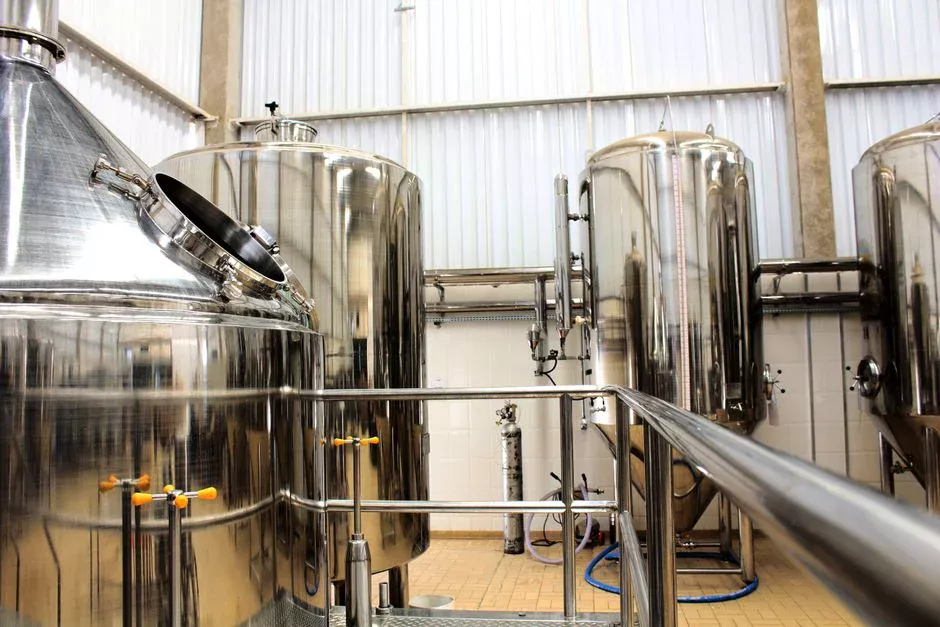
A defensible 2026 train for an integrated steelworks combines a robust physical-chemical front end with anaerobic-aerobic biology and membrane polishing, layered with advanced oxidation for the residual refractory fraction. Each stage has a measurable removal target so a procurement manager can defend every line item.
Stage 1 — Headworks. A rotary bar screen for steel mill headworks at 3-10 mm aperture removes coarse debris and protects downstream pumps; expect <5% volumetric debris loading from slag quench and sinter blow-down.
Stage 2 — Equalization. Flow and load dampening in a 6-12 h retention basin smooths the diurnal swings typical of batch casting and rolling operations; a swing factor of 1.5-2.5x mean flow is common.
Stage 3 — Physico-chemical. Coagulation with PAC (50-200 mg/L) plus anionic PAM (0.5-2 mg/L) followed by DAF delivers a 30-50% COD cut and brings oil/grease below 10 mg/L — the level at which downstream MBR membranes can run a 30-day cleaning interval rather than a 5-day one. Automatic chemical dosing for coagulation and Fenton is standard at this stage.
Stage 4 — Anaerobic UASB. Mesophilic operation at 35-37°C with an organic loading rate of 5-15 kg COD/m³·d achieves 60-80% COD removal on the soluble fraction when the BOD₅/COD ratio exceeds 0.4. Biogas yield sits at 0.30-0.40 m³ CH₄ per kg COD removed, worth $0.05-$0.12 per kWh thermal in most jurisdictions.
Stage 5 — Aerobic A/O or A²/O. A modified Ludzack-Ettinger or Bardenpho configuration handles nitrification and denitrification simultaneously. Target mixed liquor suspended solids 3,000-5,000 mg/L, HRT 12-24 h, DO 1.5-2.5 mg/L in the aerobic zone and <0.5 mg/L in the anoxic zone. MBR for steel mill wastewater polishing replaces the secondary clarifier downstream.
Stage 6 — MBR Polishing. PVDF flat-sheet or hollow-fibre membranes at 0.1-0.4 µm produce effluent with TSS <5 mg/L and COD 50-150 mg/L, suitable for cooling-tower make-up.
Stage 7 — Advanced Oxidation (if needed). Fenton at H₂O₂/Fe²⁺ molar ratio 3-5 with Fe 200-500 mg/L handles residual phenols and color; ozone at 2-5 mg O₃ per mg residual COD or activated carbon as a polishing adsorbent are alternatives where Fenton sludge is unacceptable (per Chopra & Sharma 2012, electrocoagulation with sacrificial electrodes complements chemical coagulation for stubborn colloids).
Biological Design: Why UASB + A/O + MBR Is the 2026 Default
UASB is preferred over conventional anaerobic lagoons at steel mills for three reasons: organic loading rates of 5-15 kg COD/m³·d shrink the footprint by 80-90%, the enclosed reactor captures biogas for combustion in the coke-oven gas network, and the upflow configuration tolerates the 100-200 mg/L residual phenols that would strip volatile fatty acids out of a CSTR. Reference UASB design parameters for high-COD steel mill wastewater for OLR, HRT and height-to-diameter calculations.
A/O or A²/O is the right aerobic block because coke wastewater ammonia regularly exceeds 600 mg/L while discharge limits under China GB 13456 (≤5 mg/L) and India CPCB (≤5 mg/L NH₃-N) leave no room for shortcut nitrification. MBR replaces the secondary clarifier, eliminates biomass washout at high SRT, and stabilizes effluent at COD 50-150 mg/L even when phenol and ammonia swing together. DF-series PVDF flat-sheet MBR modules are a common 0.1 µm reference. Operating at SRT 30-60 days suppresses slow-growing nitrifiers and tolerates toxic spikes from cyanide or phenol once the biomass is acclimatized over 4-6 weeks. Residual color and refractory COD after MBR are best handled with activated carbon polishing for residual COD and color.
2026 Discharge Limits and Compliance Benchmarks by Region
Design envelopes are set by the strictest applicable regulation, so the table below is the reference a process engineer should pin to the wall before any mass balance. Numbers are daily discharge limits for direct surface-water release unless noted.
| Region / Standard | COD (mg/L) | BOD₅ (mg/L) | NH₃-N (mg/L) | Phenol (mg/L) | Cyanide (mg/L) | Oil & Grease (mg/L) | TSS (mg/L) |
|---|---|---|---|---|---|---|---|
| US EPA 40 CFR Part 420 (coke & iron-steel subcategories) | 120-220 | 30-50 | 2.0-9.0 | 0.1-0.5 | 0.5-1.0 | 5-15 | 10-30 |
| EU IED 2010/75/EU + 2022 BREF revision (BAT-AEL, integrated coke + steel) | 30-50 | 10-20 | 10-25 (total N) | 0.1-0.5 | 0.1-0.4 | 3-10 | 10-25 |
| China GB 13456-2012 (new draft 2025) | ≤50 | ≤10 | ≤5 | ≤0.3 | ≤0.2 | ≤1 | ≤10 |
| India CPCB Schedule-VI (2024 update, enforced 2026) | ≤250 (inland surface water) | ≤30 | ≤5 | ≤1.0 | ≤0.2 | ≤10 | ≤100 |
| Saudi/UAE PME-aligned envelope (typical) | ≤150 | ≤30 | ≤10 | ≤0.5 | ≤0.5 | ≤10 | ≤50 |
Phenol is the single parameter most often underestimated on cross-border projects; see regional phenol discharge limits for the steel industry for the full picture. For suspended solids reference values in Gulf markets, the suspended solids compliance guide provides typical envelope numbers.
Equipment Selection Matrix and 2026 Cost Benchmarks
The matrix below converts the design into a defensible procurement recommendation. CAPEX and OPEX figures are 2026 installed-cost ranges for the Chinese export market and equivalent Indian/Southeast Asian projects, with adjustments of +20-35% for EU/US installation labor and +10-20% for Gulf sites.
| Equipment | Sizing Rule | Typical Capacity | CAPEX (USD, installed) | OPEX Driver | Notes |
|---|---|---|---|---|---|
| Rotary bar screen (GX) | 3-10 mm aperture; 0.5-1.5 m/s approach | 50-2,000 m³/h | $8K-$30K | Spray water 0.5-1 m³/h | Trash rake duty 2-4 cycles/h |
| DAF | 4-10 m³/h per m³ tank | 4-300 m³/h | $25K-$80K (50 m³/h unit) | PAC 50-200 mg/L; PAM 0.5-2 mg/L | Air-to-solid ratio 0.02-0.05 |
| UASB (concrete + EGSB internals) | 5-15 kg COD/m³·d OLR | 500-5,000 m³/d | $300-$700 per m³ daily flow | Biogas credit $0.05-$0.12/kWh thermal; heating 0.05-0.15 kWh/m³ | Payback 18-30 months from biogas in most jurisdictions |
| A/O or A²/O basin | HRT 12-24 h; MLSS 3,000-5,000 mg/L | 500-5,000 m³/d | $120-$280 per m³/d | Aeration 0.3-0.6 kWh/m³; methanol 2-4 mg/mg NO₃-N if denitrifying | DO control ±0.3 mg/L saves 15-20% blower power |
| MBR package (membrane + blower + CIP) | Flux 12-18 LMH | 500-2,000 m³/d | $180-$420 per m³/d installed | Membrane replacement 5-8 yr; CIP chemicals 0.02-0.05 USD/m³ | DF-series 0.1 µm PVDF reference module |
| Underground integrated package (WSZ, for ≤500 m³/d sites) | Pre-fab; HRT 8-14 h | 10-500 m³/d | $50K-$250K | Sludge hauling 0.3-0.8 USD/m³ | See compact pre-fab plant |
| Filter press (plate & frame) for sludge dewatering | Cycle 2-4 h; cake 25-35% DS | 5-50 m³/h slurry feed | $40K-$180K | Polymer 3-8 kg/t DS; cloth life 800-1,200 h | See sludge dewatering via filter press |
Whole-plant CAPEX for a 5,000 m³/d integrated steel mill WWTP typically lands at $1.5M-$6M with OPEX of $0.45-$1.10 per m³ treated, including chemicals and sludge disposal. The structure mirrors the analogous cost breakdown for high-COD industrial wastewater already published, with the steel-mill case adding 10-15% for cyanide destruction and ammonia stripping.
Common Failures and Engineering Pitfalls to Avoid
Most expensive retrofits trace back to one of five mistakes. Do not blend pickling wastewater into the biological train — chromium and low pH will kill biomass within hours and force a 4-6 week re-seeding cycle. Oil/grease spikes above 50 mg/L reaching the MBR will foul membranes within 24 hours; install DAF plus an in-line oil-in-water monitor with auto-divert to the break tank. UASB below 25°C halves methanogenic activity, so insulate the reactor or pull waste heat from coke-oven gas at 600-800°C. Phenolic shock loads above 500 mg/L require an on-line Fenton or ozone bypass; do not rely on biology alone to absorb a swing of that magnitude. For monitoring and automated response, the PLC monitoring strategy for cyanide, phenol and ammonia spikes outlines the alarm setpoints and control logic that have held up on operating plants.
Frequently Asked Questions
What COD and BOD removal efficiency can a combined UASB + A/O + MBR train achieve on coke oven wastewater?
A combined train routinely delivers 90-99% COD removal, taking coke oven influent of 1,500-5,000 mg/L down to 50-150 mg/L and BOD₅ below 10 mg/L at the outlet, meeting 40 CFR Part 420 and EU IED BAT-AEL envelopes for 2026.
What is the minimum effluent quality needed to reuse steel mill wastewater for cooling-tower make-up?
Cooling-tower make-up typically requires TDS <500 mg/L, COD <50 mg/L, chloride <200 mg/L and hardness <100 mg/L as CaCO₃, which an MBR followed by softening or RO can meet in most climates.
Which single upgrade delivers the largest CAPEX-to-compliance ROI on an under-performing steel mill WWTP?
Adding a properly sized DAF in front of the existing aeration basin typically cuts aeration demand by 25-35% and reduces MBR cleaning frequency by a factor of 3-4, with payback inside 12 months for a $25K-$80K investment.
How are phenol and cyanide removed in a modern steel mill wastewater train?
Phenol is recovered upstream by solvent extraction (typically methyl isobutyl ketone or butyl acetate) to below 50 mg/L, with the remainder polished by biological degradation in the A/O stage and a final Fenton or activated carbon step; cyanide is destroyed by alkaline chlorination at pH 10-11 to free cyanate, then hydrolyzed to ammonia and CO₂ (per EPA 40 CFR 420 BAT guidance).
What is the most overlooked downstream cost in a steel mill WWTP design?
Sludge handling — chemical, biological and Fenton sludge combined can reach 0.3-0.8 kg dry solids per m³ treated, and a plate-and-frame filter press at $40K-$180K with polymer dosing 3-8 kg per ton DS is often the line item cut from the early budget that later dominates operating cost.