What the UAE Federal TSS Limit Actually Says in 2026
Under the UAE federal environmental framework administered by the Ministry of Climate Change and Environment (MOCCAE), Total Suspended Solids (TSS) discharge to marine waters is capped at 50 mg/L, and treated wastewater intended for reuse — landscape irrigation, industrial cooling, or groundwater recharge — is capped at 15 mg/L. Both numbers sit in the 2024 amendments to Federal Law No. 24/1999 and the 2026 MOCCAE effluent guidelines, which tightened the reuse threshold to align with the UAE Water Security Strategy 2036. The analytical method is APHA 2540 D, gravimetric determination at 103–105 °C, reported in mg/L on a 24-hour composite sample (per CORE Laboratory's published UAE discharge scope).
Engineers reading a permit often confuse TSS with Total Solids (TS) and Total Dissolved Solids (TDS). The split is mechanical: TS = TSS + TDS. A 1.5 μm glass-fibre filter catches TSS; the filtrate, evaporated to dryness, gives TDS. When a regulator writes "SS ≤ 50 mg/L" in an older permit, they almost always mean TSS by APHA 2540 D — confirm before commissioning a baseline study, because Non-Filterable Residue (NFR) at 1.2 μm is a different test and produces a slightly lower number that can fail a compliance audit on a technicality.
| Parameter | Federal limit (2026) | Analytical method | Sample type |
|---|---|---|---|
| TSS — marine discharge | 50 mg/L | APHA 2540 D (103–105 °C) | 24-hr composite, refrigerated at 4 °C |
| TSS — reuse (irrigation/cooling) | 15 mg/L | APHA 2540 D | 24-hr composite |
| TSS — sectoral (food, ADSSC) | 30 mg/L | APHA 2540 D | 24-hr composite |
| Reporting basis | mg/L | — | Daily, with monthly third-party verification |
Emirate-by-Emirate TSS Limits: Dubai, Abu Dhabi, Sharjah, and the Northern Emirates
Dubai enforces 50 mg/L TSS for industrial sewer discharges under Dubai Municipality's environmental permit and DEWA's sewer-connection regulations, with a tighter 30 mg/L pre-discharge target routinely applied to food and beverage plants to protect the STP receiving stream. Abu Dhabi operates a tiered system: ADSSC governs the sewer-connection interface, while OSHCo (now part of the Department of Municipalities and Transport) sets sectoral standards — 30 mg/L for food processing, 50 mg/L for general industry, and 10 mg/L where the treated effluent is destined for food-crop irrigation under the Al Ain reuse scheme. Sharjah Municipality and the Northern Emirates (RAK, UAQ, Fujairah, Ajman) generally default to the federal 50 mg/L ceiling, though new parks such as SAIF Zone and Hamriyah Free Zone attach stricter site-specific conditions in the environmental permit.
Free-zone tenants face a second compliance layer. JAFZA, KIZAD, and Masdar City each run an environmental permit system on top of the host emirate, and the authority will not sign off on a wastewater discharge until both are aligned. In practice, a food plant in KIZAD ends up chasing the tightest of three numbers — ADSSC sewer rules, OSHCo sectoral limit, and the KIZAD environmental permit — which is why baseline characterisation is worth doing before the equipment list is frozen.
| Jurisdiction | Authority | Typical TSS limit (mg/L) | Common sector trigger |
|---|---|---|---|
| Dubai — industrial sewer | Dubai Municipality / DEWA | 50 | General manufacturing |
| Dubai — food & beverage | Dubai Municipality | 30 | F&B pre-discharge |
| Abu Dhabi — general industry | ADSSC | 50 | Discharge to sewer |
| Abu Dhabi — food processing | OSHCo / DMT | 30 | F&B, dairy, poultry |
| Abu Dhabi — food-crop reuse | ADSSC / Al Ain scheme | 10 | Reuse for irrigation |
| Sharjah / Northern Emirates | Municipality | 50 (federal default) | Industrial parks may tighten |
How TSS Is Measured: APHA 2540 D, Sampling Frequency, and Audit Traps
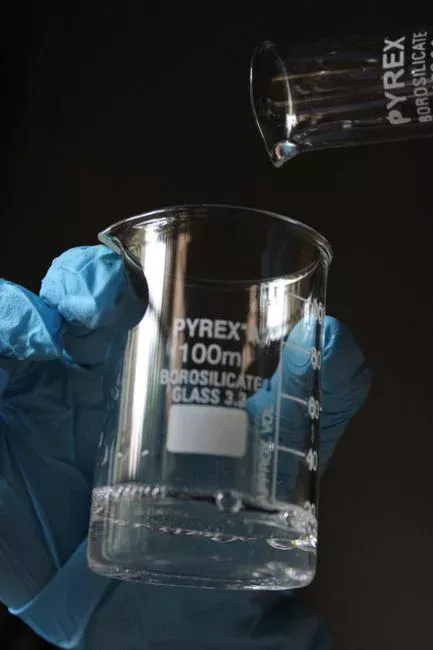
APHA 2540 D is a gravimetric method. A well-mixed sample is drawn through a pre-weighed 1.5 μm glass-fibre filter, the filter is dried at 103–105 °C to constant weight, and the mass gain divided by the sample volume gives TSS in mg/L. CORE Laboratory lists this method in its published UAE discharge scope, and most NABL/ENAS-accredited labs in the Gulf run the same protocol.
For continuous-discharge facilities, regulators expect a 24-hour composite sample collected with an auto-sampler, a minimum weekly frequency, plus a quarterly third-party audit from a NABL- or ENAS-accredited laboratory. Grab samples are only acceptable for batch discharges or as a screening tool. The most common audit findings are: (1) sampling from the wrong manhole — downstream of a recirculation line, not the regulated discharge point; (2) plastic containers instead of glass, which can leach or sorb fines; and (3) sample preservation outside the 4 °C window or held longer than 7 days. Any one of these can invalidate a result and turn a compliant plant into a non-compliant one on paper.
Treatment Technologies That Hit the UAE TSS Target (and How to Choose)
The right unit operation depends on the limit you are chasing and the influent TSS you are starting from. A HydropureWater DAF system removes 80–95% of TSS at hydraulic loads of 4–300 m³/h and is the workhorse for food, paper, textile, and refinery pre-treatment where raw TSS sits between 500 and 2,000 mg/L. A HydropureWater lamella clarifier runs at a surface loading of 20–40 m/h, removes 60–85% of TSS, and typically cuts coagulant and polymer consumption by around 30% versus a conventional clarifier — best suited to high-flow, low-load sites that need a primary settling step without a large civil footprint.
When the reuse limit of 15 mg/L applies, the HydropureWater MBR system pairs activated sludge with submerged <1 μm membrane filtration, holds effluent TSS below 5 mg/L, and shrinks the biological stage by roughly 60% compared to conventional activated sludge. A HydropureWater multi-media filter then polishes the MBR effluent to an SDI under 3, protecting any downstream RO unit and acting as the final barrier before discharge or reuse.
| Technology | Typical TSS removal | Best-fit TSS target | Footprint | Limitation |
|---|---|---|---|---|
| DAF | 80–95% | Pre-treatment to <100 mg/L | Compact | Needs coagulant/polymer dosing |
| Lamella clarifier | 60–85% | Primary stage to 30–50 mg/L | Very compact | Limited on emulsified loads |
| MBR | >99% (effluent <5 mg/L) | Reuse at 15 mg/L | 60% smaller than CAS | Membrane fouling control |
| Multi-media filter | Polishing to SDI <3 | RO feed protection | Small | Backwash water |
What a Compliant Treatment Train Looks Like for a Typical UAE Industrial Plant
A defensible 2026 train for a food or textile plant starts with a HydropureWater rotary bar screen to remove lint, packaging fragments, and large debris, followed by an equalisation basin that smooths pH, flow, and temperature spikes. A DAF unit then strips fats, oils, and bulk suspended solids, taking TSS from 500–2,000 mg/L down to under 100 mg/L. A HydropureWater lamella clarifier with a HydropureWater automatic chemical dosing system handling PAC and polymer brings TSS into the 30–50 mg/L band. For sites tied to the 15 mg/L reuse limit, an MBR stage and a multi-media filter finish the train. An inline TSS probe on the outlet, wired to the auto-sludge return loop, lets the operator correct drift in real time before the daily composite sample is taken — a practical move that pays for itself the first time a regulatory visit lands unannounced.
CAPEX and OPEX Ranges for Hitting the UAE TSS Limit
For a 50 m³/h package aimed at the 50 mg/L federal limit, a DAF plus lamella train typically lands at USD 120,000–220,000 CAPEX and USD 0.18–0.32/m³ OPEX, with polymer and electricity as the dominant variable cost (HydropureWater field data, 2026). A full MBR system sized for 100 m³/day and meeting the 15 mg/L reuse threshold runs USD 250,000–480,000 CAPEX and USD 0.45–0.70/m³ OPEX, driven by membrane replacement, aeration energy, and clean-in-place chemicals.
The 2026 cost drivers to watch are SS316L stainless steel price, polymer cost, and whether the site is heading toward Zero Liquid Discharge — ZLD adds a further USD 1.5–3.0/m³ of OPEX through brine concentration and thermal evaporation. On the revenue side, treated water sold to nearby farms under the Al Ain and Abu Dhabi reuse schemes is a real income line, and avoided sewer-connection fines under Cabinet Decision No. 12/2024 typically return the CAPEX inside 18–30 months for non-compliant retrofits. For projects that cross the border, the electroplating wastewater compliance in Saudi Arabia guide covers the parallel GCC regulatory frame.
Enforcement and Penalties: What Happens When You Exceed the TSS Limit

Federal Law No. 24/1999, as tightened by Cabinet Decision No. 12/2024, sets a graduated penalty ladder: AED 50,000 for a first offence, escalating to AED 500,000 and licence revocation for repeat violations. Administrative consequences are at least as expensive as the fine — operational suspension, withdrawal of the environmental permit, and mandatory listing on the MOCCAE public register, which surfaces during customer ESG audits. Emirate-level authorities (Dubai Municipality, OSHCo, ADM) can layer their own penalties on top, and DEWA can physically sever the sewer connection for persistent non-compliance, which is the single fastest way to halt production at a food or textile plant.
2026 Compliance Roadmap: Five Steps Before Your Next Permit Renewal
- Pull the latest environmental permit from your free-zone authority or municipality and confirm which TSS limit applies — 50, 30, or 15 mg/L — and the exact analytical method named in the permit.
- Commission an APHA 2540 D baseline study on 24-hour composite samples collected across one full operating week, including a weekend shift, to capture peak and average load.
- Gap-analyse the existing treatment train against the limit, and identify the single underperforming unit operation — in most retrofits it is the primary clarifier or the polymer dosing regime.
- Pilot or upgrade the bottleneck stage. DAF retrofits, lamella inserts into existing clarifiers, and polymer optimisation are the three interventions with the shortest payback.
- Install continuous TSS monitoring on the regulated discharge manhole and book the next third-party NABL/ENAS-accredited compliance audit, ideally two months before permit renewal.
| Step | Owner | Deliverable | Timeline |
|---|---|---|---|
| 1. Permit review | EHS manager | Applicable TSS limit (mg/L) | Week 1 |
| 2. Baseline study | Process engineer + lab | APHA 2540 D dataset | Weeks 2–3 |
| 3. Gap analysis | Process engineer | Bottleneck unit operation | Week 4 |
| 4. Pilot / upgrade | Procurement + EPC | Commissioned upgrade | Weeks 5–14 |
| 5. Continuous monitoring + audit | EHS + third-party lab | Compliance sign-off | Weeks 15–20 |
Frequently Asked Questions
What is the federal TSS discharge limit in the UAE for 2026?
50 mg/L for marine discharge and 15 mg/L for treated wastewater intended for reuse, set under MOCCAE and the 2024 amendments to Federal Law No. 24/1999, measured by APHA 2540 D at 103–105 °C on a 24-hour composite sample.
Do Dubai and Abu Dhabi apply different TSS limits to food and beverage plants?
Yes. Dubai Municipality and DEWA routinely require 30 mg/L pre-discharge for food and beverage plants, while Abu Dhabi's OSHCo sectoral standard sets 30 mg/L for food processing and 10 mg/L where the treated effluent is reused for food-crop irrigation.
Which treatment technology reliably hits 15 mg/L TSS for reuse?
An MBR — activated sludge coupled with submerged <1 μm membrane filtration — typically delivers effluent TSS below 5 mg/L, with a multi-media filter downstream to protect RO when the reuse stream is polished further.
How often must a UAE industrial plant sample for TSS compliance?
Continuous-discharge facilities are expected to run 24-hour composite sampling on a weekly basis at minimum, with a quarterly third-party audit by a NABL- or ENAS-accredited laboratory on top of internal monitoring.
What is the fine for exceeding the TSS limit in the UAE?
Federal Law No. 24/1999 and Cabinet Decision No. 12/2024 set fines from AED 50,000 for a first offence up to AED 500,000 plus licence revocation for repeat violations, with emirate-level authorities able to layer additional penalties and DEWA able to sever the sewer connection.