Why Chemical Wastewater Plants Need Predictive Maintenance in 2026
A predictive maintenance system for a chemical wastewater plant in 2026 combines IIoT sensors — vibration, motor current signature analysis, ultrasound, pH/ORP, TOC, turbidity — on critical assets (pumps, blowers, MBR membranes, chemical dosing skids, Fenton reactors) with edge gateways, an analytics layer using statistical thresholds, anomaly detection (Isolation Forest), and remaining-useful-life models, integrated to existing PLC/SCADA and CMMS. Industry deployments report 30–50% reduction in unplanned downtime, 1.5–2.5× MTBF extension, and 12–24 month payback at typical CAPEX of $80–$250k for a 50–200 m³/h plant.
The avoidable case that frames this article: a 120 m³/h chemical WWTP experienced seizure of a Fenton-reactor recirculation pump during a high-campaign production week. The bearing had been degrading for 11 days, but the only available signal was a motor overload trip — a reactive, not predictive, indicator. Result: 36 hours of off-spec discharge, ~$140k in lost chemical-throughput recovery, and ~$40k in effluent-penalty exposure (totaling roughly $180k). A properly tuned 2026 PdM stack would have flagged the vibration envelope creep and the MCSA sideband at 5–14 days lead time, with a planned bearing swap during the next maintenance window.
Baseline exposure across the sector is significant. Unplanned downtime at chemical WWTPs averages 4–8% of operating hours, versus <1% at best-in-class PdM-enabled sites (Plant Engineering, 2026 industry benchmarks). The academic foundation for modern PdM — the four functions of detection, diagnosis, prognosis, and self-healing — is well established (Sayed-Mouchaweh & Lughofer, Springer 2018), but chemical WWTPs demand domain-tuned models. Corrosive atmospheres (HCl, H2SO4, Cl₂ vapor), explosive-gas zones near chlorine dioxide rooms, scaling in Fenton and MBR assets, and abrasive slurries in primary treatment create failure modes that generic rotating-equipment PdM templates systematically miss.
The Four-Layer Architecture of a 2026 PdM System
A 2026 PdM stack for chemical wastewater service is best structured as four explicit layers, each with defined deliverables and failure modes. The architecture mirrors the industrial wastewater remote monitoring architecture reference design, with additional analytics depth.
Layer 1 — Sensing. IEPE accelerometers (1–10 kHz, ±50 g) on bearing housings; motor current signature analysis (MCSA) on VFD-driven pumps and blowers; airborne and structure-borne ultrasound (20–100 kHz) for steam-trap and bearing lubrication work; oil-debris and ferrography sensors on gear reducers. Process sensors (pH, ORP, TOC, turbidity, conductivity) serve double duty — process control plus asset-health proxy.
Layer 2 — Edge & Connectivity. Industrial gateways (OPC UA over MQTT, EtherNet/IP, PROFINET), on-edge buffering for intermittent links, and ATEX/IECEx zone classification for chemical areas (Zone 1/2 for chlorine rooms; Zone 21/22 for dust-prone sludge handling).
Layer 3 — Analytics. Tiered model architecture: (a) statistical thresholds and control charts for known modes, (b) unsupervised anomaly detection (Isolation Forest, autoencoders) for novel faults, (c) supervised classifiers (Random Forest, XGBoost) for diagnosed classes, (d) LSTM or survival-analysis models for remaining useful life. The 2026 iiot-predictive-maintenance GitHub repository (khushikhobar25, updated 2026-04) is a usable open-reference implementation built on scikit-learn Isolation Forest.
Layer 4 — Integration. PLC/SCADA (Allen-Bradley ControlLogix, Siemens S7-1500), CMMS/ERP (SAP PM, IBM Maximo) for auto work-order generation, and historian (OSIsoft PI, Aveva) for root-cause analytics. Per Springer and industry references, integration is the most under-scoped layer and the leading cause of PdM project failure (Sayed-Mouchaweh & Lughofer, 2018).
Sensor Stack and Mounting Locations for Critical WWTP Assets
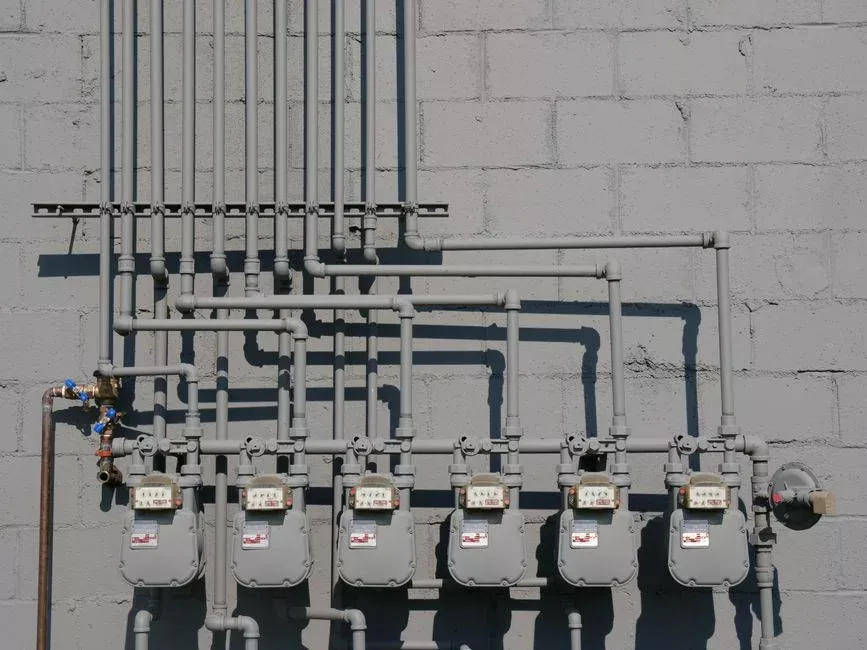
The sensor-per-asset table below is the procurement-grade output of this guide. Ranges and accuracy figures reflect typical 2026 industrial IIoT practice; ATEX classification must be confirmed against the plant's hazardous-area drawings.
| Asset | Sensors (measurement → type) | Range / Accuracy | Mounting / Location | ATEX class |
|---|---|---|---|---|
| Influent bar screens | Motor current, vibration on rake drive | MCSA ≥4 kHz; vibration ±50 g, 1–10 kHz | Drive-end bearing housing; CT on supply conductor | Zone 2 (Ex nA) |
| Grit removal blowers | Vibration, bearing temp, MCSA | ±50 g; PT100 RTD ±1°C; ≥4 kHz current | DE/NDE housings; motor lead box | Zone 2 |
| Primary clarifier drives | Torque, vibration on bridge drive | Strain-gauged shaft; ±50 g | Drive shaft centerline; cross-bracket | Non-classified |
| Fenton-reactor recirculation pumps | Vibration (radial+axial), MCSA, bearing temp, seal-pot level | ±50 g; ≥4 kHz; PT100 ±1°C; capacitive level ±2 mm | DE/NDE housings; seal pot; VFD output CT | Zone 2 typically; Zone 1 if H₂O₂ venting enclosed |
| DAF air-saturation system | Pressure, flow, air-compressor MCSA | 0–10 bar ±0.1%; 0–50 m³/h ±1%; ≥4 kHz | Saturator discharge; recycle loop; compressor terminal box | Zone 2 |
| MBR membrane bioreactor systems with pre-wired vibration and TMP monitoring | Transmembrane pressure, aeration-blower vibration, air-flow | TMP 0–1 bar ±0.5%; vibration ±50 g; thermal mass flow ±2% | Permeate manifold; blower DE bearing; air line to scour manifold | Non-classified (well-ventilated) |
| PLC-controlled chemical dosing skids with diaphragm-pressure and stroke sensors | Diaphragm pressure, stroke count, pH/ORP | 0–10 bar ±0.25%; 0–200 strokes/min ±1 count; pH ±0.02 | Pump head; metering line; inline pH/ORP cell | Zone 1 near ClO₂ dosing; Zone 2 elsewhere |
| Filter press systems with main-motor MCSA monitoring | Main-motor MCSA, vibration, hydraulic pressure | ≥4 kHz; ±50 g; 0–350 bar ±0.5% | Hydraulic power unit; main motor terminal box | Zone 2 (polymer area) |
| Rotary bar screen with rake-drive vibration monitoring | Vibration, motor current | ±50 g; ≥4 kHz | Rake-drive bearing housing; supply CT | Zone 2 |
| Chlorine dioxide rooms | Gas detection, equipment temp, vibration | ClO₂ 0–3 ppm ±0.1; Ex d certified | Ceiling + breathing zone; pump housings | Zone 1, Ex d/Ex ia mandatory |
A 100-sensor chemical WWTP generates roughly 2–5 GB/day compressed at typical 1 kHz vibration burst + 1 Hz process sampling, with on-edge decimation. ATEX zones 1 and 2 require IEC 60079-compliant sensors; chemical plants under OSHA 1910.119 PSM must classify hazardous areas before procurement (OSHA 1910.119).
Choosing the Right AI Models: From Thresholds to Remaining Useful Life
Specifying the wrong model tier is the most common 2026 PdM deployment mistake. Match model complexity to asset criticality and sensor coverage:
- Tier 1 — Statistical thresholds and control charts. Western Electric rules or CUSUM applied to bearing temperature, motor current, and pressure. Best for assets with well-understood failure modes and limited sensor coverage (small pumps, blowers with single-channel monitoring). False-alarm rate before tuning: 20–30%.
- Tier 2 — Unsupervised anomaly detection. Isolation Forest or variational autoencoders for novel fault discovery on multi-sensor streams. The 2026 iiot-predictive-maintenance GitHub reference uses Isolation Forest on IIoT sensor data. Expect 5–15% false-positive rate after tuning, with strong sensitivity to drift.
- Tier 3 — Supervised classifiers. Random Forest or XGBoost for known fault classes (cavitation, impeller wear, seal degradation, bearing race fault). Requires labelled failure data — typically 12–24 months of operating history. False-alarm rate 2–5% achievable.
- Tier 4 — Remaining useful life (RUL) and survival analysis. LSTM, transformer, or Weibull survival models for prognostics. Typical 70–90% early-detection accuracy on rotating equipment per ISA and PdM industry benchmarks, with 5–30 day prediction horizons for chemical-WWTP pump trains.
Rule of thumb: small dosing pumps and screens sit at Tier 1–2; main process pumps, blowers, and MBR aeration assets require Tier 2–3; Fenton and DAF critical-path assets justify Tier 3–4 with monthly model retraining.
Integration with PLC, SCADA, and CMMS — Where Most Projects Fail

Four integration touchpoints define the contract: (1) sensor → gateway (4–20 mA, IO-Link, wirelessHART, EtherNet/IP); (2) gateway → PLC/SCADA (OPC UA, Modbus TCP, MQTT); (3) analytics → CMMS (SAP PM, IBM Maximo APIs for auto work-order generation); (4) historian → dashboard (OSIsoft PI Vision, Aveva). Reference the sewage treatment SCADA architecture and I/O sizing guide for layer-2 detail.
Cybersecurity must follow ISA-95 levels and IEC 62443 zone-and-conduit requirements; PdM networks must be segmented from corporate IT and process OT with a DMZ and role-based access — non-negotiable for chemical plants under PSM (per OSHA 1910.119 and IEC 62443-3-3). The 2026 failure pattern, repeated across deployments, is that sensor deployment succeeds, but work orders never reach the maintenance planner because the analytics-to-CMMS integration is de-scoped into a "phase 2 option." Define the CMMS hookup as a contract line item with named API endpoints, not an option.
Recommended phased rollout: Phase 1 — critical pumps and blowers (8–12 weeks, 15–25 assets); Phase 2 — chemical dosing and MBR (12–16 weeks); Phase 3 — full plant coverage (ongoing). The phased approach is consistent with the paper-mill SCADA rollout pattern and keeps capital commitment behind demonstrated value.
KPI Benchmarks, CAPEX/OPEX, and ROI for a 50–200 m³/h Chemical WWTP
The financial case is what carries the CAPEX request through management. The benchmarks below come from 2026 industrial PdM deployments and HydropureWater field data on chemical WWTP retrofits; treat them as the planning range, not a vendor quote.
| KPI / Cost | Baseline (no PdM) | PdM-Enabled (2026) | Source / Note |
|---|---|---|---|
| Unplanned downtime (% of operating hours) | 4–8% | <1% | Plant Engineering 2026; industry benchmark |
| MTBF, critical pumps | 6,000–10,000 hr | 15,000–25,000 hr (1.5–2.5×) | Industry PdM benchmark, 2026 |
| Mean time to repair (MTTR) | 6–12 hr | 2–4 hr | HydropureWater field data, 2026 |
| False-alarm rate | 30–50% (threshold-based) | 5–10% (tuned) | Industry PdM benchmark |
| Aeration blower energy use | Baseline | 5–12% reduction | VFD + PdM optimization |
| Chemical over-dose incidents | Baseline | 40–60% reduction | HydropureWater field data, 2026 |
| CAPEX (50–200 m³/h plant, 60–120 assets) | — | $80,000–$250,000 | 2026 industrial PdM deployments |
| CAPEX (500–2,000 m³/h plant) | — | $400,000–$1,200,000 | 2026 industrial PdM deployments |
| OPEX (% of CAPEX/yr) | — | 8–12% (licensing, compute, retraining, calibration) | 2026 industrial PdM deployments |
| Annual benefit (avoided downtime + penalties + energy + chemicals) | — | $250,000–$600,000/yr | HydropureWater field data, 2026 |
| Payback period | — | 12–24 months | Industry benchmark, 2026 |
| 3-year NPV @ 10% discount | — | $400,000–$1,200,000 | Derived from above |
Sensitivity: sites with effluent-penalty clauses above $10,000 per non-compliance event see the fastest payback — a 50–200 m³/h chemical plant typically has 4–8 such events per year under reactive maintenance. Sites with already-reliable utility-grade equipment see longer payback and should run a paid pilot first. The OPEX profile of chemical WWTPs in 2026 (see the textile-dyeing WWTP opex breakdown) shows that energy and chemical cost together represent 30–45% of OPEX, and both lines respond to PdM-driven optimization.
Vendor Selection Checklist for Chemical-Plant Deployment
Convert the analysis above into a procurement checklist. Must-have capabilities for chemical-plant deployment in 2026:
- ATEX/IECEx-certified sensors for Zone 1 and Zone 2 chemical areas, with named certification numbers per IEC 60079.
- Native OPC UA and MQTT support; documented integration paths to Allen-Bradley and Siemens PLCs.
- Named, referenceable CMMS integrations (SAP PM, IBM Maximo) with public API documentation.
- IEC 62443-3-3 cybersecurity certification and support for on-premise or hybrid deployment (cloud-only is often blocked under PSM).
- Documented ML model architecture — vendor must name the model classes used at each tier, not claim "AI."
- Chemical-WWTP reference customers; 2–3 site visits or call references.
Contract structure: 8–12 week paid pilot on 10–20 assets with defined success criteria — at least 70% early detection on seeded faults, less than 10% false alarms, under 30-minute alert latency — before committing to full rollout. Pre-wired equipment is a force multiplier: DAF systems with air-compressor MCSA integration, PLC-controlled chemical dosing skids, MBR cassettes with TMP transmitters, and filter presses with main-motor MCSA monitoring all reach PdM ROI faster than retrofit installations. Conduct a wastewater equipment manufacturer reliability assessment for any supplier whose equipment will carry the PdM sensor stack.
Red flags: vendors who cannot name the ML model architecture, have no chemical-WWTP reference customers, or quote less than 6 weeks of deployment for greater than 50 assets. These are indicators of either capability gaps or scope under-estimation — both of which surface as the project is handed over to operations.
Frequently Asked Questions
What is a predictive maintenance system for a chemical wastewater plant? A 2026 PdM system combines IIoT sensors (vibration, MCSA, ultrasound, pH/ORP, TOC, turbidity) on critical assets with edge gateways, a tiered analytics layer (statistical thresholds, Isolation Forest anomaly detection, supervised classifiers, and LSTM/Weibull RUL models), and PLC/SCADA-to-CMMS integration. Industry deployments report 30–50% reduction in unplanned downtime and 12–24 month payback (Plant Engineering, 2026).
Which sensors matter most for chemical WWTP pumps? Vibration (IEPE, ±50 g, 1–10 kHz) on the drive-end and non-drive-end bearing housings, MCSA on the VFD output (≥4 kHz sampling), PT100 bearing temperature (±1°C), and seal-pot level — with ATEX Zone 1/2 certification per IEC 60079 for chemical areas.
What ML model should I start with? Begin with Tier 1 statistical thresholds on bearing temperature and motor current, then move to Tier 2 Isolation Forest for multi-sensor anomaly detection. Use the open-source 2026 iiot-predictive-maintenance GitHub repository (scikit-learn-based) as a reference implementation; expect 5–15% false-alarm rate after tuning.
How does PdM integrate with SAP PM or Maximo? Via REST/OPC UA APIs that the PdM analytics layer calls to auto-generate work orders when a fault class is diagnosed and confidence exceeds threshold. Per industry 2026 surveys, this is the most under-scoped integration and the most common cause of project failure — define it as a contract line item with named endpoints.
Which chemical-plant regulations apply to PdM networks? IEC 62443-3-3 for cybersecurity zone-and-conduit segmentation, IEC 60079 for ATEX sensor certification in hazardous areas, and OSHA 1910.119 PSM for the broader process-safety envelope covering chlorine dioxide rooms and chemical dosing skids.
How accurate are remaining useful life predictions for WWTP pumps? LSTM and Weibull survival models achieve 70–90% early-detection accuracy on rotating equipment (ISA and industry PdM benchmarks, 2026), with 5–30 day prediction horizons typical for chemical-WWTP pump trains.