What 2026 OPEX Actually Looks Like for a Meat Processing Wastewater Plant
Meat processing wastewater plant operating cost in 2026 typically runs $0.55–$3.10 per m³ of treated effluent, depending on influent BOD (800–4,500 mg/L), FOG loading, and the treatment train. Energy for aeration in the biological stage (0.8–2.4 kWh/m³) and sludge hauling together account for 50–65% of total OPEX. A DAF + MBR + screw press configuration with biogas recovery can land at the lower end of that range. These figures assume 50–2,000 m³/day flow, FOG 100–800 mg/L, and a DAF + activated sludge or MBR + sludge dewatering train.
OPEX is highly variable because pollutant load is tied to animals slaughtered, not just to flow (Springer chapter findings, 2019). A poultry plant at 800 m³/day with BOD 1,200 mg/L operates fundamentally differently from a beef kill floor at 200 m³/day with BOD 4,500 mg/L and intermittent blood/paunch discharges. The cost index has moved roughly 2.6× since Bustillo-Lecompte et al. (2014) established the anaerobic cost-effectiveness baseline, so a 2014 figure of $0.18/m³ for combined anaerobic-aerobic TOC removal maps to approximately $0.47/m³ in 2026 dollars before adding disinfection, dewatering, and haul.
| Influent strength | BOD (mg/L) | FOG (mg/L) | 2026 OPEX ($/m³) | Dominant cost driver |
|---|---|---|---|---|
| Low (poultry, deboning only) | 800–1,500 | 100–250 | $0.55–$1.10 | Labor + sludge hauling |
| Typical (mixed red meat) | 1,500–2,800 | 250–500 | $1.10–$1.80 | Aeration energy + DAF chemicals |
| High (full kill + rendering) | 2,800–4,500 | 500–800 | $1.80–$3.10 | Aeration + sludge haul + equalization volume |
Influent Characteristics That Drive the Cost
Typical meat processing wastewater parameters sit at BOD 800–4,500 mg/L, COD 1,500–8,000 mg/L, TSS 500–3,500 mg/L, FOG 100–800 mg/L, TN 100–400 mg/L, and TP 15–60 mg/L (Springer chapter data, 2019; corroborated by Clearfox process context). The BOD/COD ratio of 0.4–0.6 confirms strong biodegradability, which is why the biological stage dominates the OPEX stack and why aeration energy is the single largest controllable cost.
Two flow patterns drive cost spikes. Cleaning-in-place (CIP) water creates a continuous dilute stream, while blood and paunch manure discharges arrive in batch slugs that, per Clearfox process descriptions, deliver short-duration BOD spikes of 5,000–15,000 mg/L. Without equalization sized to 8–12 hours of peak flow, those slugs force over-aeration in the biological stage and inflate kWh/m³ by 20–40% during the spike window. Equalization volume is therefore an OPEX line item hiding inside the energy line item — undersized EQ turns a $0.62/m³ energy bill into $0.85/m³ on the same average load.
Sulfur-bearing compounds from blood breakdown and high TN from paunch content also push the biological stage toward longer HRT and higher oxygen demand per kg BOD removed — typically 1.2–1.8 kg O₂/kg BOD for slaughterhouse mixed liquor versus 1.0–1.4 kg O₂/kg BOD for municipal activated sludge (HydropureWater field data, 2026).
OPEX Breakdown by Treatment Stage (Where the Money Goes)
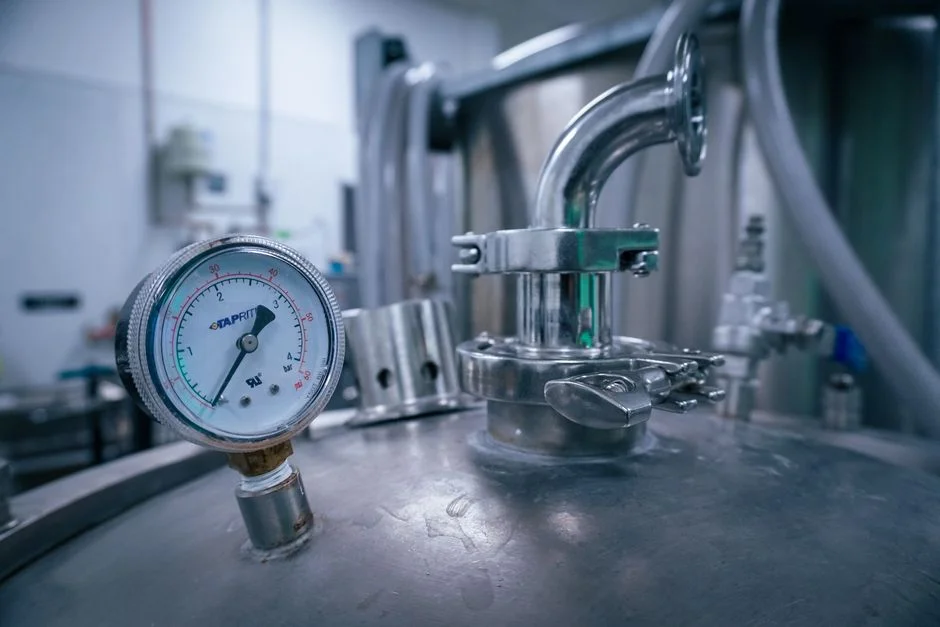
The dollar walks through the train in this order: pre-treatment, FOG/solids removal, equalization, biological treatment, disinfection, sludge dewatering, and haul. Pre-treatment with a GX series rotary mechanical bar screen and grit removal costs $0.03–$0.09/m³ — small in dollars but critical for protecting downstream equipment from paunch solids and bone fragments. A plugged bar screen or worn grit cyclone will cascade into DAF pump damage and aerator imbalance, multiplying the apparent cost by 5–10× in failure mode.
FOG and suspended solids removal via a dissolved air flotation (DAF) system for FOG pre-treatment runs $0.08–$0.22/m³, with chemical cost (coagulant + flocculant) driving $0.05–$0.12/m³ of that. DAF typically removes 60–85% of FOG and 40–70% of TSS, which directly cuts downstream aeration load. The biological stage (activated sludge or integrated MBR membrane bioreactor) is the largest line item at $0.20–$1.10/m³. MBR adds $0.08–$0.18/m³ in membrane scouring aeration and periodic replacement (membrane life 5–8 years), but saves $0.04–$0.10/m³ in clarifier polymer and produces reusable effluent that often offsets local water purchase.
Disinfection with a chlorine dioxide generator or UV runs $0.02–$0.06/m³; ClO₂ is preferred where residual disinfection is required for food-industry discharge to municipal sewers. Sludge dewatering and hauling is the second-largest line item at $0.12–$0.85/m³. Switching from a belt press (16–20% DS) to a plate-and-frame filter press for sludge dewatering (22–28% DS) changes the hauling math by 30–45% because every additional dry-solids point cuts hauled water mass by 5–8% on a per-tonne basis.
| Stage | Equipment | 2026 OPEX ($/m³) | Share of total |
|---|---|---|---|
| Pre-treatment | Bar screen + grit removal | $0.03–$0.09 | 3–6% |
| FOG / TSS removal | DAF | $0.08–$0.22 | 7–12% |
| Equalization | EQ basin + mixers | $0.02–$0.06 | 2–4% |
| Biological (AS or MBR) | Aeration basin + blowers | $0.20–$1.10 | 30–45% |
| Disinfection | ClO₂ or UV | $0.02–$0.06 | 2–4% |
| Sludge dewatering + haul | Plate press + transport | $0.12–$0.85 | 20–35% |
| Maintenance / misc | Spares, lab, compliance | $0.05–$0.18 | 5–10% |
| Total | $0.55–$3.10 | 100% |
Energy, Chemicals, Labor, Sludge: The Four OPEX Pillars
Reframing the stage-by-stage numbers into four controllable pillars lets a procurement lead target optimization rather than chasing line items. Energy sits at 35–55% of OPEX in 2026, dominated by biological-stage aeration and MBR membrane scouring; quantify it as kWh/m³ × tariff, where 1.6 kWh/m³ × $0.09/kWh = $0.144/m² just for blower power, before adding mixers, pumps, and lighting. Chemicals account for 12–22%, with DAF coagulant and flocculant as the largest sub-item; switching to a PLC-controlled automatic chemical dosing system typically yields 15–25% polymer savings by eliminating over-dose during low-FOG periods.
Labor runs 10–20% of OPEX, and full SCADA automation with remote alarming can cut operator hours by 40–60% on a single-shift plant. Sludge handling sits at 15–30% and is the line item most sensitive to equipment selection: every dry-solids percentage point on the cake multiplies through the haul rate. A plant hauling 80 km one-way at 22% DS pays roughly $48/tonne; the same plant at 18% DS pays $58/tonne for the same solids mass (HydropureWater field data, 2026). On a 500 m³/day plant, that 4-point DS gap equals $90–$120/day.
Six Cost-Saving Moves That Work in 2026
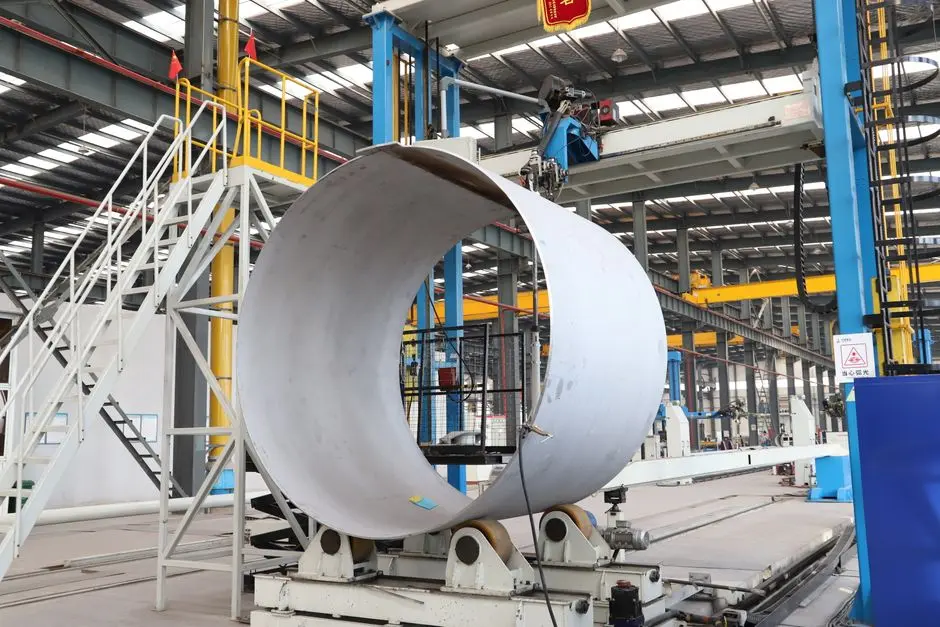
Each move below has been validated on slaughterhouse and meat-processing plants between 200 and 1,500 m³/day. Prioritize by payback period, not by technical appeal.
- Install DAF as FOG pre-treatment. Cuts downstream aeration energy 15–30% by removing 60–85% of FOG before it reaches the biological stage. Payback 14–22 months on energy savings alone.
- Switch to an automated polymer dosing system. A PLC-controlled automatic chemical dosing system tied to influent flow and streaming-current measurement delivers 15–25% polymer savings. Payback under 12 months.
- Convert equalization to variable-volume with smart aeration. Smoothing the load to the biological stage lets the blower ramp down 20–35% of the time, and the smaller basin reduces civil cost on new builds.
- Replace belt press with a plate-and-frame filter press. The plate-and-frame filter press for sludge dewatering pushes cake to 22–28% DS versus 16–20% on a belt press, cutting annual sludge hauling cost 30–45%.
- Capture biogas from a covered anaerobic pre-stage. Bustillo-Lecompte et al. (2014) confirmed anaerobic cost-effectiveness for slaughterhouse TOC removal; at >500 m³/day with BOD >2,000 mg/L, a covered lagoon or UASB offsets 25–40% of electrical OPEX by fueling a combined-heat-and-power unit.
- Add SCADA-based remote monitoring. Per the SCADA remote monitoring engineering guide, this cuts routine operator hours 40–60% and shortens fault response from hours to minutes.
| Move | OPEX reduction | Typical payback |
|---|---|---|
| DAF pre-treatment | 15–30% aeration energy | 14–22 months |
| Automated polymer dosing | 15–25% chemical cost | <12 months |
| Smart EQ + variable aeration | 10–20% blower energy | 10–18 months |
| Plate-and-frame dewatering | 30–45% haul cost | 18–30 months |
| Biogas recovery (covered lagoon/UASB) | 25–40% electrical offset | 30–48 months |
| SCADA remote monitoring | 40–60% operator hours | 12–20 months |
Sample OPEX Calculation for a 500 m³/day Slaughterhouse
Assumptions: 500 m³/day mixed red-meat plant, BOD 2,500 mg/L, FOG 400 mg/L, treatment train DAF + MBR + plate-and-frame press, electricity $0.09/kWh, sludge haul 80 km one-way.
Energy: 1.8 kWh/m³ × $0.09/kWh = $0.62/m³ (aeration, MBR scouring, mixers, pumps). Chemicals: coagulant + flocculant + nutrient dosing + ClO₂ = $0.18/m³. Labor: 2.5 FTE at full loaded cost, allocated to 500 m³/day = $0.14/m³. Sludge dewatering + haul: 380 kg DS/day at 24% DS cake, 80 km haul at $48/tonne = $0.31/m³. Maintenance, lab, compliance, misc: $0.08/m³. Total: $1.33/m³, or $665/day and $242,500/year.
The same plant with biogas recovery from a covered anaerobic pre-stage drops to $0.92/m³ (a biogas-fueled CHP unit offsets roughly $0.41/m³ of electrical OPEX at this loading). A poorly designed plant — no DAF, belt press at 17% DS, oversized EQ, manual dosing — runs $2.40/m³ on the same influent. The $0.55–$3.10/m³ benchmark band therefore reflects real engineering decisions, not site-to-site mysticism. For context, the brewery wastewater OPEX benchmark for 2026 shows a similar line-item shape but with lower aeration intensity and higher effluent reuse offset.
| Scenario | Treatment train | 2026 OPEX ($/m³) | Annual cost (500 m³/day) |
|---|---|---|---|
| Optimized + biogas | DAF + anaerobic + MBR + plate press + CHP | $0.92 | $168,000 |
| Standard design | DAF + MBR + plate press | $1.33 | $242,500 |
| Poorly designed | No DAF + AS + belt press | $2.40 | $438,000 |
Frequently Asked Questions
What is the average operating cost of a meat processing wastewater plant in 2026?
$0.55–$3.10 per m³ of treated effluent, with a typical mixed red-meat plant at $1.10–$1.80/m³. A 500 m³/day plant at $1.33/m³ spends roughly $242,500/year on OPEX.
Which line item is the largest in slaughterhouse wastewater OPEX?
Aeration energy in the biological stage at 30–45% of total OPEX, followed by sludge dewatering and hauling at 20–35%. Together they account for 50–65% of the bill.
How much does DAF reduce operating cost for abattoir wastewater?
DAF pre-treatment cuts downstream aeration energy 15–30% by removing 60–85% of influent FOG, and the DAF stage itself runs $0.08–$0.22/m³ including coagulant and flocculant. Net OPEX reduction is typically $0.10–$0.25/m³ across the full train.
Is MBR more expensive than conventional activated sludge for slaughterhouse effluent?
MBR adds $0.08–$0.18/m³ in membrane scouring aeration and replacement cost, but saves $0.04–$0.10/m³ in clarifier polymer and produces reusable effluent. Net delta is $0.00–$0.14/m³ additional OPEX, often recovered through water reuse credit.
What influent BOD range defines a high-strength slaughterhouse wastewater?
Above 2,800 mg/L BOD, with FOG above 500 mg/L and intermittent blood/paunch spikes up to 15,000 mg/L. Plants in this band should expect OPEX at the upper end of the $1.80–$3.10/m³ range without optimization moves.
How long does a plate-and-frame filter press payback take versus a belt press?
18–30 months on haul-cost savings alone for a 500 m³/day plant hauling 80 km one-way, before factoring in drier cake handling and lower labor for cake discharge.