SBR Plant Operation and Maintenance Guide for Stable Effluent
This SBR plant operation and maintenance guide holds effluent within permit through five timed phases in one tank: fill, react, settle, draw, idle. Operators hold MLSS at 2,000–4,000 mg/L, keep SVI under 150 mL/g, and protect decanter and fine-bubble diffusers with a written preventive schedule.
A sequencing batch reactor (SBR) is a fill-and-draw, time-oriented wastewater treatment process in which biological reactions and solid-liquid separation occur in the same vessel, sequenced by timer rather than by flow path. Wikipedia classifies the SBR as simply a type of activated sludge process for the treatment of wastewater, run in batches. This time-versus-space orientation separates an SBR from a conventional activated sludge plant, where aeration, clarification, and sludge return happen simultaneously in separate tanks. According to the U.S. EPA Wastewater Technology Fact Sheet on Sequencing Batch Reactors (EPA 832-F-99-073), an SBR is activated sludge that operates in time rather than space.
Each operating cycle runs five phases in fixed order: fill, react, settle, draw, and idle. Wikipedia's stage list matches: fill, react, settle, decant, idle. The tank is never empty between cycles; biomass left from the previous cycle receives the next batch of raw wastewater during fill. Of the five phases, only settle has no inflow and no outflow — no aeration or mixing is provided in the third stage, and the settling of suspended solids starts while the reactor sits quiescent.
During fill, operators choose one of three variants. Static fill adds influent to biomass without mixing, selecting for organisms with strong settling characteristics. Mixed fill runs the mixer but no air, producing anoxic conditions that drive denitrification. Aerated fill runs blowers and mixer together, supporting simultaneous nitrification-denitrification. Choosing the variant is a microbial-selection decision, not a plumbing decision.
A published comparative study found 98.1% nitrate removal and 84.1% total nitrogen (TN) removal for the SBR plant versus 89.7% nitrate and 79.7% TN for a comparable activated sludge plant running the same influent. Hitting those benchmarks on a continuous basis is the focus of practical SBR plant operation and maintenance on industrial and municipal sites, and it is what the rest of this guide engineers toward.
Phase-by-Phase Operating Parameters
The fastest path to a permit excursion on an SBR is running on "feel" instead of measurable setpoints. Every phase needs a DO target, a mixing state, a duration, and a process purpose, and the operator must be able to read all four at the panel. The table below serves as the control-room reference; the prose that follows explains the logic behind each band.
| Phase | DO target (mg/L) | Mixing state | Typical duration (% of cycle) | Process purpose |
|---|---|---|---|---|
| Fill (static / mixed / aerated) | <0.2 (static, mixed) or 1.5–2.0 (aerated) | Optional | 20–25% | Biomass selection, carbon capture, partial nitrification |
| React (anoxic) | <0.2 | On, no air | 10–20% of react block | Denitrification, nitrate → N₂ |
| React (aerobic) | 1.5–2.5 | On, blowers on | 35–45% (combined react) | BOD oxidation, nitrification, phosphorus uptake |
| Settle | — | Off (quiescent) | 15–20% | Solid-liquid separation, sludge blanket formation |
| Draw | — | Off | 20–30% (can exceed 30%) | Decant clarified supernatant |
| Idle | 0.2–0.5 | On, no air | 5–10% | Wasting, equalization between batches |
SBR phase timing and DO setpoints: the control-room read
Operators should track working bands for these indicators: MLSS 2,000–4,000 mg/L, F/M ratio 0.05–0.2 kg BOD/kg MLSS·d for municipal and most industrial SBRs, and SRT 10–30 days for full nitrification. The EPA fact sheet lists typical low-water MLSS of 2,000–2,500 mg/L for municipal loads and 2,000–4,000 mg/L for industrial loads. Municipal F:M design bands are 0.15–0.4/day. Keep the tighter plant setpoints above as the day-to-day control band.
Wikipedia's process digest lists typical aeration times of 60 to 90 minutes and notes the settling stage is usually the same length in time as the aeration. Cross-check any vendor cycle sheet against that baseline before you accept a shorter settle block. A settle block trimmed below aeration length is the most common root cause of chronic turbid decant we see in commissioning reviews.
SBR MLSS and SVI control ranges: the daily numbers that predict settle
SVI <150 mL/g is the working settle benchmark; SVI climbing past 200 mL/g is an early warning for bulking sludge, and operators should respond before the next cycle starts. For scale on how far settleability can move, Wikipedia notes aerobic granular processes reduce SVI from 200–300 to about 40 millilitres per gram — a reminder that biomass morphology, not just concentration, sets decant quality. Trend MLSS and SVI on the same daily sheet so wasting decisions react to both.
SBR nitrification and denitrification cycle tuning
High-ammonia streams typically need aerobic react extended past two hours to keep nitrifier SRT above 10 days. Grow the aerobic react slice of the cycle rather than extending total cycle time. According to NEIWPCC SBR design guidance, the design SRT for nitrifying systems should be based on aeration time during the cycle, not the entire cycle clock. Wikipedia's activated sludge digest cites nitrifying plants with a sludge age of 8–12 days; the 10–30 day band in this guide adds margin for cold industrial service. Denitrification only takes place in the absence of dissolved oxygen, so protect the anoxic react block from air leakage as deliberately as you protect DO setpoint in the aerobic block. Most plants we size for industrial ammonia spikes run aerobic react at the longer end of the table when water temperature falls below 15 °C.
The decanter is the single longest-running moving component in the cycle, making its mechanical health a critical maintenance priority. NEIWPCC guidance also warns that decanting more than about one-third of basin volume raises the chance of solids carryover into effluent. Parameters every operator should trend in the SCADA include COD, BOD, TSS, nitrate, phosphate, pH, and temperature. For the broader data, standards, and selection context behind these setpoints, see the Integrated Wastewater Treatment Plant Specifications: 2026 Engineering Data, Standards & Selection Guide.
What Replaces Clarifier Maintenance in an SBR?
Clarifier maintenance is largely replaced in an SBR by settle-phase control, sludge-blanket checks, and decanter service, because secondary clarification occurs inside the same reactor. EPA notes that SBRs typically eliminate separate primary and secondary clarifiers in municipal systems. That cuts clarifier-drive and RAS-pump work. Maintenance then shifts onto timers, automatic valves, and the decanter. Operators still need a written clarifier-style checklist for the settle and draw window: blanket height after settle, draw depth versus blanket, float-switch function, and seal condition.
Treat the settle and draw block as the plant's clarifier. Weekly SVI and blanket measurements catch carryover before a TSS excursion. Monthly actuator and float-switch checks catch mechanical faults that a conventional clarifier rake inspection would have caught. Wikipedia's sewage treatment overview frames secondary treatment as the step that reduces organic matter measured as BOD and COD using aerobic or anaerobic processes — on an SBR that performance rides entirely on the settle block doing clarifier work. When chronic floatables or FOG overload the settle phase, a DAF pre-treatment unit upstream can unload the reactor before the next cycle.
The 2026 Preventive Maintenance Schedule
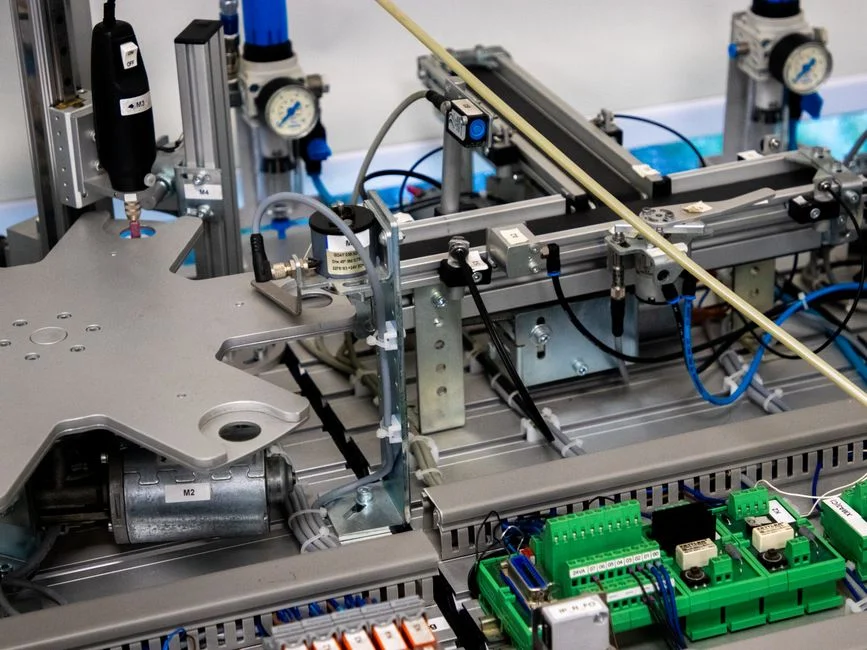
Reactive maintenance on SBR sites typically costs 3–5× more than scheduled tasks. It is a primary driver of permit excursions. Failures often hit during settle or draw when the tank cannot go offline. The schedule below is built for audit readiness: each task is named, has a frequency, and has an acceptance criterion for the shift log.
| Frequency | Task | Acceptance criterion |
|---|---|---|
| Daily | Visual inspection of aeration tank, decanter, and pumps; record flow, DO, pH, temperature; confirm no scum overflow or foaming | All readings within setpoint; no visible scum carryover |
| Weekly | Measure MLSS and SVI; check decanter float switches and level sensors; verify sludge blanket height after settle | MLSS 2,000–4,000 mg/L; SVI <150 mL/g; blanket below decanter draw depth |
| Monthly | Inspect fine bubble diffusers for plugging; drain and test one diffuser per bank; check blower air filter; lubricate decanter actuators; inspect valves and mixers for leakage | No diffuser >15% fouled by visual/DP check; no actuator fault codes; zero visible leakage |
| Quarterly | Pull and inspect one diffuser per zone; verify blower performance vs. nameplate pressure/flow; calibrate DO and pH probes; review cycle-time logs against design | Blower within ±5% of nameplate; probe calibration drift <0.1 mg/L (DO) and <0.1 pH unit; cycle times within ±5% of setpoint |
| Annual | Full decanter service; mechanical inspection of all valves and pumps; SRT mass-balance audit; VFD and blower overhaul; PLC program and firmware review; full instrumentation calibration | All service items signed off; SRT calculated within ±10% of design; PLC backup verified |
SBR decanter preventive maintenance schedule: weekly to annual
Two factors ensure this schedule is effective: weekly MLSS/SVI checks detect settle failures before they appear as effluent TSS, and monthly diffuser and decanter checks address the subsystems responsible for most unplanned downtime. NEIWPCC also recommends keeping residual alkalinity at least 50 mg/L as CaCO₃ in the decanted effluent and holding basin pH at or above 7.0 when the plant nitrifies. For context on how sludge age and biological stability drive the upstream side of this schedule, the How an Anaerobic Digester Works: 2026 Engineering Guide covers the SRT logic in detail.
SBR manual and SOP requirements: what a complete manual must include
An SBR operation and maintenance manual should cover cycle setpoints, wasting rules, diffuser and decanter service, SCADA alarms, and wet-weather or cold-weather SOP changes. NEIWPCC states that a complete SBR O&M manual plus on-site manufacturer training is essential. The design engineer should stay available through the first year until consistent compliance is proven. Include phase timing tables, alkalinity and pH control, spare-parts lists for valves and float switches, and the acceptance criteria from the PM schedule above.
Operators who only inherit a PLC password without a living manual lose the ability to adjust cycle splits when load or temperature shifts. Keep a signed copy of the current cycle recipe at the panel, and back up PLC programs after every change. Document emergency steps for decanter failure and ammonia slip so night-shift staff can act without waiting for the process engineer.
Sludge, Aeration, and Decanter: The Three High-Wear Systems
Three subsystems cause roughly 80% of SBR downtime, and operators who understand these inspection points are better prepared to maintain system integrity.
Sludge handling. Wasting occurs during idle to keep MLSS within the 2,000–4,000 mg/L range. NEIWPCC guidance matches this practice: waste during idle when MLSS is most concentrated, and control on mass of MLSS rather than concentration alone. The two most common reactor failures—bulking sludge and rising sludge—trace back to wasting frequency or F/M ratio drifting out of setpoint. If SVI and MLSS climb together, wasting is too infrequent; if MLSS drops below 2,000 mg/L and settle degrades, wasting is too aggressive.
Aeration. Fine bubble diffusers typically lose 10–30% of their oxygen-transfer efficiency over 12–24 months if not cleaned, and uneven aeration leads to partial nitrification and high effluent ammonia. The failure mode is a slow drift in DO uniformity across the tank floor, which requires monthly diffuser inspections and quarterly blower performance checks to identify. EPA also flags potential plugging of aeration devices during selected operating cycles as a known SBR disadvantage.
Decanter. A decanter that draws while the sludge blanket is high will pull solids into the effluent, triggering a TSS excursion. Mechanical risks include float switch failure, seal wear, and drive motor faults, all of which require monthly inspections and annual service. For plants with chronic solids carryover after FOG spikes, pair upstream DAF with an MBR upgrade downstream. Use that path when permits demand a membrane barrier instead of gravity settle alone.
SBR Troubleshooting: Symptom → Cause → Fix
The table below provides on-shift guidance for identifying and correcting common SBR issues. For stacked symptoms such as sbr decant getting cloudy, nitrate, ammonia going up, lots of white foam, treat cycle timing, wasting, and FOG load as one coordinated change rather than three separate tweaks.
| Symptom | Likely cause | Corrective action |
|---|---|---|
| Turbid effluent over TSS limit | Settle phase too short, or sludge blanket too high | Extend settle phase; waste more sludge; verify decanter draw depth vs. blanket height |
| Bulking sludge (SVI >200 mL/g) | Low F/M, low DO, or septicity in influent | Raise DO setpoint; add selector zone; check influent for sulfides; review F/M target |
| Rising sludge post-settle | Denitrification in blanket releasing N₂ gas | Shorten settle phase; increase draw frequency to discharge before gas lifts sludge; verify anoxic react time is sufficient |
| Foaming / scum overflow | Filamentous organisms or high FOG load | Install surface scum removal; adjust F/M; add anti-foam dosing; check FOG at source |
| Ammonia slip in effluent | Insufficient aerobic react time, low DO, or low nitrifier SRT | Extend aerobic react >2 hours; verify diffuser performance; confirm SRT >10 days |
Rising sludge and ammonia slip are often linked, as shortening the settle phase to address rising sludge may inadvertently reduce the time available for aerobic reaction. Changes to cycle splits should be implemented as a coordinated adjustment rather than as individual phase modifications. Deeper diagnosis patterns for recurring faults are also covered in Common Problems in SBR Operation: 2026 Engineering Diagnosis & Fix Guide.
Automation, Data, and Operator Training in 2026
Modern SBRs rely on PLC and SCADA systems to control cycle phases, aeration modulation, and automatic sludge wasting. Software maintenance requires an annual review of the PLC program and firmware, while instrumentation requires quarterly calibration of DO, pH, and level probes. Continuous logging of cycle times, DO profiles, MLSS, SVI, effluent TSS, COD, NH₃-N, and blower kWh is necessary for predictive analysis. A DO profile drifting downward during the aerobic react block indicates diffuser fouling, while rising kWh at constant airflow typically signals a blower air leak or fouled inlet filter.
NEIWPCC lists ORP, DO, pH, and alkalinity as SCADA parameters for nutrient-removal plants. General ORP bands run about +100 to +300 mV for nitrification and +50 to −50 mV for denitrification, tuned to site setpoints. Operator training must cover routine procedures, emergency response, decanter failure modes, and ammonia excursion protocols. Skilled operators who can interpret SCADA trends and intervene before effluent quality declines provide the best insurance for any SBR plant.
Who This Is For / Next Step
This SBR plant operation and maintenance guide is written for plant engineers, chief operators, and EPC teams running industrial or municipal SBRs who need stable BOD, TSS, and nitrogen under a written PM program. Look elsewhere if you need continuous-flow BNR design with dedicated anoxic and aerobic tanks, or if your permit already requires membrane effluent without a settle/draw step.
Before changing cycle splits or diffuser banks, gather seven days of MLSS, SVI, DO profiles, and effluent NH₃-N. Then request a quote with those logs so sizing matches the real load, not the nameplate story. Selection checklist before you lock the next O&M revision:
- Confirm fill variant (static / mixed / aerated) matches nitrogen and settle goals.
- Verify aerobic react hours keep nitrifier SRT above 10 days at winter temperature.
- Keep MLSS 2,000–4,000 mg/L and SVI <150 mL/g with idle-phase wasting.
- Limit draw volume so the blanket stays below the decanter inlet.
- Inspect fine-bubble diffusers monthly and trend blower DP and kWh.
- Calibrate DO and pH probes quarterly; back up PLC firmware annually.
- Hold residual alkalinity ≥50 mg/L as CaCO₃ in decant when nitrifying.
Frequently Asked Questions
What are the five phases of an SBR wastewater treatment plant?
The five phases, in order, are fill, react, settle, draw, and idle. Only settle runs with no inflow and no outflow while biomass separates under quiescent conditions. Fill can be static, mixed, or aerated depending on settle and nitrogen goals. React completes BOD oxidation, nitrification, and denitrification. Draw removes clarified supernatant through the decanter, and idle is used for wasting and equalization between batches.
How often should SBR diffusers be cleaned and inspected?
Fine-bubble diffusers should get a monthly visual or differential-pressure check and a deeper pull-and-inspect at least quarterly, with full cleaning when OTE loss or blower DP rises. Plants that wait 12–24 months without cleaning often see 10–30% oxygen-transfer loss and uneven floor DO. Acid wash or mechanical cleaning restores transfer; replace membranes when fouling becomes irrecoverable. Trend blower kWh at constant airflow to catch fouling early.
What MLSS and SVI should an SBR run at for stable nitrification?
Most municipal and industrial SBRs run MLSS at 2,000–4,000 mg/L with SVI under 150 mL/g for reliable settle and nitrification support. Keep SRT in the 10–30 day band when full nitrification is required, and base nitrifier SRT on aerobic react time, not total cycle time. SVI above 200 mL/g is an early bulking warning. Adjust wasting in idle in small steps rather than large infrequent dumps.
Why is my SBR effluent cloudy or high in TSS?
Cloudy or high-TSS effluent usually means settle time is too short, the sludge blanket is too high, or the decanter is drawing into solids. Pin-floc from a skewed F/M ratio and filamentous bulking are also common. Extend settle, waste to lower the blanket below draw depth, and verify float switches and seals. Check FOG at the source if scum rides over the weir during draw.
How long should the SBR react phase be for ammonia removal?
Ammonia removal typically needs aerobic react longer than two hours, and many plants need 3–6 hours when influent ammonia is high or water is cold. Extend the aerobic slice of the cycle below 15 °C rather than only stretching total cycle length. Confirm diffuser performance and keep nitrifier SRT above 10 days. If ammonia slip persists after DO is in band, lengthen aerated react before changing fill strategy.
How much basin volume can one SBR cycle safely decant?
Keep decant below about one-third of basin volume per cycle, per NEIWPCC guidance, because drawing more raises the chance of solids carryover into effluent. Verify the sludge blanket sits below the decanter inlet before the draw block opens. If demand forces deeper draws, add cycles rather than depth. Float-switch and seal condition decide whether the limit holds under upset loads.