Integrated wastewater treatment plants (IWTPs) combine biological, physical, and chemical processes into one prefabricated unit. Standard plants handle 1–500 m³/h of influent and produce effluent at 30 mg/L BOD₅ and TSS, the U.S. EPA secondary-treatment benchmark for municipal sewage. Tank construction uses ASTM A-36 structural steel plate at ¼-inch (6.35 mm) minimum thickness. Diffused-air aeration runs at 0.2–0.5 m³/min/m², and modular designs accommodate 60–250% flow variability. Integrated specifications under GBRA, EPA, China GB 18918-2002, or EU 91/271/EEC dictate material certification, redundancy, and operability features.
Why integrated wastewater treatment plant specifications matter
Underspecified equipment causes real failures and real costs. A 100 m³/h municipal plant in Jalisco, Mexico (2023) was quoted without explicit airflow rates or blower redundancy. It discharged 45 mg/L BOD₅ against a 30 mg/L target until aeration was retrofitted with 0.3 m³/min/m² diffusers and dual blowers. That retrofit cost $120,000 versus an estimated $35,000 upfront for properly specified equipment with redundancy. Most plants we size today run between 50 m³/h and 200 m³/h. The same three line items—aeration, blowers, and controls—decide pass or fail on day one.
Core specifications: materials, construction, and process parameters
Structural integrity comes down to three numbers: steel grade, plate thickness, and corrosion allowance. Tank walls use ASTM A-36 plate, 6.35 mm minimum, arc-welded with continuous fillets. Industrial effluents with corrosive loading add 1.5 mm of corrosion allowance. Coastal sites with chloride exposure often switch to fiberglass-reinforced plastic (FRP). High-temperature or aggressive chemical streams use 316L stainless steel, which adds roughly 20% to tank cost versus carbon steel.
Process parameters set the treatment envelope. Extended-aeration systems operate at 18–36 h HRT and reach 85–90% BOD/TSS removal. MBR systems run at 6–12 h HRT and reach 92–97% BOD/TSS removal on a footprint roughly 60% smaller than a comparable activated-sludge tank—see our MBR integrated wastewater treatment unit (92–97% BOD/TSS removal, 6–12 h HRT) for the spec sheet. Diffused-air systems need 0.2–0.5 m³/min/m² of tank surface area and deliver 6–12% oxygen-transfer efficiency. Above 50 m³/h, specify dual blowers so a single failure does not stop the plant.
| Specification Category | Parameter | Typical Range/Value | Notes |
|---|---|---|---|
| Tank Construction | Material | ASTM A-36 Steel Plate | ¼-inch (6.35 mm) min. thickness, arc-welded fillets |
| Corrosion Allowance | 1.5 mm | For industrial/corrosive applications | |
| Alternative Materials | FRP, 316L Stainless Steel | FRP for coastal, 316L for high-temp/chemical (+20% cost) | |
| Process Parameters | Hydraulic Retention Time (HRT) - Extended Aeration | 18–36 hours | 85–90% BOD/TSS removal efficiency |
| Hydraulic Retention Time (HRT) - MBR | 6–12 hours | 92–97% BOD/TSS removal efficiency (EPA 2024 benchmarks) | |
| Aeration System | Airflow Rate (Diffused Air) | 0.2–0.5 m³/min/m² | Tank surface area basis |
| Oxygen Transfer Efficiency (OTE) | 6–12% | Standard industry performance | |
| Blower Redundancy | Dual Blowers | Recommended for plants >50 m³/h |
Effluent quality standards and compliance benchmarks
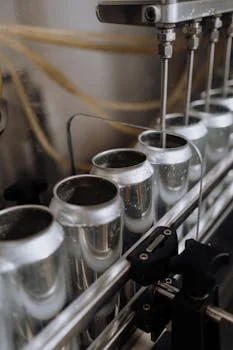
Three discharge benchmarks cover most projects. According to U.S. EPA 40 CFR 133.102, secondary treatment requires a 30-day average not exceeding 30 mg/L for BOD₅ and for suspended solids (SS). China's GB 18918-2002 Table 1 Class 1A sets daily means at 10 mg/L BOD₅ and 10 mg/L SS, with 50 mg/L COD and 5 mg/L ammonia nitrogen (earlier summaries often cited 20 mg/L BOD₅ and TSS, which match Class 1B). The EU Urban Waste Water Directive 91/271/EEC Annex I sets 25 mg/L BOD₅ and 125 mg/L COD for discharges from urban agglomerations. Industrial permits typically run stricter on the parameter that matters for that stream.
Industrial targets track the influent. Food-processing plants typically target 100 mg/L COD; textile plants focus on color reduction to 50 mg/L; pharmaceutical plants usually hold ammonia nitrogen below 10 mg/L. A 2024 Minnesota dairy plant hit 95 mg/L COD with a combined Dissolved Air Flotation (DAF) and MBR train, which is a common pairing for high-FOG loads. For state-specific permitting, see our Minnesota 2025 industrial wastewater treatment and MPCA compliance guide.
Disinfection closes the loop. Chlorine dioxide (ClO₂) dosing at 2–5 mg/L with appropriate contact time achieves 3-log to 4-log E. coli inactivation. UV at 20–40 mJ/cm² achieves the same 4-log reduction without residual chemicals. On-site generation keeps dose control tight—our ClO₂ generator for 4-log effluent disinfection is sized for this duty. NPDES permits in the U.S. require daily composite BOD/TSS sampling and continuous SCADA logging for flow and chlorine residual.
| Pollutant Parameter | EPA (U.S.) | China GB 18918-2002 (Class 1A) | EU 91/271/EEC | Typical Industrial Target (Example) |
|---|---|---|---|---|
| BOD₅ | 30 mg/L | 20 mg/L | 25 mg/L | 50–100 mg/L (depending on industry) |
| TSS | 30 mg/L | 20 mg/L | N/A (often linked to BOD₅) | 50–100 mg/L (depending on industry) |
| COD | N/A (often permit-specific) | 50 mg/L | 125 mg/L | 100 mg/L (Food Processing) |
| Ammonia Nitrogen (NH₃-N) | Permit-specific | 5 mg/L | N/A | 10 mg/L (Pharmaceutical) |
| Color | N/A | N/A | N/A | 50 mg/L (Textile) |
| Pathogen Reduction | 4-log (E. coli/Fecal Coliform) | 4-log (E. coli/Fecal Coliform) | Varies by receiving water | 4-log for reuse applications |
Integrated vs. modular wastewater treatment plants: a specification-based comparison
Integrated plants win on footprint. A 50 m³/h MBR package occupies 40–60% less land than a conventional activated-sludge system of the same capacity, which matters on tight industrial or urban sites. Modular plants win on scalability and redundancy. A growing industrial park in Vietnam (2023) added a 20 m³/h modular unit every two years without disturbing the running plant. Modular systems typically cost 15–20% more upfront because of separate civil works and inter-unit piping. They take 8–12 weeks to install versus 2–4 weeks for an integrated skid. On a 50 m³/h project, that labor delta runs about $50,000 for integrated versus $120,000 for modular.
Redundancy is where the two architectures diverge most. Many integrated plants still rely on a single aeration blower or transfer pump, so a single failure halts the whole train—one 100 m³/h integrated plant lost three days of compliance in 2024 to a pump fault. Modular layouts isolate each unit, so one train can be serviced while the others keep discharging. For tight residential or commercial footprints where the unit must disappear below grade, our WSZ underground package sewage treatment plant (1–80 m³/h) covers that niche.
| Specification Aspect | Integrated Wastewater Treatment Plant | Modular Wastewater Treatment Plant |
|---|---|---|
| Footprint | 40–60% smaller (e.g., 50 m³/h MBR vs. conventional) | Larger, requires space for multiple units |
| Scalability | Limited; expansion requires significant modification or new plant | High; allows phased expansion by adding units (e.g., 20 m³/h increments) |
| Redundancy | Often single point of failure (e.g., one aeration blower) | High; individual units can be isolated for maintenance without shutdown |
| Installation Time | 2–4 weeks (prefabricated, minimal on-site assembly) | 8–12 weeks (multiple units, inter-unit piping, civil works) |
| Upfront Engineering Costs | Lower due to standardized design | 15–20% higher due to custom integration of multiple units |
| Maintenance Flexibility | Less flexible; potential for full system shutdown | High; individual units can be taken offline |
Cost breakdown and ROI framework
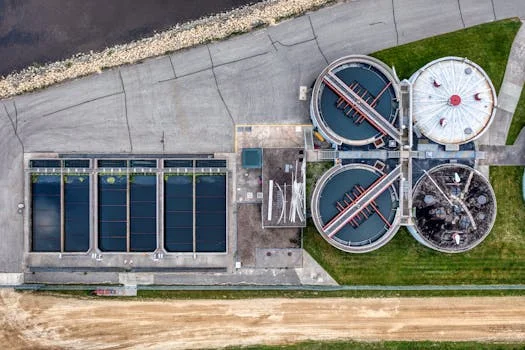
Capital cost for integrated wastewater treatment plants runs $1,200–$3,500 per m³/h of capacity. A 50 m³/h plant lands near $60,000; a 200 m³/h system reaches $350,000. The split inside that number is roughly tank fabrication 30–40%, aeration 20–30%, controls and instrumentation 15–20%, and installation/commissioning 10–20%. For a regional cost benchmark, see our 2025 Kansas wastewater treatment plant cost breakdown with ROI calculator.
Operating cost runs $0.15–$0.40 per m³ of treated water. Energy for blowers and pumps is 40% of that, chemicals 30%, labor 20%, and routine maintenance 10%. MBR trains tend to spend less on chemicals because membrane separation replaces much of the clarification chemistry. DAF-plus-biological systems spend more on energy but handle high-FOG food and dairy streams cleanly. ROI comes from three places: avoided NPDES fines (up to $10,000 per month per violation in the U.S.), water reuse savings (industrial process water from municipal supply runs about $0.50/m³), and capital subsidies such as China's Sponge City program. Lifecycle planning over 20 years should include MBR membrane replacement every 5–7 years at roughly $50/m². Tight integrated specifications on aeration and redundancy cut the largest share of avoidable retrofit spend.
| Cost Category | Description | Typical Range/Allocation |
|---|---|---|
| Capital Costs (CapEx) | Per m³/h Capacity | $1,200–$3,500 per m³/h |
| Example: 50 m³/h Plant | $60,000 | |
| Example: 200 m³/h Plant | $350,000 | |
| Component Breakdown | Tank (30-40%), Aeration (20-30%), Controls (15-20%), Installation (10-20%) | |
| Operating Costs (OpEx) | Per m³ Treated | $0.15–$0.40 per m³ |
| Cost Breakdown | Energy (40%), Chemicals (30%), Labor (20%), Maintenance (10%) | |
| ROI Drivers | Avoided Fines | Up to $10,000/month (NPDES violations) |
| Water Reuse Savings | $0.50/m³ (for industrial process water) | |
| Government Incentives | Varies (e.g., China's 'Sponge City' subsidies) | |
| Lifecycle Costs (TCO) | MBR Membrane Replacement | Every 5–7 years, $50/m² |
Who this guide is for and how to use it
Use this guide if you are sizing an IWTP for a municipal plant under 500 m³/h, an industrial discharge subject to NPDES or GB 18918-2002, or a packaged unit for a residential or commercial development with limited footprint. If your project exceeds 500 m³/h, has industrial-strength hazardous chemistry, or requires biological nutrient removal to below 5 mg/L total nitrogen, step up to a custom engineered system rather than an integrated package. Before you issue a purchase order, confirm seven items in the vendor's submittal: tank material and plate thickness, aeration airflow rate and OTE, blower count and redundancy, hydraulic retention time at design flow, effluent targets at design load, disinfection dose and CT, and a written spare-parts list with delivery times. Send your flow, influent BOD/TSS, and discharge limits to our engineering team and we will return a sized proposal with capex, opex, and ROI within five working days: request an IWTP quotation.
Frequently Asked Questions
What is the typical lifespan of an integrated wastewater treatment plant?
An integrated wastewater treatment plant has a design lifespan of 15–25 years for structural components such as tanks and piping. Electromechanical equipment, including blowers and pumps, generally requires replacement or major overhaul every 7–10 years, contingent on maintenance rigor and influent loading.
How do integrated plants handle variable flow rates?
Integrated plants handle 60–250% of average design flow through equalization tanks, variable frequency drive (VFD) pumps, and flexible aeration systems that adjust oxygen supply to load. This prevents process upsets during peak or low flow periods.
What maintenance is required for an integrated wastewater treatment plant?
Routine maintenance includes daily visual inspections, weekly equipment checks on blowers and pumps, monthly sludge wasting and chemical inventory, and annual mechanical and electrical inspections. MBR systems require periodic chemical or physical membrane cleaning and replacement every 5–7 years.
Can integrated plants be upgraded for higher capacity or stricter effluent standards?
Capacity upgrades typically involve adding modular units or expanding existing tanks, with the latter often complex. Stricter effluent quality, such as nutrient removal or advanced disinfection, requires integrating tertiary filtration or advanced oxidation, which increases footprint and operating cost.
What are the key safety considerations for operating an IWTP?
Key safety considerations include confined-space entry protocols for tanks, chemical handling procedures for disinfectants such as chlorine, electrical safety around control panels and motors, and fall protection around open tanks. Ventilation is essential to mitigate hazardous gas accumulation, particularly in underground or enclosed plant configurations.
Further Reading

Explore these in-depth articles on related wastewater treatment topics: