SBR Operation Troubleshooting Guide: Map the Symptom to the Cycle Phase
Most SBR failures start in the settle, decant, or react phase rather than fill, and this SBR operation troubleshooting guide maps each symptom to its root cause. Benchmarks for a healthy basin run MLSS 2,000–5,000 mg/L, SVI 50–150 mL/g, and DO 1.5–2.0 mg/L.
More than 80% of unplanned downtime traces to settle, decant, or react rather than fill (HydropureWater field data, 2026). Identifying the broken phase usually reveals the root cause within 30 minutes on the plant floor. Standard references put SBR aeration at typically 60 to 90 minutes and decant draw from the top 20 to 30 percent of tank contents (Wikipedia, 2026), which bounds how much cycle retiming can recover.
An SBR is more sensitive to operating parameters than a continuous-flow activated-sludge plant for three reasons. There is no flow equalization upstream of the basin. There is no return activated sludge (RAS) line to mask poor settling. The entire reactor surface becomes a single settle interface.
That sensitivity is useful when the system is tuned. Four master levers — MLSS, SVI, F/M ratio, and DO setpoint — keep the plant compliant when held in range. Healthy benchmarks across industrial SBRs in 2026 are MLSS 2,000–5,000 mg/L, SVI 50–150 mL/g, F/M 0.05–0.15 kg BOD/kg MLSS·d, and DO 1.5–2.0 mg/L during the aerobic react phase. Most plants we size for food and textile loads run MLSS toward the lower half of that band to protect settle time.
If effluent TSS is climbing and ammonia is breaking through, start with the effluent TSS exceedance diagnostic guide, then return to the parameter table below. Day-to-day cycle checks belong in the SBR Plant Operation and Maintenance Guide: 2026 Engineering Manual for sequencing batch reactor teams.
Master Operating Parameters Every SBR Operator Should Monitor
MLSS above 5,000 mg/L is where tuning stops and failure starts: oxygen-transfer efficiency drops 30–40% and settle-phase failure becomes likely. Every operator should benchmark readings against the table below before chasing a specific alarm. The "Alarm Threshold" column marks the line where a parameter stops being a tuning variable and starts being a failure mode.
At SVI above 150 mL/g, the sludge blanket will not compact in 45 minutes. At F/M below 0.05, filamentous organisms outcompete floc-formers and bulking becomes almost certain within weeks.
| Parameter | Healthy Range | Alarm Threshold | Action if Exceeded |
|---|---|---|---|
| MLSS | 2,000–5,000 mg/L | >6,000 mg/L or <1,500 mg/L | Increase/decrease wasting; check SVI before raising MLSS |
| SVI | 50–150 mL/g | >150 mL/g = bulking | Lower MCRT below 10 days; verify selector zone |
| F/M ratio | 0.05–0.15 kg BOD/kg MLSS·d | <0.04 or >0.20 | Adjust wasting; verify influent BOD loading |
| DO (aerobic) | 1.5–2.0 mg/L | <1.0 or >3.0 mg/L | Check blower output; verify probe calibration |
| DO (anoxic) | <0.2 mg/L | >0.5 mg/L | Reduce surface mixing; extend anoxic hold |
| MCRT | 5–15 days | <5 or >20 days | Reset waste rate; check winter compensation |
| Settle-phase time | 45–90 min | <30 min | Reduce decant volume %; check SVI |
| Decant volume | 25–40% of reactor volume | >50% | Add reactor volume or reduce hydraulic load |
| pH | 6.5–8.5 | <6.2 or >9.0 | Nitrification halts below 6.2; check alkalinity |
| Temperature | 10–30 °C | <10 °C in winter | Extend aerobic react by 30–60 min; raise MCRT |
Nitrification is the most pH-sensitive step: at pH below 6.2 the Nitrosomonas rate effectively halts. That failure recurs at food-processing SBRs receiving acidic CIP (clean-in-place) wastewater. Temperature matters equally — the nitrification rate roughly halves for every 10 °C drop. A plant running 20 °C in summer and 8 °C in winter needs nearly double the aerobic react time to hold effluent NH₃-N below 5 mg/L.
MLSS, SVI, and F/M are batch-end tests (typically 2–4 per day). DO, pH, and temperature should be logged continuously with a 5-minute trend interval through a real-time water quality monitoring system, not sampled manually.
SBR Sludge Bulking Fix: Restore Settling When SVI Exceeds 150 mL/g
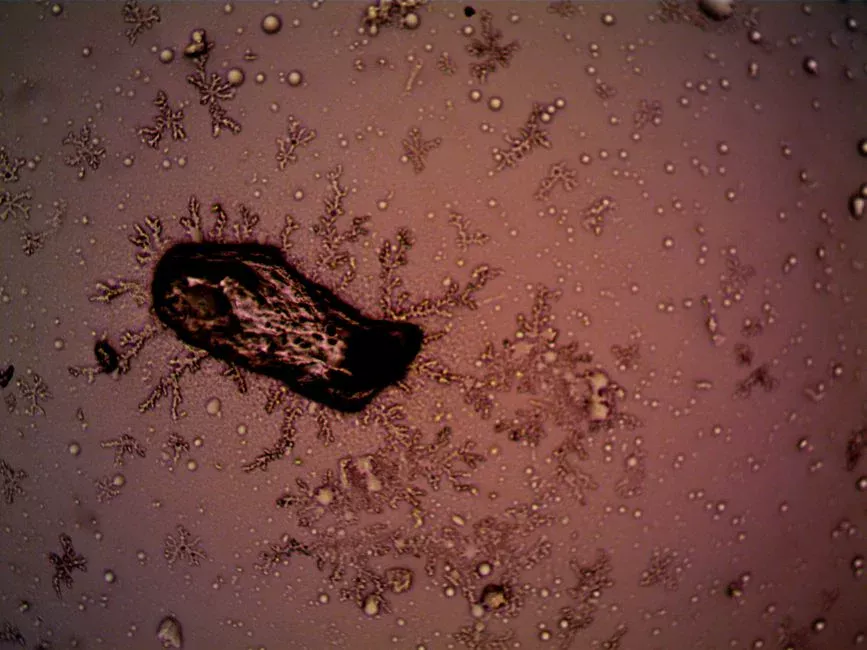
Sludge bulking is the most disruptive SBR failure mode. The sludge blanket does not compact in 45 minutes, SVI rises above 150 mL/g, and the decanter pulls cloudy solids into the effluent. TSS routinely exceeds 30 mg/L. In municipal and food-processing SBRs, bulking accounts for an estimated 35–45% of unplanned decant-phase downtime (HydropureWater field data, 2026).
The root cause is a combination of low F/M (below 0.05) and high MCRT (above 15 days), which selects for filamentous organisms. Under microscope, Nocardia appears as short, branching, Gram-positive filaments; Microthrix parvicella shows as long, coiled, Neisser-positive filaments; type 021N is a long, motile, Gram-negative filament. A filament count above 10⁷–10⁸ µm/mL of mixed liquor is the diagnostic threshold for bulking.
The fix is mechanical, process, and chemical in that order. First, increase the wasting rate to drop MCRT below 10 days — the single most effective intervention. Second, install or optimize a selector zone: a high-F/M contact zone during the first 5–15% of the fill phase, where influent BOD meets return sludge at F/M above 2.0, outcompetes filaments. Third — and only as a last resort — chlorinate the return sludge at 2–3 g Cl₂/kg MLSS·d to knock back filaments.
As a preventive measure, hold F/M in the 0.08–0.12 band, keep aerobic DO above 1.0 mg/L, and run an anoxic selector with DO below 0.2 mg/L but NO₃-N above 0.5 mg/L. Most food-plant SBRs we audit recover settle within two weeks of the MCRT cut alone. A PLC-controlled chemical dosing system is the safest way to deliver the chlorination step if it becomes necessary.
SBR Foaming and Scum Control: Nocardia Versus Microthrix
Biological foam in an SBR is a diagnosis problem before it is a dosing problem, and silicone anti-foam only masks the root cause. Brown, viscous foam almost always indicates Nocardia — driven by high MCRT, long sludge age, and low F/M. White or pale-yellow, grease-like foam is almost always Microthrix parvicella, favored by temperatures below 15 °C, long MCRT, and FOG in the influent.
The color, a simple float/sink test, and a microscope exam of the foam itself distinguish biological foam from detergent foam coming out of laundry or food CIP streams. Start by cutting MCRT to 5–10 days. Add a coarse water spray over the reactor surface during react and settle to break foam mechanically. Install a scum baffle 0.3–0.5 m upstream of the decanter so floatables miss the weir, and raise wasting to 1.5× normal for 1–2 weeks to bleed foam-formers from the basin.
Skip silicone anti-foam as a long-term fix — it lowers surface tension and can worsen solids carry-over downstream.
Prevention is upstream: install a DAF pre-treatment for FOG and TSS reduction in front of the SBR, cap MCRT at 12 days in winter, and confirm that no oil stream is bypassing the equalization tank. Foaming intensity above 0.3 m of head on the reactor surface is the operational threshold to act on, not to watch. When operators report sbr decant getting cloudy, nitrate, ammonia going up, lots of white foam, treat foam, settle, and nitrogen as one linked failure chain rather than three separate alarms.
SBR Decanter Clogging Solutions and Floating Sludge Carry-Over

Decanter failures are the most common mechanical SBR problem and the one least covered in plant manuals. The symptom is specific: effluent TSS spikes only during the decant phase, not during react or settle, and the decanter motor may trip on torque overload. The cause is almost always a floating sludge blanket disturbed by the decanter inlet, plus scum accumulation on the weir, plus a degraded seal on a floating decanter.
The diagnostic is visual and takes five minutes at the end of settle. Is the sludge blanket more than 0.5 m below the decanter inlet? Is scum or floatables visible at the surface? If either answer is no, the weir is doing the wrong job.
Clean or install a scum baffle. Cap draw rate below 1.5 L/s per metre of weir length. Extend settle above 45 minutes. On floating decanters, replace the seal and keep submergence at 10–15 cm. Virginia's SBR design standard adds a spacing rule — basin inlets no closer than 10 feet (about 3 m) to the outlet device (9VAC25-790-710) — that retrofit plants violate at their cost.
Schedule weekly weir brushing during idle. Prefer a floating decanter with a self-cleaning weir. Add a surface spray nozzle during idle so scum stays liquid instead of baking on. A coarse mechanical bar screen upstream cuts ragging on the decanter seal — a frequent failure point in textile and food SBRs.
SBR Incomplete Nitrification Causes: MCRT, Alkalinity, and Loading
Incomplete nitrification in an SBR — effluent NH₃-N above 5 mg/L or NO₃-N above 10 mg/L with rising total nitrogen — is the most reported biological performance failure in industrial SBRs. Contrary to operator instinct, this is rarely an aeration problem; it is an MCRT and ammonia-loading problem. At MCRT below 8 days, the slow-growing Nitrosomonas and Nitrobacter populations wash out. A stable nitrification population needs MCRT in the 8–15 day band at 20 °C, and 15–25 days below 15 °C.
Two diagnostic tests confirm the cause. First, profile DO across the aerobic react phase: it should hold at 1.5–2.0 mg/L for the final 60 minutes. Second, profile ORP: a working batch swings from roughly +100 mV at the end of the aerobic phase to roughly -100 mV at the end of the anoxic phase. If ORP stays positive throughout, the anoxic phase never actually happened — denitrification is impossible regardless of aeration tuning.
The "sbr decant foggy, high ammonia, good svi" pattern — a hazy decant with ammonia climbing while SVI stays healthy — points to nitrifier washout rather than settling failure. Extend aerobic react by 30–60 minutes. Do not raise DO from 2 to 4 mg/L — that wastes blower energy without fixing the rate-limiting step. Reduce wasting to recover MCRT, and add a dedicated anoxic fill or react of 30–60 minutes before the aerobic phase.
For low-C/N influents, dose methanol at about 3 g per gram of NO₃-N removed, or use acetate for faster uptake. Nitrification consumes 7.14 mg of CaCO₃ alkalinity per mg of NH₃-N oxidized, so high-ammonia streams need alkalinity make-up. Landfill leachate or pig-farm influent above 500 mg/L NH₃-N makes conventional nitrification/denitrification uneconomical. Consider sidestream partial nitritation, or for brine above 5,000 mg/L TDS use the high-salinity wastewater treatment approaches in the cost guide.
SBR Settle Phase Failure Diagnosis: Rising Sludge From Denitrification
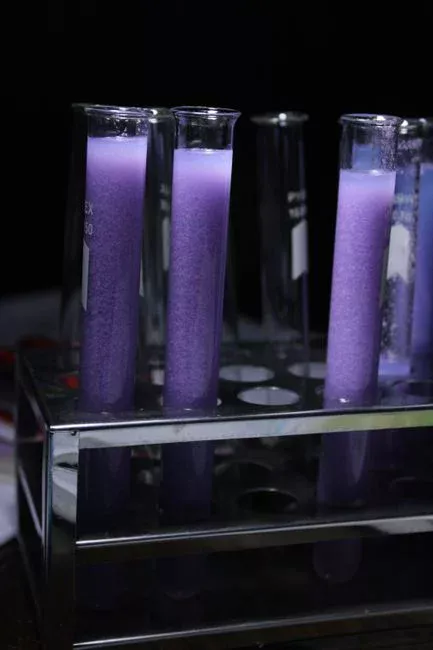
Rising sludge during SBR settle means denitrification is occurring inside the settle phase. NO₃-N trapped in the sludge blanket converts to N₂ gas, and the bubbles lift the floc into the decanter, loading the effluent with sludge particles and elevated total nitrogen. The trigger is NO₃-N above 5 mg/L entering the settle phase.
Extend anoxic react so NO₃-N drops below 2 mg/L before settle begins. Reduce decant volume to keep a deeper blanket. As an emergency only, a chlorine dose of 0.5–1 mg/L can slow gas formation long enough to stop carry-over — a bandage, not a cure.
End the cycle on a true anoxic hold, not an aerobic hold. If end-of-react ORP stays positive instead of −50 to −100 mV, the cycle timing is wrong, not the sludge.
Influent-Type Failure Map: Matching Symptoms to Wastewater Character
The influent-type failure map below predicts which SBR alarm trips first for five industrial wastewater characters, from food and beverage BOD above 3,000 mg/L to brine TDS above 5,000 mg/L. Use this map before changing waste rates or blower setpoints, because influent character — not operator error — sets the dominant failure mode.
| Influent Type | Typical Loading | Most Likely Failure | Recommended Pre-Treatment or Mitigation |
|---|---|---|---|
| Food / beverage | BOD >3,000 mg/L, high FOG | Bulking, foaming | DAF for FOG; selector zone for F/M control |
| Landfill leachate / pig manure | NH₃-N >500 mg/L | Nitrification failure from MCRT washout | MBR hybrid or sidestream partial nitritation |
| Low-C/N industrial | BOD/N <3 | Incomplete denitrification, high NO₃-N effluent | External carbon (methanol 3 g/g NO₃-N or acetate) |
| Textile / dyeing | High color, inhibitory azo dyes | Bulking, ammonia breakthrough | Fenton pre-oxidation before biological stage |
| High-TDS / brine | TDS >5,000 mg/L | Nitrification collapse above 8,000 mg/L | Partial nitritation/anammox or biological desalination pre-stage |
For high-strength food and beverage streams, FOG control is the single most cost-effective intervention — a DAF ahead of the SBR typically reduces surface scum events by 70–80% (HydropureWater field data, 2026). For high-ammonia streams, a MBR hybrid as an SBR upgrade path protects the slow-growing nitrifier population and is a realistic retrofit for plants losing nitrification in winter. Trend logging for MLSS, DO, ORP, and waste rate belongs in one place — see the cloud-based SCADA guide for water treatment plants.
Operator Checklist and Next Step
Who this is for: plant engineers facing common problems in SBR operation who need the phase-mapped SBR operation troubleshooting guide sequence before changing setpoints. Who should look elsewhere: projects still selecting between SBR, continuous activated sludge, and MBR at the flowsheet stage — start with process selection, not troubleshooting. Design-stage readers should also note Virginia's requirement for a minimum of two SBR basins at design flows above 0.1 mgd, with waste sludge control rated at 50% of total basin volume per day (9VAC25-790-710).
Run this checklist before you change blower speed or waste volume:
- Confirm which cycle phase first shows the symptom (react, settle, or decant).
- Record MLSS, SVI, F/M, DO (aerobic and anoxic), MCRT, pH, and temperature against the alarm table.
- Inspect blanket depth vs. decanter inlet at the end of settle (target >0.5 m clearance).
- Check ORP swing: about +100 mV end-aerobic to about −100 mV end-anoxic.
- Verify FOG and ragging loads upstream (DAF and bar screen) before blaming biology alone.
- If winter NH₃-N rises, extend aerobic react 30–60 min and raise MCRT before raising DO above 2.0 mg/L.
- If foam head exceeds 0.3 m, cut MCRT and add surface spray before dosing silicone anti-foam.
If your basin still fails settle or nitrification after these checks, request a process review and equipment check with your current MLSS, SVI, and cycle times attached.
Frequently Asked Questions
What SVI value indicates sludge bulking in an SBR?
An SVI above 150 mL/g is the standard bulking threshold for SBR settle failure. At 200 mL/g the sludge blanket will not compact in 45 minutes, and effluent TSS will exceed 30 mg/L without intervention. Drop MCRT below 10 days first, then verify the selector zone before any chlorine dose of 2–3 g Cl₂/kg MLSS·d.
What F/M ratio should a sequencing batch reactor maintain?
Hold F/M between 0.05 and 0.15 kg BOD/kg MLSS·d on industrial SBR cycles. The 0.08–0.12 band suppresses filamentous growth and keeps settle performance stable on most food and textile loads we size. Values below 0.05 almost always select for filaments and push SVI above 150 mL/g within weeks.
How long should the SBR settle phase be?
Settle phase should run a minimum of 45 minutes for MLSS between 2,000 and 4,000 mg/L. At higher MLSS or SVI above 150 mL/g, extend settle to 60–90 minutes so the blanket clears the decanter inlet by more than 0.5 m. Never cut settle below 30 minutes only to chase hydraulic throughput.
What DO setpoint is required for nitrification in an SBR?
Maintain DO at 1.5–2.0 mg/L for the final 60 minutes of the aerobic react phase at about 20 °C. Below 1.0 mg/L, the nitrification rate drops sharply and ammonia breakthrough becomes likely. Raising DO from 2 to 4 mg/L rarely fixes washout; recover MCRT into the 8–15 day band first, then extend aerobic react 30–60 minutes.
Why does SBR sludge rise during the settle phase?
Sludge rises when NO₃-N above 5 mg/L reaches the settle phase and converts to N₂ gas inside the floc. Extend the anoxic react time so NO₃-N drops below 2 mg/L before settle begins, and keep a deeper blanket by cutting decant volume. Confirm the cycle by ORP at the end of react reading −50 to −100 mV rather than a positive value.
Why is the decant foggy when SVI is good and ammonia is rising?
Foggy decant with rising ammonia and a healthy SVI usually means nitrifier washout rather than settling failure. MCRT has drifted below 8 days, so Nitrosomonas and Nitrobacter populations thin out while floc quality stays acceptable. Recover MCRT into the 8–15 day band at 20 °C by reducing wasting, then extend aerobic react 30–60 minutes before touching the DO setpoint.