What "Cloud Based SCADA" Actually Means in a Water Plant
A cloud based SCADA for water and wastewater plants replaces the on-prem HMI server and historian with an MQTT/OPC UA broker hosted on AWS IoT, Azure IoT Hub, or a purpose-built water SCADA platform, streaming PLC tag data over TLS-encrypted cellular or fiber links. For a 500-I/O municipal plant, 2026 subscription pricing runs $1,800–$18,000 per year versus $120,000–$260,000 capex for a new on-prem SCADA server stack, with the trade-off being IEC 62443 cybersecurity responsibility and 200–800 ms uplink latency.
Three distinct deployment patterns are marketed under the same label, and the engineering failure modes differ for each. True cloud-native architectures (AWS IoT Core, Azure IoT Hub) ingest MQTT/OPC UA directly from PLCs or edge gateways; no on-prem HMI server is required, but every device, certificate, and IAM role becomes the plant's responsibility. Hybrid deployments — the model used by vendors like MetroCloud and Cattron RemoteIQ, which "integrate into virtually any existing PLC-based control system" — keep the local HMI and PLC logic intact and forward a tagged subset to a vendor-hosted cloud dashboard. Cloud-historian-only keeps a traditional Wonderware/iFIX/WinCC server in the control room and replicates time-series data to a cloud historian (Aveva PI, InfluxDB Cloud) for remote analytics.
Cloud architectures become economically rational at the 200–5,000 I/O point range per site, which covers more than 90% of municipal water plants and small industrial wastewater sites (HydropureWater field data, 2026). At 5,000+ tags the capex crossover flips back toward on-prem because hyperscaler egress and per-message pricing scale linearly. Any 2026 deployment must be evaluated against AWWA M92 (Cybersecurity Risk Management for Water Utilities), which is the governing framework US state regulators now reference during sanitary surveys. For a deeper look at the underlying PLC layer that feeds these systems, see the PLC control architecture for municipal wastewater plants.
The Four Engineering Trade-offs: Connectivity, Security, Cost, Latency
Vendor brochures compress the decision into "real-time, low-cost, easy integration." The actual evaluation runs along four independent axes, and a proposal that scores well on three of them can still fail the procurement gate on the fourth.
Connectivity in 2026 is dominated by 4G LTE cellular at remote lift stations and well sites, with public LTE-M and NB-IoT as lower-power alternatives for battery sites drawing under 2 W. Main plants typically use private fiber with cellular failover; satellite (Starlink Maritime/Roam) emerged in 2025–2026 as a tertiary backup with measured 600–1,500 ms round-trip latency. Security requirements now converge on IEC 62443-3-3 SL-2 for small-to-mid utilities and SL-3 for utilities serving more than 50,000 population, with TLS 1.3 for transport, X.509 device certificates per device, and network segmentation documented per NIST SP 800-82r3. Port-forwarding VPNs are no longer accepted by most US state primacy agencies (per AWWA M92 §6.4, 2024 advisory). Cost follows a crossover curve: at 200 tags, cloud subscription beats on-prem capex by month 24; at 2,000 tags, on-prem capex still wins on a 10-year TCO once engineering labor and historical database maintenance are included. Latency separates use cases cleanly — 200–800 ms cellular round-trip is fine for SCADA monitoring and slow setpoint changes, but VFD/soft-starter interlocks and valve sequencing must remain on the local PLC scan at 5–50 ms; pushing those loops to the cloud is a hard engineering error, not a configuration choice.
Protocol Stack: Modbus TCP, OPC UA, MQTT, and DNP3 Compared
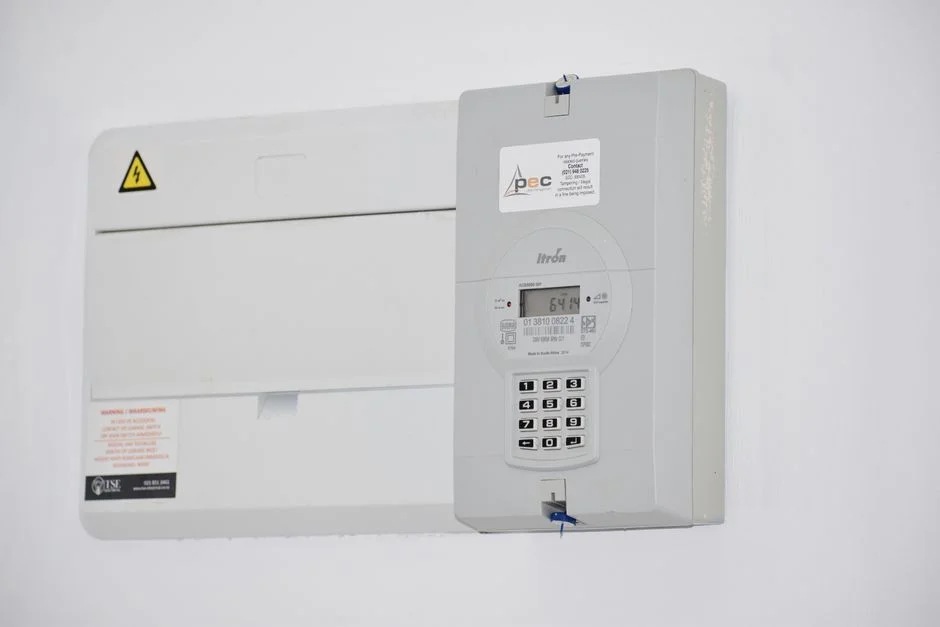
For greenfield water SCADA cloud builds in 2026, the protocol question is settled: MQTT with Sparkplug B payload encoding is the de facto standard, delivering 70–85% cellular bandwidth savings versus polled Modbus TCP because only state changes are transmitted (HydropureWater field data, 2026). The table below compares the four protocols a controls engineer will encounter on a vendor shortlist.
| Protocol | Standard | Typical Latency | Payload / Message | Security | Best Fit |
|---|---|---|---|---|---|
| Modbus TCP | IEC 61158 (legacy) | 1,000–5,000 ms (polled) | ~260 bytes | None native | Brownfield retrofits via gateway |
| OPC UA | IEC 62541 | 20–200 ms (Pub/Sub, 2026 spec) | Variable, binary | TLS 1.2/1.3, X.509 | Pharma, semiconductor, OPC-UA-standardized industrial sites |
| MQTT Sparkplug B | Eclipse Sparkplug 3.0 | 50–200 ms | 50–200 bytes | TLS 1.3, X.509 client certs | Greenfield water/wastewater cloud SCADA |
| DNP3 | IEEE 1815-2012 | 100–500 ms | Variable | DNP3-SA (Secure Authentication) | North American electric utility + combined water-power sites |
For brownfield retrofits where the existing PLC fleet speaks Modbus TCP or Profibus, deploy a protocol gateway (Ignition Edge, Kepware, Red Lion Crimson) priced at $800–$4,500 per unit. The gateway publishes to the cloud broker as Sparkplug B, keeping the PLC firmware unchanged. For sites integrating with an electric utility SCADA at a combined water-power facility, require DNP3 Secure Authentication (IEEE 1815-2012) at the gateway boundary. These protocol decisions directly affect what predictive maintenance analytics for wastewater plants can ingest downstream.
2026 Cost Breakdown: Cloud vs On-Prem SCADA for a 500-I/O Plant
The 2026 cost picture for a representative 500-I/O municipal water plant — typical of a 10–30 MLD secondary wastewater facility or a mid-sized drinking water treatment plant — is summarized below. All figures are budgetary and exclude civil work, instrumentation, and PLC hardware already in place.
| Cost Line | On-Prem SCADA | Cloud SCADA (Hybrid) |
|---|---|---|
| SCADA server pair (redundant) | $18,000–$35,000 capex | $0 (vendor-hosted) |
| Historian + reporting (PI/Wonderware) | $22,000–$48,000 capex | Included in subscription |
| Engineering / configuration labor | $40,000–$95,000 capex | $2,000–$6,000 one-time integration |
| Redundant networking & firewall | $12,000–$28,000 capex | Customer cellular links $15–$45/mo each |
| Platform fee (year 1) | — | $3,600–$18,000 ($300–$1,500/mo) |
| Annual maintenance (18–25% of capex) | $16,000–$51,000/yr | $0–$3,000/yr (vendor SaaS support) |
| 5-year TCO (range) | $240,000–$420,000 | $45,000–$130,000 |
Hidden costs that derail cloud-only budgets: cellular data overage on RTU links (capped plans start at 1 GB/mo, with overage at $0.10–$0.50/MB), AWS/Azure egress fees of $0.09/GB after the first GB per month (relevant for sites streaming video or high-frequency vibration tags), and operator training on the new cloud HMI — typically 8–16 hours per shift at $90–$150/hr loaded labor. The capex advantage flips above ~800 tags, where per-message hyperscaler pricing and gateway count begin to outweigh the avoided on-prem engineering cost. Below 150 tags, cloud is unambiguously cheaper even on a 3-year horizon.
Vendor Categories: Hyperscaler IoT, Purpose-Built Water SCADA, Hybrid On-Prem
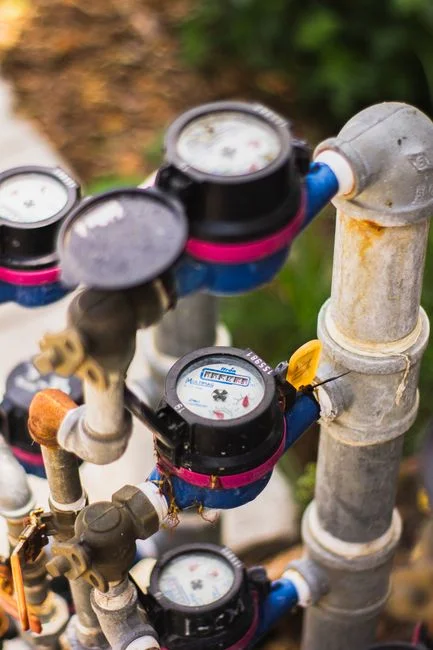
The 2026 vendor market splits into three categories with very different procurement profiles. Treating them as substitutes is the most common mistake in a shortlist.
| Category | Examples | Strength | Weakness | Best Fit |
|---|---|---|---|---|
| Hyperscaler IoT | AWS IoT Core, Azure IoT Hub, Google Cloud IoT | Scalable, raw building blocks, integrates with plant ML stack | Not turnkey; requires cloud engineering staff | Industrial reuse sites with IT/OT cloud team |
| Purpose-built water SCADA | MetroCloud, Cattron RemoteIQ, Sentryx, Trimble Unity, Element Blue WaterTrax | Pre-built water dashboards, monthly SaaS, fast commissioning | Limited customization, vendor lock-in | Greenfield lift stations, small utilities |
| Hybrid on-prem | Ignition by Inductive Automation + cloud-forwarding, Aveva PI + Aveva Connect, OSIsoft/AVEVA | Local HMI retained, cloud historian + remote view | Higher 5-year TCO, two systems to maintain | Multi-site municipal, regulated drinking water |
Decision heuristic: greenfield lift stations and well sites with under 200 tags → purpose-built SaaS; multi-site municipal utilities keeping the existing iFIX/WinCC/Citect fleet → hybrid with cloud historian; industrial reuse sites (pharma, semiconductor, food & beverage) where the site already runs an OPC UA backbone → hyperscaler IoT plus a PLC-controlled chemical dosing skid or PLC-controlled MBR wastewater treatment system that natively publishes OPC UA. AWWA M92 documentation requirements are similar across all three, but the cybersecurity evidence package is heaviest for hyperscaler builds.
Migrating Legacy SCADA to Cloud: A Phased Engineering Plan
A 500-I/O plant migration from Wonderware, iFIX, WinCC, or Citect to a cloud-forward architecture runs 16–28 weeks and should follow four distinct phases. Skipping the OT assessment in Phase 1 is the most common cause of overrun.
- Phase 1 — Weeks 1–4: OT assessment. Asset inventory, network diagram, IEC 62443 zone-and-conduit mapping per AWWA M92. Identify the 10–15% of tags that drive safety interlocks and must remain on the local PLC scan.
- Phase 2 — Weeks 5–10: Edge deployment. Install protocol gateways (Ignition Edge or equivalent), translate Modbus/Profibus to MQTT Sparkplug B, pilot on one non-critical process area (e.g., lift station or wash-water pump).
- Phase 3 — Weeks 11–18: Cloud build. Provision broker (AWS IoT Core or vendor SaaS), historian, role-based access via RADIUS/Active Directory, build operator dashboard, rationalize alarm philosophy (typical result: 40–60% alarm count reduction).
- Phase 4 — Weeks 19–24: Cutover and resilience. Migrate remaining assets, retain on-prem HMI as a documented fallback, run a tabletop exercise for a 24-hour cloud outage (PLC continues on last setpoint; local HMI optional; cloud broker buffers 24–72 h of buffered publish once the link returns, provided the edge gateway has local store-and-forward).
For the underlying process-control logic that the new cloud dashboards will surface, the sludge age control automation guide for 2026 covers the activated-sludge side of the same migration.
Frequently Asked Questions

What does cloud based SCADA for water cost in 2026? A 200–2,000 tag municipal plant runs $1,800–$18,000 per year in subscription, with $2,000–$6,000 one-time integration. That compares to $120,000–$260,000 capex for an equivalent on-prem SCADA server stack, before the 18–25% annual maintenance.
Is cloud SCADA secure enough for drinking water utilities? Yes, when deployed per IEC 62443-3-3 SL-2 (or SL-3 above 50,000 population) and AWWA M92 with documented zones and conduits. AWWA's 2024 advisory still classifies cloud architectures as acceptable with documented compensating controls.
What happens if the internet link goes down? The PLC continues running on the last commanded setpoint at its native 5–50 ms scan. A local HMI is optional but recommended for safety. The edge gateway buffers publishes for 24–72 hours depending on configuration, then backfills the cloud historian when the link returns. Cellular failover is the standard 2026 recommendation for single-link sites.
Which protocol should I require for a new cloud SCADA build? MQTT Sparkplug B for greenfield water/wastewater. OPC UA only if the site is already standardized on it. Modbus TCP is acceptable only through a protocol gateway — never poll Modbus directly to a cloud broker.
How long does a migration take? 16–28 weeks for a 500-I/O plant, 6–10 weeks for a single lift-station deployment, assuming the OT assessment is completed before the integrator is engaged.