Why Dutch Food Processors Face Tighter Effluent Pressure in 2026
Food processing wastewater treatment in the Netherlands must meet the EU Industrial Emissions Directive 2010/75/EU BAT-AELs and local Waterschap permit limits, typically requiring a train of rotary screening, DAF for FOG and suspended solids, biological treatment via MBR, and optional RO for reuse. A packaged 50–500 m³/day MBR system for a Dutch dairy or brewery costs €180,000–€650,000 CAPEX with OPEX of €0.55–€0.95/m³ in 2026.
Every Dutch food and beverage plant discharging more than 4,000 m³/year falls under EU Industrial Emissions Directive (IED) 2010/75/EU, with BAT-AELs for the food, drink and milk industries setting discharge ceilings of 25–120 mg/L COD, 30–50 mg/L TSS, and 15–25 mg/L total nitrogen depending on the BREF reference (per the 2019 BREF for Food, Drink and Milk Industries, due for update cycle review). The 21 Dutch Waterschappen (water authorities) act as permit issuers under the Dutch Water Act (Waterwet) and can — and routinely do — set stricter plant-specific lozingsvergunningen (discharge permits) than the EU baseline, particularly for nutrients and chlorides downstream of sensitive surface-water bodies.
Food production is water-intensive: between 66% and 90% of drinking-quality water entering a plant becomes wastewater (per the 2020 Springer chapter on wastewater treatment in food processing industries). That ratio, combined with rising Dutch potable tariffs of €1.50–€2.20/m³ in 2026, makes both compliance and water reuse financially binding constraints on equipment selection. A second 2025–2026 signal: Aquacycl Netherlands BV expanded its Leeuwarden hub in June 2025 to serve EU manufacturers with containerized, service-based biological treatment — a competitive option that any 2026 specification will need to benchmark against a permanent packaged MBR/DAF installation.
Influent Characteristics by Dutch Food Sub-Sector
Design loadings vary by a factor of ten across Dutch food sub-sectors, so any 2026 specification must start with a site-specific characterization. The table below captures typical ranges used by Dutch engineering firms for preliminary sizing of equalization, DAF, and biological stages.
| Sub-sector | COD (mg/L) | BOD₅ (mg/L) | TSS (mg/L) | FOG (mg/L) | Total N (mg/L) | Total P (mg/L) | pH range |
|---|---|---|---|---|---|---|---|
| Dairy (cheese, milk, whey) | 1,000–5,000 | 600–3,000 | 300–1,500 | 200–1,200 | 30–150 | 10–60 | 4–11 |
| Brewery (mashing, fermentation, CIP) | 2,000–6,000 | 1,200–3,500 | 500–2,000 | 50–400 | 30–100 | 5–30 | 3–11 |
| Potato processing (campaign) | 3,000–8,000 | 1,500–4,500 | 1,000–4,000 | 100–500 | 80–250 | 20–80 | 5–9 |
| Vegetable/fruit washing & blanching | 500–3,000 | 300–1,800 | 200–1,200 | 20–200 | 20–80 | 5–25 | 4–10 |
Flow variability is the second design variable. Potato campaigns can swing 3–5× from base load across a single processing week, while breweries see diurnal peaks tied to mashing and CIP cycles. Equalization tank sizing must reflect the peak:average ratio at the site, not the sub-sector average, otherwise the downstream MBR will see shock loads above its 8,000–12,000 mg/L MLSS operating window. The pH range across cleaning cycles — 3 to 11 — is wide enough that automatic pH adjustment upstream of biological treatment is non-negotiable, since sustained excursions below pH 5 or above pH 9 will crash nitrification within hours. Springer 2021 confirms the broader pattern: food processing wastewater is consistently rich in BOD, suspended solids, and oily substances across sub-sectors, which is why DAF + biological treatment remains the default rather than membrane-only or chemical-only trains.
The Standard 2026 Treatment Train for Dutch Food Plants
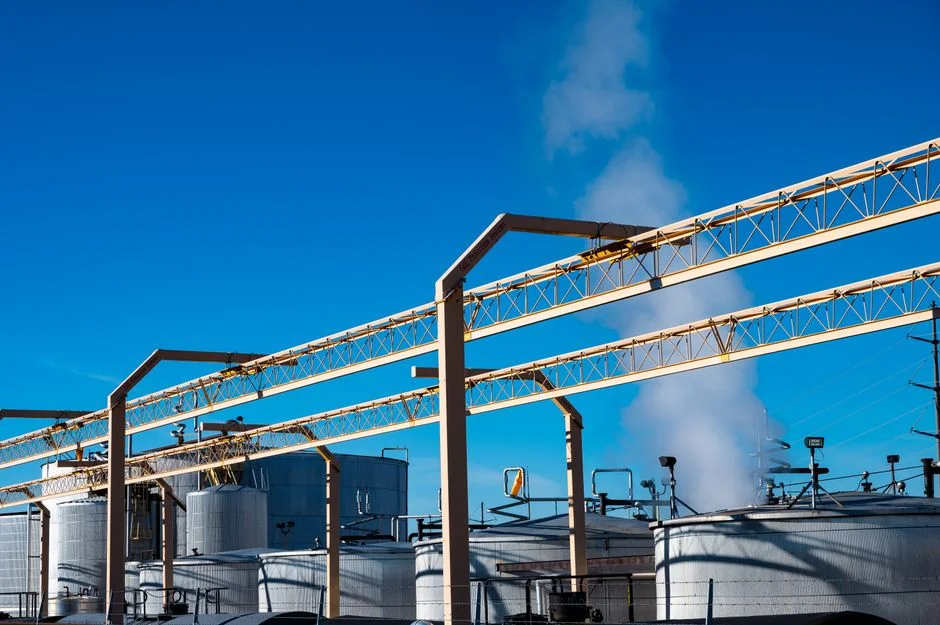
A defensible 2026 process flow for a Dutch food plant runs rotary screen → DAF → equalization → MBR → optional RO, with sludge dewatering on a plate and frame filter press. Each stage has a specific sizing basis; quotes that skip or compress these steps should be queried.
| Stage | Equipment | Design parameter | Typical removal / output |
|---|---|---|---|
| 1. Headworks | Rotary mechanical bar screen (3–6 mm aperture) | Peak flow + 20% margin | Removes rags, vegetable matter, packaging debris; protects downstream pumps |
| 2. FOG & TSS | Dissolved Air Flotation (DAF) | Hydraulic retention 20–40 min; saturator recycle 20–30% | 80–95% FOG; 60–90% TSS |
| 3. Equalization | Flow EQ basin, mixed, aerated | 8–24 h retention; dampens peak:average to <2:1 | Stable feed to biology |
| 4. Biological | MBR (submerged PVDF flat-sheet, 0.1 μm pore) | MLSS 8,000–12,000 mg/L; HRT 6–10 h | Effluent <1 μm; COD <125 mg/L; TSS <5 mg/L |
| 5. Reuse (optional) | Industrial RO | Recovery 60–80%; 2-pass for potable reuse | TDS <50 mg/L permeate; suitable for CIP or boiler feed |
| 6. Sludge | Plate and frame filter press | Chamber pressure 6–10 bar | 18–25% DS cake for off-site disposal or agricultural reuse where permitted |
In practice, the headworks GX series rotary bar screen for headworks protects the downstream train from fibrous vegetable matter and packaging fragments that would otherwise blind DAF micro-bubbles and tear MBR membranes. The DAF stage, typically a DAF for food processing wastewater, uses saturated water recycled at 20–30% of forward flow to generate 10–50 μm micro-bubbles that attach to FOG droplets and float them as a skimmable layer. The downstream integrated MBR system for Dutch food plants concentrates biomass to 8,000–12,000 mg/L — roughly four times a conventional activated-sludge tank — which both shrinks the biological footprint and stabilizes effluent quality through the 0.1 μm PVDF membrane barrier. Sludge from DAF float plus waste activated sludge is conditioned with polymer and dewatered on a plate and frame filter press for sludge dewatering to an 18–25% dry solids cake; below 18% DS the cake is too wet for off-site incineration economics, above 25% the press is over-cycled. Where the local Waterschap allows it, the cake can be diverted to agricultural land under the Dutch Meststoffenwet, but phosphorus limits usually cap this route.
Aquacycl Netherlands vs. Packaged MBR: Which Fits a Dutch Food Plant?
Aquacycl Netherlands BV launched its Leeuwarden hub in June 2025 to offer containerized BETT (Bio-Electrochemical Treatment Technology) reactors as a monitored, service-based alternative to permanent packaged MBR/DAF installations. The procurement question for 2026 is which model — capital purchase or operating service — actually fits a given sub-sector.
| Decision axis | Aquacycl Netherlands (service model) | Packaged MBR + DAF (capital purchase) |
|---|---|---|
| CAPEX barrier | None — recurring service fee, typically €2.50–€5.00/m³ all-in | €180,000–€900,000 depending on capacity |
| OPEX control | Vendor-controlled; limited transparency on energy and chemical split | Operator-controlled; €0.55–€0.95/m³ achievable at scale |
| High-FOG streams (dairy, slaughter) | DAF pretreatment still required — service is biological only | DAF included in the same supply package |
| Water reuse (RO polish) | Limited; BETT effluent is suitable for discharge, not always for RO feed | MBR permeate is RO-ready; 60–80% reuse achievable |
| Tariff/trade resilience | Marketed as a 2025–2026 differentiator against U.S.–EU tariff disruption | Independent of trade policy; equipment sourced regionally |
| Contract term | Multi-year service agreement; exit clauses vary | Owned asset; 15–25 year depreciation |
The decision rule that emerges from comparing these axes: high-FOG streams — dairy, slaughter-adjacent, frying operations — almost always need DAF pretreatment regardless of which biological reactor sits behind it, so a packaged MBR + DAF stack from a single supplier is usually simpler and cheaper in 15-year lifetime terms. Low-strength streams (vegetable wash water, beverage CIP with biological limits already met) can run on a service-based biological-only system with lower entry cost. The Aquacycl value proposition is strongest for cross-border manufacturers who want to defer capital exposure during the 2025–2026 trade environment, or for multi-site operators who want identical, centrally monitored units across plants.
CAPEX and OPEX Benchmarks for 2026 Dutch Food Plant Installations
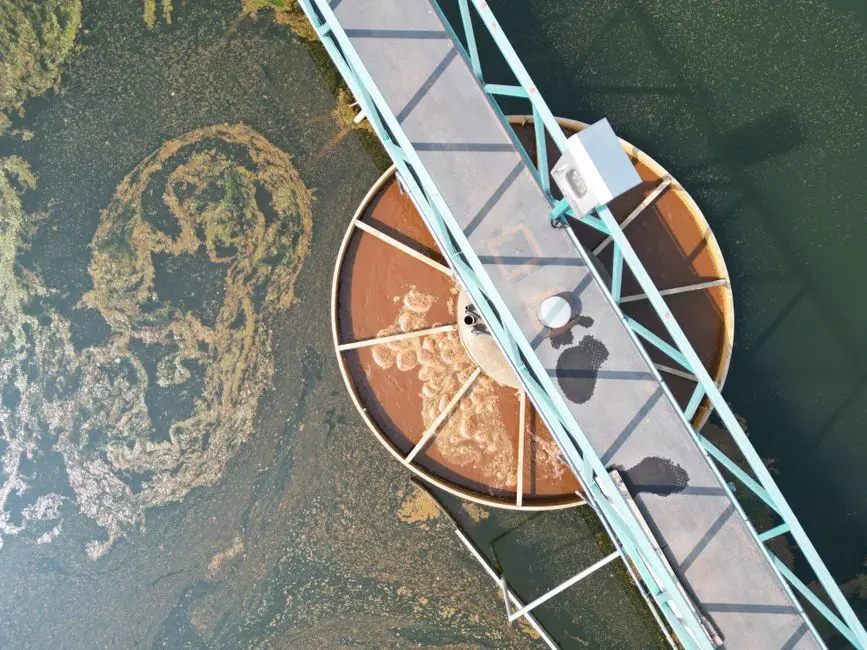
Any business case presented to a Dutch food plant's CapEx committee needs a defensible 2026 cost basis. The figures below are built from packaged MBR + DAF + headworks supply, excluding building works and permitting fees.
| Plant size (m³/day) | CAPEX range (2026 EUR) | OPEX (MBR + DAF, €/m³) | Energy (kWh/m³) | Notes |
|---|---|---|---|---|
| 50 | €180,000–€280,000 | €0.85–€0.95 | 1.0–1.2 | Containerized skid; limited equalization |
| 200 | €320,000–€450,000 | €0.65–€0.80 | 0.9–1.1 | Standard packaged MBR + DAF, civil EQ basin |
| 500 | €650,000–€900,000 | €0.55–€0.70 | 0.8–1.0 | Dual-train MBR; on-site sludge dewatering |
| 1,000 | €1,100,000–€1,600,000 | €0.50–€0.65 | 0.7–0.9 | RO polish included; full reuse train |
OPEX between €0.55 and €0.95/m³ covers energy at 0.8–1.2 kWh/m³, chemical dosing (coagulant, antifoam, CIP chemicals), scheduled membrane cleaning (typically weekly CIP with NaOCl and citric acid), and sludge disposal. The 60% water reuse case is the largest single offset: at a potable tariff of €1.50/m³, reuse yields €0.90/m³ in avoided purchase — enough to flip a 200 m³/day brewery's water balance inside 18–24 months when paired with an industrial RO for water reuse in food processing. Pretreatment upstream of the RO must control hardness and SDI, typically using a high-efficiency sedimentation tank with coagulant dosing from an automatic chemical dosing system sized to flow-proportional setpoints. The Aquacycl service model is competitive against this benchmark when CAPEX is the binding constraint: zero capital outlay against €2.50–€5.00/m³ all-in means payback math collapses to pure operating-cost comparison. For sites already at full permit capacity and where water reuse is the next strategic lever, owned MBR + RO remains the lower 10-year cost path.
Permit Pathway and EU Compliance Checklist for 2026
Procurement cannot outrun the permit pathway; the order of operations below is how a Dutch food plant should sequence a 2026 specification against the Waterschap and EU IED.
- Confirm IED scope. Establish whether the plant exceeds 4,000 m³/year discharge into surface water and therefore falls under EU IED 2010/75/EU Annex I (per the 2019 BREF for Food, Drink and Milk Industries).
- File a lozingsvergunning. Submit the discharge permit application to the relevant Waterschap with influent characterization, the proposed treatment train (screening → DAF → EQ → MBR → optional RO), discharge quality projections against BAT-AELs, and a monitoring plan.
- Reference the BREF. Cite the EU BAT Reference Document for Food, Drink and Milk Industries when sizing biological treatment and justifying effluent targets; the document is on a multi-year review cycle and an update is expected.
- Install continuous monitoring. pH, flow, COD, TSS, and total nitrogen monitoring is required under IED Article 14; data must be retained for inspection and reported annually.
Frequently Asked Questions
What are the EU IED BAT-AEL discharge limits for food processing in the Netherlands?
BAT-AELs from the 2019 BREF for Food, Drink and Milk Industries set effluent ceilings of 25–120 mg/L COD, 30–50 mg/L TSS, and 15–25 mg/L total nitrogen depending on the sub-sector (per EU IED 2010/75/EU). Dutch Waterschappen can impose tighter plant-specific lozingsvergunningen where local surface-water quality requires it.
What is the typical 2026 cost of a packaged MBR system for a Dutch food plant?
A 50 m³/day packaged MBR + DAF for a small dairy or brewery costs €180,000–€280,000 CAPEX with €0.85–€0.95/m³ OPEX in 2026. A 500 m³/day dairy or brewery installation runs €650,000–€900,000 CAPEX and €0.55–€0.70/m³ OPEX. Aquacycl Netherlands offers a CAPEX-free service model at €2.50–€5.00/m³ all-in.
Is DAF pretreatment required before an MBR for food wastewater?
DAF is required upstream of any biological or membrane stage when FOG exceeds roughly 200 mg/L — typical for dairy, slaughter-adjacent, and frying operations — to prevent membrane fouling. Lower-FOG streams (vegetable wash water, brewery conditioning) can sometimes run biological-only, but a DAF upstream of an MBR is still good insurance for membrane life.
Which Dutch authority issues a food plant's discharge permit?
The local Waterschap (one of 21 regional water authorities) issues the lozingsvergunning under the Dutch Water Act (Waterwet). The permit defines site-specific limits, monitoring requirements, and reporting frequency, and can be stricter than EU BAT-AELs where receiving-water quality is at risk.
What water reuse rate can a Dutch dairy or brewery realistically achieve?
With MBR permeate feeding a properly pretreated industrial RO at 60–80% recovery, a Dutch dairy or brewery can realistically reuse 50–70% of treated effluent for non-potable applications (CIP rinse, boiler feed, cooling). At a potable tariff of €1.50/m³, that yields €0.75–€1.05/m³ in offset OPEX and typically 18–30 month RO-payback periods on plants above 200 m³/day.