What Does an Effluent Treatment Plant Actually Cost in Nigeria in 2026?
Effluent treatment plant cost in Nigeria in 2026 ranges from ₦180 million for a 50 m³/day packaged MBR system to ₦2.8 billion for a 5,000 m³/day industrial plant with FMEnv-compliant discharge. OPEX runs ₦280–₦1,100 per m³ depending on influent load and reuse targets, with textile, palm oil, and brewery facilities sitting at the upper end because their COD and FOG loadings force larger biological reactors and tertiary polishing. A Lagos textile factory handling 800 m³/day of dye-house wastewater, currently facing an FMEnv audit notice, sits squarely in the ₦620M–₦950M CAPEX band for a turnkey MBR + Fenton polishing plant — the kind of number a procurement manager needs to walk into a board meeting with, not a vendor's "starts from" quote.
Four variables drive almost every line item on a Nigerian ETP budget. First, design flow in m³/day sets tankage, blower sizing, and membrane area. Second, influent COD/BOD load (textile runs 800–3,000 mg/L COD versus municipal at 250–500) determines reactor volume and aeration demand. Third, target effluent quality — surface-water discharge under FMEnv/EGASPIN limits versus reuse for boiler feed or process water — pushes the design toward MBR or RO. Fourth, site constraints: a greenfield site in Ogun costs 20–30% less in civil works than a brownfield retrofit inside a running Apapa factory. For small estates, hotels, and factories below 80 m³/day, a packaged buried sewage treatment plant from the WSZ series delivers 1–80 m³/h with 2–3 month delivery and the lowest installed footprint.
CAPEX Breakdown by Plant Capacity and Process Type
CAPEX in Nigeria is driven primarily by three cost lines: civil works (35–45% of total), equipment supply (30–40%), and electrical, instrumentation, and automation (10–15%). Containerized or skid-mounted package plants land 15–20% cheaper than stick-built concrete-tank installations because they cut civil works hours and compress the install schedule from 8–12 months to 3–5 months. The table below maps 2026 turnkey CAPEX by capacity tier and process type, anchored to Lagos landed costs.
| Capacity | Activated Sludge | SBR | MBR | DAF + Biotreatment |
|---|---|---|---|---|
| <100 m³/day | ₦85M–₦160M ($55K–$105K) | ₦110M–₦200M ($70K–$130K) | ₦180M–₦320M ($115K–$205K) | ₦130M–₦240M ($85K–$155K) |
| 100–500 m³/day | ₦180M–₦420M ($115K–$270K) | ₦240M–₦520M ($155K–$335K) | ₦380M–₦780M ($245K–$500K) | ₦280M–₦620M ($180K–$400K) |
| 500–2,000 m³/day | ₦420M–₦1.1B ($270K–$710K) | ₦520M–₦1.4B ($335K–$900K) | ₦780M–₦2.1B ($500K–$1.35M) | ₦620M–₦1.7B ($400K–$1.1M) |
| >2,000 m³/day | ₦1.1B–₦2.0B ($710K–$1.3M) | ₦1.4B–₦2.4B ($900K–$1.55M) | ₦2.1B–₦5.7B ($1.35M–$3.65M) | ₦1.7B–₦3.2B ($1.1M–$2.05M) |
For an integrated MBR system sized 10–2,000 m³/day, the 2026 CAPEX range of $0.6M–$9M derived from a sugar-mill benchmark (see the MBR CAPEX OPEX benchmark for industrial wastewater) translates to ₦380M–₦5.7B at current exchange. MBR commands a 25–40% premium over conventional activated sludge because of the PVDF membrane modules, more intense aeration, and tighter control instrumentation, but it pays back through a 60% smaller footprint, higher MLSS tolerance (8,000–12,000 mg/L versus 2,000–4,000), and reuse-grade effluent that eliminates downstream filtration. For streams with FOG above 150 mg/L or TSS above 400 mg/L — typical in food, palm oil, and textile — a DAF pretreatment system typically adds 12–18% to total CAPEX but protects downstream biology from hydraulic shock and floatable loading.
Sector-Specific Cost Premiums: Textile, Food & Beverage, Oil & Gas, Palm Oil
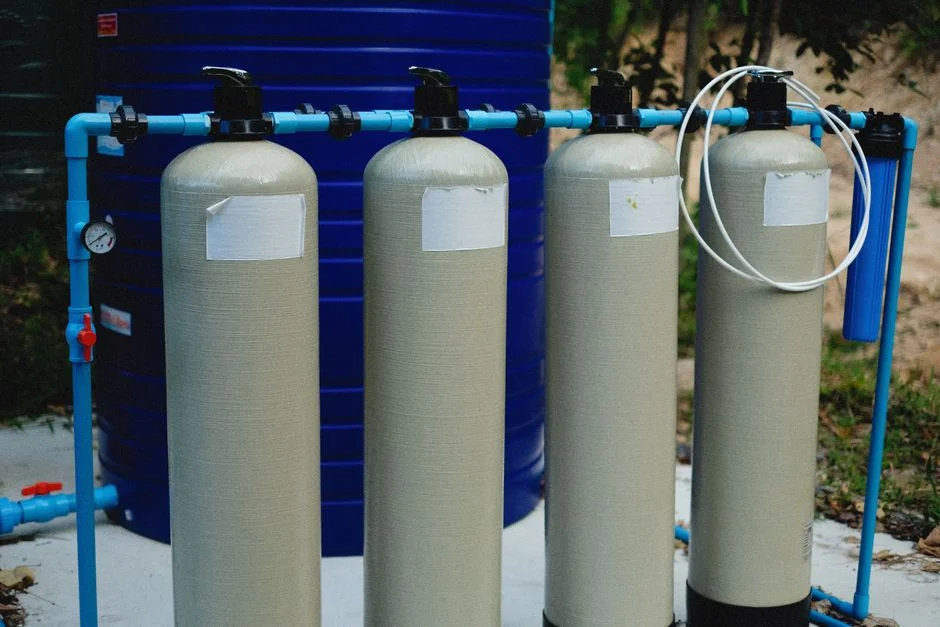
A generic benchmark is dangerous because sector-specific influent chemistry changes reactor sizing, tertiary stage selection, and sludge yield. Textile effluent arrives with COD 800–3,000 mg/L, strong color (200–1,500 Pt-Co), and high temperature (40–60°C) from dye baths; a 500 m³/day textile plant typically needs Fenton oxidation or ozone polishing on the back end, adding ₦45M–₦120M to the MBR CAPEX just for the tertiary reactor, dosing skid, and contact tower. Food and beverage, including brewery streams at BOD 1,500–4,000 mg/L, sit in the UASB + MBR configuration — the anaerobic front-end recovers biogas worth ₦8–₦15/m³ in displaced diesel, and the MBR polish handles the residual COD to under 100 mg/L for discharge. The CAPEX premium for F&B over municipal is 15–22%.
Palm oil mill effluent (POME) is a special case: very high BOD (20,000–25,000 mg/L), high suspended solids, and 80–90°C discharge temperature. The standard train is anaerobic pond or covered lagoon followed by aerobic polishing, but high TSS forces a DAF pre-step to protect the biology. Oil and gas and petroleum refineries carry the highest CAPEX per m³/day capacity at ₦1.2M–₦2.5M per m³/day at mid-scale because explosion-proof motors, API separators, DAF, and biological treatment must all be ATEX-rated and bunded. Hospital and medical effluents, while smaller in flow, need ClO2 disinfection for pathogen control — a chlorine dioxide generator adds 5–8% to small-plant CAPEX but is non-negotiable under the FMEnv nitrogen discharge compliance guide for healthcare facilities. Where total nitrogen limits apply (typically 10–20 mg/L depending on receiving water), tertiary nitrification-denitrification or breakpoint chlorination adds another ₦35M–₦95M for a 500 m³/day plant (per the 2026 FMEnv framework summarized in the FMEnv nitrogen discharge compliance guide).
OPEX: What Does It Cost to Run an ETP in Nigeria Per Cubic Meter?
OPEX in 2026 runs ₦280–₦1,100/m³ ($0.18–$0.95/m³ USD-equivalent), with well-designed MBR at the lower end and high-strength streams needing chemical precipitation at the upper end. Power is the single largest line item in Nigeria at 30–50% of total OPEX because grid unreliability forces diesel generator backup, and aeration alone consumes 0.3–0.6 kWh/m³ for MBR or up to 1.2 kWh/m³ for conventional activated sludge. The 2026 WTP OPEX breakdown guidance recommends real-time power monitoring through a digital KPI dashboard (per the engineering reference at article 6315) to catch blower inefficiencies before they burn ₦2–₦4 million per month in wasted kWh.
Chemicals — coagulant, polymer, pH adjusters, and nutrient supplements — account for 12–22% of OPEX. An automatic chemical dosing system tied to flow-paced setpoints typically cuts chemical consumption 8–15% versus manual dosing, which at a 500 m³/day plant saves ₦1.8M–₦3.5M per year. Sludge disposal runs 8–18% of OPEX because haulage to approved landfill in Lagos or Port Harcourt costs ₦8,000–₦15,000 per tonne wet; dewatering with a plate and frame filter press to 60% dry solids cuts sludge mass by 70% and haulage cost proportionally. Skilled operator labor runs 10–15% of OPEX, with one operator per 8-hour shift standard for plants under 1,000 m³/day — at 2026 Lagos wages of ₦180,000–₦320,000/month loaded cost, that is ₦6M–₦11.5M per year per shift position.
Hidden Landed Costs Most Buyers Forget: Duty, Freight, Power, Compliance
Naive international benchmarks understate Nigerian landed cost by 30–50% because they exclude the duty and logistics layer. Imported equipment — MBR modules, blowers, control panels, dosing pumps — attracts 15% import duty, 7.5% VAT, and a 0.5% ECOWAS levy, all calculated on CIF value at Lagos Apapa or Onne Port. Sea freight from China or Europe adds 6–10% of equipment value, and inland haulage to site adds another 2–4%. For a ₦500M equipment order, that is ₦130M–₦165M in landed-cost overhead that the international quote never shows.
Civil works in Nigeria run 20–35% above Asian benchmarks because of FX exposure on cement (₦8,500–₦10,200 per 50 kg bag in 2026), rebar, and formwork labor. Generator backup is mandatory for any plant without 24/7 grid, and diesel at ₦1,200–₦1,800/litre in 2026 adds ₦8–₦18/m³ to OPEX depending on aeration intensity. Finally, FMEnv/EGASPIN compliance carries its own annual price tag: an online effluent monitoring station, quarterly lab analysis, and permit renewal add ₦4.5M–₦18M per year depending on plant size — the details for nitrogen-driven upgrades are mapped in the FMEnv nitrogen discharge compliance guide. A "cheap" imported plant can end up costing 1.4–1.6× the vendor's headline figure once these line items are loaded in.
How to Choose the Right ETP Configuration for Your Site
The right configuration depends on flow, load, and discharge target — not on what the vendor happens to manufacture. Use the matrix below to match your site to the right train before you request quotes.
| Site Profile | Recommended Configuration | Why |
|---|---|---|
| <80 m³/day, low–medium strength | Packaged WSZ buried plant, optional DAF if FOG >100 mg/L | Fastest install (2–3 months), lowest CAPEX, buried design saves plot space |
| 80–500 m³/day, surface-water discharge | MBR with PVDF flat-sheet modules | Reuse-grade effluent, 60% smaller footprint, stable against load swings |
| 500–2,000 m³/day, COD >2,000 mg/L | Anaerobic (UASB/IC) + MBR polish | Biogas recovery cuts OPEX 30–40% versus aerobic-only; smaller aeration tank |
| >2,000 m³/day, ZLD or high-purity reuse | MBR + multi-media filter + industrial RO | Closed-loop reuse offsets 5–8% of OPEX; protects downstream membranes |
For the small tier, a packaged buried sewage treatment plant is the lowest-friction option. For the 80–500 m³/day band, specify MBR modules from the DF series — see the PVDF flat-sheet MBR module reference for flux and operating pressure specs. Plants above 2,000 m³/day chasing ZLD or boiler-feed reuse should add an industrial RO system downstream of a multi-media filter to protect membrane life.
Frequently Asked Questions
How much does a 100 m³/day ETP cost in Nigeria in 2026?
A 100 m³/day packaged MBR plant in Lagos lands at ₦180M–₦280M turnkey in 2026, including civil works, equipment, and commissioning. Containerized variants at the low end install in 10–14 weeks. Regional pricing in Kano tracks 5–8% lower than Lagos on civil works but 3–5% higher on equipment freight (per the Kano industrial wastewater engineering guide).
What does a brewery effluent treatment plant cost in Nigeria?
A 500 m³/day brewery ETP using UASB + MBR runs ₦780M–₦1.1B in 2026 because the 1,500–4,000 mg/L BOD forces a large anaerobic reactor and biogas handling package. The premium over a municipal plant of the same flow is 15–22%, partly offset by biogas revenue.
What does FMEnv compliance add to ETP cost in 2026?
Compliance adds ₦4.5M–₦18M per year in monitoring and permit costs, plus ₦35M–₦95M upfront for tertiary nitrogen removal if the receiving water classification triggers limits under 20 mg/L TN (per the FMEnv nitrogen discharge compliance guide).
Can an ETP be financed in Nigeria?
Yes — most EPCs offer 24–48 month financing on turnkey packages, and Development Finance Institutions (BOI, DBN, CBN intervention funds) cover industrial environmental upgrades at single-digit interest. Abuja FCT projects have access to additional state-level incentives (per the Abuja FCT industrial wastewater guide).
What is the payback on water reuse from an ETP?
Reuse-grade effluent at ₦120–₦220/m³ displaces purchased process water at ₦350–₦600/m³, giving 2–4 year payback on the RO polish train at any plant above 200 m³/day with reliable intake pressure.