Why Kano Industrial Wastewater Cannot Be Solved by Generic Treatment Designs
Kano's three industrial zones — Challawa, Bompai, and Sharada — discharge an estimated 18,000–22,000 m³/day of combined industrial effluent (Kano State Ministry of Environment estimates, 2025), and the load is not generic. A Challawa tannery running beamhouse, chrome-tan, and finishing produces a stream with COD 4,000–8,000 mg/L, total chromium 50–500 mg/L, sulfide often above 200 mg/L, and ammonia 200–600 mg/L. Conventional activated sludge fails on this stream because sulfide strips dissolved oxygen faster than the biomass can transfer it, and trivalent chromium is not removed without a dedicated pH 8.5–9 lime precipitation step followed by lamella clarification.
A Bompai textile mill running reactive azo dyes discharges effluent with COD 1,500–3,000 mg/L, color 2,000–5,000 Pt-Co units, and TDS 3,000–6,000 mg/L from dye-bath salts. Biological treatment alone removes at most 30% of the color load because the azo chromophore is recalcitrant under aerobic conditions. The 2024 Springer chapter on hydrodynamic cavitation (Top 3) confirms that a cavitation or Fenton pre-step achieves 35–50% COD reduction and 60–80% decolorization before the stream ever reaches the bioreactor, which is why hybrid trains are now the default for textile and tannery wastewater globally (per the 2023 Springer membrane review, Top 1).
Add Kano's hydrology. Groundwater tables in the Chad Formation aquifers around Challawa and Bompai are falling 0.5–1.2 m/year (HydropureWater field data, 2026), and the Kano industrial water tariff sits at ₦180–₦280/m³ in 2026. A 60–80% reuse target — the same level SUEZ demonstrated at the Dongjiakou steel plant in Qingdao (Top 5) — is not an aspirational KPI here, it is the only path to a defensible operating cost. Generic European or Southeast Asian treatment recipes do not account for either the high chromium-and-sulfide loading or the reuse economics, which is why Kano plants need a localized design from the first mass balance onward.
The 2026 Regulatory Stack Every Kano Plant Must Navigate
The compliance floor is the National Environmental Standards and Regulations Enforcement Agency (NESREA) Effluent Limitation Regulation, S.I. 14 of 2009. The limits are not optional: BOD ≤ 50 mg/L, COD ≤ 250 mg/L, TSS ≤ 50 mg/L, total chromium ≤ 0.5 mg/L, sulfide ≤ 0.2 mg/L, oil and grease ≤ 10 mg/L, pH 6–9, and temperature ≤ 40°C for any discharge into Nigerian surface water or land. Kano State Ministry of Environment adds a quarterly self-monitoring report and spot-sampling authority, and chronic non-compliance routes through NESREA enforcement, with fines that can reach ₦5M plus operating-license revocation (per the Federal Competition and Consumer Protection Act amendment, 2024).
The Federal Ministry of Environment 2021 Surface and Groundwater Quality Guidelines tighten the heavy-metal envelope that S.I. 14 of 2009 does not yet cover: cadmium ≤ 0.003 mg/L, lead ≤ 0.01 mg/L, mercury ≤ 0.001 mg/L, and TDS ≤ 500 mg/L for surface water discharges from new installations. Any plant designed today should target the 2021 FMEnv numbers, not the 2009 defaults, because regulators are using the newer limits when assessing Environmental Impact Assessment (EIA) submissions.
| Parameter | NESREA S.I. 14 of 2009 limit | FMEnv 2021 surface water limit | WHO 2026 reuse target (cooling/process) |
|---|---|---|---|
| BOD₅ | 50 mg/L | — | ≤ 10 mg/L |
| COD | 250 mg/L | — | ≤ 50 mg/L |
| TSS | 50 mg/L | — | ≤ 5 mg/L (turbidity ≤ 1 NTU) |
| Total chromium | 0.5 mg/L | 0.05 mg/L | 0.05 mg/L |
| Sulfide | 0.2 mg/L | — | — |
| Cadmium | < 0.01 mg/L | 0.003 mg/L | 0.003 mg/L |
| Lead | 0.1 mg/L | 0.01 mg/L | 0.01 mg/L |
| pH | 6–9 | 6.5–8.5 | 6.5–8.5 |
| TDS | 2,000 mg/L | 500 mg/L (new plants) | ≤ 450 mg/L for cooling |
For plants supplying multinational buyers or exporting finished goods, ISO 14001 environmental management plus near-zero-liquid-discharge (ZLD) equivalent targets are increasingly baked into supply contracts, and the WHO Wastewater Reuse Guidelines 2026 set the pathogen and salinity envelope for any reuse loop feeding cooling towers, boiler feed, or process wash water. Treat the WHO limits as the design floor for the reuse permeate, not the discharge.
Sector-by-Sector Treatment Train for Kano's Three Dominant Industries

The treatment train has to be matched to the effluent. Copying a municipal activated-sludge design into a tannery is the most common engineering failure I see in Kano bids.
| Parameter | Tannery (Challawa) | Textile (Bompai) | Agro-processing (Sharada/dairy) |
|---|---|---|---|
| Flow range | 50–1,500 m³/day | 100–3,000 m³/day | 20–500 m³/day |
| COD (influent) | 4,000–8,000 mg/L | 1,500–3,000 mg/L | 2,000–6,000 mg/L |
| BOD/COD ratio | 0.3–0.4 | 0.2–0.3 | 0.4–0.6 |
| Key contaminants | Total Cr 50–500 mg/L, sulfide >200 mg/L, NH₃ 200–600 mg/L | Reactive azo dyes, TDS 3,000–6,000 mg/L, color 2,000–5,000 Pt-Co | FOG 500–2,000 mg/L, protein, lactose BOD |
| Pre-treatment | Sulfide oxidation (H₂O₂ 50% or NaOCl), Cr precipitation pH 8.5–9 | Fenton or hydrodynamic cavitation (35–50% COD reduction) | Coarse screen + DAF for FOG/protein |
| Biological step | SBR or MBR, MLSS 6,000–8,000 mg/L | MBR with PVDF flat-sheet, 0.1–0.2 μm pore | SBR or MBBR |
| Polishing | RO (rejection >99.5% on Cr) for reuse | UF → RO, recovery 65–75% | Chlorination or ClO₂ disinfection |
Tannery (Challawa). Rotary bar screen (5 mm aperture) → grit chamber → sulfide oxidation with 50% H₂O₂ at 1.5–2.0× stoichiometric dose, 30-minute contact → chromium precipitation with lime to pH 8.5–9 in a dedicated reactor → lamella clarifier for sludge separation → DAF pre-treatment for residual suspended solids → SBR or containerized MBR membrane bioreactor with MLSS 6,000–8,000 mg/L → optional RO polishing for chromium-free reuse at 80–95% recovery. Sludge from the lamella and DAF units is dewatered on a plate-and-frame filter press at 75–85% volume reduction before off-site disposal.
Textile (Bompai). Bar screen → equalization (8–12 hour HRT for flow and pH dampening) → hydrodynamic cavitation reactor at 5–8 bar inlet pressure, achieving 35–50% COD reduction per the 2024 Springer cavitation study → neutralization to pH 7–8 → DAF for color and FOG → MBR with PVDF flat-sheet MBR modules at 0.1–0.2 μm pore size, flux 15–25 LMH → UF polish → RO at 65–75% recovery for reuse. RO recovery on MBR permeate routinely hits 80–95% because the bioreactor has already removed the colloidal load that fouls the membrane (Springer 2023 chapter, Top 1).
Agro-processing (dairy, edible oil, flour — Sharada). Coarse screen → DAF for FOG and protein recovery (FOG removal >90% at 30 mg/L PAC dose) → equalization → SBR or MBBR for BOD reduction with HRT 8–12 hours → ClO₂ disinfection at 1.5–2.0 mg/L for 30 minutes achieves a 99% pathogen kill rate, which matters because dairy effluent typically carries total coliforms 10⁶–10⁸ CFU/100 mL. No RO required unless the reuse loop feeds the boiler.
Kano CAPEX, OPEX and Water Tariff Economics in 2026 Naira
Budgets in Naira need a defensible range, not a single point estimate, and the exchange rate assumption is the dominant variable. This section is anchored to a NAFEX rate of ₦1,580–₦1,650/USD in Q1 2026 (HydropureWater field data) and CIF Apapa or Onne port shipping from Chinese OEMs.
Containerized MBR (10–200 m³/day modules). Equipment cost is $18,000–$42,000 per 50 m³/day module CIF Apapa, plus $4,000–$7,000 inland transport to Kano, plus 8–10% Nigerian customs duty and 7.5% VAT. A 200 m³/day plant in three 50 m³/day containers lands in Kano for roughly $180,000–$220,000 fully landed, with site work adding ₦18–35M for civil foundations and interconnecting pipework. Order-to-commissioned timeline is 8–14 weeks.
Civil-built SBR (500 m³/day). ₦180M–₦280M all-in including earthworks, reinforced concrete, aeration grid, blowers, and control panel. The build cycle is 18–24 months and assumes a competent local civil contractor; under-capacity contractors in Kano regularly push this to 30 months, which is itself a CAPEX risk because the inflation on materials over a 30-month build can add 15–25% to the original budget.
OPEX benchmarks in 2026 Naira. Full SBR with chemical dosing runs ₦120–₦220/m³, MBR with membrane cleaning and replacement amortization runs ₦180–₦280/m³, and a full RO polish loop on top of MBR runs ₦310–₦420/m³. Set against the Kano industrial water tariff of ₦180–₦280/m³, a 60–80% reuse plant pays back its incremental CAPEX in 18–28 months. Below 200 m³/day of throughput, sludge disposal economics tip the balance: licensed off-site disposal is ₦8,000–₦15,000 per cubic meter of dewatered cake, so on-site dewatering becomes mandatory rather than optional. Labor for a 500 m³/day plant in Kano runs ₦3.5M–₦5M/month for a 4–6 operator shift rota.
For cross-border equipment procurement benchmarks outside Nigeria, a useful reference is this DAF supplier comparison for industrial wastewater covering the Jordanian market, which shares the same Chinese-shipping logistics model. For a West Africa parallel on compliance and cost, this West Africa wastewater compliance and cost guide shows how Abidjan plants are structuring their NESREA-equivalent submissions.
Choosing Between Containerized MBR, Civil SBR, and DAF+UF for a Kano Site
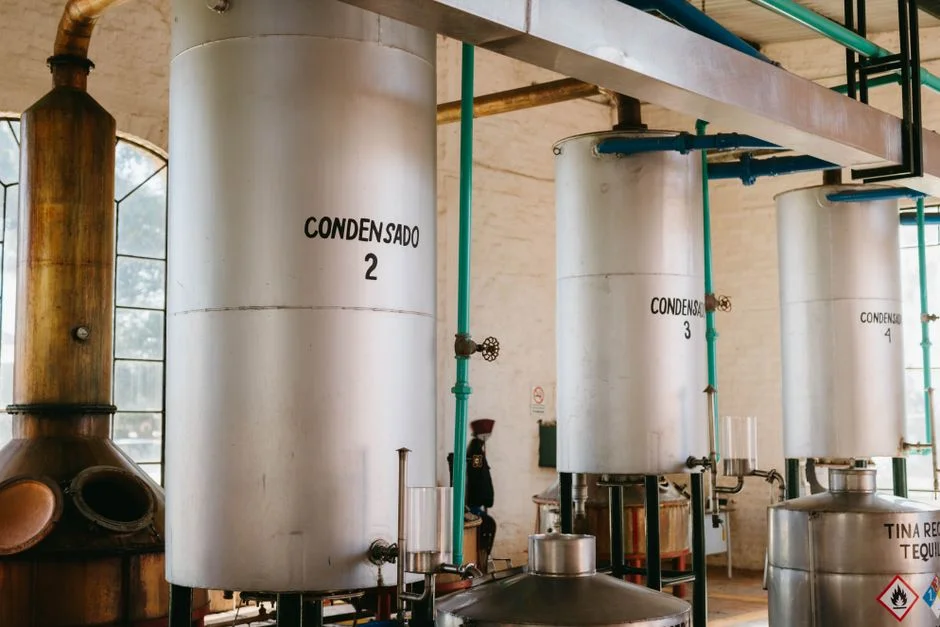
The decision is not line-item CAPEX. It is whole-life cost, footprint, commissioning risk, and operator skill. Three configurations cover 95% of the bids I see from Kano.
| Configuration | Best-fit flow range | CAPEX/m³/day | OPEX (₦/m³) | Footprint | Build/commission time | Operator skill required |
|---|---|---|---|---|---|---|
| Containerized MBR | 10–500 m³/day | $360–$1,100 | 180–280 | ~60% of SBR | 8–14 weeks | Moderate (membrane cleaning) |
| Civil SBR | 500–5,000 m³/day | $230–$360 | 120–220 | Reference baseline | 18–24 months | Low (well-understood) |
| DAF + UF (no biological) | 20–300 m³/day, low-BOD/high-FOG | $180–$320 | 90–150 | ~40% of SBR | 6–10 weeks | Low |
Containerized MBR is the right answer for any plant under 500 m³/day that needs compliance within four months of order, or any site where Challawa industrial land is too constrained for open civil basins. The trade-off is membrane replacement every 5–7 years, which OPEX needs to amortize.
Civil SBR wins on lifetime CAPEX per m³ above 1,000 m³/day and is fully maintainable with local skills, but the 18–24 month build is itself a regulatory risk because NESREA will not issue a discharge permit against a design on paper — they want operating data.
DAF + UF (no biological) only fits a narrow envelope: low-BOD, high-FOG streams such as edible-oil refining or dairy whey processing. It skips the biological step entirely and is the lowest CAPEX option, but pushing a tannery or textile effluent through this configuration will fail the NESREA COD limit on day one.
For textile and tannery plants where recalcitrant COD otherwise forces the MBR to be sized for 2× the hydraulic load, a hydrodynamic cavitation pre-step justifies a 15–25% premium on the MBR CAPEX because the smaller biological stage pays for itself in OPEX within 24 months. All three configurations can be supplied as pre-skidded, pre-wired units from a Chinese OEM with FAT testing and on-site commissioning — see the containerized MBR membrane bioreactor for a representative 50 m³/day module.
Sourcing a Treatment Plant from China to Kano: 6-Step Buyer Checklist
- Lock the influent and target effluent against NESREA S.I. 14 of 2009 and FMEnv 2021 before any vendor contact. A vendor who quotes without seeing 7-day composite sampling data is guessing.
- Request a PID, full equipment list, and itemized CAPEX breakdown with at least three reference plants of similar capacity and sector — and call those references directly. A Chinese OEM with no African or Middle East reference list is a procurement risk.
- Confirm factory acceptance test (FAT) video, container-loading photos, and CIF Apapa or Onne Incoterm in the contract. CIF is non-negotiable; FOB shifts port-risk onto a buyer who has never cleared cargo through Apapa.
- Build in 8–10% customs duty, 7.5% VAT, SONCAP conformity assessment, and 6–10 weeks for clearing and inland transport to Kano. Apapa congestion routinely adds two weeks to the timeline, and SONCAP documentation errors add another two.
- Negotiate commissioning, training, and a 12-month performance warranty with a liquidated-damages clause tied to effluent compliance. Verbal commitments from a trading company do not survive a failed performance test.
- Plan 4 weeks for on-site commissioning plus 8 weeks of biological acclimation before discharge compliance sampling. Biological systems do not perform to spec on day one; any compliance sample taken inside the first 8 weeks of operation is not representative.
For a deeper cross-border procurement benchmark, this cross-border sewage plant sourcing benchmark covers the Bangladesh buyer journey with the same Chinese-supplier model. For a North African parallel on industrial compliance and engineering, this Northern Africa industrial wastewater engineering and compliance guide covers Alexandria's regulatory stack and treatment-train decisions under comparable hydrology.
Frequently Asked Questions About Industrial Wastewater Treatment in Kano
Q1. What permits does a Kano factory need to discharge treated industrial wastewater? An EIA approval from FMEnv, an effluent discharge permit from NESREA under S.I. 14 of 2009, and a state-level operating permit from the Kano State Ministry of Environment. Quarterly self-monitoring reports are mandatory, and the 2021 FMEnv surface and groundwater guidelines set the heavy-metal envelope for new installations.
Q2. How much does a 200 m³/day industrial wastewater treatment plant cost in Nigeria in 2026? A containerized MBR lands in Kano for $180,000–$220,000 fully landed (CIF Apapa + duty + VAT + inland transport), plus ₦18–35M civil works. A civil-built SBR at the same flow runs ₦80M–₦130M but takes 18–24 months to build.
Q3. Can a Chinese supplier ship and install in Kano, and what is the typical timeline? Yes. CIF Apapa or Onne is the standard Incoterm. Allow 6–8 weeks for sea freight, 2–4 weeks for customs and SONCAP, 1–2 weeks inland to Kano, and 4 weeks on-site commissioning. Order to first-treated-effluent is 14–20 weeks for a containerized plant, 18–24 months for a civil SBR.
Q4. What treatment is required for tannery or textile effluent specifically? Tannery requires sulfide pre-oxidation, chromium precipitation at pH 8.5–9, DAF, and MBR or SBR, with optional RO for reuse. Textile requires hydrodynamic cavitation or Fenton pre-step for color and recalcitrant COD, neutralization, DAF, and MBR with PVDF flat-sheet modules, with UF/RO for any reuse loop.
Q5. Is MBR or SBR better for a 300 m³/day plant in northern Nigeria? MBR, for three reasons: 60% smaller footprint in constrained Challawa plots, better effluent quality for reuse (TSS ≤ 5 mg/L vs ≤ 30 mg/L from SBR), and faster compliance demonstration to NESREA. The membrane OPEX premium is recovered through the reuse offset in 18–28 months.
Q6. Where can I find compliance, process, and cost data for industrial wastewater in Nigeria? The Nigeria- and West-Africa-focused engineering content on this site, plus the containerized MBR, DAF, PVDF membrane module, filter press, and ClO₂ generator product pages for unit-operation specifications.