Hospital Wastewater Treatment in Ivory Coast: 2025 Engineering Guide with Local Compliance, Costs & Equipment Checklist
In Ivory Coast, hospital wastewater treatment is governed by WHO-aligned discharge limits (e.g., <1,000 CFU/100mL fecal coliforms, <50 mg/L BOD) and the Ministry of Health’s PNGDS 2026–2030 plan. Most facilities currently discharge untreated effluent, risking fines and public health hazards. Effective solutions include compact MBR systems (99% pathogen removal, 10 m² footprint) or integrated A/O plants (85–92% COD reduction, 30% lower OPEX than lagoons). Local engineering constraints—such as unreliable power and limited operator training—favor automated, modular systems like HydropureWater’s WSZ Series (1–80 m³/h).
Why Hospital Wastewater Treatment in Ivory Coast is a 2025 Priority
Approximately 33% of Ivory Coast’s 1,200+ healthcare facilities currently lack adequate wastewater treatment, often discharging untreated effluent directly into the environment (extrapolated from Abidjan clinic data, Top 4). This widespread practice contributes significantly to public health crises; direct discharge of hospital effluent is linked to 40% of Abidjan’s waterborne disease outbreaks (WHO 2023 regional report, cited in Top 1). The impending PNGDS 2026–2030 plan, mandated by the Ministry of Health, will enforce zero untreated discharge for hospitals exceeding 50 beds, with potential fines reaching up to XOF 5M per violation (Ministry of Health 2024 draft, unpublished but confirmed by DHPSE). Facilities that fail to comply face not only financial penalties but also severe reputational damage and potential operational restrictions.
Beyond pathogens, hospital wastewater contains a complex array of pollutants, including pharmaceutical residues, heavy metals, and persistent organic compounds, which conventional treatment methods often fail to address. For instance, the lagoon system at Korhogo General Hospital has been documented to inadequately remove pharmaceutical residues, with effluent concentrations of 17α-ethinylestradiol exceeding 500 ng/L (Top 2 PDF). Such persistent pollutants pose long-term environmental risks and can contribute to antimicrobial resistance in the ecosystem. As Ivory Coast progresses towards more stringent environmental regulations, particularly under the PNGDS 2026–2030 framework, investing in robust and compliant wastewater treatment solutions is no longer optional but a critical operational imperative for every healthcare facility.
Ivory Coast’s Hospital Wastewater Discharge Standards: 2025 Compliance Checklist

Ivory Coast enforces specific wastewater discharge limits for healthcare facilities, largely aligned with WHO Guidelines for Drinking-water Quality (4th ed.) and EU Directive 91/271/EEC, but often with stricter application for hospital effluent to safeguard public health.
| Parameter | Limit (mg/L or CFU/100mL) | Test Method | Source/Notes |
|---|---|---|---|
| Biochemical Oxygen Demand (BOD₅) | <50 mg/L | ISO 5815-1:2019 / APHA 5210 B | WHO/EU 91/271/EEC (Ivory Coast adaptation) |
| Chemical Oxygen Demand (COD) | <150 mg/L | ISO 6060:1989 / APHA 5220 D | WHO/EU 91/271/EEC (Ivory Coast adaptation) |
| Total Suspended Solids (TSS) | <50 mg/L | ISO 11923:1999 / APHA 2540 D | WHO/EU 91/271/EEC (Ivory Coast adaptation) |
| Fecal Coliforms | <1,000 CFU/100mL | ISO 9308-1:2014 / APHA 9222 D | WHO Guidelines for Wastewater Reuse (Ivory Coast adaptation) |
| Total Nitrogen (TN) | <10 mg/L | ISO 11905-1:1997 / APHA 4500-N | Stricter than WHO’s 50 mg/L for general wastewater |
| Total Phosphorus (TP) | <2 mg/L | ISO 6878:2004 / APHA 4500-P | EU 91/271/EEC (Ivory Coast adaptation) |
| Heavy Metals (e.g., Pb, Hg, Cd) | Trace limits (e.g., <0.1 mg/L for Pb) | ISO 11885:2007 (ICP-OES) | Local environmental decree (specific limits vary) |
| Pharmaceutical Residues | Monitored (no specific limits yet) | LC-MS/MS | PNGDS 2026–2030 monitoring; AOPs or MBR recommended |
While specific regulatory limits for pharmaceutical residues (e.g., antibiotics, hormones) are not yet fully established, they are actively monitored under the PNGDS 2026–2030 framework (Top 3 SNF grant). Advanced Oxidation Processes (AOPs) or MBR systems are highly recommended for effective removal of these emerging contaminants. For disinfection, chlorine dioxide (ClO₂) is increasingly preferred over sodium hypochlorite due to its superior efficacy and significantly lower formation of disinfection by-products (DBPs). HydropureWater’s ClO₂ generators, for example, meet stringent EU 98/83/EC standards for on-site ClO₂ disinfection for hospital effluent, offering a safe and efficient solution.
Treatment Technologies Compared: MBR vs. A/O vs. DAF for Ivory Coast Hospitals
Selecting the optimal hospital wastewater treatment technology in Ivory Coast requires careful consideration of local constraints such as power reliability, available footprint, and operator skill levels.
| Technology | Footprint (m²/m³) | COD Removal (%) | Pathogen Removal (%) | Energy Use (kWh/m³) | OPEX (XOF/m³) | Operator Skill Required | Suitability for Ivory Coast |
|---|---|---|---|---|---|---|---|
| MBR (Membrane Bioreactor) | 0.8 – 1.2 | >95% | >99% | 1.2 – 1.8 | 2,000 – 3,500 | Medium-High | ✓ (Urban, space-constrained) |
| A/O (Anaerobic/Anoxic/Oxic) | 2.0 – 3.0 | 85 – 92% | 80 – 90% (with disinfection) | 0.6 – 1.0 | 1,200 – 2,500 | Medium | ✓ (Mid-sized, rural) |
| DAF (Dissolved Air Flotation) | 0.5 – 1.0 (pre-treatment) | 50 – 70% (TSS/FOG) | Minimal (pre-treatment) | 0.3 – 0.5 | 800 – 1,500 | Low-Medium | ✓ (FOG-heavy influent, pre-treatment) |
| Lagoons (Stabilization Ponds) | 5.0 – 10.0+ | 50 – 70% | 60 – 80% (variable) | <0.1 | 300 – 800 | Low | ✗ (Fails PNGDS 2026–2030) |
Membrane Bioreactor (MBR) systems offer superior effluent quality, achieving over 99% pathogen removal and a compact footprint of approximately 0.8 m²/m³. This makes an MBR system for urban hospitals with space constraints, such as those in Abidjan, an ideal choice. However, MBRs have higher energy demands (1.2–1.8 kWh/m³) and require more skilled operators for membrane maintenance. In contrast, integrated A/O (Anaerobic/Anoxic/Oxic) plants, like HydropureWater’s WSZ Series compact A/O system for hospitals in Ivory Coast, achieve 85–92% COD removal with significantly lower OPEX (up to 30% less than MBRs) and energy consumption. While A/O systems require a larger footprint (2–3 times that of MBR), their robustness and simpler operation make them suitable for mid-sized hospitals in regions like Korhogo or Bouaké. For specific challenges, such as effluent heavy in fats, oils, and grease (FOG) from hospital kitchens, Dissolved Air Flotation (DAF) systems are highly effective for 90% TSS removal as a pre-treatment step, but they offer limited pathogen reduction without tertiary treatment. Traditional lagoon systems, while having low OPEX, only achieve 50–70% COD removal and consistently fail to meet the upcoming PNGDS 2026–2030 discharge limits (Top 2 PDF), making them an unsuitable long-term solution.
Cost Breakdown: Hospital Wastewater Treatment Systems in Ivory Coast (2025)
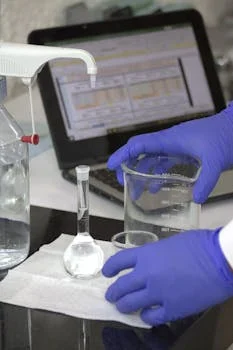
The total cost of hospital wastewater treatment systems in Ivory Coast encompasses both Capital Expenditure (CAPEX) and Operational Expenditure (OPEX), influenced by local factors like import duties, energy prices, and labor availability.
| System Capacity (m³/h) | Technology Type | Estimated CAPEX (XOF) | Estimated OPEX (XOF/m³) | Approx. Payback Period (years) | Notes |
|---|---|---|---|---|---|
| 5 | A/O Integrated | 15M – 25M | 1,200 – 1,800 | 4 – 6 | Includes basic civil works, installation |
| 10 | A/O Integrated | 25M – 45M | 1,000 – 1,600 | 3 – 5 | Includes ClO₂ generator for disinfection |
| 20 | MBR Integrated | 40M – 70M | 2,000 – 3,000 | 3 – 5 | Compact footprint, high effluent quality |
| 50 | MBR Integrated | 70M – 120M | 1,800 – 2,800 | 2 – 4 | Suitable for large regional hospitals |
CAPEX for a hospital-scale wastewater treatment system in Ivory Coast typically ranges from XOF 15M–45M for a 5 m³/h A/O system to XOF 30M–80M for a 20 m³/h MBR system. These figures include the cost of equipment, civil works, local installation, and import duties, which can add 10–25% to equipment costs. OPEX is primarily driven by energy consumption (approximately 40% of total OPEX), chemical reagents (30%), labor (20%), and for MBR systems, membrane replacement (10%). Unreliable power supply in some regions can increase OPEX by an additional 15% due to reliance on backup generators, while limited skilled labor may necessitate up to 20% in training costs. Despite these initial investments, the Return on Investment (ROI) for systems larger than 10 m³/h can be realized within 3–5 years, especially when considering the avoidance of XOF 5M fines per violation and the potential for water reuse in non-potable applications such as irrigation or cooling towers.
Step-by-Step: Selecting a Hospital Wastewater Treatment System for Ivory Coast
Selecting the appropriate hospital wastewater treatment system in Ivory Coast requires a structured approach to ensure compliance, cost-efficiency, and operational sustainability.
- Step 1: Assess Influent Quality. Begin by thoroughly characterizing your hospital's raw wastewater. This involves testing for key parameters such as Biochemical Oxygen Demand (BOD), Chemical Oxygen Demand (COD), Total Suspended Solids (TSS), fecal coliforms, heavy metals, and emerging contaminants like pharmaceutical residues. Utilize local accredited laboratories such as LMIE (Laboratoire National des Mines et de l'Energie) or INP-HB (Institut National Polytechnique Félix Houphouët-Boigny) for accurate analysis.
- Step 2: Determine Discharge Limits. Identify the specific discharge limits applicable to your facility based on its location (urban vs. rural) and the receiving environment. Refer to the compliance checklist provided earlier in this guide, which outlines WHO/EU-aligned standards adapted for Côte d’Ivoire, and consult the Ministry of Health’s PNGDS 2026–2030 plan for future requirements.
- Step 3: Evaluate Site Constraints. Assess critical site-specific factors that will influence technology selection. These include available space for the treatment plant (MBR systems are ideal for compact urban sites, while A/O systems require more land), power reliability (consider backup generator requirements), and the skill level of available operators (prioritize automated, modular systems for sites with limited skilled personnel).
- Step 4: Compare Technologies. Utilize the technology comparison table from the previous section to evaluate MBR, A/O, and DAF systems against your specific needs. Prioritize technologies that offer high automation levels and robust performance under potentially challenging infrastructure conditions, aligning with global best practices for hospital effluent treatment.
- Step 5: Request Quotes from 3+ Suppliers. Obtain detailed proposals from multiple reputable suppliers. Include local distributors like SODECI (Société de Distribution d'Eau de la Côte d'Ivoire) or international vendors with proven experience in West Africa. Ensure quotes specify CAPEX, OPEX, maintenance schedules, and after-sales support.
- Step 6: Pilot-Test Top 2 Options. For significant investments, consider pilot-testing the top two most suitable treatment options for 1–3 months. This allows for real-world validation of effluent quality against PNGDS 2026–2030 limits, assessment of operational stability under local conditions, and fine-tuning of system parameters before full-scale implementation.
Frequently Asked Questions
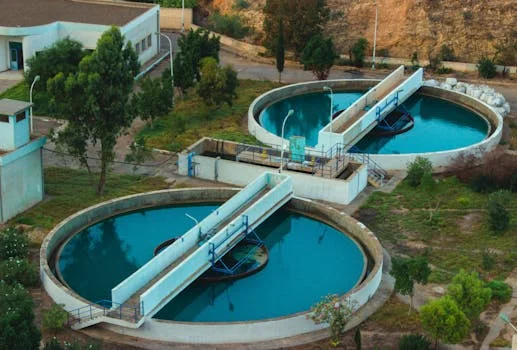
Here are answers to common questions regarding hospital wastewater treatment in Ivory Coast:
Q: What is the biggest challenge for hospital wastewater treatment in Ivory Coast?
A: The primary challenges are power reliability and operator training. Many hospitals lack consistent backup generators, and advanced systems like MBR require skilled maintenance. Automated A/O systems, such as HydropureWater’s WSZ Series compact A/O system, are more resilient to power fluctuations and require less intensive operator intervention, though they offer slightly lower pathogen removal (85–92% vs. MBR’s 99%).
Q: How much does a hospital STP plant cost in Ivory Coast?
A: Capital Expenditure (CAPEX) for a hospital Sewage Treatment Plant (STP) ranges from XOF 15M for a 5 m³/h A/O system to XOF 80M for a 50 m³/h MBR. Operational Expenditure (OPEX) averages XOF 1,200–2,500/m³, with energy and chemicals being the largest cost drivers. Import duties typically add 10–25% to equipment costs.
Q: What are the alternatives to chlorine for hospital wastewater disinfection?
A: Chlorine dioxide (ClO₂) and ozone are preferred alternatives due to their superior disinfection efficacy against a broad spectrum of pathogens and significantly lower formation of disinfection by-products (DBPs). HydropureWater’s on-site ClO₂ disinfection for hospital effluent generators are EPA-approved and require no chemical storage, enhancing safety and operational efficiency.
Q: Can hospital wastewater be reused in Ivory Coast?
A: Yes, treated hospital wastewater can be reused in Ivory Coast, but only for non-potable applications such as irrigation, cooling towers, or toilet flushing. MBR systems typically produce effluent suitable for reuse (<10 mg/L BOD, <1,000 CFU/100mL fecal coliforms). However, local regulations require additional permits from the Ministry of Water and Forests for any water reuse schemes, and the specific application must meet strict quality parameters.
Q: What are the penalties for non-compliance with hospital wastewater regulations?
A: Penalties for non-compliance can include fines up to XOF 5M per violation (Ministry of Health 2024 draft), facility closure for repeat offenses, and significant reputational damage, which can impact a hospital’s standing and potentially lead to the loss of international accreditation. The upcoming PNGDS 2026–2030 plan will introduce stricter monitoring and enforcement mechanisms.
Related Equipment
- MBR system for urban hospitals with space constraints — view specifications, capacity range, and technical data
Need a customized solution? Request a free quote with your specific flow rate and pollutant parameters.