Why Izmir’s Industrial Wastewater Treatment Costs Are Rising in 2026
İZSU’s 2026 discharge limits for industrial effluent have tightened to COD <80 mg/L and TSS <30 mg/L, forcing a shift from conventional biological treatment to advanced membrane and physical-chemical processes. For a textile factory manager in the İzmir Atatürk Organized Industrial Zone (İAOSB), these regulations often manifest as a series of failed inspections and "non-compliance" notices that threaten operational continuity. The cost of non-compliance is no longer just a fine; it is the risk of facility shutdown during peak production cycles. Energy costs in Izmir have stabilized at approximately TRY 1.2/kWh, yet they now account for 35–45% of total OPEX for wastewater plants, driving a critical demand for energy-efficient technologies such as anaerobic digestion, where biogas recovery can offset up to 60% of electricity consumption (HydropureWater field data, 2025).
Land scarcity in high-density zones like Çiğli and İAOSB has further complicated the landscape, increasing CAPEX by 20–30% for facilities attempting to expand conventional activated sludge systems. As land prices rise, compact technologies like Membrane Bioreactors (MBR) and Dissolved Air Flotation (DAF) have gained traction despite their higher upfront costs. A 2025 audit of 12 Izmir-based textile plants revealed that 75% were non-compliant with the new COD limits, primarily due to aging infrastructure unable to handle modern synthetic dye loads. These facilities are now facing retrofitting costs ranging from TRY 3M to TRY 8M per unit. Understanding the balance between Bursa’s wastewater treatment standards and cost benchmarks compared to Izmir's local İZSU requirements is essential for regional procurement teams managing multiple sites.
The transition to 2026 standards requires a granular look at process parameters. For instance, heavy metal thresholds in textile effluent, specifically Chromium, are now capped at <0.5 mg/L. Achieving this requires precise chemical precipitation stages prior to biological treatment. For food processing plants in the Kemalpaşa zone, the challenge lies in Fats, Oils, and Grease (FOG) levels, which İZSU now monitors with real-time sensors at major discharge points. This guide breaks down the technical and financial frameworks necessary to navigate these shifts without operational downtime.
İZSU Discharge Limits: The 2026 Compliance Checklist for Industrial Facilities
İZSU’s 2026 regulatory framework requires industrial facilities to maintain strict effluent quality thresholds, with mandatory 24-hour composite sampling for Chemical Oxygen Demand (COD) and Biological Oxygen Demand (BOD) to ensure representative data. Compliance is not merely about meeting an average; it is about managing the peak concentrations that occur during batch processing in textile dyeing or food cleaning cycles. Failure to adhere to these limits results in progressive fines and, eventually, the revocation of discharge permits.
| Parameter | İZSU 2026 Limit (Industrial) | Recommended Target for Design | Sampling Protocol |
|---|---|---|---|
| COD (Chemical Oxygen Demand) | <80 mg/L | <60 mg/L | 24-hour Composite |
| BOD5 (Biochemical Oxygen Demand) | <30 mg/L | <20 mg/L | 24-hour Composite |
| TSS (Total Suspended Solids) | <30 mg/L | <10 mg/L | 24-hour Composite |
| FOG (Fats, Oils, Grease) | <10 mg/L | <5 mg/L | Grab Sample |
| Total Nitrogen (TN) | <15 mg/L | <10 mg/L | 24-hour Composite |
| Total Phosphorus (TP) | <2 mg/L | <1 mg/L | 24-hour Composite |
| pH Range | 6.5 – 8.5 | 7.0 – 8.0 | Continuous/Grab |
| Chromium (Total) | <0.5 mg/L | <0.1 mg/L | Grab Sample |
To secure an İZSU discharge permit, facilities must follow a rigorous application process. This begins with the submission of a Pre-treatment Criteria Report, which outlines the internal processes, expected influent characteristics, and the proposed treatment technology. İZSU typically requires a 90-day review period, during which they may mandate pilot testing for high-strength effluents. Annual renewal fees currently range from TRY 50K to TRY 200K, scaled by the daily flow rate (m³/day). All laboratory analysis used for compliance must be performed by a TÜRKAK ISO 17025 accredited facility.
Common pitfalls in Izmir’s industrial sector include pH fluctuations in textile dyeing—where rapid shifts from acidic to alkaline can inhibit biological sludge activity—and unexpected chromium spikes in leather tanning effluent. These spikes require specialized chemical precipitation or ion exchange units. For food processing, the primary risk is nitrogen and phosphorus levels; İZSU has increased its focus on nutrient removal to prevent eutrophication in the Gulf of Izmir, necessitating advanced tertiary treatment or optimized MBR denitrification cycles.
MBR vs DAF vs Conventional Systems: Which Technology Fits Your Izmir Facility?
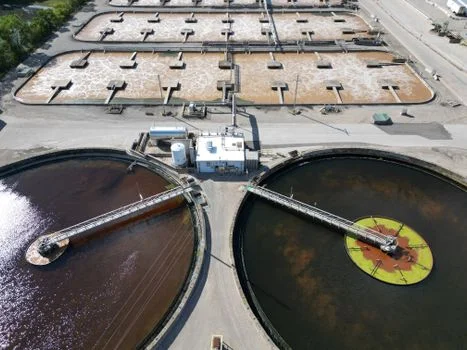
Selecting the correct treatment technology in Izmir depends on a three-way trade-off between effluent quality, available land area, and long-term OPEX. While conventional activated sludge systems remain the baseline for many older facilities, they often fail to meet the <80 mg/L COD limit for textile and chemical industries without extensive tertiary upgrades. In contrast, MBR systems for high-COD industrial effluent provide a compact solution that consistently achieves COD <50 mg/L by replacing secondary clarifiers with ultrafiltration membranes.
| Feature | MBR (Membrane Bioreactor) | DAF (Dissolved Air Flotation) | Conventional Activated Sludge |
|---|---|---|---|
| Hydraulic Retention Time (HRT) | 6 – 10 Hours | 0.5 – 2 Hours | 18 – 24 Hours |
| Membrane Flux / Loading Rate | 15 – 25 LMH | 5 – 10 m/h | 0.4 – 0.8 m/h (Clarifier) |
| Sludge Production (kg/kg COD) | 0.2 – 0.3 | 0.4 – 0.6 (Chemical Sludge) | 0.4 – 0.5 |
| COD Removal Efficiency | 95% - 98% | 60% - 85% (FOG-dependent) | 80% - 90% |
| CAPEX Range (TRY) | 3.5M – 50M | 1.2M – 15M | 2M – 20M |
| OPEX (TRY/m³) | 2.5 – 3.5 | 1.2 – 2.0 | 0.8 – 1.5 |
For food processing facilities in İzmir, where high concentrations of FOG and TSS are the primary concerns, DAF systems for FOG and TSS removal in food processing are the most cost-effective choice. DAF systems utilize micro-bubbles to float solids and oils to the surface for mechanical skimming, achieving up to 99% TSS removal. However, DAF is a physical-chemical process; it does not remove dissolved COD as effectively as biological systems. Therefore, many Izmir facilities utilize a DAF-MBR hybrid approach: DAF for pre-treatment to protect membranes from grease fouling, followed by MBR for high-level organic removal.
In the İAOSB zone, where land is priced at a premium, the small footprint of MBR (often 60% smaller than conventional systems) justifies its higher CAPEX. Conversely, in the outer industrial zones of Torbalı or Tire, where land is more available, conventional systems with added tertiary sand filtration may be viable if the influent COD is relatively low (e.g., <500 mg/L). For energy-intensive sectors like pulp and paper, the lower OPEX of DAF and conventional systems is a significant advantage, provided they can meet the discharge limits.
Step-by-Step: Designing an İZSU-Compliant Wastewater Treatment System for Your Facility
Designing a treatment system for the 2026 Izmir market begins with a rigorous influent characterization. Engineers must account for the high variability in industrial loads; for example, textile influent COD can swing from 500 mg/L to 5,000 mg/L within a single shift. Using APHA 5220 methods for COD testing, a minimum of seven days of data is required to establish the "design basis" flow and mass loading. This prevents the common error of undersizing equalization tanks, which leads to hydraulic shocks and system failure.
- Pre-treatment and Equalization: Install fine screening (1–2 mm) to remove lint and large solids. Equalization tanks should be sized for 8–12 hours of storage to neutralize pH and temperature, especially for textile dyeing effluent which can exceed 40°C.
- Primary Treatment (Physical-Chemical): For food and dairy, implement DAF to reduce FOG loads to <50 mg/L. For chemical sectors, use coagulation-flocculation to precipitate heavy metals.
- Biological Stage Selection: Based on the required effluent quality, select between MBR or conventional activated sludge. For MBR, calculate the required membrane area using a conservative flux of 18 LMH (liters per square meter per hour) to account for Izmir’s summer temperature peaks.
- Tertiary Treatment and Disinfection: If the goal is discharge to a sensitive water body or reuse, include UV disinfection (40 mJ/cm² dose) and carbon filtration.
- Modular Implementation: For facilities with limited space or fluctuating production, WSZ systems or modular MBR skids allow for rapid deployment and future expansion without major civil works.
Energy optimization is the final, critical step in the design process. Incorporating variable-frequency drives (VFDs) on aeration blowers can reduce energy consumption by up to 30%. for high-strength organic wastewater (COD >3,000 mg/L), anaerobic digestion should be evaluated. By converting organic waste into biogas, facilities can generate heat for boilers or electricity, significantly reducing the TRY 1.2/kWh energy burden. Drawing from global benchmarks for food processing wastewater treatment, Izmir facilities are increasingly adopting these circular economy models to improve their ROI.
Water Reuse in Izmir: ROI Models for Industrial Facilities
As Izmir faces increasing water stress, the ROI for water reuse systems has shifted from "environmental altruism" to "financial necessity." Industrial facilities are currently paying approximately TRY 4.5/m³ for freshwater and TRY 3.2/m³ in discharge fees. By implementing a reuse loop, a facility can save TRY 7.7 for every cubic meter of water recycled. For a textile plant processing 1,000 m³/day, a 40% reuse rate results in annual savings of approximately TRY 1.1M.
| Sector | Reuse Target (%) | Required Technology | CAPEX (TRY) | Payback Period |
|---|---|---|---|---|
| Textile (Dyeing) | 40% - 50% | MBR + RO + UV | 1.5M – 4.5M | 2.5 – 3.5 Years |
| Food Processing | 60% - 70% | DAF + MBR + RO | 2M – 6M | 3.0 – 4.0 Years |
| Power Generation | 80% - 90% | UF + RO | 3M – 10M | 2.0 – 3.0 Years |
| Chemical / Pharma | 30% - 40% | Advanced Oxidation + RO | 2.5M – 5M | 4.0 – 5.0 Years |
The standard treatment train for high-quality reuse involves RO systems for water reuse in Izmir’s textile plants. These systems achieve 95% recovery of high-purity water with TDS <50 mg/L, which is ideal for sensitive dyeing processes. The OPEX for RO systems (energy and chemicals) typically ranges from TRY 0.5 to 1.2/m³, which is well below the cost of purchasing and discharging water. A 2025 case study of a textile plant in the Torbalı district showed that by integrating RO and UV, they reduced freshwater intake by 45%, achieving a full payback on their TRY 5.8M investment in just 3.2 years.
Beyond the direct financial savings, water reuse provides a "compliance buffer." By reducing the total volume of water discharged to the İZSU network, facilities can often stay within their permitted mass loading limits even if production increases. This effectively decouples production growth from regulatory risk, a critical advantage for Izmir’s expanding industrial sectors.
Frequently Asked Questions
What are the penalties for non-compliance with İZSU’s 2026 discharge limits?
Penalties currently range from TRY 50,000 to TRY 500,000 per violation, depending on the severity and duration of the exceedance. Repeated non-compliance can lead to the sealing of discharge points and mandatory facility shutdowns until a compliant treatment system is commissioned.
How do I choose between MBR and DAF for my textile plant?
The decision depends on your primary goal. If you need to meet strict COD limits (<80 mg/L) for sewer discharge, MBR is the superior choice. If you are dealing with high levels of suspended solids and oils from pre-treatment but have a robust biological stage downstream, DAF is more cost-effective for solids removal.
Can I reuse treated wastewater for cooling towers in Izmir?
Yes, provided the water meets İZSU’s reuse guidelines, which include Legionella counts <1 CFU/mL and specific conductivity limits to prevent scaling. This typically requires MBR followed by RO and UV disinfection to ensure biological safety and mineral balance.
What’s the typical payback period for a water reuse system in Izmir?
For most textile and food processing plants, the payback period is between 2.5 and 4 years. This calculation includes savings from reduced freshwater purchases and lower wastewater discharge tariffs, which are both rising in the Izmir municipal region.
How often do I need to replace MBR membranes in Izmir’s conditions?
Under standard operating conditions and proper pre-treatment, MBR membranes have a lifespan of 5 to 7 years. Replacement costs average TRY 500–800 per square meter of membrane area. Regular chemical cleaning (CIP) is essential to maintain flux and maximize lifespan.