Why Mississippi Industrial Facilities Are Failing DEQ Wastewater Standards
Mississippi industrial facilities faced 127 DEQ wastewater violations in 2023, with 68% originating from small industrial sites such as food processing, metal finishing, and textile operations, according to the Mississippi DEQ 2023 Annual Report. Aging infrastructure, a certified-operator shortage, and cost pressure drive most of that non-compliance. The most common violations are exceeded NPDES limits for biochemical oxygen demand (BOD) at 42%, total suspended solids (TSS) at 31%, fats, oils, and grease (FOG) at 15%, and metals at 12%.
A Mississippi poultry processing plant incurred $180,000 in fines in 2023 after repeated lagoon failures during peak production caused discharge violations (DEQ 2023 Annual Report). Outdated lagoons cannot absorb the diurnal swings common at Mississippi plants, so the first heavy rain or production spike pushes effluent over the limit. Mississippi has only 2.3 certified wastewater operators per 10,000 residents, the lowest ratio in the Southeast, which makes manual operation of complex conventional plants hard to sustain at rural sites (AWWA 2024). Conventional upgrades can cost $3–$5 million for 500,000 GPD; modern package plants and advanced systems typically run $500,000–$1.5 million CAPEX for the same flow.
Mississippi DEQ Wastewater Standards: NPDES Permits, Limits, and Enforcement
NPDES permits in Mississippi are issued by the Department of Environmental Quality (DEQ) under EPA Region 4 delegated authority, and discharge limits vary by industrial sector. Food processing facilities typically face ≤10 mg/L for FOG, while metal finishing operations may see ≤2 mg/L for copper. Common industrial limits include BOD ≤30 mg/L, TSS ≤30 mg/L, and pH 6.0–9.0 S.U. Specific metals such as lead ≤0.5 mg/L and zinc ≤1.0 mg/L are also frequently regulated. In 2024, DEQ enforcement priorities target FOG in food processing, metals in metal finishing, and ammonia in chemical manufacturing.
Permits operate on a five-year renewal cycle, and facilities must submit mandatory self-monitoring reports (SMRs) quarterly through DEQ's ePermitting portal. Earlier summaries often cited $10,000–$50,000 per violation; Miss. Code § 49-17-43 caps civil penalties at not more than $25,000 per violation, with each day treated as a separate violation. Repeat offenders typically receive a mandatory corrective action plan (CAP) on top of the fine.
| Parameter | Typical Industrial NPDES Limit (Mississippi) | Relevant Industry Examples |
|---|---|---|
| BOD5 | ≤30 mg/L | General Industrial, Food Processing, Chemical Manufacturing |
| TSS | ≤30 mg/L | General Industrial, Food Processing, Textile Manufacturing |
| pH | 6.0 – 9.0 S.U. | All Industrial Dischargers |
| FOG | ≤10 mg/L | Food Processing, Rendering Plants |
| Copper | ≤2.0 mg/L | Metal Finishing, Electroplating |
| Lead | ≤0.5 mg/L | Battery Manufacturing, Metal Finishing |
| Zinc | ≤1.0 mg/L | Metal Finishing, Galvanizing |
| Ammonia-N | Varies (e.g., ≤5 mg/L) | Chemical Manufacturing, Fertilizers |
Industrial Wastewater Treatment Technologies: Engineering Specs and Performance Benchmarks
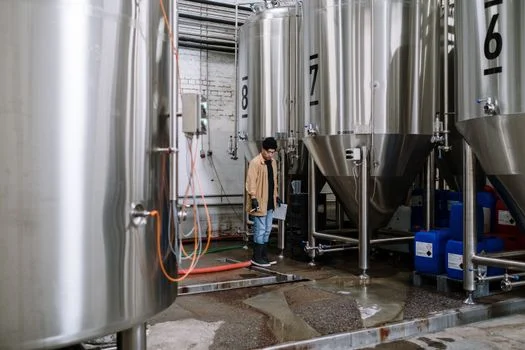
Membrane bioreactor (MBR) systems deliver the cleanest effluent among standard industrial options, consistently achieving ≤5 mg/L BOD and ≤2 mg/L TSS through 0.1 μm PVDF membranes for solids separation. They need up to 60% less footprint than conventional activated sludge, which matters when a plant sits against a property line. Energy use runs 0.8–1.2 kWh/m³ (EPA 2024) for aeration and membrane scouring.
Dissolved air flotation (DAF) units target FOG and TSS, removing 90–98% of FOG and 85–95% of TSS from food processing streams, which can cut municipal surcharges by $0.50–$2.00 per 1,000 gallons. HydropureWater's DAF units handle 4–300 m³/h using micro-bubble flotation and serve as a strong primary stage for high-FOG food and rendering operations. See our DAF systems for food processing wastewater in Mississippi for capacity and specification details.
Chemical coagulation and flocculation remove over 95% of dissolved metals such as copper and nickel, the typical need for metal finishing wastewater, but they generate sludge that must be dewatered. Sludge dewatering for Mississippi industrial wastewater using plate and frame filter presses compacts sludge to 30–40% dry solids, cutting disposal volume and cost. For an overview of MBR systems for Mississippi industrial wastewater, the integrated unit page lists flow ranges and tank sizes.
Package plants such as HydropureWater's WSZ series combine anaerobic/aerobic (A/O) biological treatment, sedimentation, and disinfection in one skid, hitting ≤30 mg/L BOD and TSS at flows under 50 m³/h. At those sizes the controls are automated enough that one part-time operator can cover two or three sites, which offsets the Mississippi operator shortage. Disinfection for food processing wastewater in Mississippi is typically finished with UV or chlorine dioxide before discharge.
| Technology | Primary Contaminant Target | Typical Effluent Quality (BOD/TSS) | Footprint Reduction vs. Conventional | Energy Use (kWh/m³) | Operator Skill Level |
|---|---|---|---|---|---|
| MBR Systems | BOD, TSS, Nutrients | ≤5 mg/L BOD, ≤2 mg/L TSS | 60% | 0.8 – 1.2 | Moderate (Automated with periodic oversight) |
| DAF Systems | FOG, TSS | 85-95% removal (influent dependent) | Minimal (Pre-treatment unit) | 0.2 – 0.5 | Low to Moderate (Monitoring, chemical addition) |
| Chemical Treatment (Coag/Floc) | Metals, Color, Colloidal Solids | 95%+ metal removal | Moderate (Tanks, clarifier, sludge dewatering) | 0.1 – 0.3 | Moderate (Chemical dosing, sludge handling) |
| Package Plants (A/O) | BOD, TSS | ≤30 mg/L BOD, ≤30 mg/L TSS | 50% | 0.5 – 1.0 | Low (Automated, minimal manual input for smaller flows) |
Cost Models: CAPEX, OPEX, and ROI for Mississippi Industrial Facilities
Industrial wastewater treatment cost in Mississippi depends on technology, flow rate, and contaminant profile. As of 2026, CAPEX benchmarks are:
- Package Plants (500,000 GPD): $500,000–$1,500,000
- MBR Systems (200–1,000 m³/day): $1,000,000–$3,000,000
- DAF Systems (4–300 m³/h): $200,000–$800,000
- Chemical Treatment (with sludge dewatering): $300,000–$1,000,000 (excluding ongoing chemical costs)
OPEX is driven by energy, chemicals, and labor. Energy runs 0.5–1.5 kWh/m³ depending on treatment intensity (MBRs sit at the top end for aeration). Chemical costs for coagulation/flocculation are typically $0.10–$0.50/m³ of treated water. Automated MBR systems need 1–4 hours per day of attention, compared with 8+ hours per day for manually intensive lagoons, which is a real labor line on rural Mississippi sites.
DAF systems for food processors commonly pay back in 12–24 months through surcharge reductions of $0.50–$2.00 per 1,000 gallons based on BOD, TSS, and FOG, plus avoided DEQ fines. Earlier summaries often cited CWSRF loans at roughly 2% interest and IIJA coverage up to 45% of project cost. MDEQ's FY-2026 Clean Water SRF Intended Use Plan offers new loans at 0.8% annual interest for terms not exceeding 20 years, or 1.8% for 30-year terms; IIJA requires 49% of supplemental General CWSRF funding as subsidy, and qualifying recipients can receive 80% principal forgiveness on eligible loans. To get a budget range for your specific flow and influent, request a free quote with your project parameters.
For a 10-year total cost of ownership (TCO) model, include initial CAPEX (equipment, installation, engineering), annual OPEX (energy, chemicals, labor, maintenance, sludge disposal), compliance risk (fines, legal fees, reputational damage), and savings (surcharge reductions, resource recovery).
| Cost Category | Package Plant (500,000 GPD) | MBR System (500 m³/day) | DAF System (100 m³/h) |
|---|---|---|---|
| CAPEX (2026) | $500,000 – $1,500,000 | $1,500,000 – $2,500,000 | $300,000 – $600,000 |
| OPEX (Annual Avg.) | $50,000 – $150,000 | $100,000 – $250,000 | $30,000 – $80,000 |
| Energy Cost (per m³) | $0.50 – $1.00 | $0.80 – $1.20 | $0.20 – $0.40 |
| Chemical Cost (per m³) | $0.05 – $0.20 | $0.02 – $0.10 | $0.10 – $0.50 |
| Labor (hrs/day) | 1 – 2 | 2 – 4 | 1 – 2 |
| Typical ROI (via surcharge reduction/fine avoidance) | 3-5 years | 4-6 years | 1-2 years |
How to Select the Right System for Your Mississippi Industrial Facility

Selecting the right industrial wastewater treatment system in Mississippi starts with facility needs, permit limits, and long-term economics. Most plants we size for food processing and metal finishing in Mississippi end up with a two-stage train (DAF or chemical precipitation ahead of a package plant or MBR) rather than a single unit, because influent swings are too wide for one technology alone.
- Step 1: Profile Your Wastewater. Measure BOD, TSS, FOG, specific metals (copper, lead, zinc), and pH over a minimum 30-day period. This identifies the dominant contaminants and their concentrations for system design.
- Step 2: Match Contaminants to Technology. High FOG and TSS in food processing points to DAF; high BOD and TSS for tight NPDES limits points to MBR; dissolved metals in metal finishing points to chemical treatment followed by sedimentation.
- Step 3: Assess Operator Availability. Given the Mississippi operator shortage, automation is decisive. Automated MBRs and modern package plants cut labor by up to 70% versus traditional lagoons, which makes them viable for rural facilities without certified staff.
- Step 4: Evaluate Footprint. Urban industrial sites often lack space. MBR systems need 60% less area than conventional activated sludge for equivalent capacity, and package plants offer a similar footprint advantage over custom-built facilities.
- Step 5: Calculate ROI and Total Cost of Ownership (TCO). Use the TCO template to compare CAPEX, OPEX, and compliance risk across shortlisted options, including surcharge savings and avoided DEQ fines.
| Decision Factor | Primary Recommendation | Secondary Recommendation | Not Recommended |
|---|---|---|---|
| High FOG/TSS (e.g., Food Processing) | DAF System | Package Plant (with pre-treatment) | Standalone MBR (inefficient for FOG) |
| High BOD/TSS, Space-Constrained | MBR System | Compact Package Plant | Conventional Activated Sludge (large footprint) |
| High Metals (e.g., Metal Finishing) | Chemical Treatment | MBR (post-precipitation) | DAF (ineffective for dissolved metals) |
| Limited Operator Availability | Automated Package Plant | Automated MBR System | Manual Lagoon System |
| Flow Rate < 50 m³/h | Package Plant | Small DAF or Chemical Batch | Large-scale MBR (overkill) |
Compliance Checklist: Avoiding DEQ Violations in Mississippi
Continuous DEQ compliance is achievable through a proactive checklist that pairs permit conditions with operational discipline. The five items below cover the gaps we see most often during pre-inspection audits at Mississippi industrial sites.
- Verify NPDES Permit Limits: Review your specific NPDES permit limits each renewal cycle. For example, a food processing facility must consistently meet ≤10 mg/L FOG.
- Conduct Quarterly Self-Monitoring Reports (SMRs): Submit accurate quarterly SMRs on time through DEQ's ePermitting portal, and keep the raw monitoring data on file.
- Implement Automated Monitoring: Install and calibrate online instrumentation for pH, flow, and key contaminants such as TSS so excursions are caught before they become violations.
- Train Staff on DEQ Spill Response Protocols: Run spill drills at least annually. Earlier drafts cited a 1,000-gallon spill threshold; MDEQ guidance requires sanitary sewer overflows and bypasses to be reported within 24 hours of becoming aware of the event.
- Schedule Annual DEQ Inspections and Pre-Inspection Audits: Run an internal pre-inspection audit to close compliance gaps before the official DEQ inspection each year.
Frequently Asked Questions
What are the most common DEQ wastewater violations for Mississippi industrial facilities?
The most common DEQ wastewater violations for industrial facilities in Mississippi are exceeded permit limits for BOD, TSS, FOG, and heavy metals. They typically stem from aging infrastructure, inadequate treatment capacity during production spikes, and the statewide shortage of certified operators, especially at rural sites.
How much does an industrial wastewater treatment system cost in Mississippi?
Industrial wastewater treatment cost in Mississippi varies by technology and capacity. As of 2026, CAPEX for package plants runs $500,000–$1.5 million for 500,000 GPD, MBR systems $1 million–$3 million for 200–1,000 m³/day, and DAF systems $200,000–$800,000 for 4–300 m³/h. OPEX depends on energy, chemical, and labor inputs.
What are the NPDES permit limits for BOD, TSS, and FOG in Mississippi?
General NPDES permit limits for many Mississippi industrial facilities are ≤30 mg/L BOD and ≤30 mg/L TSS, with pH held between 6.0 and 9.0 S.U. Food processing and rendering operations typically face ≤10 mg/L FOG, and metal finishing operations face limits such as ≤2 mg/L copper, ≤0.5 mg/L lead, and ≤1.0 mg/L zinc. Always check your specific permit for exact values.
Can a package plant be used for a food processing facility in Mississippi?
Yes. A package plant paired with a DAF pre-treatment stage is a common fit for food processing facilities in Mississippi, especially smaller operations. The DAF unit strips FOG and TSS before the biological stage, the package plant hits ≤30 mg/L BOD and TSS, and the controls are automated enough to run with limited on-site staff.
What funding options are available for wastewater treatment upgrades in Mississippi?
Mississippi facilities can apply for Clean Water State Revolving Fund (CWSRF) loans. MDEQ's FY-2026 Intended Use Plan offers 0.8% interest for terms not exceeding 20 years, or 1.8% for 30-year terms. IIJA requires 49% of supplemental General CWSRF funding as subsidy, and qualifying recipients can receive 80% principal forgiveness on eligible loans, which lowers net CAPEX.
Need a system sized to your flow rate and pollutant profile? Request a quote with your specific parameters and we'll match the right train.