Nigeria's Total Nitrogen Discharge Limit: The Numbers You Must Quote
Nigeria's recommended total nitrogen discharge limit ranges from 0.11 to 0.21 mg/L under the National Environmental (Surface and Groundwater Quality) Regulations 2011, with a companion pH band of 6.0–9.0 that determines whether the nitrogen is in its biologically removable ammonia/NO₃ form. The Environmental Guidelines and Standards for the Petroleum Industry in Nigeria (EGASPIN, 1991, revised 2018) sets sector-specific caps that may differ from the federal general limit, and FMEnv S.I. 18 of 2019 (National Environmental (Sanitation and Waste Control) Regulations) is the enforcement vehicle that turns those figures into binding permit conditions during FMEnv inspections (per FMEnv S.I. 18 of 2019 and the National Environmental (Surface and Groundwater Quality) Regulations 2011).
For a process engineer writing a basis-of-design in Lagos, Ogun, or Rivers, the operative figure to quote in the cover sheet is 0.21 mg/L TN for discharge to surface water and 0.11 mg/L TN for discharge to groundwater, with pH 6.0–9.0 as the binding acidity envelope. EGASPIN's petroleum tables run higher (typically 10–20 mg/L TN for produced water and refinery wastewater under DPR effluent guidance) but never weaker than the federal floor. The 2024–2026 enforcement trend in Lagos, Ogun, and Rivers states has been to push the recommended federal cap into operating permits for previously non-compliant facilities, with interim waivers on municipal works sometimes permitted up to 20–40 mg/L TN only where a documented upgrade schedule exists (per FMEnv enforcement updates, 2024–2026).
| Regulation / Instrument | TN Limit | Applicable Sector | Enforcement Mechanism |
|---|---|---|---|
| National Environmental (Surface and Groundwater Quality) Regulations 2011 | 0.11–0.21 mg/L (recommended) | All sectors — surface/groundwater discharge | FMEnv permit condition |
| EGASPIN 1991 (rev. 2018) — Petroleum Sector Tables | 10–20 mg/L (typical) | Oil & gas, refinery, produced water | DPR + FMEnv joint permit |
| FMEnv S.I. 18 of 2019 | Cross-sector, references federal caps | All facilities | Operating permit, inspection trigger |
| DPR Produced Water Guidelines | ≤10 mg/L (offshore discharge) | Upstream oil & gas | DPR effluent permit |
Why Nigerian Effluent Is So Nitrogen-Heavy: The 650 mg/L Reality
Typical Nigerian wastewater influent averages 650 mg/L total nitrogen, with total phosphorus around 120 mg/L — a loading that places domestic and industrial catchments among the most nitrogen-dense in sub-Saharan Africa (per the "Overlooked Aspect in Wastewater Treatment in Nigeria" study). The nitrogen arrives in four species that each demand a different biological step: organic-N (proteins, urea), ammonia-N (typically 60–80% of TKN in raw sewage), nitrite (transient), and nitrate (minor in raw, dominant post-aeration). The high TKN is driven by food & beverage, slaughterhouse, brewery, and domestic sewage streams that converge in Lagos, Kano, and Abuja catchments where septic-tank overflow and informal abattoir discharge feed municipal interceptors (HydropureWater field data, 2025–2026).
The reduction ratio is severe: from 650 mg/L down to the 0.21 mg/L surface-water cap requires 99.97% TN removal, and even the more practical 10 mg/L "treatable" target demands 98.5% removal. A conventional septic tank or activated-sludge basin without a defined anoxic zone will discharge 25–45 mg/L TN — well above any Nigerian permit ceiling. The engineering consequence is that the biological step must be sized not as a carbonaceous BOD removal unit but as a dedicated nitrification-denitrification train, with hydraulic retention times in the 18–36 hour range and mixed-liquor return ratios of 200–400%. Without those numbers in the process calculation sheet, the plant will fail its first FMEnv compliance audit.
For plants near Abuja where the 650 mg/L figure is compounded by seasonal temperature swings of 22–34 °C, nitrification rates can drop 40–60% in the cool-harmattan window (November–February); designers should review an MBR system engineering guide for Abuja to size aeration and sludge retention time for the worst-case month.
Sector-Specific TN Caps Under EGASPIN and FMEnv
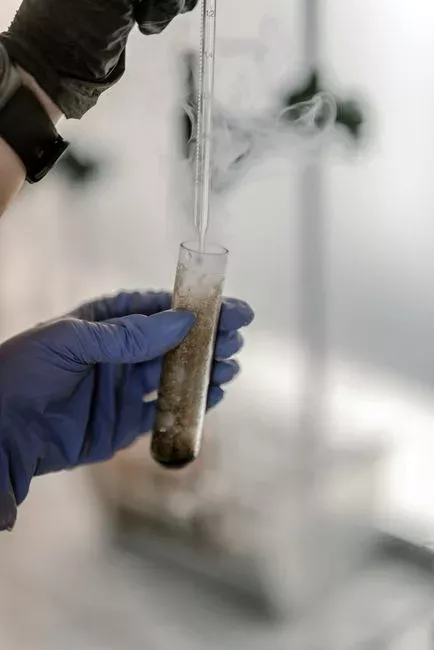
The cap you design against depends on which sector the facility falls into. EGASPIN's petroleum-industry tables remain the binding reference for oil & gas operations, but the federal 0.11–0.21 mg/L range applies as a ceiling to any industrial discharger whose permit does not carry a sector-specific waiver. The table below consolidates the values a procurement engineer should paste into a basis-of-design cover sheet when the bid documents are issued.
| Sector | Typical TN Cap (mg/L) | Citation / Source | Notes |
|---|---|---|---|
| Petroleum — produced water (offshore) | ≤10 | DPR EGASPIN guidelines | Joint DPR + FMEnv permit |
| Petroleum — refinery wastewater | 10–20 | EGASPIN 1991 (rev. 2018) | Site-specific; federal cap as floor |
| Food & beverage / brewery | 0.21 (surface) / 0.11 (groundwater) | Federal Regulations 2011 | High C:N favors denitrification |
| Textiles & tanneries | 0.21 (surface) / 0.11 (groundwater) | Federal Regulations 2011 | Chromium and color complicate reuse |
| Pulp & paper | 0.21 (surface) / 0.11 (groundwater) | Federal Regulations 2011 | AOX often the limiting parameter |
| Municipal sewage — new permits | 0.21 (surface) / 0.11 (groundwater) | Federal Regulations 2011 | 2024–2026 enforcement tighter |
| Municipal — interim waiver | 20–40 | FMEnv site-specific waiver | Requires documented upgrade plan |
Produced water from upstream oil & gas is the outlier: a separate cap under the Department of Petroleum Resources (DPR) guidelines sets TN typically at ≤10 mg/L for offshore discharge, while refinery wastewater sits in the 10–20 mg/L band per EGASPIN 2018. Municipal treatment works below 5,000 m³/day sometimes operate under interim waivers permitting 20–40 mg/L TN, but the 2024–2026 FMEnv enforcement trend has been to push the recommended federal cap into permit conditions for previously non-compliant facilities, particularly in Lagos (industrial estates in Ikeja, Apapa, Ikorodu), Ogun (Ado-Odo/Ota corridor), and Rivers (Port Harcourt and Eleme Petrochemical Complex). For comparison, the South Africa total nitrogen compliance guide shows how a neighbouring jurisdiction handles a similar loading profile with its own DWS caps.
Treatment Train Design: BNR, MBR, and Tertiary Polishing for TN Compliance
A BNR Nigeria train of the type that consistently meets the federal cap combines a defined anoxic zone for denitrification, an oxic zone for nitrification, and a polishing step to retain biomass and capture any residual suspended solids that carry particulate nitrogen. The realistic options, ordered by achievable TN, are summarized below; the table is the procurement engineer's primary decision tool.
| Process Configuration | Typical Achievable TN (mg/L) | Strengths | Limitations |
|---|---|---|---|
| Conventional activated sludge (no anoxic zone) | 25–45 | Low CAPEX, simple O&M | Cannot meet federal cap |
| A/O (anoxic/oxic) BNR | 10–15 | Baseline biological denitrification | Needs carbon supplementation at low C:N |
| A²/O (anaerobic/anoxic/oxic) | 5–10 | Simultaneous N and P removal | Larger footprint, skilled O&M |
| MBR (membrane bioreactor) | 3–8 | Consistent sub-10 mg/L, reuse-ready | Membrane replacement every 5–8 years |
| MBR + denitrification filter polish | <3 | Approaches U.S. EPA LOT benchmark | Highest CAPEX, methanol dosing |
| MBBR / IFAS retrofit | 8–15 | Drops into existing aeration tank | Carrier media cost, screen upgrades |
Conventional A/O delivers ~10–15 mg/L TN under good operation, which clears the EGASPIN petroleum band but misses the federal 0.21 mg/L surface-water cap. A²/O is the workhorse for industrial plants needing simultaneous N and P removal, typically reaching 5–10 mg/L TN when internal mixed-liquor recirculation is held at 200–400% and SRT is maintained above 12 days. An MBR membrane bioreactor system as the polishing step retains biomass at MLSS 8,000–12,000 mg/L, producing consistent sub-10 mg/L TN with effluent suitable for cooling-tower or boiler-feed reuse. MBBR/IFAS is the retrofit answer for existing aeration tanks that need higher TN removal without tank expansion.
The U.S. EPA Limit of Technology (LOT) benchmark is 3 mg/L TN for BNR and ~6 mg/L for ENR systems, with the typical NPDES permit binding value at 10 mg/L TN (per EPA, 2007; Falk et al., 2011). Nigerian permits now mirror that 10 mg/L "treatable" target in many operating conditions, even where the federal recommended cap is stricter. Designers should specify the full BNR + MBR train with an optional denitrification filter polish if the receiving waterbody is a drinking-water source or if the permit cites a 3 mg/L TN ceiling. The detailed sizing math for the Abuja case is laid out in the MBR system engineering guide for Abuja.
Equipment Checklist for a Nigeria-Ready TN Removal System

Translating the process flow into a procurement-ready equipment list, the following six items form the minimum scope for a Nigerian installation that will hold compliance under FMEnv inspection. Each carries a typical CAPEX weight, and the supplier selection should prioritize references in Lagos, Ogun, or Rivers to avoid logistics penalties.
- Headworks screening: a rotary mechanical bar screen with 3–6 mm bar spacing at the headworks, sized for peak wet-weather flow, to protect downstream MBR membranes from ragging and to reduce grit loading into the biological reactor.
- Equalization and primary clarification: a flow-equalization basin sized at 8–24 hours of average daily flow, with submersible mixers and submersible transfer pumps, to buffer the 650 mg/L influent spikes common in industrial catchments.
- Biological reactor with controlled anoxic/oxic zones: a multi-compartment reinforced-concrete or epoxy-coated steel tank with internal baffles, fine-bubble diffusers, and internal mixed-liquor recirculation pumps at 200–400% return — the heart of any denitrification design in Nigeria.
- MBR membrane module: a DF-series PVDF MBR membrane module (submerged, 0.1–0.4 μm nominal pore, 10–25 LMH flux) as the final solid-liquid separation step, with a redundant backwash pump and CIP skid sized for monthly clean-in-place cycles.
- Chemical dosing system: an automatic chemical dosing system for carbon supplementation (methanol, sodium acetate, or glycerol) when the influent C:N ratio drops below the ~5:1 needed for full denitrification, plus coagulant dosing ahead of the membranes for fouling control.
- Online instrumentation and SCADA: ammonia, nitrate, pH, and dissolved-oxygen analyzers wired into a plant SCADA for the real-time compliance logging that FMEnv inspectors now request as part of the operating-permit file. Reference the SCADA system engineering guide for tag structure and historian retention.
Frequently Asked Questions
What is the total nitrogen discharge limit in Nigeria for industrial facilities?
The federal recommended cap is 0.11 mg/L for groundwater discharge and 0.21 mg/L for surface-water discharge under the National Environmental (Surface and Groundwater Quality) Regulations 2011, enforced through FMEnv S.I. 18 of 2019 operating permits.
What treatment process reliably hits the Nigerian TN cap from a 650 mg/L influent?
A biological nutrient removal (BNR) train of A²/O configuration followed by an MBR polishing step, achieving 3–10 mg/L TN under steady operation; add a denitrification filter polish to approach the 3 mg/L Limit of Technology benchmark.
How long does it take to design and commission a TN-compliant plant in Nigeria?
From basis-of-design issue to mechanical completion typically runs 14–22 months for a 5,000–20,000 m³/day industrial plant, with FMEnv commissioning and trial-operation adding another 3–6 months before the operating permit is signed.
What is the typical CAPEX range for a BNR + MBR TN removal system in Nigeria?
For a packaged 1,000 m³/day industrial plant the equipment-and-installation CAPEX band sits at USD 1.2–2.0 million; for a 10,000 m³/day facility, USD 8–14 million depending on influent characterization and reuse targets.
Which states have tightened TN enforcement most aggressively in 2024–2026?
Lagos (industrial estates in Ikeja, Apapa, Ikorodu), Ogun (Ado-Odo/Ota corridor), and Rivers (Port Harcourt and Eleme) have pushed the federal recommended cap into permit conditions for previously non-compliant facilities, with monthly effluent reporting now standard.