Abuja FCT industrial wastewater discharge compliance means meeting NESREA limits: COD < 60 mg/L and BOD < 30 mg/L for most sectors. Wupa handles domestic waste for 700,000 people only. Factories need on-site DAF or MBR; ROI follows avoided fines (up to ₦5M/month).
On-site DAF reaches 95% FOG removal, and an MBR reaches 99% pathogen removal. Installed cost runs from $50,000 for a small chemical dosing system to $2M+ for a large MBR plant. Water reuse savings move the payback alongside those avoided fines.
Abuja FCT Industrial Wastewater Discharge Compliance
Abuja FCT industrial wastewater discharge compliance means treated effluent must meet Table 1 before it leaves the site. COD must stay at or below 60 mg/L, and BOD5 must stay at or below 30 mg/L. TSS must stay at or below 50 mg/L. NESREA enforces those limits, and Wupa is a municipal plant only.
Factories in food, pharmaceuticals, textiles and metal finishing carry organic load, solids, and sometimes toxic compounds well above a domestic sewer. A food processor in Abuja's Idu Industrial Zone was fined ₦3.2 million in 2024 for exceeding TSS limits, according to the FCT Environmental Protection Board, as reported in earlier project notes. Most food plants we size in Idu see FOG and COD swing hard between shifts, so one grab sample understates the permit risk.
The Wupa Sewage Treatment Plant is designed for domestic waste from a population equivalent of 700,000 people. Typical domestic effluent is described as COD generally below 500 mg/L. Industrial effluent can show COD concentrations exceeding 2,000 mg/L, plus metals or complex chemicals. Wupa is not built for that load.
Chuke, Marcus and Abubakar (2026) sampled Wupa in 2024. Wet-season mean influent was BOD 116.7 mg/L, COD 222.3 mg/L and TSS 144.8 mg/L. Mean effluent was BOD 21.3 mg/L, COD 46.6 mg/L and TSS 28.5 mg/L. The plant uses activated sludge with extended aeration, in six bioreactors of 27,700 m3 each, 166,200 m3 in total, and it discharges to the Wupa River.
Dry-season influent COD in that study was 400 mg/L, 510 mg/L and 417 mg/L across three weeks. One week therefore sat above the older below-500 description. Their comparison column, labelled NESREA, used BOD 20 mg/L, COD 50 mg/L and TSS 100 mg/L. Wet-season mean effluent BOD of 21.3 mg/L was just above the 20 mg/L figure they applied.
Table 1 remains the industrial schedule used in this guide. A paired test on the wet-season means gave t = 7.785 and p < 0.05, so treatment changed the water. Most plants we size for factories still cannot send 2,000 mg/L COD to this municipal line. All 173 respondents in that study, 89 plant staff and 84 Abuja Environmental Protection Board staff, named FME, NESREA and WHO as the instruments they work under.
NESREA Effluent Limits for Abuja Factories
NESREA effluent limits for Abuja factories are the numeric ceilings in the National Environmental (Effluent Limitation) Regulations 2023, enforced by NESREA and the FCT Environmental Protection Board. The schedule below is the industrial set carried in this guide. Protect the receiving water, not the catalogue recovery claim.
| Parameter | Maximum Limit (mg/L, unless specified) | Typical Source in Abuja Industries |
|---|---|---|
| Chemical Oxygen Demand (COD) | 60 | Food processing, pharmaceuticals, textiles |
| Biochemical Oxygen Demand (BOD5) | 30 | Food processing, organic chemicals |
| Total Suspended Solids (TSS) | 50 | Food processing, textiles, metal finishing |
| pH | 6.0 – 9.0 | Chemical manufacturing, metal finishing |
| Oil & Grease (O&G) | 10 | Food processing, automotive, metal fabrication |
| Chromium (Total) | 0.1 | Metal finishing, tanning |
| Lead | 0.1 | Battery manufacturing, metal plating |
| Cadmium | 0.05 | Metal plating, pigments |
Read the same ceilings in permit language as COD < 60 mg/L, BOD < 30 mg/L and TSS < 50 mg/L, with pH between 6.0-9.0. Chromium (< 0.1 mg/L) and Lead (< 0.1 mg/L) sit with cadmium at 0.05 mg/L. Most metal finishers we review fail lead or chromium long before they fail BOD.
Sector load still decides the train. Food processing brings high organic load and fats, oils and grease. Pharmaceutical wastewater often carries antibiotics, solvents and active pharmaceutical ingredients. Textile effluent brings colour, dyes and surfactants. Metal finishing brings heavy metals and acids.
Earlier plant notes cited fines of up to ₦5 million per month, and a range of ₦1 million to ₦5 million, under Section 27 of the NESREA Act 2007 (amended 2023). The gazette text read for this update does not state a ₦5 million monthly figure in section 27. A continuing daily fine can still grow, because ₦50,000 is added for each day. Directors in charge can be proceeded against unless they prove lack of knowledge or due diligence, under section 27(4).
According to the NESREA (Establishment) Act, 2007, section 24(5), a body corporate faces a fine not exceeding ₦1,000,000. An extra ₦50,000 applies for every day the offence continues. That text is in Official Gazette No. 92 of 31 July 2007. Section 27(3) uses the same corporate ceiling for a harmful hazardous-substance discharge.
Section 27(2) sets a personal fine not exceeding ₦1,000,000 or imprisonment for a term not exceeding 5 years. Section 30(1)(g) lets an officer seek a court order to suspend activities and seal premises. That is the legal path behind a production halt, and it is a court order, not an automatic switch. Several Agency powers in sections 7 and 8 are stated as other than in the oil and gas sector, so this page is not an oil-and-gas permit guide.
COD BOD Discharge Permit Nigeria FCT
COD BOD discharge permit Nigeria FCT work has two layers for a factory beside a drain, river or wetland. NESREA section 24 requires effluent limitations based on best practicable control technology, and the Agency may write further limitation rules under section 24(3). A discharge that is not authorized is the problem section 27(1) names for hazardous substances in harmful quantities. Sampling rights sit in section 30, including taking samples for analysis.
According to the National Environmental (Wetlands, River Banks and Lake Shores) Regulations, 2009, a person must apply before depositing any substance on a river bank or lake shore. The permit is Form B after a Form A application, and the Agency can revoke it. Regulation 27(1)(a) requires pre-treatment or full treatment of effluent where a lake shore or river bank is developed for tourism or other aesthetic use. A conviction under regulation 31 can bring a fine not exceeding ₦500,000, or imprisonment of not less than three months, plus remediation.
Specified lake shores carry a protected zone of 200 metres from the low water mark. Lakes that are not listed carry a protected zone of 100 metres. No activity is allowed in a protected zone without the Agency's written consent, under regulation 25(3). Most files we see are missing that consent when the outfall pipe sits on the bank.
The FCT Environmental Protection Board conducts quarterly sampling and surprise inspections. Factories must obtain and maintain a valid discharge permit, with regular reporting. A permit that quotes the wrong sector limit is a failed permit, even if the hardware is new. Keep the lab method, the sample point and the receiving water on the same sheet as the design basis.
Treatment Trains That Hit the Abuja Limit
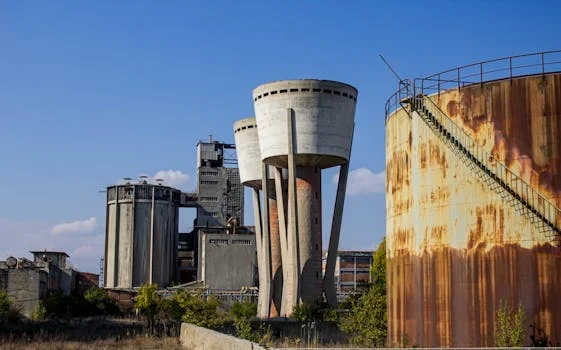
Industrial wastewater treatment in Abuja uses a physical, then chemical, then biological sequence matched to the pollutant that breaks Table 1. Primary treatment takes out rags, grit and settleable solids before any biological tank. Skip that step and the downstream unit blinds.
- Primary Treatment: This stage removes large solids and settleable particles. Screening, often with a GX Series Rotary Mechanical Bar Screen, can achieve over 90% Total Suspended Solids (TSS) reduction by taking out rags, plastics and coarse debris. Sedimentation then lets denser particles settle, which cuts TSS further and steadies the feed to the next stage.
Secondary treatment then attacks dissolved organics and finer solids. Pick the unit from the pollutant, not from the footprint slogan.
DAF System for Food Processing Wastewater Abuja
A DAF system for food processing wastewater Abuja floats FOG and suspended solids before a biological reactor sees them. The DAF machine releases air-saturated water so micro-bubbles lift solids to a skimmer. Units in this range cover 4 to 300 m³/h at a saturation pressure of 3–5 bar. Removal above the 95% FOG removal mark, stated as over 95% FOG removal, is the figure food and textile pre-treatment is sized against.
Most cassava and beverage lines we size run near the low end of 4 to 300 m³/h except on wash-down days. A Saturday caustic wash can double the FOG peak for a few hours. Size the DAF on that peak, or the biological tank takes a slug it cannot absorb. Textile plants use the same float step after coagulation, when dye floc needs a surface, not a hopper.
MBR System for Pharmaceutical Wastewater Abuja
An MBR system for pharmaceutical wastewater Abuja pairs a biological reactor with a membrane when TSS and pathogens both have to fall. MBR systems in the DF Series use PVDF membranes with a pore size of 0.1 μm. That barrier removes solids, bacteria and viruses and reaches over 99.9% bacterial reduction. Filtration area on these modules sits between 80 and 225 m², so the same family covers a pilot and a full production block.
Antibiotics, solvents and APIs still need a biological or oxidation step upstream of the sheet. The membrane does not dissolve a solvent. It holds the solids and the biomass in the tank so the biology gets a long solids age. Most pharmaceutical briefs we see cannot stop at a clarifier once the permit asks for pathogen removal at that 99.9% level.
Chemical dosing covers metals, phosphate and colour. Coagulants such as polyaluminium chloride or ferric chloride break colloids so floc can settle or float. PLC control meters the dose to the actual pH and solids, which is what holds chromium, lead and cadmium inside Table 1. A fixed stroke pump on a varying line will overshoot one day and fail the metal limit the next.
Tertiary disinfection with chlorine dioxide generators is aimed at over 99% kill rates for pathogens such as E. coli, so the water can be discharged or reused in non-potable duty. Sludge from primary and secondary stages goes to a plate and frame filter press. Dewatered cake at 30–40% dry solids content is the handling figure that cuts haul volume.
Comparing Trains for Abuja's Four Hard Sectors
Technology choice for an Abuja factory follows the pollutant that breaks the limit, the footprint on the plot, and the power the site can actually hold. Table 2 compares the four trains buyers shortlist. Use it as a screen, then confirm with a lab sheet.
| Technology | Key Removal Efficiencies | Footprint | Energy Use | OPEX | Abuja Suitability |
|---|---|---|---|---|---|
| Dissolved Air Flotation (DAF) | FOG >95%, TSS >80% | Medium | Medium | Medium | Excellent for food processing, textiles (pre-treatment) |
| Membrane Bioreactor (MBR) | BOD >95%, COD >90%, TSS >99%, Pathogens >99.9% | Low | High | High (membrane replacement) | Ideal for pharmaceuticals, high-quality reuse, strict NESREA limits |
| Chemical Dosing (Coagulation/Flocculation) | Heavy Metals >90%, Phosphates >80%, TSS >70% | Low | Low | Medium (chemical costs) | Essential for metal finishing, color removal in textiles, specific contaminant removal |
| Activated Sludge (Conventional Biological) | BOD >90%, COD >80%, TSS >90% | High | Medium | Medium | General organic load reduction, requires large area |
Sector fit, from jobs already described for Abuja, looks like this.
- Food Processing (High FOG, Organic Loads): Cassava waste and beverage lines need DAF for FOG and TSS, then activated sludge or an anaerobic step for the organic load. DAF without biology will not land COD at 60 mg/L when the raw load is in the thousands.
- Pharmaceuticals (Antibiotics, Solvents): Strict limits and hard organics push buyers to MBR systems plus advanced oxidation where solvents remain. The Medical Wastewater Treatment System is the integrated package named for that duty. Related medical context sits in hospital wastewater treatment solutions for Abuja's medical sector.
- Textiles (Dyes, Surfactants): Coagulation and flocculation through automatic chemical dosing systems take colour out, then DAF lifts the floc and surfactants. Residual COD may still need a biological stage.
- Metal Finishing (Heavy Metals): Precipitate metals with pH control and the right reagent, then dewater the sludge on a filter press. That is how chromium and lead are held to the 0.1 mg/L line in Table 1.
Industrial Wastewater Treatment Cost Abuja Nigeria
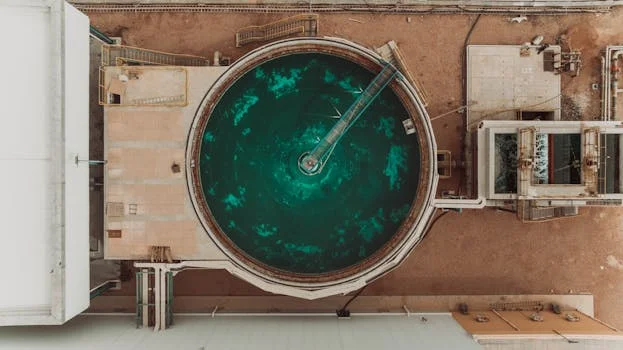
Industrial wastewater treatment cost Abuja Nigeria splits into 2025 capital bands and a monthly operating bill. Flow, strength and civil works move a plant inside the band more than the brand name does. Table 3 is the capital screen used for budgeting.
| System Type & Capacity | Estimated CAPEX (USD) | Key Drivers |
|---|---|---|
| Small Chemical Dosing (10-50 m³/day) | $50,000 - $150,000 | Basic equipment, chemical storage, installation |
| Small DAF + Biological (50-200 m³/day) | $200,000 - $500,000 | DAF unit, biological reactor, pumps, controls, civil works |
| Medium MBR (100-500 m³/day) | $500,000 - $1,500,000 | MBR modules, biological reactor, aeration, advanced controls, civil works |
| Large MBR (500-2,000 m³/day) | $1,500,000 - $4,000,000+ | Multiple MBR trains, larger biological volume, extensive civil works, automation |
Operating cost is the part that decides whether the plant is still running in year three. Price each line with a unit and a condition, not a percentage slogan.
- Energy Consumption: MBR aeration and filtration commonly draw 0.5-1.5 kWh/m³ treated. Abuja power in the cost notes used here averages around ₦65/kWh, so a 1.0 kWh/m³ plant spends about ₦65 on power for each cubic metre before chemicals.
- Chemicals: Chemical dosing systems need PAC, ferric chloride, polymer and acid or caustic on a repeating purchase cycle.
- Membrane Replacement: MBR sheets are typically changed on a 5–7 year life, and that replacement is a planned capital spike, not a surprise.
- Labor: Skilled operators in Abuja are priced around ₦5,000–₦10,000 per day. Automation cuts heads only if someone on site can still answer an alarm.
- Sludge Disposal: Haulage and tipping of dewatered cake scale with dry solids and with how far the licensed site sits from the factory.
Import duties on specialized equipment can add approximately 35% to the landed cost. Buyers still pencil an approx. 35% uplift on the equipment invoice before they compare a local fabricator. Large MBR plants can exceed $2 million once civil works and duty are both in the sheet. Most Abuja budgets we build land near the low end of each band when the tanks sit on an existing slab.
Payback in the earlier notes came from avoided NESREA fines, previously described at up to ₦5 million per month, and from reuse. One Abuja food processor cut fresh-water purchase by over 40% after non-potable reuse (HydropureWater field data, 2024). Use the Act fine of not exceeding ₦1,000,000 plus ₦50,000 per day when you redo that payback, and keep the older ₦5 million figure only as the number the previous note used.
Design Steps Before You Buy a Train
Design of an industrial wastewater system for Abuja starts with a measured influent, not with a catalogue model. Procurement and the plant engineer should walk the six steps in order. Skipping characterization is the usual reason a commissioned plant misses Table 1.
- Step 1: Wastewater Characterization: Sample across shifts for COD, BOD, TSS, pH, metals and FOG. The FCT Environmental Protection Board often sets the sampling protocol. Batch dumps and wash-down peaks matter as much as the daily average. Most characterization campaigns we run need one production-day composite and one wash-down grab.
- Step 2: Compliance Mapping: Set each result against Table 1 for your sector. The gap, not the average, defines the process. A metal shop with lead at 2 mg/L has a precipitation problem even when BOD is already low.
- Step 3: Technology Selection: Use Table 2 against that gap. High FOG points to DAF first. Pharmaceutical effluent that must also drop pathogens points to MBR. Do not buy oxidation capacity you have not shown you need.
- Step 4: System Sizing: Size on average daily flow and on the peak hour. Leave a path for the next production line. Where the duty is closer to domestic sewage on a tight plot, an Underground Package Sewage Treatment Plant (WSZ Series) can take variable load without a large open basin. It does not replace DAF or metals precipitation when FOG or chromium is the limit you fail.
- Step 5: Vendor Evaluation: Ask for Nigerian industrial references, spares held for Abuja, and a warranty tied to Table 1 after commissioning. You can compare top suppliers for industrial wastewater treatment in Abuja before you freeze the list. A checklist that is actually usable has six lines: sector references, local spares, commissioning test against Table 1, operator training, sludge outlet, and a named person for a failed NESREA sample.
- Step 6: Installation and Commissioning: Lock civil works, delivery and pipework on one programme. Train the crew before the first dirty water. Performance testing must show the effluent holds the NESREA limits across a normal week, not on a single polished sample.
Who This Serves, and the Next Step
Factory engineers, EPC contractors and procurement teams at food, pharmaceutical, textile and metal plants in Abuja FCT are the readers who must discharge under NESREA rules. It is also for a site whose outfall touches a river bank, lake shore or wetland and therefore picks up the 2009 permit layer. Domestic estates that only send sewage to Wupa, and whose COD stays in the municipal band below 500 mg/L, do not need this industrial train.
Oil and gas effluent sits outside several NESREA Act powers that are written as other than in the oil and gas sector. Use the sector regulator for that stream. Do not paste Table 1 onto a flow the Act did not hand to NESREA. A separate city page, Industrial Wastewater Treatment in Sydney: 2026 Compliance Guide with Costs, Equipment and Sydney Water Standards, describes another jurisdiction and does not change any limit on this page.
Most inquiries that close start with a lab sheet, not a brochure flow. Send the measured flow, COD, BOD, TSS, FOG and metals, plus the receiving point, and request a sized treatment train for this Abuja plant.
Frequently Asked Questions
Abuja buyers lock COD, BOD, plant cost and the MBR or DAF choice with five questions before they sign a purchase order.
What COD and BOD must an Abuja factory meet before discharge?
Most sectors in Table 1 must discharge at COD 60 mg/L or below and BOD5 30 mg/L or below. TSS sits at 50 mg/L, oil and grease at 10 mg/L, and pH between 6.0-9.0. Chromium and lead are each at 0.1 mg/L, and cadmium is 0.05 mg/L. The FCT Environmental Protection Board samples, so a design that meets the limit only on a clean day will fail a surprise inspection.
How much does an industrial wastewater plant cost in Abuja?
A small chemical dosing system at 10-50 m³/day is about $50,000 to $150,000. A small DAF plus biological plant at 50-200 m³/day is about $200,000 to $500,000. A medium MBR at 100-500 m³/day is about $500,000 to $1,500,000. A large MBR at 500-2,000 m³/day runs from $1,500,000 to $4,000,000+. Import duty of about 35% sits on the equipment price, and large plants can exceed $2 million.
When does a pharmaceutical plant in Abuja need an MBR?
A pharmaceutical plant needs an MBR when antibiotics, solvents or APIs must come down and the permit also asks for pathogen removal above 99.9%. DF Series modules use a 0.1 μm PVDF pore and filtration areas of 80 and 225 m². Energy is higher than a clarifier plant, often 0.5-1.5 kWh/m³, and membranes are typically replaced every 5–7 years. A DAF-only line will not hold that pathogen figure.
Can a food factory in Abuja reuse treated wastewater?
Yes, reuse is allowed for non-potable duty such as cooling make-up, wash-down or irrigation when the water meets the NESREA reuse condition for that duty. MBR effluent is the usual candidate because bacterial reduction can exceed 99.9%. One Abuja food processor cut fresh-water purchase by over 40% after reuse (HydropureWater field data, 2024). The reuse loop still needs a discharge permit for any bleed sent to a drain.
How should a buyer choose equipment support in Abuja?
Choose a supplier that can show similar Nigerian industrial references, spare parts held for Abuja, and a warranty that covers commissioning against the Table 1 limits. Labour for operators in Abuja is about ₦5,000–₦10,000 per day, so a plant that needs a full crew on every shift costs more than the equipment line suggests. Ask who attends a NESREA sample failure within a day. Compare recent Abuja supplier notes before you freeze the vendor list.