Why Poultry Processing Wastewater Is a Compliance and Engineering Priority in Thailand
Thailand is one of the world's top five poultry exporters, with major production clusters in Nakhon Ratchasima, Chon Buri, and Lop Buri processing more than 1.6 million tonnes of broiler meat annually (Thai Broiler Processing Exporters Association, 2025-Q4). Each tonne of live weight generates 4–8 m³ of effluent, so a single 200 m³/day slaughterhouse produces enough wastewater to fill an Olympic pool every week. That effluent is unusually high-strength compared with municipal sewage: typical raw influent from slaughter, deboning, and further-processing lines runs 800–4,000 mg/L BOD, 1,500–5,000 mg/L COD, 400–1,800 mg/L TSS, 200–1,500 mg/L FOG, and 100–300 mg/L TKN (industry benchmarks compiled 2024–2026; see also this meat processing wastewater treatment process design reference for comparable Middle East figures). The Bangkok Thonburi municipal sewage-collection project, originally due for completion in 2025, remains unfinished in mid-2026, leaving canalside communities exposed to raw wastewater overflow — a reminder that even centralized infrastructure is delayed (Thai Chinese Press, 2026-06-11). For a Thai food exporter, on-site treatment is therefore not optional: PCD Notification tightening through 2026 has lowered BOD, FOG, and ammonia limits for food-industry discharges, and plants that fall short face closure orders under PCD Section 80 plus daily administrative penalties.
2026 Thailand PCD Effluent Standards for Poultry Plants
Every process design starts with the discharge envelope. Under Thailand Pollution Control Department (PCD) 2026 industrial effluent guidance, poultry processors must meet the following limits before release to either a watercourse or a municipal sewer.
| Parameter | Discharge to watercourse | Discharge to municipal sewer | Monitoring requirement |
|---|---|---|---|
| BOD₅ | ≤ 20 mg/L | ≤ 30 mg/L | 24-h composite, monthly |
| COD | ≤ 120 mg/L (flow <100 m³/d) → ≤ 400 mg/L (flow >500 m³/d, tiered) | ≤ 500 mg/L (tiered by flow) | 24-h composite, monthly |
| TSS | ≤ 50 mg/L | ≤ 50 mg/L | 24-h composite, monthly |
| FOG (n-hexane extractable) | ≤ 5 mg/L | ≤ 15 mg/L | Grab sample, weekly |
| TKN | ≤ 100 mg/L | ≤ 100 mg/L | 24-h composite, monthly |
| pH | 5.5 – 9.0 | 5.5 – 9.0 | On-line, continuous |
| Temperature | ≤ 40 °C | ≤ 40 °C | On-line, continuous |
| Visible foam / solids / oil sheen | None | None | Visual, every shift |
Plants inside Bangkok Industrial Estate, Rojana, or Amata City Rayong typically fall under the municipal-sewer tier because the receiving treatment works accepts high-flow loads. Plants discharging to canals or irrigation ditches in Chon Buri or Lop Buri fall under the stricter watercourse tier. PCD 2026 guidance mandates online pH and flow monitoring with 3-year record retention, plus 24-h composite sampling by an accredited laboratory. Non-compliance escalates from administrative warning to Section 80 closure order, with daily penalties validated against the Thailand PCD effluent standards 2026 compliance guide. FOG is the parameter that catches most plants off-guard: the 5 mg/L watercourse limit is roughly 40× lower than the typical 200 mg/L concentration leaving the kill floor.
The Four-Stage Process Flow for Poultry Wastewater Treatment
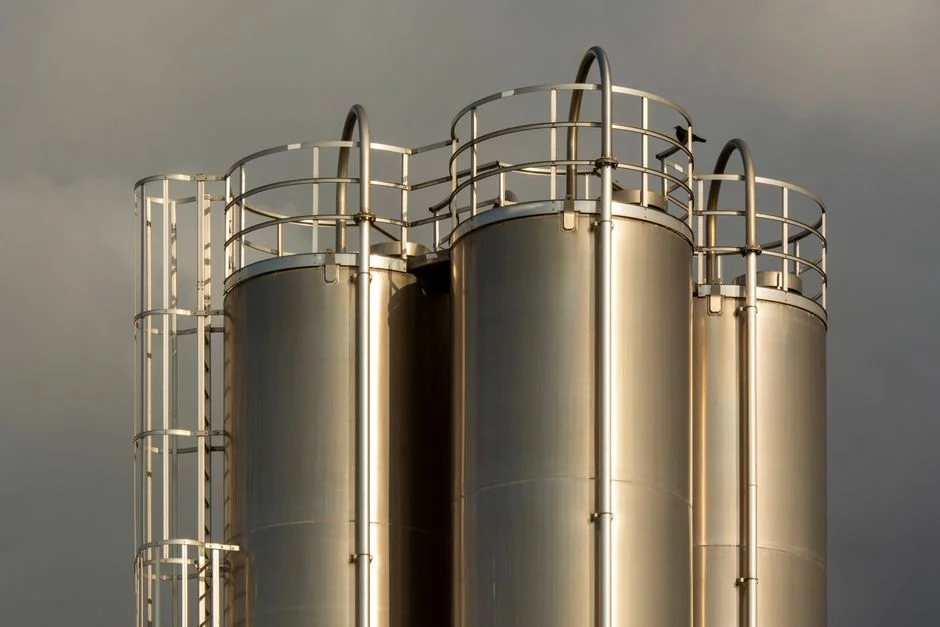
A compliant 2026 train for a poultry plant is built in four stages. Each stage attacks a specific fraction of the load, and skipping a stage almost always shows up as a permit violation within the first quarter of operation.
| Stage | Equipment | Target pollutants | Typical removal |
|---|---|---|---|
| 1. Pre-treatment | Rotary mechanical bar screen, 3–5 mm aperture | Feathers, offal, paunch manure, large solids | 60–80% TSS capture at headworks |
| 2. Dissolved Air Flotation (DAF) | DAF skid with micro-bubble generator, coagulant/polymer dosing | Emulsified FOG, colloidal TSS, phosphorus | 85–95% TSS, 90–98% FOG at 4–50 m³/h |
| 3. Biological treatment | MBR (PVDF flat sheet, 0.1 μm nominal pore) or SBR | Dissolved BOD/COD, ammonia, residual FOG | > 95% BOD, > 90% COD, > 95% ammonia |
| 4. Disinfection | Chlorine dioxide (ClO₂) generation, 50 g/h – 20,000 g/h capacity | Coliforms, E. coli, pathogens | 99.9% bacterial reduction; CT ≥ 1.5 mg·min/L at pH 7 |
Stage 1 – Pre-treatment. A rotary mechanical bar screen for poultry headworks with 3–5 mm bar spacing removes feathers, offal, and paunch solids before they reach the DAF. Anything coarser that bypasses the screen will rag around the recycle pump and shut the plant down. Expect 60–80% TSS capture here, with screenings collected to a sealed bin for off-site rendering.
Stage 2 – DAF for FOG and colloidal TSS. A DAF system for poultry FOG and TSS removal saturates a side-stream with pressurized air; when it releases into the flotation tank, micro-bubbles attach to oil droplets and lift them as scum. With a properly sized automatic coagulant and polymer dosing skid (typically 50–150 mg/L PAC plus 2–5 mg/L anionic polymer), the DAF reliably hits 90–98% FOG removal, which is the difference between passing and failing the PCD 5 mg/L watercourse limit. For Southeast Asia food plants running similar effluent profiles, this DAF system selection for Southeast Asia food plants reference gives comparable sizing logic.
Stage 3 – Biological treatment. An MBR system for poultry processing effluent using a flat sheet MBR membrane module (PVDF, 0.1 μm) delivers a sub-1 μm filtrate with TSS consistently below 3 mg/L and BOD below 5 mg/L. MBR is preferred for 2026 builds because its 60% smaller footprint lets the biological stage fit inside the existing plant boundary, and its tolerance of FOG spikes (up to 80 mg/L residual after DAF) is far better than a conventional aeration basin. SBR is a credible alternative for plants under 100 m³/day; see the comparison below.
Stage 4 – Disinfection. A chlorine dioxide disinfection generator producing 50 g/h to 20,000 g/h of ClO₂ provides a 99.9% bacterial kill at a far lower dose than chlorine (1–2 mg/L ClO₂ vs 5–10 mg/L Cl₂), without forming trihalomethanes. The ClO₂ contact basin is sized for a CT of at least 1.5 mg·min/L to meet PCD coliform targets and WHO/EU potable-equivalent reuse criteria if the plant is targeting water recycling for wash-down or boiler feed.
Sludge handling. DAF scum and waste-activated sludge are dewatered with a plate and frame filter press for sludge dewatering to a 60–65% moisture cake suitable for off-site rendering or sanitary landfill. Expect 8–12 kg dry solids per m³ of raw influent.
MBR vs SBR vs Conventional Activated Sludge: Choosing the Right Biological Stage
The single biggest CAPEX/OPEX trade-off in a poultry plant is the biological stage. The table below is the framework I use when reviewing EPC submittals.
| Criterion | MBR (flat sheet PVDF) | SBR (sequencing batch) | Conventional AS |
|---|---|---|---|
| Suitable flow range | 10 – 2,000 m³/day | 50 – 200 m³/day | 100 – 5,000 m³/day |
| Effluent TSS | < 3 mg/L (sub-1 μm) | 10 – 30 mg/L (after decanter) | 15 – 40 mg/L (after clarifier) |
| Effluent BOD₅ | < 5 mg/L | < 20 mg/L | 15 – 30 mg/L |
| FOG tolerance | High (handles 80 mg/L FOG spikes) | Moderate (sensitive to slug loads) | Low (FOG > 50 mg/L causes foaming) |
| Footprint vs CAS | 0.4× (60% smaller) | 0.6× | 1.0× (baseline) |
| CAPEX, 200 m³/day (USD) | $0.45M – $0.90M | $0.30M – $0.55M | $0.25M – $0.45M + clarifier |
| OPEX, $/m³ treated | $0.35 – $0.65 | $0.25 – $0.50 | $0.20 – $0.45 |
| Membrane / media replacement | 5 – 7 years (PVDF modules) | Diffusers 5 – 8 years | Diffusers 5 – 8 years |
| Operator skill required | Moderate (CIP, integrity testing) | Low to moderate (PLC recipes) | Moderate (clarifier, RAS, WAS) |
| Water-reuse suitability | Excellent (direct to RO/UF) | Good (sand filter + RO) | Fair (tertiary polish needed) |
For 2026 Thai poultry plants above 100 m³/day targeting either PCD watercourse-tier discharge or any kind of water-reuse credit, MBR is the right call: the higher CAPEX is recovered within 3–5 years through sludge-hauling savings, smaller civil footprint, and reuse-water revenue. SBR makes sense for 50–100 m³/day plants with stable load and a municipal-sewer discharge point — the controls are simpler and CAPEX is roughly 30% lower. Conventional activated sludge is hard to justify in 2026 unless you are retrofitting existing aeration tanks; even then, you are still buying a secondary clarifier and living with FOG sensitivity. For a deeper OPEX breakdown, the wastewater treatment OPEX breakdown by m³ reference is a useful cross-check.
2026 CAPEX and OPEX Benchmarks for a Thai Poultry Wastewater Plant
The numbers below are 2026 USD benchmarks for a full DAF + biological + ClO₂ + sludge-dewatering train, including tankage, civil works, MCC, and commissioning. They are anchored to Thai EPC quotations and HydropureWater field data from 2025-Q4 through 2026-Q2.
| Flow tier | CAPEX (USD, turnkey) | OPEX ($/m³ treated) | Energy (kWh/m³) | Major cost drivers |
|---|---|---|---|---|
| 50 m³/day | $0.18M – $0.40M | $0.40 – $0.85 | 1.2 – 1.8 | FRP tankage, SBR basin, small DAF skid, ClO₂ 50–200 g/h |
| 200 m³/day | $0.35M – $0.90M | $0.28 – $0.65 | 0.8 – 1.4 | SS/FRP tankage, DAF skid $25K–$120K, MBR modules $80K–$280K, ClO₂ gen $8K–$45K, civil works, PCD permit |
| 500 m³/day | $0.80M – $1.80M | $0.22 – $0.55 | 0.7 – 1.2 | Larger DAF, dual-train MBR, larger ClO₂ generator, on-line monitoring skid, sludge press upgrade |
For the 200 m³/day reference plant, membrane replacement every 5–7 years is the single largest OPEX line item after energy, followed by chemical dosing (PAC, polymer, ClO₂ precursor) and sludge hauling. Two Thailand-specific savings are worth flagging during the budget review: BOI-promoted poultry plants may claim import-duty exemption on membrane modules and ClO₂ generators under the Thailand Board of Investment machinery list, and the 2026 PCD fee schedule caps permitting costs at THB 75,000 for plants under 500 m³/day (per PCD 2026 guidance, 2025-12 update). An anaerobic lagoon can lower OPEX to $0.10–$0.20/m³ for lagoon-tolerant slaughterhouse effluent, but it only works on sites with more than 2 hectares of available land and fails the 2026 PCD ammonia and FOG limits for watercourse discharge, so it is rarely the right answer for a 2026 build.
Implementation Checklist and Frequently Asked Questions
Seven steps from influent to commissioning — this is the procurement sequence I walk EPCs through before any vendor quote is requested.
| Step | Deliverable | Typical duration |
|---|---|---|
| 1. Influent characterization | 7-day composite sampling for BOD, COD, TSS, FOG, TKN, pH, temperature | 1 – 2 weeks |
| 2. PCD discharge tier confirmation | Letter from estate/IEAT or municipality confirming sewer vs watercourse tier | 2 – 4 weeks |
| 3. Flow sizing | Peak daily flow + 1.3× safety factor; equalization volume ≥ 8 h HRT | 1 week |
| 4. Process train selection | P&ID with DAF, biological, ClO₂, sludge train sized to peak load | 2 – 3 weeks |
| 5. Vendor P&ID review | Issued for Approval (IFA) package, equipment list, GA drawings | 2 – 3 weeks |
| 6. Pilot or FAT | Factory acceptance test on DAF skid and MBR module, or on-site pilot for 4 weeks | 2 – 4 weeks |
| 7. Installation and commissioning | Civil, mechanical, electrical, commissioning, PCD walk-through test | 8 – 12 weeks |
How long does a 200 m³/day poultry wastewater plant take to build in Thailand? From PO to commissioning, expect 4–6 months for the full DAF + MBR + ClO₂ train, with 60–90 days of that window spent on site for civil works, equipment installation, and PCD walk-through testing. Vendor lead time on MBR modules is currently 8–10 weeks in 2026.
What is the single most common compliance failure for Thai poultry plants? FOG excursions above 15 mg/L on the municipal-sewer tier. The root cause is almost always under-sized DAF or polymer-dosing issues during the high-FOG morning shift. Add a second polymer stage or upgrade to a 50 m³/h DAF before adding biological capacity.
Can effluent be reused for wash-down or boiler feed? Yes, if the MBR is followed by UF/RO polishing and ClO₂ residual is controlled below 0.5 mg/L at the point of use. Typical reuse targets are 30–50% of the treated flow, which cuts water purchase cost by THB 12–18 per m³ in 2026 Bangkok tariff terms.
Is MBR worth the extra CAPEX over SBR for a 150 m³/day plant? If you are discharging to a municipal sewer and do not plan to reuse water, SBR is the more economical choice. If you need watercourse-tier BOD ≤ 20 mg/L or any reuse, the MBR premium pays back inside five years.
What operator skill level is needed to run the system? One shift operator with a process-technician background, supported by a service contract for quarterly membrane CIP and annual DAF audit. Most Thai poultry plants run the train with a 2-person day-shift + 1 on-call night rotation.