Why Tannery Wastewater Breaks Standard NF Cost Models
Nanofiltration tannery wastewater cost in 2026 runs about $180–$720 per m³/day installed. A 1,000 m³/day plant typically budgets $420,000–$1.6M. The spread tracks influent TDS (8,000–35,000 mg/L in chrome tanneries), chrome and sulfide pretreatment, and NF-only polishing versus NF+RO for reuse-grade effluent.
Generic membrane pricing assumes a relatively clean industrial feed. Tannery effluent is not one feed — it is three blended streams, each with its own fouling mechanism. Unhairing and soaking liquor carries sulfide at 50–200 mg/L and BOD of 2,000–8,000 mg/L. Chrome tanning liquor brings Cr³⁺ at 50–500 mg/L and TDS climbing to 35,000 mg/L. Vegetable tanning streams add high color, polyphenols, and organic load that fouls polyamide surfaces. A vendor quoting off freshwater curves will undersize the high-pressure pump, under-spec the CIP system, and miss the pretreatment step that actually determines whether the membranes live 30 months or 11.
The chemistry matters because chloride — the dominant anion in tannery brine at 8,000–25,000 mg/L — directly reduces NF divalent retention and depresses flux. The ScienceDirect study on simulated tannery NF confirmed that rising Cl⁻ shifts the membrane's effective cutoff and derates freshwater flux by 15–25% (Cuartas-Uribe et al., 2005, presented at ICOM Seoul). According to Religa and Kaźmierczak (Membranes, 2023), high salt in chrome baths builds an adsorption–polarization layer. That layer cut chromium retention in classic NF to about 83% in their tests. NF with constant-volume diafiltration raised chromium retention to 93–95% and cut regenerate salt below 10 g/L under lab conditions. At the same time, the Springer laundry-wastewater study established a workable operating window at pH 8.5, 30 °C, and 12 bar TMP (Yalçin et al., 2020). Tannery streams routinely need 14–20 bar to overcome osmotic pressure at TDS above 20,000 mg/L. That pressure bump alone shifts pump and piping cost by 20–35%. For context on how oxidation pretreatment changes the cost stack in a similar high-COD textile stream, see the ozone oxidation cost guide for textile wastewater.
NF Operating Parameters That Drive Tannery Project Cost
Five operating parameters separate a defensible tannery NF proposal from a guess: TMP, flux, recovery, pH, and cross-flow velocity. Each one has a clean-water textbook value and a tannery derated value, and the gap between the two is where project cost lives.
| Parameter | Clean-water NF (textbook) | Tannery NF (operating target) | Cost impact |
|---|---|---|---|
| Transmembrane pressure (TMP) | 8–12 bar | 12–20 bar | Higher-pressure pump, thicker piping, energy +25–40% |
| Flux | 15–25 LMH | 10–18 LMH | More membrane area for the same permeate flow |
| Recovery | 80–90% | 65–80% | Larger concentrate stream, higher disposal OPEX |
| pH window | 5.0–9.0 | 6.5–8.5 | Tighter control requires dosing system, more operator attention |
| Cross-flow velocity | 0.10–0.20 m/s | 0.15–0.30 m/s | Larger circulation pumps, more energy per m³ permeate |
Springer ANOVA work on laundry NF is still the most actionable literature cue for tannery buyers: pH dominated flux decline, while TMP and cross-flow rate had low effects (Yalçin et al., 2020). Translation for a procurement lead — pH control on the feed is not a nice-to-have, it is the single highest-leverage operating decision. Holding pH in the 7.0–8.5 band cuts fouling rate measurably and is the cheapest insurance you can buy for a 24–36 month membrane life.
Two other numbers should be in your back pocket before vendor meetings. First, NF alone does not move COD meaningfully — the same Springer study found COD barely reduced by the NF stage and required RO polish for reuse-grade water. Adding RO behind NF increases CAPEX by 40–80%, which is why the cost range below has a wide NF-only band and a wider NF+RO band. Second, NF at 12–18 bar draws 0.8–1.8 kWh/m³ permeate, compared with 1.8–3.5 kWh/m³ for RO at 15–30 bar. Over a 1,000 m³/day plant running 330 days/year, that energy delta is roughly $120K–$300K/year. That gap explains why NF-only polishing is often right for discharge-to-sewer duty even when reuse is the long-term goal. Most plants we size for chrome-precipitated mixed streams run toward the lower end of the flux band once chloride exceeds about 15,000 mg/L. The full RO cost stack is covered in the industrial RO system product page and the RO system process and stages guide.
2026 CAPEX Breakdown: Nanofiltration Tannery Wastewater Cost by Scope
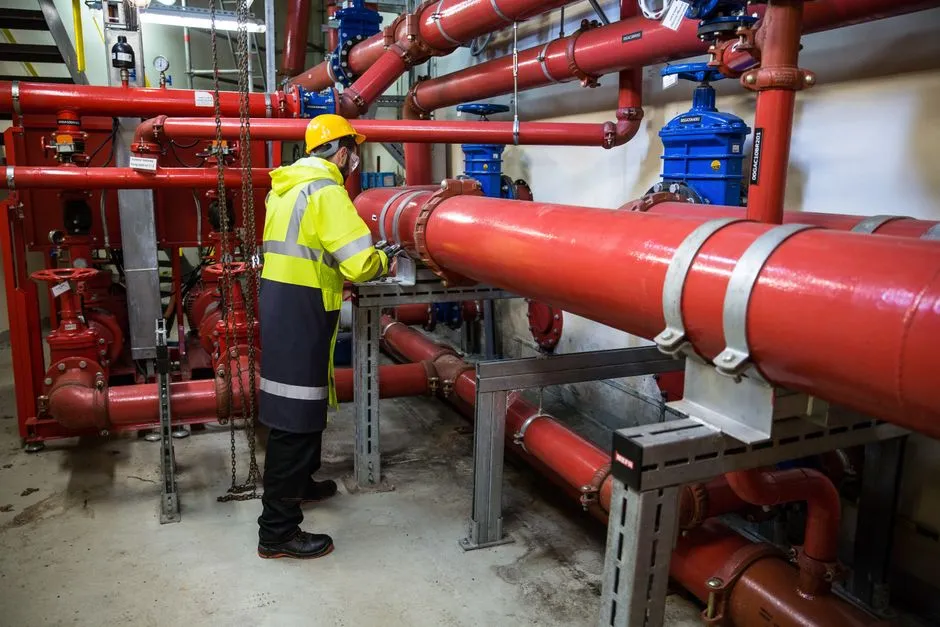
Installed cost for tannery NF in 2026 still maps to the same $180–$720 per m³/day permeate band, driven by influent chemistry and permeate end-use. The figures below use 2026 equipment pricing for polyamide thin-film composite NF on polysulfone support, with high-pressure stainless pump skids and CIP systems sized for tannery CIP frequency.
| Plant size | Stream profile | Scope | 2026 CAPEX (USD) |
|---|---|---|---|
| 200 m³/day | Vegetable-tan only, low chrome | NF skid only | $80,000–$144,000 |
| 200 m³/day | Vegetable-tan only, low chrome | Equalization + DAF + NF | $170,000–$290,000 |
| 1,000 m³/day | Chrome-precipitated, mixed stream | NF skid only | $420,000–$720,000 |
| 1,000 m³/day | Chrome + vegetable blend | UF + NF + RO + CIP | $900,000–$1,600,000 |
Three cost bands cover most real projects. Light tannery streams (low TDS, no chrome breakthrough) land at $180–$380 per m³/day installed. Mixed tannery with chrome precipitation upstream and a single NF stage lands at $380–$560 per m³/day. Chrome-plus-vegetable blends requiring UF+NF+RO for reuse-grade permeate push to $560–$720 per m³/day, with the RO stage and high-recovery CIP system driving the upper bound.
The CAPEX split inside a fully-loaded 1,000 m³/day system is fairly stable: membranes 25–35%, high-pressure pumps and VFDs 18–25%, skids and frames 10–15%, instrumentation and PLC 8–12%, installation and commissioning 15–22% (HydropureWater field data, 2026). The 2–3× cost swing between a small chrome tannery running NF-only and a large blend running UF+NF+RO+cleaning is real and is driven by influent variability, not vendor margin. A plant engineer who walks into a meeting quoting a single number has not yet seen the chemistry report.
Before you freeze a budget, walk this checklist with the vendor. Confirm measured TDS, Cl⁻, Cr³⁺, S²⁻, and COD on each segregated stream. Lock the chrome precipitation and sulfide oxidation design basis. Name the target permeate duty — sewer, wash water, or reuse bath. Size flux at the derated tannery TMP, not clean-water curves. Price CIP frequency and chemicals at that fouling load. Quote concentrate disposal route and unit price. Tie membrane warranty to pretreatment performance, not calendar months alone.
OPEX Drivers: Membrane Life, Cleaning Chemicals, and Energy
Membrane life is the single largest swing factor in 10-year total cost of ownership for tannery NF trains. Tannery-grade polyamide NF elements run $25–$55/m², and realistic replacement intervals are 24–36 months when chrome and sulfide pretreatment is functioning, versus 8–14 months when pretreatment is under-specified (HydropureWater field data, 2026). A 1,000 m³/day system with 800–1,200 m² of installed membrane area will spend $25,000–$65,000/year on replacement elements — or $80,000–$120,000/year if pretreatment fails. The cheapest place to save money on a tannery NF project is on the equipment in front of the membranes.
CIP frequency is the next lever. A well-tuned tannery NF system runs 1–2 cleaning cycles per week at $80–$220 per cycle for a mid-size installation. High-fouling streams — particularly those with residual sulfide or hardness breakthrough — push this to 3–4 cycles and add $8,000–$25,000/year in chemical cost alone. Dose control on the cleaning sequence is critical to avoid overdosing, which is why most operators pair the NF skid with an automatic chemical dosing skid rather than manual feed.
Energy and concentrate disposal close the OPEX picture. At 12–18 bar and 0.8–1.8 kWh/m³, a 1,000 m³/day plant spends $25,000–$75,000/year on NF electrical depending on local tariff. Concentrate is 20–35% of feed volume and often the largest annual line for chrome tanneries. Disposal runs $5–$45/m³ depending on chrome content and whether concentrate goes to evaporation, offsite haulage, or a ZLD crystallizer. For plants evaluating ZLD, the capex delta of an evaporator/crystallizer typically doubles the total membrane train budget. Comparing nanofiltration tannery wastewater cost to a full RO train, energy alone can swing six-figure annual OPEX on a 1,000 m³/day duty.
NF vs UF vs RO: Choosing the Right Membrane Train for Tannery Streams
Membrane train selection is the decision that swings total project cost by 2–4× and 10-year OPEX by 30–60%. The right answer is tied to what you are trying to do with the permeate, not what the cheapest membrane will pass.
| End-use goal | Recommended train | Typical CAPEX multiplier (vs NF-only) | OPEX multiplier |
|---|---|---|---|
| Discharge to sewer (TDS < 2,000 mg/L, no reuse) | UF + NF | 1.0–1.2× | 1.0× |
| Reuse in chrome tanning baths (low TDS, low chrome) | UF + NF + RO | 1.4–1.8× | 1.3–1.6× |
| Reuse in process washing or boiler feed | UF + NF + RO (+ optional polish) | 1.6–2.2× | 1.5–2.0× |
| Zero liquid discharge (ZLD) | UF + NF + RO + crystallization/evaporation | 3.5–4.0× | 2.0–2.5× |
UF alone handles TSS and partial COD reduction for discharge compliance but does not address TDS, chrome, or color. NF adds divalent salt rejection and meaningful chrome reduction. Zakmout et al. (Membranes, 2020) compared NF270/NF90 with BW30/SW30 on synthetic tannery salts. Their NF permeate still carried enough chromium for environmental discharge limits in that Algerian case, while SW30 RO reached discharge-quality permeate. That lab result aligns with field practice of putting RO behind NF when reuse or strict discharge is the duty. RO is required for reuse-grade permeate and total salt removal. For hazardous streams above ~500 m³/day, the Springer dynamic-modelling study on FO-NF integrated systems shows the technology becomes economically attractive as concentrate minimization displaces part of the RO load (Abdullah et al., 2016). For plants evaluating 2027+ capex, FO-NF is worth a vendor conversation even if it is not yet a standard bid line in 2026. The upstream MBR system and multi-media filter stages typically sit ahead of the NF skid and protect it from suspended solids and oil carryover.
Pretreatment Upstream of NF: The Step That Decides Project Economics
Three pretreatment operations decide whether a tannery NF project is a 30-month membrane life story or an 11-month failure. The first is chrome precipitation at pH 8–9, which drops Cr³⁺ from 50–500 mg/L to under 2 mg/L and protects both NF and downstream RO from irreversible chromium fouling. The second is sulfide oxidation with H₂O₂ or MnO₂, which brings S²⁻ from 50–200 mg/L below detection — without this, NF membranes foul within weeks, regardless of how clean the rest of the feed looks. The third is equalization plus a DAF system for fats, grease, and suspended solids that would otherwise blind the NF first stage.
The chrome-laden sludge produced by precipitation is itself a problem. If it is not dewatered, the chromium-rich cake becomes a hazardous waste liability rather than a manageable solid. A plate and frame filter press sized for tannery sludge produces a 25–35% dry-solids cake that can be sent to secure landfill or, in some jurisdictions, recovered for chrome reuse. Skipping this step saves $30,000–$80,000 on the front end and frequently costs more in disposal fees over the first three years of operation.
Who This Guide Is For and Next Step
Plant engineers and EPC teams sizing chrome or vegetable tannery membrane trains use this guide to compare NF-only versus UF+NF+RO bids. Procurement managers comparing vendor quotes against stream chemistry will find the CAPEX bands and OPEX levers above more useful than a single list price. Look elsewhere if you only need primary solids removal with no salt or chrome target — a DAF or clarifier alone may be enough. If you have a stream chemistry report and a target permeate duty, request a scoped CAPEX/OPEX estimate through our tannery NF quote request with TDS, Cr³⁺, S²⁻, and design flow attached.
Frequently Asked Questions
What does a nanofiltration system for tannery wastewater cost in 2026?
Installed cost runs $180–$720 per m³/day of permeate capacity in 2026. A 1,000 m³/day project typically lands between $420,000 and $1.6M. The spread tracks influent chemistry, pretreatment scope, and whether the permeate must meet sewer discharge or reuse-grade TDS. NF-only polishing sits at the low end; UF+NF+RO for chrome-bath reuse fills the upper band.
How long do NF membranes last on tannery effluent?
Membrane life is typically 24–36 months when chrome precipitation and sulfide oxidation are working. Without that pretreatment, replacement often falls to 8–14 months on the same polyamide elements. Holding feed pH in the 7.0–8.5 band remains the highest-leverage operating control for flux stability and CIP frequency on tannery brine.
Can NF alone hit reuse-grade quality for chrome tannery baths?
No. NF meaningfully reduces divalent salts and chrome but not COD or monovalent salts to reuse-bath levels. RO downstream is required for reuse-grade permeate in 2026 designs. Lab comparisons of NF versus SW30 RO on tannery salts show the same pattern: NF helps concentrate chromium, while RO is what clears discharge or reuse limits.
What influent TDS derates NF performance the most?
Chloride at 8,000–25,000 mg/L, typical of tannery brine, reduces divalent retention and derates flux by 15–25% versus clean-water curves. High salt also raises osmotic pressure, so TMP often moves from textbook 8–12 bar into the 14–20 bar band. That derating, not list price of the elements, is what expands membrane area and pump CAPEX.
How much concentrate does a tannery NF system produce?
About 20–35% of feed volume becomes concentrate at 65–80% recovery. Disposal at $5–$45/m³ is often the largest annual OPEX line for chrome tanneries. Plants chasing ZLD should budget evaporator or crystallizer CAPEX that can roughly double the membrane-train total versus NF-only polishing. For full RO cost benchmarking, see the industrial RO system cost pricing guide.