In 2025, wastewater treatment plant cost in Chandigarh ranges from ₹4.5 lakh for a 50 KLD packaged FRP MBBR to ₹40–48 lakh for a 500 KLD RCC SBR, with a 200 KLD fully automated MBR typically at ₹30–35 lakh. Prices move with technology (MBBR vs. MBR vs. SBR), tank material (MS vs. FRP vs. RCC), and automation level. Local sludge disposal fees and Chandigarh's 10 mg/L BOD ceiling add 15–25% to lifecycle cost.
Why Wastewater Treatment Plant Cost in Chandigarh Climbed in 2025
A 200 KLD MBBR plant in mild steel with semi-automatic controls averages ₹18–22 lakh in 2025 Chandigarh quotes. The same capacity in fully automated MBR with FRP tanks runs ₹30–35 lakh. Steel prices increased 12% YoY in 2024 according to Indian Steel Association data, which raised mild steel sewage treatment plant pricing by roughly ₹1.5–2 lakh per 100 KLD. Procurement teams in Mohali and Chandigarh are responding by specifying Fiber Reinforced Plastic (FRP) or RCC tanks for larger municipal jobs.
Land scarcity in Chandigarh's industrial zones is the second pressure point. Industrial land trades at ₹40,000–₹60,000 per square meter, which is why underground STP systems for space-constrained sites in Chandigarh now win roughly 30% of tenders even though their engineering cost runs higher per KLD. Regulatory pressure from the Haryana State Pollution Control Board (HSPCB) and the Chandigarh Pollution Control Committee (CPCC) closed another escape route: as of 2024, all new STPs above 100 KLD must add tertiary treatment (advanced filtration plus disinfection), which adds ₹5–8 lakh to CAPEX.
Operational costs are rising just as fast. Chandigarh Municipal Corporation tenders show sludge disposal fees climbing from ₹1,500/ton in 2023 to ₹3,000–₹5,000/ton in 2025, pushing OPEX up 18–22% for plants without proper dewatering. With industrial electricity at ₹8–₹10/kWh, aeration technology is the single biggest lever a plant engineer can pull: Membrane Bioreactors (MBR) deliver the cleanest effluent but use 2–3× more power than Moving Bed Biofilm Reactors (MBBR) because of membrane scouring air.
Wastewater Treatment Plant Cost Breakdown by Capacity (50 KLD to 1 MLD)
The benchmark below reflects 2025 Chandigarh market rates. Figures cover equipment and installation only and exclude 18% GST plus civil works, which run ₹1,500–₹3,000 per square meter depending on soil conditions across the Tricity area.
| Capacity (KLD) | Technology | Material | Automation Level | Capital Cost (₹) | Cost per KLD (₹) | OPEX (₹/KLD/year) |
|---|---|---|---|---|---|---|
| 50 KLD | MBBR | FRP (Packaged) | Manual | ₹4,50,000 - ₹6,00,000 | ₹9,000 - ₹12,000 | ₹1,500 |
| 100 KLD | MBBR | Mild Steel (MS) | Semi-Auto | ₹9,50,000 - ₹12,00,000 | ₹9,500 - ₹12,000 | ₹1,350 |
| 200 KLD | MBBR | Mild Steel (MS) | Semi-Auto | ₹18,00,000 - ₹22,00,000 | ₹9,000 - ₹11,000 | ₹1,200 |
| 200 KLD | MBR | FRP/Stainless | Fully Auto | ₹30,00,000 - ₹35,00,000 | ₹15,000 - ₹17,500 | ₹2,200 |
| 500 KLD | SBR | RCC (Civil) | PLC Controlled | ₹40,00,000 - ₹48,00,000 | ₹8,000 - ₹9,600 | ₹1,100 |
| 1,000 KLD (1 MLD) | SBR | RCC (Civil) | SCADA | ₹75,00,000 - ₹90,00,000 | ₹7,500 - ₹9,000 | ₹950 |
FRP tanks cost 20–30% more than mild steel up front, but they typically save ₹1.5–2 lakh per year in corrosion-related maintenance and repainting, especially on chemical effluent streams. Stepping up to PLC and SCADA adds ₹3–5 lakh to CAPEX while trimming labor-driven OPEX by up to 40% through remote monitoring and tighter chemical dosing.
How Technology Choice Drives Cost: MBBR vs. SBR vs. MBR
Technology selection is a balance between land availability, discharge limits, and budget. In Phase I and Phase II industrial areas, where plots are tight, footprint often matters as much as the price tag.
| Parameter | MBBR (Moving Bed) | SBR (Sequential Batch) | MBR (Membrane) |
|---|---|---|---|
| Capital Cost (₹/KLD) | ₹8,000 – ₹12,000 | ₹10,000 – ₹15,000 | ₹15,000 – ₹22,000 |
| Footprint (sq. m/KLD) | 0.8 – 1.2 | 0.5 – 0.8 | 0.3 – 0.5 |
| Energy Use (kWh/KLD) | 0.4 – 0.6 | 0.8 – 1.2 | 1.5 – 2.5 |
| BOD Removal (%) | 85% - 92% | 90% - 95% | 98% - 99% |
| Effluent Quality | Standard Discharge | High Quality | Reuse Quality (<5 mg/L BOD) |
| Compliance (BOD <10) | Requires Tertiary | Generally Compliant | Exceeds Standard |
MBBR is the workhorse for high-strength industrial effluent when land is available. For plants close to the Sukhna Lake watershed, MBR systems for Chandigarh's strict discharge limits are often mandatory to hit the <5 mg/L BOD bar. Budget for membrane replacement of ₹2–3 lakh every 3–5 years on a 200 KLD MBR; most plants we size for the Tricity run at the lower end of that interval when inlet screening is consistent.
Chandigarh Compliance Requirements and Hidden Costs
HSPCB discharge standards and CPCB norms set surface discharge limits at BOD <10 mg/L, COD <50 mg/L, and TSS <20 mg/L. Chandigarh's UT administration reported to the NGT in 2024 that STPs must meet BOD <10 mg/L and fecal coliform <100 MPN/100 ml (Times of India, 2024). Hitting those numbers usually needs a secondary biological stage followed by tertiary polishing (sand filter, activated carbon, UV or chlorine). Tertiary treatment adds ₹5–8 lakh to CAPEX and roughly ₹0.75/KLD to OPEX, and it is non-negotiable above 100 KLD.
Sludge management is where budgets quietly blow up. Plants above 100 KLD can no longer rely on open drying beds without drawing inspector pushback on odor and space. A plate and frame filter press costs ₹8–12 lakh upfront but cuts sludge volume by 70%, which directly lowers the ₹3,000–₹5,000/ton disposal fee charged by the municipal corporation; for a sludge dewatering equipment to reduce disposal costs in Chandigarh project, this is usually the highest-ROI line item. Earlier market estimates cited Environmental Compensation fines of ₹1–5 lakh per event; a 2024 NGT order on an HSPCB STP case reduced a ₹13.12 lakh levy to ₹6 lakh (Amazon Seller Services v. HSPCB), so remote monitoring and automated disinfection function as financial insurance rather than nice-to-haves.
Local Vendor Comparison: Who Offers the Best Value?
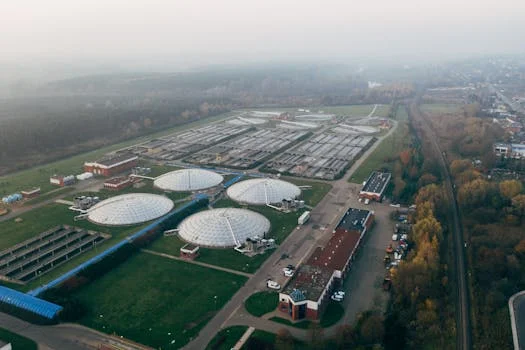
Chandigarh's supplier base splits into local engineering firms, national manufacturers, and packaged-system resellers. Vendors with in-house fabrication typically undercut traders by 15–20%. Lead times matter when a closure notice is sitting on the desk: packaged FRP units ship in 6–8 weeks, while custom RCC civil plants need 12–16 weeks.
| Vendor Type | Typical Capacity | Tech Offered | Price Range | Lead Time | Support Level |
|---|---|---|---|---|---|
| Local Engineering Firms | 50 - 300 KLD | MBBR, SBR | Mid-Range | 8-10 Weeks | High (Local Presence) |
| National Manufacturers | 100 KLD - 5 MLD | MBR, SBR, MBBR | Competitive | 10-14 Weeks | Moderate |
| Packaged System Resellers | 10 - 50 KLD | MBBR (FRP) | Premium | 4-6 Weeks | Low (Third Party) |
An Annual Maintenance Contract in Chandigarh runs ₹50,000–₹2,00,000 per year. It is OPEX, but it cuts unplanned downtime by roughly 40% and extends equipment life by 5–7 years on MBR and fully automated SBR systems, which is where most service-call hours get spent.
ROI Calculator: Is a Wastewater Treatment Plant Worth It?
Industrial fresh water in Chandigarh costs about ₹40/KL, and rising tariff trajectories shorten payback fast. Use the table below to plug in your own numbers; the example column is a 200 KLD plant.
| Input Field | Example: 200 KLD Plant | Your Data |
|---|---|---|
| Capital Cost (CAPEX) | ₹20,00,000 | ________________ |
| Annual OPEX (Power + Chem + Labor) | ₹8,76,000 | ________________ |
| Water Tariff (₹/KL) | ₹40 | ________________ |
| Annual Savings from Reuse (60% reuse) | ₹17,52,000 | ________________ |
| Fine Avoidance (Estimated/Year) | ₹3,00,000 | ________________ |
| Net Annual Benefit | ₹11,76,000 | ________________ |
| Payback Period | 1.7 Years | ________________ |
Sensitivity check: a 10% rise in municipal water tariffs, which the Tricity has seen in recent cycles, cuts the payback period by about 1.1 years. State industrial incentives and central schemes like Namami Gange can stack up to ₹5 lakh in grants for plants above 100 KLD, improving ROI by another 15–20%.
Need a sized CAPEX and OPEX sheet for your flow rate and discharge limits? Request a free quote with daily flow, peak factor, and influent BOD/COD/TSS.
Frequently Asked Questions
How much does a wastewater treatment plant cost in Chandigarh?
A 50 KLD packaged FRP MBBR starts at ₹4.5–6 lakh; a 100 KLD MS MBBR runs ₹9.5–12 lakh; a 200 KLD MBR sits at ₹30–35 lakh; and a 500 KLD RCC SBR lands between ₹40–48 lakh. Add 15–25% for civil works, tertiary filtration, and compliance upgrades, and budget GST at 18% on top.
What hidden costs should I plan for in a Chandigarh STP project?
The four that bite hardest are sludge disposal at ₹3,000–₹5,000/ton, electricity at ₹8–₹10/kWh, membrane replacement at ₹2–3 lakh every 3–5 years on a 200 KLD MBR, and tertiary treatment upgrades at ₹5–8 lakh. A 20–30% contingency above the equipment quote covers most of them.
MBBR vs. MBR: which is cheaper to run in Chandigarh?
MBBR wins on OPEX. It uses 0.4–0.6 kWh/KLD versus 1.5–2.5 kWh/KLD for MBR, and it avoids the membrane replacement line. MBR costs more per KLD but produces reuse-quality water under 5 mg/L BOD, which can be mandatory near the Sukhna Lake watershed.
How long is the payback on a 200 KLD wastewater treatment plant?
With industrial water at ₹40/KL and 60% reuse, a ₹20 lakh CAPEX plant clears payback in roughly 1.7 years before fine avoidance, and around 1.5 years once ₹3 lakh/year of avoided HSPCB penalties is included. Tariff inflation and Namami Gange grants shorten that further.
Can I install an STP underground in Chandigarh?
Yes. Underground packaged systems such as the WSZ series suit tight urban plots, cut land use by up to 70%, and disappear into landscaping. They carry a 10–15% premium for tank reinforcement and ventilation, and local bylaws on depth and structural certification must be checked before final design.
If you need a sized proposal for a specific flow rate and influent profile, send your parameters through request a quote with daily flow, peak factor, influent BOD/COD/TSS, and the discharge destination, and the engineering team will return a CAPEX/OPEX sheet plus a payback curve.