Wastewater Treatment Plant Cost in Colorado Springs: 2026 CAPEX, OPEX & Tech-Specific Breakdown
In Colorado Springs, wastewater treatment plant costs vary dramatically by scale and technology: municipal plants like the $125M Edward W. Bailey WTP (50 MGD) contrast with industrial systems starting at $1.2M (50,000 GPD). CAPEX ranges from $3–$15 per gallon of daily capacity, while OPEX spans $0.30–$1.80/m³—driven by energy (40% of OPEX), chemical dosing, and compliance upgrades for Colorado’s nutrient limits (e.g., total phosphorus <0.05 mg/L). This guide breaks down 2026 cost models by technology, capacity, and local regulatory factors to help buyers budget accurately.
For a local craft brewery in the North Nevada Avenue corridor or a precision manufacturer in the Pikes Peak region, the budgeting dilemma often begins with a sudden notice of stricter discharge limits. A facility processing 100,000 gallons per day (GPD) may face a $3M upgrade to meet new phosphorus and nitrogen standards. Navigating these costs requires moving beyond national averages to understand the specific economic and regulatory pressures of the El Paso County market. By analyzing the intersection of equipment costs, local labor rates, and the Colorado Discharge Permit System (CDPS) requirements, procurement managers can develop a 2026 budget that accounts for the full lifecycle of the asset.
Why Wastewater Treatment Costs in Colorado Springs Are Unique
Colorado’s semi-arid climate and the state’s 2023 Water Plan prioritize high-efficiency reuse, which increases demand for advanced treatment technologies like Membrane Bioreactors (MBR) and Reverse Osmosis (RO) that carry 20–40% higher CAPEX than conventional systems. In a region where every drop of the Arkansas River is spoken for, the ability to recycle process water isn't just an environmental goal; it is a financial necessity for industrial growth. This focus on reuse necessitates systems capable of producing "Class A" reclaimed water, which significantly shifts the cost profile toward advanced filtration and disinfection.
El Paso County’s stringent nutrient limits, specifically Total Phosphorus (TP) <0.05 mg/L and Total Nitrogen (TN) <10 mg/L, require tertiary treatment stages that add $1.5–$3.5M to a 1 MGD plant according to 2024 CDPHE compliance data. Standard secondary treatment is no longer sufficient for facilities discharging into sensitive local watersheds. Meeting these limits often requires the integration of phosphorus removal cost models for Colorado’s limits, involving both chemical precipitation and advanced solids separation.
Local labor costs for specialized construction also deviate from national norms. The $1.45B Southern Delivery System (SDS) project utilized 30 Colorado-based companies, establishing a benchmark for skilled trade rates. By 2026, projections from the Bureau of Labor Statistics indicate that skilled trades in the Colorado Springs MSA will command $85–$120 per hour, roughly 15% above the national average. This premium affects every stage of the project, from initial civil works to long-term maintenance contracts.
Water rights and permitting infrastructure further complicate the financial landscape. Colorado Springs Utilities’ SDS project included approximately $200M in permitting and infrastructure fees alone. For industrial buyers, this scales into significant "soft costs." Navigating the nexus of Colorado water law and local municipal codes can consume 5-10% of a project's total budget before a single piece of equipment is installed on-site.
CAPEX Breakdown: How Much Does a Wastewater Treatment Plant Cost in Colorado Springs?
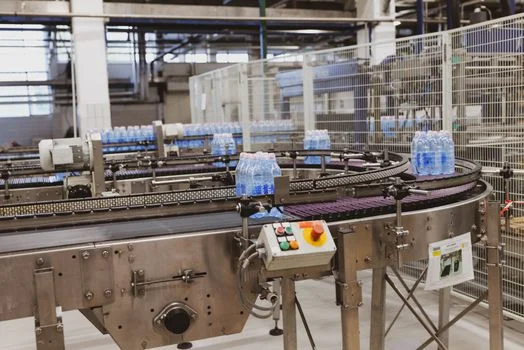
Municipal wastewater treatment plant construction in El Paso County typically requires a capital investment of $10 to $15 per gallon of daily capacity. For example, the $125M Edward W. Bailey WTP (50 MGD) reflects the high end of this scale due to its advanced biological filtration. Conversely, smaller municipal installations, such as the 0.5 MGD Persigo Plant upgrades, have seen project costs hover around $2.8M, including pipeline infrastructure. These benchmarks serve as a baseline for public sector planners evaluating long-term infrastructure expansions.
Industrial plants ranging from 50,000 to 500,000 GPD generally see a CAPEX range of $3 to $8 per gallon. The variance is primarily dictated by the influent's complexity and the required effluent quality. A food processing facility requiring high-strength BOD removal will lean toward the $8/gallon mark, while a simple TSS (Total Suspended Solids) removal system for a warehouse may sit at the lower end. Key cost drivers include land acquisition (10–15% in urban Colorado Springs), civil and structural works (20–30%), specialized equipment (40–50%), and the permitting process (5–10%).
Design optimization can lead to significant capital savings. In the case of the Edward W. Bailey WTP, the use of Orthos filtration technology allowed the facility to double its filtration rate to 12 GPM/ft², effectively halving the number of filters required from 12 to 6. This single design optimization saved the utility nearly $8M in capital costs. For industrial buyers, choosing MBR systems for Colorado Springs’ nutrient limits or high-efficiency DAF systems for food/beverage wastewater in Colorado can similarly reduce footprint and civil costs.
| Capacity (GPD) | Technology Type | CAPEX Range (USD) | Colorado Springs Example/Context |
|---|---|---|---|
| 50,000 | DAF (Industrial) | $1.2M – $1.8M | Small Food Processing/Pre-treatment |
| 250,000 | MBR (Industrial/Reuse) | $2.5M – $3.5M | Industrial Park Water Recycling |
| 500,000 | Conventional Activated Sludge | $2.0M – $3.0M | Small Municipal/Persigo Scale |
| 1,000,000 | MBR + Nutrient Removal | $8.0M – $12.0M | Tertiary Municipal Upgrade |
| 50,000,000 | Advanced Biological Filter | $125M+ | Edward W. Bailey WTP |
OPEX Unpacked: Energy, Chemicals, and Labor Costs per m³
Energy consumption accounts for approximately 40% of a wastewater treatment plant’s total operating expenditure, with aeration alone responsible for 60% of that energy draw. Colorado Springs Utilities’ projected 2026 industrial rate is $0.085/kWh, representing a 12% increase from 2023 levels. For plants utilizing high-pressure membrane systems or intensive aeration for BOD reduction, energy costs are the most volatile variable in the OPEX equation. Implementing variable frequency drives (VFDs) and high-efficiency blowers is essential for controlling these costs in the local market.
Chemical expenditures typically range from $0.05 to $0.20 per cubic meter treated. In systems like Dissolved Air Flotation (DAF), coagulants and flocculants such as ferric chloride are critical for effective solids separation, often costing around $0.12/m³. Precise chemical dosing for nutrient removal compliance is necessary to meet the <0.05 mg/L phosphorus limit without overspending on reagents. disinfection requirements may necessitate a chlorine dioxide generator to ensure pathogen control while minimizing harmful byproducts.
Labor and maintenance represent the remaining core of the OPEX profile. For a 0.5 MGD industrial plant, 24/7 operation typically requires at least two Full-Time Equivalents (FTEs). With skilled operator rates in Colorado Springs projected at $85/hour for 2026, labor costs can reach $0.10–$0.30/m³. Annual maintenance, including membrane cleaning, pump seals, and sensor calibration, generally requires a budget of 2–5% of the total CAPEX. For a $2M MBR system, this equates to a $50,000 to $100,000 annual maintenance reserve.
| Technology | Energy ($/m³) | Chemicals ($/m³) | Labor ($/m³) | Total OPEX Range ($/m³) |
|---|---|---|---|---|
| Conventional Activated Sludge | $0.15 - $0.25 | $0.05 - $0.10 | $0.20 - $0.40 | $0.40 - $0.75 |
| MBR (Membrane Bioreactor) | $0.35 - $0.55 | $0.08 - $0.15 | $0.15 - $0.30 | $0.58 - $1.00 |
| DAF (Dissolved Air Flotation) | $0.10 - $0.20 | $0.15 - $0.25 | $0.10 - $0.25 | $0.35 - $0.70 |
Tech-Specific Cost Comparison: MBR vs. DAF vs. Conventional Activated Sludge
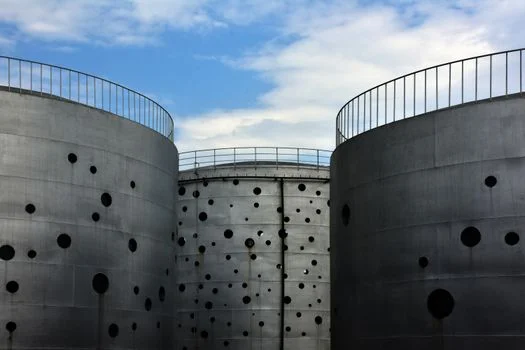
Membrane Bioreactor (MBR) technology requires the highest initial capital investment at $8 to $12 per gallon of capacity but offers a 60% smaller physical footprint than conventional systems. This footprint reduction is a critical factor for industrial sites in Colorado Springs where land prices are high or space is constrained by existing infrastructure. MBRs produce superior effluent quality (TSS <1 mg/L), making them the preferred choice for facilities aiming for direct non-potable reuse or those facing the strictest discharge permits.
Dissolved Air Flotation (DAF) serves as a mid-range CAPEX option, typically costing $5 to $7 per gallon. DAF is exceptionally effective at removing fats, oils, and grease (FOG) as well as total suspended solids, achieving up to 95% removal rates. While its chemical costs are higher than other technologies—averaging $0.15–$0.25/m³—its ability to handle variable influent loads makes it ideal for the food and beverage industry or metalworking applications common in the Pikes Peak region. It is often used as a pre-treatment step to reduce municipal surcharges.
Conventional activated sludge remains the lowest CAPEX option at $3 to $5 per gallon but carries the highest long-term OPEX when nutrient removal is factored in. These systems require a large footprint and often struggle to meet Colorado’s modern nutrient limits without expensive tertiary upgrades. When comparing technologies, buyers must weigh the lower initial cost against the potential for $1.5M+ in future compliance-driven retrofits. For a broader regional perspective, procurement managers may also review an Arizona WWTP cost comparison to see how Colorado’s specific nutrient and energy factors stack up against neighboring markets.
| Metric | MBR | DAF | Conventional Activated Sludge |
|---|---|---|---|
| CAPEX | High ($8-$12/gal) | Medium ($5-$7/gal) | Low ($3-$5/gal) |
| OPEX | Medium-High | Medium (High Chem) | High (with Nutrient Upgrades) |
| Footprint | Minimal (Excellent) | Moderate | Large |
| Effluent Quality | Superior (Reuse Ready) | Good (TSS/FOG removal) | Basic (Requires Tertiary) |
| Best Use Case | Water Reuse / Tight Space | Food & Beverage / Industrial | Large Municipal / Low Limit |
Hidden Costs: Compliance, Permitting, and Colorado-Specific Fees
The Colorado Discharge Permit System (CDPS) imposes annual fees ranging from $5,000 to $50,000 based on flow volume and pollutant complexity. These fees, administered by the Colorado Department of Public Health and Environment (CDPHE), are often overlooked during the initial budgeting phase. Beyond the flat fee, the cost of monthly Discharge Monitoring Reports (DMRs) and the associated laboratory testing can add $50,000 to $200,000 annually to the operating budget, depending on the number of parameters required by the permit.
Nutrient removal upgrades represent the single largest "hidden" capital risk for existing plants in Colorado Springs. To meet a TP limit of <0.05 mg/L, a 1 MGD plant typically requires a combination of chemical precipitation and high-efficiency solids separation, such as a high-efficiency sedimentation tank or tertiary DAF. These upgrades can range from $1.5M to $3.5M. Planning for these stages during the initial build, even if not immediately required, can save millions in future retrofitting costs.
Stormwater management and MS4 permit compliance add another layer of expense for industrial sites. Developing the necessary infrastructure to manage runoff—including detention ponds, bioswales, and filtration systems—can cost between $200,000 and $1M. In Colorado Springs, where flash flooding and sediment control are significant concerns, these costs are non-negotiable for new industrial developments. Integrating stormwater planning with wastewater treatment can sometimes yield synergies in land use and permitting.
5-Year TCO Model: How to Calculate Total Cost of Ownership
A 5-year Total Cost of Ownership (TCO) for a wastewater treatment facility is calculated by combining the initial CAPEX with five years of OPEX and anticipated compliance-driven upgrades. This model is essential for justifying budgets to executive boards or municipal councils, as it reveals the true long-term impact of technology choices. A system with a lower CAPEX but high chemical and energy requirements may end up costing significantly more over a five-year horizon than a more expensive, high-efficiency MBR system.
Consider a worked example for a 0.5 MGD industrial MBR plant in Colorado Springs. The initial CAPEX is estimated at $4M. Annual OPEX, calculated at $0.80/m³ for a yearly flow of approximately 912,500 m³, totals $730,000 per year. Over five years, this OPEX reaches $3.65M. When adding $500,000 for permitting, stormwater compliance, and initial testing, the 5-year TCO reaches $8.15M. Sensitivity analysis should also be performed; for instance, a 20% increase in energy prices or a move to even stricter nutrient limits (TP <0.03 mg/L) could increase the TCO by an additional 10-15%.
| TCO Component | Cost Estimate (0.5 MGD MBR) | Percentage of 5-Year TCO |
|---|---|---|
| Initial CAPEX | $4,000,000 | 49% |
| 5-Year OPEX (Energy, Chem, Labor) | $3,650,000 | 45% |
| Permitting & Compliance Fees | $250,000 | 3% |
| Stormwater & Monitoring | $250,000 | 3% |
| Total 5-Year TCO | $8,150,000 | 100% |
Frequently Asked Questions
What is the average cost of a wastewater treatment plant in Colorado Springs?For municipal projects, costs typically range from $10 to $15 per gallon of daily capacity. For industrial systems (50,000–500,000 GPD), CAPEX usually falls between $3 and $8 per gallon. A 100,000 GPD industrial plant generally requires a budget of $1.2M to $3M depending on the technology and discharge requirements.
How do nutrient removal limits in Colorado affect plant costs?Colorado’s strict limits (TP <0.05 mg/L) often require tertiary treatment upgrades. For a 1 MGD plant, adding the necessary chemical precipitation and advanced filtration stages can add $1.5M to $3.5M to the CAPEX and increase chemical OPEX by $0.10–$0.20/m³.
What are the typical operating expenses (OPEX) for plants in El Paso County?OPEX in Colorado Springs ranges from $0.30 to $1.80 per cubic meter. This is driven by energy rates (~$0.085/kWh), chemical costs for nutrient removal, and high local labor rates for skilled operators ($85–$120/hour).
Is MBR more cost-effective than DAF for industrial use in Colorado?MBR has a higher CAPEX but is more cost-effective for facilities requiring high-quality reuse water or those with limited land. DAF is more economical for pre-treatment of high-strength organic waste (like food processing) where the goal is to reduce municipal surcharges rather than achieve total reuse.