What Is a Package Sewage Treatment Plant and Why It Fits Ghana
A package sewage treatment plant is a factory-built, skid- or container-integrated biological treatment unit delivered with all process tanks, blowers, dosing pumps, and PLC pre-wired. In Ghana, the 5–500 m³/d capacity range covers roughly 80% of new residential estate, hotel, mining camp, and small-municipality demand — and it beats a poured-concrete conventional works on three points: install time (2–4 weeks vs 4–8 months), site civil cost (30–50% lower because tanks arrive pre-fabricated), and footprint (40–60% smaller at equal hydraulic loading).
Ghana's procurement drivers are specific. The country added an estimated 200+ new residential estates in the Accra–Kumasi–Tema corridor during 2024–2025, each requiring on-site treatment where municipal sewer does not reach. Mining camps in the Western and Ashanti regions face strict EPA site-closure obligations, and hotel/resort facilities now see routine EPA compliance audits tied to operating permit renewal. A buried WSZ package sewage treatment plant of the A/O + sedimentation + disinfection configuration, rated 1–80 m³/h and fully buried with automated control, is the dominant reference design on Chinese B2B platforms for this capacity band and is the benchmark most Ghana-bound RFQs are quoted against.
Ghana EPA Discharge Standards Every Package Plant Must Meet
Ghana EPA Environmental Quality Guidelines require effluent BOD₅ ≤ 50 mg/L, TSS ≤ 50 mg/L, COD ≤ 250 mg/L, NH₃-N ≤ 5 mg/L, pH 6–9, and FOG ≤ 10 mg/L for discharge to surface water or municipal sewer. Ghana Water Company Limited (GWCL) may impose stricter parameters in specific districts, particularly for ammonia and phosphorus in the Weija and Kpong sewer sheds. Where the treated effluent is reused for land irrigation (a common arrangement for Accra golf courses, cocoa nurseries, and hotel grounds), the WHO 2006 guidelines apply additionally, with fecal coliform ≤ 200 CFU/100 mL for unrestricted irrigation.
The single biggest post-installation failure point in West Africa is the gap between a supplier's claimed effluent and actual performance on Ghanaian wastewater. Demand a third-party effluent test report — SGS, Bureau Veritas, or TUV — run on actual municipal or food-processing wastewater, not simulated sucrose-glucose lab feed. Reject any data sheet that does not list both influent and effluent BOD, COD, TSS, and NH₃-N side by side.
| Parameter | Ghana EPA limit (surface discharge) | GWCL sewer (typical) | WHO 2006 irrigation reuse |
|---|---|---|---|
| BOD₅ | ≤ 50 mg/L | ≤ 30 mg/L | ≤ 20 mg/L |
| TSS | ≤ 50 mg/L | ≤ 30 mg/L | ≤ 30 mg/L |
| COD | ≤ 250 mg/L | ≤ 120 mg/L | — |
| NH₃-N | ≤ 5 mg/L | ≤ 3 mg/L | ≤ 5 mg/L |
| pH | 6–9 | 6.5–8.5 | 6.5–8.5 |
| FOG | ≤ 10 mg/L | ≤ 10 mg/L | — |
| Fecal coliform | — | — | ≤ 200 CFU/100 mL |
Three Package STP Architectures Compared for Ghanaian Conditions
The architecture choice drives roughly 60% of lifetime satisfaction because it sets the maintenance access pattern, the upgrade ceiling, and the OPEX slope. Three options dominate Ghana-bound RFQs in 2026.
Architecture 1 — Buried WSZ (A/O + sedimentation + chlorination). Capacity 1–80 m³/h, typically 50–200 m³/d per unit. CAPEX US$8,000–$45,000 FOB China. The unit sits below grade, leaving only the manhole covers and control kiosk visible, which makes it the preferred choice where landscaping, golf-course sightlines, or residential estate aesthetics matter. OPEX is low — no membrane replacement, only sludge wasting every 6–12 months. The downsides are real: confined-space entry for any tank work, no upgrade path if discharge limits tighten, and chlorination alone will not meet the WHO 2006 fecal coliform ≤ 200 CFU/100 mL reuse threshold without on-site chlorine dioxide disinfection as a secondary step.
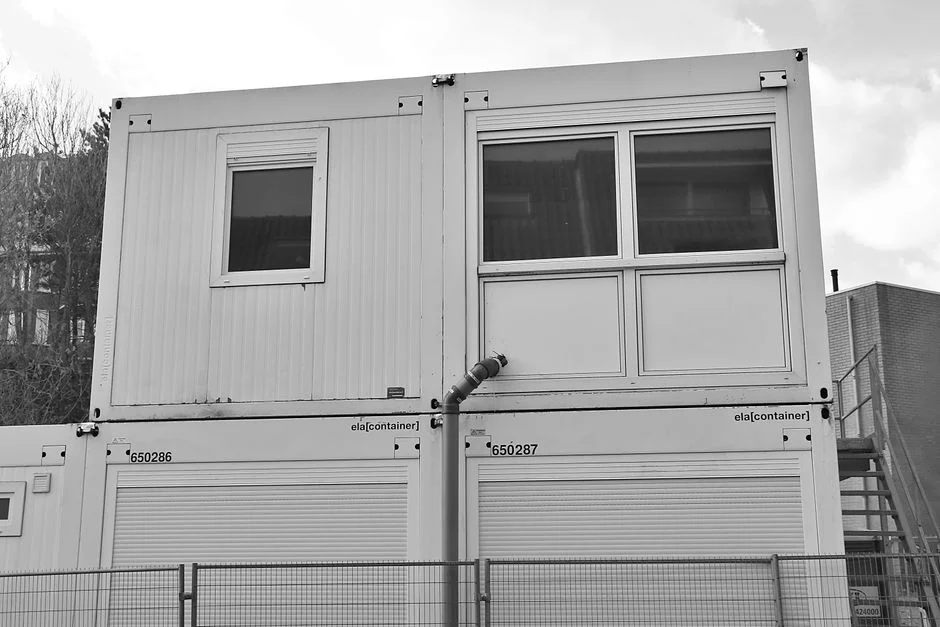
Architecture 2 — Skid-mounted containerized STP (MBR or SBR in 20/40-ft container). Typical 20–500 m³/d. CAPEX US$35,000–$120,000 FOB. Delivered on a flatbed, lifted by crane onto a prepared slab, plumbed, and commissioned in 5–10 days. Expandable by paralleling containers, and relocatable when a mining or logging camp closes. The trade-offs: requires a covered compound (sun degradation of cable jackets and PVC piping in 28–35°C tropical sun shortens service life), and membrane-bearing variants carry a 5–8 year membrane replacement cost of US$8,000–$25,000 per module set.
Architecture 3 — Above-grade MBR package (activated sludge + submerged PVDF ultrafiltration). Capacity 10–2,000 m³/d. CAPEX US$60,000–$300,000 FOB. Effluent turbidity < 1 NTU and BOD < 5 mg/L — reuse-quality water for toilet flush, landscape irrigation, or cooling-tower makeup. Footprint is 60% smaller than an equivalent buried WSZ at the same daily flow because MLSS can run at 8,000–12,000 mg/L. Membrane cleaning every 6–12 months (CIP with NaOCl + citric acid) is the main OPEX item, and a 2–4 day standby is required during chemical clean. The right pick where irrigation reuse, hospital wastewater, or food/beverage effluent is in scope — for example, a MBR membrane bioreactor package system sized 50 m³/d delivers BOD < 5 mg/L consistently on cassava-processing wastewater at 35°C influent temperature.
| Parameter | Buried WSZ | Containerized skid (MBR/SBR) | Above-grade MBR |
|---|---|---|---|
| Typical capacity | 50–200 m³/d | 20–500 m³/d | 10–2,000 m³/d |
| FOB CAPEX (US$) | 8,000–45,000 | 35,000–120,000 | 60,000–300,000 |
| Effluent BOD₅ | ≤ 30 mg/L | ≤ 10 mg/L | ≤ 5 mg/L |
| Effluent TSS | ≤ 30 mg/L | ≤ 5 mg/L | ≤ 1 mg/L |
| Footprint (per m³/d) | ~0.4 m² | ~0.2 m² | ~0.15 m² |
| Reuse-ready (WHO 2006) | No (needs ClO₂) | Yes (MBR variant) | Yes |
| Best fit | Residential/hotel, permanent | Mining/logging camp, < 3 yr | Hospital, food/bev, reuse |
Decision rule: choose buried WSZ for permanent residential or hotel sites under 200 m³/d where the effluent goes to sewer or surface water; choose containerized skid for mining or logging camps and any project under three years; choose MBR for irrigation reuse, hospitals, and food/beverage facilities where effluent quality drives the decision.
How to Size a Package Plant for a Ghanaian Facility
Under-specifying is the most common sizing error in Ghana because Chinese supplier design defaults assume 120–150 L/person/day water consumption, while actual per-capita use in Accra's premium estates, Kumasi's middle-income housing, and Tema's new developments runs 150–200 L/person/day. Hospital sizing should use 200–250 L/bed/day, and hotels 300–500 L/guest/day — both higher than Chinese hotel benchmarks because the 28–35°C ambient temperature drives more shower, laundry, and pool-backwash flow.
Organic load per person is 40–60 g BOD₅/day for domestic sewage. For food processing, add 2–4 kg BOD per ton of raw material — cassava processing specifically generates 2.5–3.5 kg BOD/ton because of the high starch content. Apply a 1.3–1.5 peaking factor for daily peak flow and 2.0 for hourly peak; this is critical for hotels, schools, and churches where flow concentrates in 4–6 hour windows.
Worked example: a 300-room hotel at 250 L/bed-day generates 75 m³/d average flow; the hourly peak of 2.0 × 75 / 24 = 6.25 m³/h must pass through the unit, so a 80 m³/d buried WSZ unit with hydraulic residence time ≥ 8 hours is the minimum selection. Confirm HRT explicitly with the supplier — Chinese data sheets often quote 6 hours, which is borderline for the elevated BOD of Ghanaian food-service waste streams.
CAPEX and Landed Cost Breakdown for Ghana Imports
The FOB Qingdao price is only 65–75% of the total delivered cost to an Accra or Kumasi site. Build the budget in layers, not as a single line item. The reference benchmark from the dominant Made-in-China Top 1 listing is US$8,000 for 2+ pieces, US$10,000 for 1 piece of small buried WSZ, FOB Qingdao.
Sea freight on a 20-ft container runs US$3,500–$5,500 Qingdao → Tema at 2025–2026 rates; a 40-ft container is US$6,000–$9,000. Tema port charges total approximately 12% of CIF value, broken down as import duty 5–20% depending on HS code 8421.21 classification, VAT 15%, NHIL 2.5%, GETFund 2.5%, ECOWAS levy 0.5%, and inspection fee 1%. Inland transport Tema → Accra runs US$800–$1,500; Tema → Kumasi US$2,000–$3,500. If no local engineer is available, add US$5,000–$15,000 for a Chinese supplier commissioning supervisor (10–14 day mobilization including flights, accommodation, and per diem).
Worked example for a 100 m³/d buried WSZ: FOB US$22,000 + sea freight US$4,500 + port and duties ~US$5,500 + inland transport US$1,500 = landed ~US$33,500; add US$10,000–$15,000 for civil works, electrical connection, and 50 m of inlet/outlet piping to reach a total project cost of ~US$45,000. For a 100 m³/d MBR system, multiply equipment CAPEX by 2.5–3× and the same landed-cost model applies. For a deeper global benchmark, see the global package STP pricing benchmark for 2026.
| Cost line | 100 m³/d buried WSZ (US$) | 100 m³/d MBR (US$) |
|---|---|---|
| FOB equipment | 22,000 | 65,000 |
| Sea freight (20-ft) | 4,500 | 5,000 |
| Tema port + duties (~12% CIF) | 5,500 | 12,000 |
| Inland to Accra | 1,500 | 1,800 |
| Commissioning supervisor | 8,000 | 12,000 |
| Civil + electrical + piping | 12,000 | 15,000 |
| Total landed project | ~53,500 | ~110,800 |
Supplier Shortlist: How to Vet a Package STP Exporter Before You Pay
The two most common failure modes in West African STP procurement are ghost suppliers (no real factory, dropship from a trading company) and non-compliant plants (effluent passes the supplier's lab test but fails on real Ghanaian wastewater). Use this five-point framework before issuing the deposit.
- Certifications and references. Request ISO 9001 certificate and at least three reference installations in West Africa or comparable tropical climate. Flag any supplier whose only references are Chinese municipal projects in winter cities. Cross-check the reference names on LinkedIn — a real plant manager is a 30-second verification.
- Third-party effluent data. Demand an SGS, Bureau Veritas, or TUV effluent test report on actual wastewater, not simulated. Reject reports that list only effluent values without paired influent BOD, COD, TSS, and NH₃-N. The influent must show ≥ 200 mg/L BOD for the test to be meaningful.
- Local representation. Confirm a named agent in Accra or Lagos for commissioning, spares, and warranty service. Major Chinese OEMs including HydropureWater now maintain West Africa agents; request the contact, call them, and ask how many STPs they commissioned in 2025.
- Warranty in writing. 12 months on electromechanical equipment, 24 months on membrane modules, with a 72-hour on-site response SLA in Ghana. Verbal commitments from a sales engineer do not survive a warranty claim.
- FAT video and pre-shipment inspection. Insist on a recorded Factory Acceptance Test of your specific unit before it leaves the port. A detailed walkthrough of how to vet a Chinese wastewater OEM gives a reusable procurement protocol.
Frequently Asked Questions
What is the FOB price of a small package STP from China? A small buried WSZ unit (5–50 m³/d) lists at US$8,000 for 2+ pieces or US$10,000 for 1 piece FOB Qingdao, based on the dominant Made-in-China supplier reference. Larger 100–200 m³/d units run US$20,000–$45,000 FOB.
Will a Chinese package plant pass Ghana EPA inspection? Yes, if the unit is correctly sized and configured. Ghana EPA requires BOD₅ ≤ 50 mg/L, TSS ≤ 50 mg/L, COD ≤ 250 mg/L, NH₃-N ≤ 5 mg/L — all achievable with A/O, SBR, or MBR configurations. Demand a third-party test report to confirm.
What capacity range does a buried WSZ plant cover? The WSZ series is rated 1–80 m³/h, equivalent to roughly 24–1,920 m³/d depending on the operating hour assumption. For most Ghanaian residential and hotel applications, units sized 50–200 m³/d are the common selection.
How long does shipping from China to Tema take? Ocean transit Qingdao → Tema averages 28–35 days in 2025–2026, plus 7–14 days for port clearance and inland transport. Plan 60–75 days total from purchase order to site delivery.
What is the typical membrane replacement cost for an MBR package plant? PVDF ultrafiltration membranes in a 50–100 m³/d MBR system cost US$8,000–$25,000 per replacement set, with a 5–8 year service life under proper CIP maintenance. This is the dominant long-term OPEX line item and the reason to use the same supplier for spares.