Wastewater treatment plant cost in Denmark in 2026 spans DKK 5M for small package plants (100 m³/day) to DKK 250M+ for large municipal facilities (50,000+ m³/day). Earlier guidance used DKK 11.5/m³ as a user fee; DANVA Water in Figures 2025 reports an average wastewater utility share of €5.74/m³ and a wastewater component of €7.31/m³ including VAT and taxes. Capital costs depend on technology choice (MBR vs. conventional activated sludge), site conditions, and compliance with Denmark's high secondary-treatment connection rate. This guide breaks down CAPEX and OPEX by plant size and technology, and presents ROI benchmarks for industrial and municipal projects.
Why Denmark's Wastewater Treatment Costs Differ from Other Markets
Wastewater treatment plant cost in Denmark is shaped by strict environmental rules, high energy prices, and a national push toward a circular economy.That performance forces advanced systems and can add 20–30% to capital cost versus plants that rely only on primary treatment. Operators often select MBR or tertiary filtration to hold effluent quality. Denmark's electricity price of DKK 0.30/kWh also pushes plants toward low-energy designs such as anaerobic digestion for high-strength industrial waste or energy-efficient DAF systems for industrial pretreatment in Denmark's high-fee environment. Municipal networks are funded by connection fees of DKK 18,000–30,000 per household, while industrial sites either invest in on-site pretreatment or pay surcharges for high-load discharge. The trade-off favors long-term OPEX savings and resource-recovery revenue over lowest first cost.
CAPEX and OPEX by Plant Size and Technology
Wastewater treatment plant cost in Denmark varies sharply with capacity, technology, and site conditions. New CAPEX typically runs DKK 5M–15M for 100–500 m³/day package plants, DKK 20M–50M for 1,000–5,000 m³/day facilities, and DKK 100M–250M+ for municipal plants of 10,000 m³/day or more, as seen in the DKK 250 million West Funen project (Envidan, 2023). Land runs DKK 500–2,000/m² depending on urban versus rural location. Technology is the main lever on CAPEX per m³/day of capacity: conventional activated sludge DKK 1,500–3,000, MBR DKK 2,500–4,500, and DAF pretreatment DKK 1,000–2,000. OPEX scales with size and process choice; energy DKK 3.0–5.5/m³, chemicals DKK 1.0–2.5/m³, labor DKK 2.0–4.0/m³, maintenance DKK 1.5–3.0/m³, and sludge disposal DKK 0.5–1.5/m³. For a 2,000 m³/day plant over 5 years, a conventional activated sludge design may total DKK 34M–56M (CAPEX DKK 4M–6M plus 5-year OPEX DKK 30M–50M), while an MBR may run slightly higher but deliver better effluent and a smaller footprint.
| Parameter | Conventional Activated Sludge | MBR (Membrane Bioreactor) | DAF (Dissolved Air Flotation) - Pretreatment |
|---|---|---|---|
| CAPEX (DKK/m³/day capacity) | 1,500 – 3,000 | 2,500 – 4,500 | 1,000 – 2,000 |
| OPEX (DKK/m³ treated) | 8.0 – 12.0 | 9.0 – 15.0 | (Varies, typically 4.0 – 7.0 for standalone) |
| Energy (DKK/m³) | 3.0 – 5.0 | 3.5 – 5.5 | 1.5 – 2.5 |
| Chemicals (DKK/m³) | 1.0 – 2.0 | 1.0 – 2.5 | 1.0 – 2.0 |
| Labor (DKK/m³) | 2.0 – 3.5 | 2.0 – 4.0 | 1.0 – 2.0 |
| Maintenance (DKK/m³) | 1.0 – 2.0 | 1.5 – 3.0 | 0.5 – 1.0 |
| Sludge Disposal (DKK/m³) | 0.5 – 1.0 | 0.5 – 1.5 | (Integrated with main plant) |
| Typical Plant Size (m³/day) | >1,000 | 100 – 50,000+ | 50 – 5,000+ |
| Footprint Requirement | Large | Compact | Moderate |
Centralized vs. Decentralized Treatment for Danish Municipalities and Industries
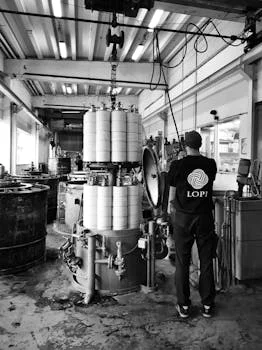
Centralized plants such as West Funen's DKK 250M facility capture economies of scale and lower per-m³ treatment cost, but require extensive sewer networks (DKK 500–1,500/m), land acquisition, and complex permitting. Decentralized package plants cut CAPEX by 40–60% versus expanding centralized systems for capacities under 5,000 m³/day, with options like the Underground Package Sewage Treatment Plant (WSZ Series) for rural and industrial sites. The trade-off is higher per-m³ OPEX from localized labor and maintenance. Centralized plants must follow EU Urban Waste Water Directive 91/271/EEC; decentralized plants under 2,000 PE may qualify for exemptions but still meet local discharge rules. Mariagerfjord municipality cut DKK 12M/year by centralizing treatment (Fluid Handling Pro, 2021), while remote industrial sites often find a detailed engineering guide for Denmark's package plant requirements more practical than running a long sewer connection.
| Feature | Centralized Wastewater Treatment | Decentralized (Package Plant) Wastewater Treatment |
|---|---|---|
| Typical Capacity | >5,000 m³/day (up to 50,000+ m³/day) | <5,000 m³/day (down to 10 m³/day) |
| CAPEX Impact | High initial investment (DKK 100M-250M+) due to scale and network | Lower initial investment (DKK 5M-50M) for <5,000 m³/day; 40-60% CAPEX reduction |
| OPEX Impact | Lower per m³ due to economies of scale in operations | Potentially higher per m³ due to lack of shared infrastructure, more localized labor |
| Infrastructure Cost | Extensive piping networks (DKK 500-1,500/m for sewer lines) | Minimal piping, localized collection |
| Regulatory Compliance | Strict adherence to EU Urban Waste Water Directive 91/271/EEC | May qualify for exemptions if <2,000 PE, but must meet local discharge standards |
| Footprint | Large land requirement, often greenfield sites | Compact, modular, can be integrated into existing industrial sites |
| Scalability | Expansion often requires significant new infrastructure | Modular design allows for easier phased expansion |
Denmark's User Fees and Funding Models for Municipal and Industrial Plants
Denmark's wastewater funding model runs on a user-pays principle. Earlier guidance used DKK 11.5/m³; DANVA Water in Figures 2025 reports an average wastewater utility share of €5.74/m³ and a wastewater component of €7.31/m³ including VAT and taxes, within a €11.02/m³ total water price. That wastewater charge covers most municipal OPEX, with the gap funded by household connection fees of DKK 18,000–30,000. Industrial sites discharging to municipal sewers pay DKK 15–25/m³ depending on volume and pollutant load, reflecting the extra treatment burden from COD, BOD, and FOG. To cut those surcharges, food and pharma plants typically install on-site pretreatment; DAF systems for industrial pretreatment in Denmark's high-fee environment are a common pick for FOG and suspended-solids removal. A 500 m³/day plant sending 300 m³/day to a municipal system without pretreatment may face over DKK 1.2M/year in fees; the same plant with a DAF can drop annual municipal fees toward DKK 500K by reducing load and discharge volume.
ROI and Payback Period: Engineering Benchmarks for 2025
ROI and payback for wastewater treatment plant cost in Denmark depend on user-fee recovery, energy savings, water reuse, and sludge sales. Municipal plants funded by user fees typically see 5–8-year payback, while industrial plants with water reuse and resource recovery often reach payback in 3–5 years.RO systems for water reuse in Denmark's circular economy save DKK 2.00–4.00/m³ by replacing potable water in cooling, irrigation, and process use. Sludge sold as biogas feedstock earns DKK 100–300/ton, and systems aligned with EU Water Reuse Regulation 2020/741 may qualify for tax breaks. A 1,000 m³/day industrial plant with MBR and water reuse at DKK 25M CAPEX can combine DKK 1.5M in reduced municipal fees, DKK 0.5M in energy savings, and DKK 1.0M in water-reuse value for DKK 3M/year total, yielding roughly 8.3 years payback.
| ROI Driver | Typical Annual Savings/Revenue (DKK/m³ treated) | Notes for Denmark |
|---|---|---|
| Energy Savings (MBR vs. Conventional) | 0.50 – 1.00 | Driven by DKK 0.30/kWh electricity cost; MBR efficiency. |
| Water Reuse (Potable Water Savings) | 2.00 – 4.00 | Applicable for cooling, irrigation, process water; tax incentives. |
| Reduced Municipal Discharge Fees | 1.00 – 2.50 (for industrial) | Avoids DKK 15-25/m³ surcharges for high-load discharge. |
| Sludge Sales (Biogas Feedstock) | 0.05 – 0.15 (per m³ treated) | Based on DKK 100-300/ton sludge, depending on dry solids content. |
| Sample ROI Calculation (1,000 m³/day Industrial MBR with Water Reuse) | ||
| CAPEX | DKK 25,000,000 | Includes MBR, RO, installation. |
| Annual Savings/Revenue (Total) | DKK 3,000,000 | Sum of energy, water reuse, reduced fees. |
| Payback Period | 8.3 years | DKK 25M / DKK 3M. |
Selecting the Right Technology for Denmark's Regulatory and Economic Context
Technology selection should start with raw influent characterization (COD, BOD, TSS), because those numbers set the treatment intensity. Space-constrained urban sites usually favor compact MBR systems for Denmark's 97.93% secondary treatment connection rate. High-strength organic loads often justify anaerobic digestion, which generates biogas to offset Denmark's DKK 0.30/kWh power cost, as covered in a cost and efficiency comparison of aerobic vs. anaerobic systems. Cold winters require insulated tanks and sometimes heat recovery to keep biology active; high Danish labor rates push plants toward automation, and modular designs like the Underground Package Sewage Treatment Plant (WSZ Series) cut manual operation. Resource-recovery alignment (sludge-to-energy, water reuse) should steer the choice. A supplier checklist for Denmark should confirm biological-treatment compliance, kWh per m³, full lifecycle cost (maintenance, chemicals), expandability, and sludge handling; for industrial pretreatment, DAF systems for industrial pretreatment in Denmark's high-fee environment remain the standard for FOG and TSS removal.
Who this is for: municipal engineers sizing new plants or expansions, industrial owners in food, pharma, or metal finishing, and EPC contractors preparing budget estimates in Denmark. Who should look elsewhere: buyers needing only a few hundred m³/day on a tight timeline (consider the WSZ series first) or remote sites where a sewer tie-in beats on-site CAPEX. Next step: send your influent data, daily flow, and target effluent limits to request a sized budget and RO or DAF skid quote.
Frequently Asked Questions
What is the Denmark wastewater treatment model?
Denmark's wastewater model is built on high centralization and advanced biological treatment. Earlier figures cited 95.7%; Eurostat reports 97.93% of the population connected to at least secondary treatment in 2022. Plants follow EU Urban Waste Water Directive 91/271/EEC, push energy efficiency and resource recovery, and fund operations mainly through user fees. DANVA (2025) puts the average wastewater utility share at €5.74/m³ (€7.31/m³ including VAT and taxes), with household connection fees covering remaining capital needs.
How much does it cost to set up a sewage treatment plant in Denmark?
Setup cost depends on capacity and process. Small 100 m³/day package plants run from DKK 5M, while municipal plants of 50,000+ m³/day can exceed DKK 250M. Main CAPEX drivers are land at DKK 500–2,000/m², technology (conventional activated sludge DKK 1,500–3,000 per m³/day, MBR DKK 2,500–4,500 per m³/day), and sewer lines at DKK 500–1,500/m.
Which country has the best sewage treatment plant?
Denmark ranks near the top on secondary treatment coverage, with Eurostat showing 97.93% connection in 2022 and circular-economy practices such as sludge-to-energy; Mariagerfjord saved DKK 12M/year through centralization. Germany is known for energy-positive plants and advanced nutrient removal, and Singapore leads in water reuse through NEWater and similar schemes.
What are the operational costs for a wastewater treatment plant in Denmark?
OPEX typically runs DKK 8–15/m³ treated, broken into energy DKK 3.0–5.5/m³, chemicals DKK 1.0–2.5/m³, labor DKK 2.0–4.0/m³, maintenance DKK 1.5–3.0/m³, and sludge disposal DKK 0.5–1.5/m³. At DKK 0.30/kWh, energy efficiency directly controls operating cost, which is why low-aeration MBRs and DAF pretreatment are common.
Can industrial plants in Denmark use decentralized wastewater treatment?
Yes, decentralized package plants work well below 5,000 m³/day, and options like the WSZ series can cut CAPEX 40–60% versus extending centralized sewer service. Decentralized plants may carry higher per-m³ OPEX from local labor and maintenance, but they still must meet Denmark's biological-treatment rules and local discharge limits, which usually means pairing a package plant with an MBR or DAF pretreatment stage.