MBR systems in the Netherlands produce near-reuse-quality effluent (<1 mg/L BOD, <5 mg/L TSS) while using 20–30% less footprint than conventional activated sludge. Dutch plants such as Holland Malt’s B-SMART MBR and the Varsseveld municipal works report 92–97% COD removal and energy use cuts of up to 20% versus conventional trains. Installations still work under Council Directive 91/271/EEC and the Dutch Water Act (Waterwet); Directive (EU) 2024/3019 will repeal 91/271/EEC from 1 August 2027 (EUR-Lex). Capex benchmarks for 100–2,000 m³/day projects remain €1.5M–€12M, with OPEX typically €0.25–€0.50/m³.
Why Dutch plants choose membrane bioreactors
Membrane bioreactors combine activated sludge with 0.04–0.4 μm membranes so Dutch municipal and industrial plants meet sensitive-area nutrient limits without a secondary clarifier. Typical permeate is <1 mg/L BOD and <5 mg/L TSS at MLSS 8–12 g/L. Footprint falls 20–60% versus clarifier-based trains on constrained sites near Rotterdam and Schiphol. Energy for aeration and pumping commonly sits at 0.4–0.8 kWh/m³.
Why MBR systems in the Netherlands are expanding
Space limits and strict discharge permits push Dutch utilities and factories toward membrane bioreactors instead of clarifier trains. Council Directive 91/271/EEC still sets secondary-treatment minima of BOD <25 mg/L and COD <125 mg/L for urban discharges, with stricter nutrient targets in sensitive areas. According to EUR-Lex (2025 summary), Directive (EU) 2024/3019 will replace 91/271/EEC from 1 August 2027 and extends collection and treatment duties down to agglomerations of 1,000 p.e., while strengthening tertiary and quaternary obligations for larger plants. Until then, Dutch permits under the Waterwet (omgevingsvergunning) continue to quote 91/271/EEC-era limits plus site-specific N and P caps.
Most plants we size for Dutch industrial parks run at the lower end of the 0.5–1.2 m² per m³/day land range because plot prices near ports leave little room for clarifiers. Membrane trains hold TN below 10 mg/L and TP below 1 mg/L more consistently than gravity settling when sludge settleability drifts. Holland Malt’s B-SMART MBR, commissioned in 2023, reports over 95% COD removal and up to 20% energy savings versus conventional activated sludge. The municipal plant at Varsseveld, the first Dutch full-scale MBR, entered operation in December 2004 and still produces effluent with less than 5 mg/L TSS after two decades of service.
According to the WUR eDepot project note prepared for Waterboard Rijn en IJssel, Varsseveld was chosen because its effluent enters a small, ecologically important watercourse where solids and nutrient limits leave little margin for clarifier upsets. That reference still anchors Dutch discussions of long-term membrane reliability for municipal loads around 23,000 p.e. design capacity. Engineers specifying MBR systems in the Netherlands for similar receiving waters usually lock TSS and pathogen guarantees into the process warranty.
How MBR Systems Work: Process Flow and Key Components
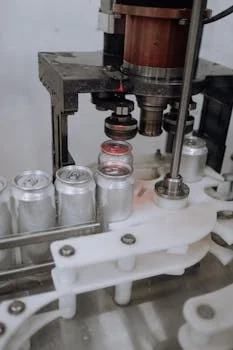
MBR process trains integrate biological oxidation with membrane filtration, replacing secondary clarification with a physical barrier. Membranes sit submerged in, or beside, the bioreactor so biomass stays in the tank while clean permeate is drawn through the pores. That differs from conventional plants, which separate solids by gravity in a secondary clarifier.
Raw wastewater usually passes screening and grit removal, then optional primary clarification, before entering the bioreactor. Mixed liquor suspended solids (MLSS) in an MBR typically run 8–12 g/L, versus 2–4 g/L in conventional activated sludge, so biodegradation is denser per cubic metre of tankage. After the bioreactor, permeate pumps pull treated water through the membrane modules while concentrated sludge recirculates. Operators watch transmembrane pressure and flux together; when TMP climbs at constant flux, a maintenance clean is scheduled before permeability collapses.
Key components of an MBR system include:
- Bioreactor: Contains aerobic and anoxic zones for organic matter degradation and nutrient removal (nitrification/denitrification).
- Membrane Module: The heart of the system, comprising thousands of hollow fibers or flat sheets made from materials like PVDF (polyvinylidene fluoride) or PTFE (polytetrafluoroethylene), with pore sizes typically ranging from 0.04–0.4 μm. These membranes act as a physical barrier.
- Aeration System: Provides oxygen to microorganisms in the aerobic zone and scours the membrane surface to prevent fouling, crucial for maintaining membrane flux.
- Permeate Pump: Draws treated water through the membranes.
- Backwash System: Periodically reverses flow or uses air to dislodge accumulated solids from the membrane surface, restoring flux.
Optimal operation relies on precise process parameters: MLSS concentrations are maintained at 8–12 g/L, hydraulic retention time (HRT) typically spans 4–8 hours, and sludge retention time (SRT) extends from 20–50 days, contributing to robust biological treatment and reduced sludge production. Membrane flux, the rate at which permeate passes through the membrane, commonly ranges from 15–30 LMH (liters per square meter per hour). Energy consumption for Dutch MBR installations typically falls between 0.4–0.8 kWh/m³, which is a notable improvement over the 0.6–1.2 kWh/m³ often observed in conventional systems, primarily due to reduced aeration requirements for sludge and the absence of secondary clarifier energy. An integrated package such as the MBR Membrane Bioreactor Wastewater Treatment System is often specified when Dutch municipal or industrial clients need a skid-mounted train with matched aeration and permeate pumping.
| Parameter | Typical MBR Range | Unit |
|---|---|---|
| Membrane Pore Size | 0.04–0.4 | μm |
| MLSS Concentration | 8,000–12,000 | mg/L |
| Hydraulic Retention Time (HRT) | 4–8 | hours |
| Sludge Retention Time (SRT) | 20–50 | days |
| Membrane Flux | 15–30 | LMH |
| Energy Consumption (Aeration & Pumping) | 0.4–0.8 | kWh/m³ |
MBR vs. Conventional Wastewater Treatment: Performance and Cost Comparison
MBR effluent quality outperforms clarifier-based activated sludge on BOD, TSS and pathogen retention under the same biological loading. The separation step is a 0.04–0.4 μm membrane rather than gravity settling, so sludge bulking does not push solids into the discharge. That reliability is why Dutch water boards use MBR when the receiving water is a small ecological stream.
MBR permeate typically shows <1 mg/L BOD, <5 mg/L TSS and often <10 mg/L TN, which supports direct discharge to sensitive waters or reuse. Conventional secondary effluent more often sits at 10–30 mg/L BOD, 10–50 mg/L TSS and 10–20 mg/L TN, so tertiary filters may still be required to match 91/271/EEC sensitive-area expectations. Footprint can drop to about 0.5 m²/m³/day for MBR versus about 1.2 m²/m³/day for a conventional layout—roughly 60% less land for the same hydraulic capacity.
Energy for Dutch MBR plants generally ranges from 0.4–0.8 kWh/m³, versus 0.6–1.2 kWh/m³ for conventional trains. Reported savings reach about 20% where secondary clarifiers and excess aeration are removed. Capex for MBR capacity is typically €2,000–€4,000 per m³/day, against €1,500–€3,000 per m³/day for conventional works, but sludge mass often falls 30–50% because SRT is longer. OPEX line items commonly include membrane replacement (€0.05–€0.15/m³), energy (€0.08–€0.16/m³) and labour (€0.02–€0.05/m³), plus chemical cleaning. Where MBR sits in the treatment hierarchy relative to polishing steps, engineers often review secondary vs tertiary wastewater treatment before locking the flowsheet.
Field crews also notice fewer sludge-blanket escapes during wet-weather peaks because the membrane, not a settler, defines solids capture. That operational margin matters when Dutch discharge permits leave little room for TSS spikes after storm inflows.
| Feature | MBR Wastewater Treatment | Conventional Activated Sludge |
|---|---|---|
| Effluent Quality | <1 mg/L BOD, <5 mg/L TSS, <10 mg/L TN | 10–30 mg/L BOD, 10–50 mg/L TSS, 10–20 mg/L TN |
| Footprint Requirement | 0.5 m²/m³/day (approx. 60% less) | 1.2 m²/m³/day |
| Energy Consumption | 0.4–0.8 kWh/m³ (up to 20% savings) | 0.6–1.2 kWh/m³ |
| CAPEX (per m³/day capacity) | €2,000–€4,000 | €1,500–€3,000 |
| OPEX (per m³) | €0.25–€0.50 (lower sludge handling costs) | €0.30–€0.60 (higher sludge handling costs) |
| Sludge Production | Lower (longer SRT) | Higher (shorter SRT) |
| Reliability | High, consistent effluent quality | Can be affected by sludge settling issues |
2025 Cost Benchmarks for Dutch MBR Projects
Dutch MBR capital budgets still cluster between €1.5M and €12M for capacities from about 100 to over 2,000 m³/day, with OPEX typically €0.25–€0.50/m³ of permeate. Municipal packages in the 500–2,000 m³/day band often land at €3M–€8M. Industrial trains that need heavier pretreatment and specialty membranes start near €1.5M at 100 m³/day and can exceed €12M above 2,000 m³/day when waste strength or automation rises.
OPEX shares are roughly 40% energy, 30% membrane replacement every 5–10 years, 20% labour and 10% chemicals and consumables. A PLC-controlled chemical dosing for MBR membrane cleaning keeps NaOCl and citric acid cleans on schedule and holds labour near €0.02–€0.05/m³. Municipal ROI windows of 5–10 years are driven by compliance and avoided land purchase. Food, beverage and pharma plants often see 3–7 years when reuse credits and discharge-fee savings are counted, especially where energy falls 20%+ versus conventional aeration.
EU Cohesion Fund support and Water Authority grants (for example Waterschap Rijn en IJssel programmes for advanced nutrient removal) can shrink net capex. A 500 m³/day industrial MBR sized for complex Rotterdam-area wastewater might budget about €3.2M capex and €0.32/m³ OPEX and still clear a six-year payback when reuse and compliance benefits are included. Flat-sheet modules such as DF Series PVDF flat sheet membranes for submerged MBR applications are often compared on flux (15–25 LMH) and replacement interval when OPEX models are built.
Procurement teams should also stress-test the model at winter temperatures around 10–12 degC, when biological kinetics slow and operators sometimes raise MLSS or extend HRT within the 4–8 hour band to hold nitrification. Those seasonal adjustments change blower duty and therefore the energy share of OPEX.
| Cost Category | Typical Range (Netherlands, 2025) | Notes |
|---|---|---|
| CAPEX (Total Project) | €1.5M–€12M | Dependent on capacity (100–2,000 m³/day) and industrial complexity. |
| Municipal Projects | €3M–€8M | For capacities of 500–2,000 m³/day. |
| Industrial Projects | €1.5M–€12M | For capacities of 100–2,000 m³/day, often higher complexity. |
| OPEX (per m³ treated) | €0.25–€0.50 | Includes energy, membrane replacement, labor, chemicals. |
| Energy Cost Share | ~40% of OPEX | 0.4–0.8 kWh/m³ |
| Membrane Replacement Cost Share | ~30% of OPEX | Membranes replaced every 5–10 years. |
| Labor Cost Share | ~20% of OPEX | Reduced compared to conventional systems. |
| ROI (Typical) | 3–10 years | Faster for industrial, slower for municipal. |
| Municipal ROI | 5–10 years | Driven by compliance, reduced land use. |
| Industrial ROI | 3–7 years | Driven by effluent reuse value, energy savings. |
How much do MBR and RO units cost?
MBR and RO unit costs stack when Dutch plants need permeate suitable for process reuse rather than discharge alone. The MBR stage usually carries the larger share of biological and solids-separation capex at €2,000–€4,000 per m³/day of MBR capacity, while a downstream reverse-osmosis block is sized on permeate flow and recovery, not on raw COD. Combined industrial packages that polish MBR permeate through RO for boiler or process make-up commonly sit inside the same €1.5M–€12M project envelope cited for complex Dutch industrial MBRs, with RO adding membrane vessels, antiscalant dosing and concentrate handling on top of the bioreactor.
Budget equations used by EPC teams start from hydraulic capacity, peak COD and required conductivity. A 500 m³/day MBR at about €3.2M may need an RO train of similar daily volume if reuse demand matches permeate production; RO OPEX then adds energy for high-pressure pumps and periodic membrane cleanings beyond the MBR’s €0.25–€0.50/m³ baseline. When only discharge compliance is required, skip RO and stop at MBR permeate. When conductivity or dissolved organics must fall further, size RO on MBR permeate quality (<1 mg/L BOD, <5 mg/L TSS) so fouling rates stay predictable.
What drives combined MBR and RO project cost?
Combined MBR and RO project cost is driven by peak flow, recovery target, concentrate disposal route and pretreatment intensity ahead of the bioreactor. High FOG or grit loads force dissolved-air flotation or fine screens before membranes, which raises civil and equipment spend even when the membrane area itself is unchanged. Concentrate from RO may need sewer discharge fees or further treatment, so the full water balance—not only the permeate price—belongs in the ROI sheet.
Top 5 MBR Membrane Suppliers in the Netherlands: Technical Specs and Selection Criteria
MBR membrane supplier selection in the Netherlands turns on pore size, flux, local service and proven industrial references, not brochure claims. Procurement teams compare PVDF versus PTFE, submerged versus cross-flow hydraulics, and spare-part lead times inside the Benelux service network.
- Triqua: A prominent Dutch supplier offering MemTriq® (cross-flow) and SubTriq® (submerged) MBR systems. Their standard membranes are 0.04 μm PVDF (polyvinylidene fluoride) with typical flux rates of 20–50 LMH, suitable for capacities ranging from 10–200 m³/day. Triqua focuses on custom solutions for complex industrial wastewater.
- Xylem Netherlands: Leveraging GE membranes, Xylem offers robust MBR solutions. Their systems typically feature 0.1 μm PVDF membranes, achieving flux rates of 25–30 LMH, with capacities from 50–1,000 m³/day. Xylem case studies in the Netherlands have documented up to 20% energy savings compared to conventional systems.
- EnviroChemie: Specializing in custom industrial MBR systems, EnviroChemie provides flexible membrane options, including 0.03–0.4 μm membranes. Their solutions are designed for demanding industrial applications, with capacities ranging from 100–5,000 m³/day, often incorporating advanced pretreatment.
- Sperta Membrane: While China-based, Sperta Membrane has a distribution presence in the Netherlands, offering cost-effective MBR membrane modules. Their DF Series PVDF flat sheet membranes for submerged MBR applications typically feature a 0.1 μm pore size, 15–25 LMH flux, and capacities from 32–135 m³/day.
- Hydranautics: A global leader in membrane technology, Hydranautics supplies MBR membranes, often featuring 0.4 μm PTFE (polytetrafluoroethylene) material. These membranes are known for their chemical resistance and high permeability, with flux rates typically between 20–40 LMH and capacities from 50–2,000 m³/day.
When selecting an MBR membrane supplier, key criteria include:
- Membrane Material: PVDF is common for its durability and chemical resistance; PTFE offers superior chemical and temperature resistance for challenging industrial wastewaters.
- Pore Size: Ranging from 0.03–0.4 μm, impacting effluent quality and fouling propensity.
- Flux Rate (LMH): Higher flux reduces membrane area but can increase fouling risk.
- Energy Consumption (kWh/m³): Directly affects OPEX, influenced by aeration and pumping efficiency.
- Certifications: Ensure compliance with Dutch/EU standards (e.g., CE marking, ISO 14001 for environmental management).
- Local Support: Availability of technical support, spare parts, and service in the Netherlands.
| Supplier | Membrane Type/Material | Pore Size (μm) | Typical Flux (LMH) | Capacity Range (m³/day) | Key Feature for Netherlands Market |
|---|---|---|---|---|---|
| Triqua | MemTriq®/SubTriq® PVDF | 0.04 | 20–50 | 10–200 | Dutch-based, complex industrial focus |
| Xylem Netherlands | GE Membranes (PVDF) | 0.1 | 25–30 | 50–1,000 | Strong local presence, energy efficiency |
| EnviroChemie | Custom Industrial (various) | 0.03–0.4 | Varies | 100–5,000 | Tailored industrial solutions |
| Sperta Membrane | DF Series PVDF Flat Sheet | 0.1 | 15–25 | 32–135 | Cost-effective, Dutch distribution |
| Hydranautics | PTFE (Hollow Fiber) | 0.4 | 20–40 | 50–2,000 | Chemical resistance, high permeability |
Dutch Compliance and Permitting for MBR Wastewater Treatment Plants
Dutch MBR permitting still rests on Council Directive 91/271/EEC plus the national Water Act (Waterwet), which together set effluent and discharge conditions for an omgevingsvergunning. Earlier guidance under 91/271/EEC used secondary minima of BOD <25 mg/L, COD <125 mg/L and TSS <35 mg/L, with sensitive-area nutrient targets often near <10 mg/L TN and <1 mg/L TP. The 2024 recast, Directive (EU) 2024/3019, keeps those secondary concentration tables as a baseline while adding broader agglomeration coverage from 1,000 p.e. and staged tertiary/quaternary duties for larger plants; according to EUR-Lex, 91/271/EEC is repealed from 1 August 2027.
Under the Waterwet, any discharge to surface water or sewer needs permit limits that can go beyond EU floors for industrial pollutants. Food and beverage sites face strict nutrient caps; pharmaceutical plants must show Active Pharmaceutical Ingredient control; textile mills need colour removal. MBR trains help because they deliver log 4–6 pathogen reduction and keep TSS stable when clarifiers would fail. Municipal omgevingsvergunning timelines typically run 6–12 months; complex industrial dossiers with novel waste streams often take 12–18 months because of impact studies and consultation.
Designers preparing permit packages should document design flux (15–30 LMH), expected energy (0.4–0.8 kWh/m³) and contingency for membrane cleaning chemicals so regulators can see how the plant stays inside limits during CIP events. That paperwork shortens questions during the 6–18 month review window.
Selection checklist and who should use this guide
Plant engineers comparing Dutch MBR options should walk a short checklist before freezing the P&ID:
- Confirm peak and average flow in m³/day plus COD/BOD ratio and FOG load.
- Decide whether discharge or reuse sets the permeate target, including any RO stage.
- Check available plot area against about 0.5 m²/m³/day for MBR versus 1.2 m²/m³/day conventional.
- Verify omgevingsvergunning nutrient limits against expected TN <10 mg/L and TP <1 mg/L performance.
- Model OPEX at 0.4–0.8 kWh/m³ plus membrane replacement every 5–10 years.
- Confirm local spare-part and CIP chemical supply inside the Netherlands.
- Stress-test winter biology at 10–12 degC within the 4–8 hour HRT band.
Who this is for: municipal utilities, food/beverage and pharma EPCs, and procurement managers sizing 100–2,000 m³/day trains on constrained Dutch sites. Who should look elsewhere: very dilute municipal flows where a well-settling conventional plant already meets permit limits without land pressure, or projects that only need coarse primary treatment. Next step: gather influent data and permit drafts, then request a technical quotation with flow, COD and discharge limits so equipment sizing can be checked against the €1.5M–€12M Dutch cost band.
Frequently Asked Questions
What is the difference between MBR and conventional wastewater treatment?
MBR combines activated sludge with membrane filtration at 0.04–0.4 μm pore size, so secondary clarifiers are not required and permeate typically reaches <1 mg/L BOD. Conventional trains rely on gravity settling, need larger footprints, and usually discharge 10–30 mg/L BOD. Dutch and EU sensitive-area permits often force conventional plants into extra tertiary filters that an MBR already provides through the membrane barrier.
How much energy does an MBR system use in the Netherlands?
Dutch MBR plants typically consume 0.4–0.8 kWh/m³ for aeration and permeate pumping, compared with 0.6–1.2 kWh/m³ on many conventional activated-sludge trains. Documented industrial cases report energy reductions around 20% when secondary clarifiers are removed and aeration is tuned for 8–12 g/L MLSS. Exact figures still depend on wastewater strength, flux setpoint and how aggressively membranes are air-scoured.
What are the maintenance requirements for MBR membranes?
MBR membranes need chemical cleaning with NaOCl and citric acid about every 3–6 months to control fouling and hold design flux. Membrane modules are commonly replaced every 5–10 years depending on wastewater chemistry and CIP discipline. Dutch plants often automate backwash and dosing so labour stays near €0.02–€0.05/m³ while operators still inspect transmembrane pressure trends weekly.
Can MBR systems handle high-strength industrial wastewater?
MBR systems treat high-strength industrial wastewater effectively when pretreatment protects the membranes. Dissolved-air flotation for fats and oils, pH correction and fine screening are routine ahead of the bioreactor. Dutch food, beverage and pharmaceutical plants use MBR on COD loads up to about 5,000 mg/L once FOG and grit are controlled, with suppliers sizing MLSS, SRT and flux around the peak organic load.
What is the typical ROI for an MBR system in the Netherlands?
Typical ROI is 5–10 years for municipal projects and 3–7 years for industrial projects in the Netherlands. Payback shortens when permeate replaces freshwater for cooling or process use and when sludge disposal volumes fall with longer SRT. Energy savings of 20%+ versus conventional aeration and avoided tertiary filters also improve the cash-flow model used by Dutch procurement teams.