Why Wastewater Treatment Plant Costs Vary So Widely in Cambodia
In 2025, wastewater treatment plant costs in Cambodia range from $3,000 to $6,000 per m³/day of capacity, depending on scale and treatment technology. For example, Svay Rieng’s $30.6M plant (6,800 m³/day) equates to $4,500/m³/day, while Sihanoukville’s $20M project suggests $3,500/m³/day for smaller municipal systems. Industrial plants, such as food processing and textiles, typically cost 20–30% more due to higher pretreatment requirements. This guide breaks down cost components, local financing options, and ROI calculations for projects from 100 m³/day to 20,000 m³/day.
The economy of scale drives cost variance in the Cambodian market. A decentralized 100 m³/day package plant for a residential development in Siem Reap may require an investment of $6,000/m³/day because fixed costs for engineering, mobilization, and control systems cannot be amortized over a large volume. Large-scale municipal projects, like the Svay Rieng benchmark ($4,500/m³/day for 6,800 m³/day), benefit from bulk procurement and centralized civil works. As capacity crosses the 10,000 m³/day threshold, costs often stabilize near $3,500/m³/day, provided the technology remains conventional.
Technology selection significantly shifts the capital expenditure (CAPEX) vs. operational expenditure (OPEX) balance. Conventional Activated Sludge (CAS) remains the budget-friendly baseline, costing roughly 30% less in equipment than Membrane Bioreactor (MBR) systems. However, in urban centers like Phnom Penh or Sihanoukville, where land acquisition costs range from $150 to $300/m², the smaller footprint of an MBR membrane bioreactor for high-efficiency industrial treatment often justifies the higher initial equipment cost. In rural areas like Svay Rieng, where land is available at $50–$100/m², larger CAS lagoons or oxidation ditches are more economically viable.
| Project Scale (m³/day) | Estimated Cost per m³ (USD) | Total Estimated CAPEX (USD) | Typical Technology |
|---|---|---|---|
| 100 - 500 | $5,500 - $6,500 | $550K - $3.25M | Integrated Package (MBR/WSZ) |
| 1,000 - 5,000 | $4,500 - $5,500 | $4.5M - $27.5M | SBR / Activated Sludge |
| 5,000 - 10,000 | $3,500 - $4,500 | $17.5M - $45M | CAS / Oxidation Ditch |
| 20,000+ | $3,000 - $3,500 | $60M+ | Large-scale Municipal CAS |
Cost Breakdown: What Drives the $20M–$90M Price Tag?
Civil works represent 40% to 50% of the total investment for a Cambodian wastewater treatment plant, often totaling $12M to $25M for a 10,000 m³/day facility. This includes heavy excavation, reinforced concrete tanks, and the construction of administrative buildings. In coastal regions like Koh Kong or Sihanoukville, civil costs can escalate by 15% due to the need for specialized anti-corrosive concrete additives and more complex soil stabilization for heavy tank structures.
Equipment procurement accounts for 30% to 40% of the budget, with a significant portion dedicated to the treatment process itself. For industrial applications requiring high-purity discharge, an underground package sewage treatment plant for municipal projects or a dedicated DAF system for industrial pretreatment is essential. Automation and control systems add another $150,000 to $500,000 depending on the level of remote monitoring required by the operator. Import duties range from 10% to 25% on mechanical equipment, though exemptions are often available for projects within Special Economic Zones (SEZs).
Soft costs, including Environmental Impact Assessments (EIA), engineering design, and permitting, typically consume 10% to 15% of the budget. EIA fees for large-scale projects can range from $50,000 to $200,000. Design costs are generally benchmarked at $200 to $500 per m³/day of capacity. A 10% contingency fund is standard practice to mitigate risks associated with currency volatility and potential logistics delays.
| Component | Percentage of Total Cost | Key Cost Drivers in Cambodia |
|---|---|---|
| Civil Works | 40 - 50% | Concrete, excavation, soil stabilization, piping |
| Mechanical Equipment | 30 - 40% | Pumps, blowers, MBR/DAF units, import duties |
| Engineering & Permitting | 10 - 15% | EIA fees, design, MoE compliance audits |
| Labor & Installation | 5 - 10% | Local labor ($5-$15/hr) vs. expat supervisors |
| Contingency | 10% | Currency fluctuation and supply chain buffer |
Municipal vs. Industrial Plants: Cost Comparison for Cambodia
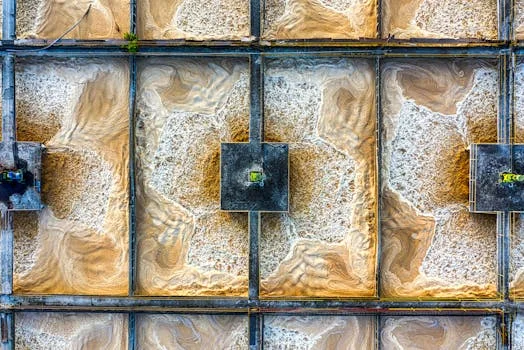
Industrial wastewater treatment plants in Cambodia typically cost $4,000 to $7,000 per m³/day of capacity, reflecting a 20-40% premium over municipal systems due to complex chemical profiles. Municipal plants focus on Biological Oxygen Demand (BOD) and pathogen removal, targeting E. coli reduction of 99.9%. Industrial facilities must handle high Chemical Oxygen Demand (COD), fats, oils, and greases (FOG), and heavy metals, necessitating advanced pretreatment stages like Dissolved Air Flotation (DAF), which can add $1.2M to $2.5M to the CAPEX of a 1,000 m³/day plant.
Operational costs diverge significantly between these sectors. Municipal OPEX usually ranges from $0.15 to $0.40/m³, primarily driven by electricity for aeration and sludge disposal. Industrial OPEX can reach $0.30 to $0.80/m³ because of intensive use of coagulants, flocculants, and pH adjustment chemicals. A textile factory might spend $2.5M on a 500 m³/day plant, whereas a municipal plant of the same capacity would cost approximately $1.8M but lack the specialized chemical dosing units required for dye removal.
Compliance and monitoring costs are another differentiator. Industrial operators face stricter discharge limits, such as <50 mg/L COD for textile effluent compared to the <120 mg/L often permitted for municipal discharge. This requires continuous monitoring systems and regular laboratory testing, which can cost between $50,000 and $150,000 annually. Understanding the DAF vs. sedimentation cost comparison for industrial pretreatment is vital for optimizing the budget.
| Parameter | Municipal Plant | Industrial Plant (Textile/Food) |
|---|---|---|
| CAPEX per m³/day | $3,000 - $5,000 | $4,000 - $7,000 |
| OPEX per m³ | $0.15 - $0.40 | $0.30 - $0.80 |
| COD Discharge Limit | < 120 mg/L | < 50 - 80 mg/L |
| Primary Technology | CAS / SBR | DAF + Biological + Chemical Dosing |
Financing Options for Wastewater Projects in Cambodia
Grants from international development agencies are the most common financing vehicle for large-scale municipal wastewater infrastructure in Cambodia, covering between 30% and 70% of total CAPEX. The $30.6M Svay Rieng plant is a prime example of Japanese ODA providing 100% grant funding for critical infrastructure. The World Bank and Asian Development Bank (ADB) provide blended finance options that combine low-interest loans with technical assistance grants to improve project bankability for provincial towns.
For industrial projects and private developers, the Ministry of Economy and Finance (MEF) facilitates low-interest loans specifically for green infrastructure and environmental compliance. Commercial banks like ACLEDA offer specialized financing for industrial upgrades, though interest rates are higher, typically ranging from 8% to 12% APR. Public-Private Partnerships (PPPs) using Build-Operate-Transfer (BOT) models are also used to distribute the financial burden between the state and private investors over a 20-to-30-year period.
Local incentives provide additional financial relief for wastewater investments. Projects located within Special Economic Zones (SEZs) are often eligible for tax holidays and exemptions on import duties for treatment equipment. These exemptions require formal approval from the Council for the Development of Cambodia (CDC) and the Ministry of Commerce. Planners may look at Kigali’s wastewater treatment plant costs and financing options to see how emerging economies utilize similar grant-loan hybrids to fund urban sanitation.
ROI Calculator: Is Your Wastewater Project Financially Viable?
A 1,000 m³/day industrial wastewater treatment plant in Cambodia typically achieves a payback period of 3 to 7 years when water reuse and fine avoidance are factored into the financial model. To calculate the Return on Investment (ROI), engineers must weigh the total CAPEX against annual operational savings and potential revenue. For a factory currently paying $1.00/m³ for municipal water and facing potential fines of $20,000 per year for non-compliance, the installation of a treatment system becomes a strategic financial asset.
The primary revenue stream for municipal plants is the sale of treated effluent for irrigation or industrial cooling, priced between $0.10 and $0.30/m³. For industrial users, the "revenue" is often the avoided cost of raw water intake. If a facility reuses 70% of its treated water, it can save over $250,000 annually in water procurement costs alone. Emerging carbon credit markets offer $5 to $15 per ton of CO2e for projects that include methane capture from anaerobic digesters, providing a secondary income source that can shorten the payback period by 12–18 months.
The standard ROI formula for these projects is: ROI = (Annual Savings + Revenue - OPEX) / CAPEX * 100. For a $4M plant with $100,000 in annual OPEX, $500,000 in water savings, and $100,000 in avoided fines, the ROI would be 12.5% per annum. This data-driven approach allows procurement managers to justify the budget to stakeholders by demonstrating that the plant pays for itself well within its 20-year design life.
| Financial Metric | Example: 1,000 m³/day Industrial Plant |
|---|---|
| Total CAPEX | $4,500,000 |
Annual OPEX ($0
Get a Free Quote — Tell Us About Your Project
Contact Us
|