Why Dire Dawa Needs Wastewater Treatment Plants Now
Dire Dawa’s municipal water demand grew by 22% between 2020 and 2024, significantly outpacing the development of centralized sewage infrastructure and creating a critical deficit in water security (ScienceDirect 2023). As Ethiopia’s second-largest city and a primary industrial hub, the gap between water consumption and treatment capacity has reached a breaking point. Current data from the World Bank (2024) indicates that only 30% of industrial wastewater in Ethiopia receives any form of treatment before discharge, with Dire Dawa’s expanding textile and food processing sectors contributing approximately 60% of the city’s total organic pollution load. This lack of oversight has led to the contamination of seasonal watercourses and groundwater reserves, which are vital for the region’s arid-climate survival.
The regulatory landscape is shifting rapidly to address these failures. Ethiopia’s National Water Policy (2021) now mandates secondary treatment for all urban centers with populations exceeding 50,000. With Dire Dawa’s population now surpassing 500,000 residents, the city is under immediate federal pressure to achieve compliance. Beyond population growth, Dire Dawa faces unique hydrogeological challenges: an arid climate that intensifies the impact of pollutants, seasonal flooding that overwhelms existing drainage, and a historic lack of comprehensive sewer networks (MS Consultancy 2022). For industrial facility managers, the investment in on-site treatment is no longer optional; it is a prerequisite for operational licensing and a strategic hedge against the city's rising water costs.
the scarcity of water in the eastern corridor of Ethiopia makes wastewater reclamation a financial necessity. Municipal engineers are increasingly looking toward "purple pipe" systems for non-potable reuse in irrigation and industrial cooling. By implementing advanced compact underground WWTP solutions for Dire Dawa’s space-constrained sites, the city can transition from a linear "use-and-dispose" model to a circular water economy, preserving its limited freshwater for human consumption.
Wastewater Treatment Plant Costs in Dire Dawa: 2025 Benchmarks by Capacity
In Dire Dawa, the capital expenditure (CAPEX) for a 500 m³/day municipal wastewater treatment plant currently ranges between $1.2M and $1.8M USD, including civil works, electromechanical equipment, and localized installation costs. These benchmarks are extrapolated from Ethiopia’s Second Urban Water Supply and Sanitation Project (SUWSSP), which established a baseline of approximately $5,050 USD per m³/day of capacity for large-scale municipal infrastructure ($505M for 100,000 m³/day). However, for smaller decentralized systems or industrial facilities, the cost per unit of capacity is significantly higher due to the absence of economies of scale and the need for specialized pretreatment stages.
For industrial projects in Dire Dawa, cost structures vary by sector. Textile facilities, which must manage complex dye loads and high chemical oxygen demand (COD), typically face costs of $1,100–$1,500 USD per m³/day. In contrast, food processing plants (e.g., beverage or dairy) often require less intensive chemical pretreatment, resulting in costs of $800–$1,200 USD per m³/day. Engineering data shows that the cost per m³/day decreases by approximately 30% once plant capacity exceeds 2,000 m³/day, as fixed costs for control systems, site security, and laboratory facilities are distributed over a larger volume.
| Plant Capacity (m³/day) | Primary Application | Estimated CAPEX (USD) | Cost per m³/day (USD) | Avg. OPEX (USD/m³) |
|---|---|---|---|---|
| 50 | Small Industrial / Hotel | $60,000 – $95,000 | $1,200 – $1,900 | $0.45 – $0.60 |
| 500 | Industrial Park / District | $1.2M – $1.8M | $2,400 – $3,600* | $0.30 – $0.45 |
| 2,000 | Municipal Sub-center | $2.4M – $3.2M | $1,200 – $1,600 | $0.20 – $0.35 |
| 10,000 | Large Municipal Plant | $8.5M – $11.5M | $850 – $1,150 | $0.15 – $0.25 |
*Note: Mid-range plants often include higher-spec tertiary treatment for reuse, increasing the per-unit cost compared to basic municipal systems.
Operating expenses (OPEX) in Dire Dawa are heavily influenced by electricity tariffs and the availability of imported treatment chemicals. Municipal plants typically operate at $0.15–$0.30 USD/m³, while industrial plants—particularly those utilizing Membrane Bioreactors (MBR) for high-purity effluent—can reach $0.50 USD/m³. When evaluating these figures, it is useful to consider how Nakuru’s industrial WWTP costs compare to Dire Dawa’s, as both regions face similar logistical constraints and water scarcity issues.
Technology Comparison: MBR vs. Activated Sludge vs. DAF for Dire Dawa’s Wastewater

Membrane Bioreactor (MBR) systems provide 99% Total Suspended Solids (TSS) removal and require a 60% smaller physical footprint than conventional activated sludge, making them the technical benchmark for Dire Dawa’s high-organic-load industrial zones. In Dire Dawa, where influent COD levels often reach 800–1,200 mg/L due to low per-capita water use and high industrial concentration, traditional biological systems often struggle with sludge settling and effluent consistency. Selecting the appropriate technology requires a trade-off between initial CAPEX and long-term operational stability.
Conventional Activated Sludge (CAS) remains the most common choice for large municipal projects due to its lower upfront cost ($600–$900 USD/m³/day). However, CAS requires significant land area—a commodity that is becoming increasingly expensive in Dire Dawa’s urban core—and produces large volumes of sludge that require costly stabilized disposal. For industrial facilities dealing with fats, oils, and grease (FOG) or high TSS from textile dyes, a Dissolved Air Flotation (DAF) system is often required as a pretreatment step. DAF systems can remove over 90% of TSS and insoluble COD, protecting downstream biological processes at a CAPEX of $500–$800 USD/m³/day.
| Feature | MBR System | Activated Sludge (CAS) | DAF (Pretreatment) |
|---|---|---|---|
| CAPEX | High ($1,100 - $1,600/m³) | Medium ($600 - $900/m³) | Low ($500 - $800/m³) |
| Footprint | Minimal (Integrated) | Large (Requires Clarifiers) | Small to Medium |
| Effluent Quality | Tertiary (Reuse Ready) | Secondary | Pretreated (Not Final) |
| Energy Use | High (Membrane Scouring) | Medium (Aeration) | Low (Recirculation Pump) |
| Maintenance | High (Membrane Cleaning) | Medium (Sludge Return) | Low (Mechanical Skimmers) |
For facility managers prioritizing water reclamation, MBR systems for Dire Dawa’s high-organic-load industrial wastewater are often the most viable path to meeting Ethiopia's strict discharge standards (BOD <30 mg/L). In cases where heavy industrial pollutants are present, integrating DAF pretreatment for Dire Dawa’s industrial wastewater with high FOG or dye content can prevent membrane fouling and reduce the overall OPEX of the secondary treatment stage. For a deeper dive into the financial implications of these technologies, engineers should review detailed MBR system cost and efficiency data for industrial applications.
ROI Calculator: How to Estimate Payback for Your Dire Dawa WWTP Project
The return on investment (ROI) for an industrial wastewater treatment plant in Dire Dawa is typically achieved within 3 to 5 years when factoring in water reuse savings and the avoidance of regulatory non-compliance fines. In a region where industrial water tariffs can reach $1.20 USD/m³, every cubic meter of water recycled on-site represents a direct reduction in operational overhead. For municipal projects, the ROI timeline is longer—usually 7 to 10 years—but is justified by the broader economic benefits of improved public health and environmental preservation.
To calculate a preliminary ROI for a Dire Dawa project, follow this three-step financial model:
- Calculate Annual Water Savings: Multiply your daily wastewater volume by the percentage of water you intend to reuse (typically 30–50% for MBR systems). Multiply this by the local water tariff ($1.20 USD/m³) and 350 operating days.
- Estimate Avoided Costs: Include Ethiopia’s Environmental Protection Authority (EPA) fines, which can reach $50,000 USD per year for major non-compliance. Also, factor in the reduction in discharge fees if your local utility charges based on effluent volume or strength.
- Factor in OPEX and Amortization: Subtract the annual operating costs (energy, chemicals, labor, and sludge disposal) from your total savings. Divide the total CAPEX by this net annual saving to find the payback period in years.
Case Study Example: A 1,000 m³/day textile plant in Dire Dawa installs a $1.5M MBR system. By reusing 40% of its water, it saves $168,000 annually. By avoiding $50,000 in EPA fines and reducing discharge fees by $40,000, the total annual benefit is $258,000. After subtracting $100,000 in OPEX, the net annual gain is $158,000, leading to a payback period of approximately 9.5 years. However, if water tariffs rise or the plant increases reuse to 70% (via RO integration), the payback drops to 5.2 years.
For decision-makers looking for comparative models, it is helpful to see how Cambodia’s WWTP costs and ROI models compare to Ethiopia’s, as both markets are currently navigating rapid industrialization with evolving environmental mandates.
Compliance and Permitting: What Dire Dawa’s WWTP Projects Must Meet
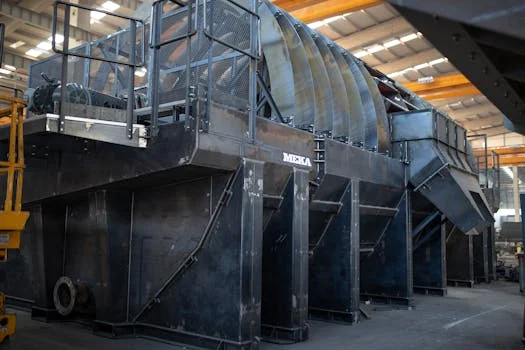
Ethiopia’s National Effluent Standards require that all discharged wastewater meet a Biological Oxygen Demand (BOD) limit of <30 mg/L and Total Suspended Solids (TSS) of <50 mg/L, though industrial sectors like textiles face even stricter thresholds. For any facility discharging into public water bodies or municipal sewers in Dire Dawa, compliance is monitored by the regional Environmental Protection Authority (EPA) and the Dire Dawa Water Supply and Sewerage Authority (DDWSSA). Failure to meet these standards can result in daily fines or the suspension of business licenses.
The permitting process for a new WWTP in Dire Dawa typically follows this trajectory:
- Environmental Impact Assessment (EIA): Required for all plants with a capacity exceeding 500 m³/day. This must be conducted by a certified third-party consultant and approved by the EPA (estimated timeline: 3–6 months).
- DDWSSA Technical Review: Engineers must submit detailed design drawings, including hydraulic profiles and process flow diagrams, to ensure the plant aligns with the city's master plan (estimated timeline: 2–4 months).
- Construction Permit: Once the EIA and technical designs are approved, a local construction permit is issued, often requiring a fee based on the project's total valuation (typically $500–$5,000 USD).
A common pitfall in Dire Dawa is underestimating the cost of sludge management. Ethiopia’s Construction Design and Supervision Works Proclamation (2013) stipulates that sludge must be stabilized and disposed of in designated landfills. Landfill tipping fees in the region range from $20 to $50 per ton, depending on the moisture content and chemical profile of the sludge. Engineers must design for high-efficiency dewatering (e.g., filter presses or centrifuges) to minimize these ongoing compliance costs.
How to Choose a Wastewater Treatment Plant Supplier in Ethiopia
Selecting a WWTP supplier for a project in Dire Dawa requires a rigorous evaluation of their local support capabilities and their understanding of Ethiopia’s specific environmental constraints. While international firms often provide superior membrane technology and automation, the lack of a local service presence can lead to catastrophic downtime if spare parts must be imported from overseas. A successful partnership balances technical excellence with logistical reliability.
Use the following checklist when evaluating potential suppliers:
- Local References: Can the supplier provide case studies of operational plants in Dire Dawa, Addis Ababa, or Hawassa?
- After-Sales Support: Does the supplier have a dedicated service team or an Ethiopian partner firm for emergency repairs?
- Compliance Guarantee: Will the supplier contractually guarantee that the treated effluent will meet Ethiopia’s EPA standards for your specific industry?
- Energy Efficiency: Given Dire Dawa’s energy costs, what is the specific energy consumption (kWh/m³) of the proposed system?
- Climate Adaptation: Is the equipment designed to handle Dire Dawa’s high ambient temperatures and potential for dust/silt infiltration?
One strategic approach used by textile plants in the Dire Dawa Industrial Park is bundling the procurement of the WWTP with water reuse systems (such as Reverse Osmosis). This "turnkey" approach can reduce total CAPEX by 15–20% by streamlining the engineering and installation phases. ensuring the supplier complies with the Construction Design and Supervision Works Proclamation (2013) is essential to avoid legal delays during the commissioning phase.
Frequently Asked Questions
How much does a small wastewater treatment plant cost in Dire Dawa?
A small-scale package plant with a capacity of 50 m³/day typically costs between $60,000 and $95,000 USD. This price includes the prefabricated treatment units, basic civil works, and installation. Underground systems (such as the WSZ series) are often preferred for hotels or small factories to save surface space, though they may require additional excavation costs.
What are the ongoing costs of running a WWTP in Dire Dawa?
OPEX generally ranges from $0.15 to $0.50 USD per cubic meter of treated water. The largest cost drivers are electricity (approx. 40% of OPEX), chemical consumables like coagulants and disinfectants (30%), and labor/sludge disposal (30%).
How long does it take to build a wastewater treatment plant in Dire Dawa?
For municipal plants (over 1,000 m³/day), the timeline from permitting to commissioning is usually 18 to 24 months. Industrial facilities using prefabricated or integrated systems can often be completed in 6 to 12 months, depending on the speed of EIA approval.
What are the penalties for not treating wastewater in Dire Dawa?
The Ethiopian Environmental Protection Authority can levy fines of up to $50,000 USD per year for significant discharge violations. Additionally, facilities may be forced to cease operations until a compliant treatment system is installed and verified.
Can I reuse treated wastewater for industrial processes in Dire Dawa?
Yes. Treated effluent from MBR systems is generally suitable for cooling towers, dust suppression, and irrigation. For high-precision industrial reuse (e.g., textile dyeing or boiler feed), tertiary treatment involving Reverse Osmosis (RO) is required, which typically adds $300–$500 USD per m³/day to the initial CAPEX.