What Industrial Park Wastewater Looks Like in 2026
Industrial park wastewater in 2026 arrives at a single header pipe from a tenant mix that most plants were never designed to handle in aggregate. Pharmaceutical, textile, chemical, food-processing, and metal-finishing tenants typically discharge simultaneously, and diurnal COD swings of 2–4× are routine because batch reactors in upstream plants dump on shift changes (HydropureWater field data, 2026). A 2024 edible-fungi park retrofit in China documented in China Water & Wastewater 40(22):73-77 (2024) had to expand biological capacity specifically because new tenants pushed influent COD above the original 4,000 mg/L design point within five years of commissioning.
For engineering design, a defensible 2026 baseline for a mixed Chinese or Southeast Asian industrial park is COD 800–6,000 mg/L, BOD 250–2,400 mg/L, TSS 200–1,500 mg/L, pH 5–9, oil & grease up to 300 mg/L, and temperature 20–40 °C. The BOD/COD ratio sits between 0.25 and 0.45 in a healthy mixed park; below 0.25 indicates refractory organics from dye, pesticide, or solvent tenants, and forces a chemical or advanced-oxidation polishing step downstream. A well-instrumented equalization basin with online pH and conductivity probes is the cheapest insurance against shock loads that would otherwise kill biomass in the biological stage. The coagulant dosing system design at the headworks should be sized to handle the upper bound of this envelope, not the average.
| Parameter | Typical range (mixed park, 2026) | Design driver |
|---|---|---|
| COD | 800–6,000 mg/L | Drives biological stage sizing |
| BOD | 250–2,400 mg/L | Sets aeration demand |
| BOD/COD | 0.25–0.45 | <0.25 = refractory, needs polishing |
| TSS | 200–1,500 mg/L | Sets pre-treatment solids load |
| pH | 5–9 | Equalization must normalize before biology |
| Oil & grease | up to 300 mg/L | DAF required upstream of biology |
| Temperature | 20–40 °C | Favors mesophilic anaerobic |
Discharge Limits and Reuse Targets That Drive the Design
Discharge limits dictate the train's polishing stage more than influent characteristics do, and in 2026 the three regimes a CETP designer will encounter are China GB 18918-2002, EU IED 2010/75/EU, and EPA categorical pretreatment under 40 CFR. GB 18918-2002 Grade 1A — COD ≤50 mg/L, BOD ≤10 mg/L, SS ≤10 mg/L, ammonia ≤5 mg/L — is the most common reuse-grade target in Chinese industrial parks and effectively forces an MBR or chemical polishing stage. EU IED reference values for organic-load discharges from chemical installations typically run COD 100–160 mg/L depending on sector BREF, with BAT-AEL ranges tightening through 2024-2026 (per EU CWW BREF, 2024 update).
EPA categorical pretreatment limits under 40 CFR 414 (organic chemicals), 430 (pulp/paper), and 433 (metal finishing) apply at the tenant outfall before the central header, which is why most US-style CETPs require tenant-side compliance plus a central polishing train. Where the park recycles to cooling tower make-up or process water, the 2026 working targets approach WHO drinking-water aesthetics and EU Drinking Water Directive 98/83/EC values, though park-to-park reuse rarely needs to meet full potability. The discharge limit you must meet is the single largest determinant of CAPEX — moving from GB 1A (≤50 mg/L COD) to industrial reuse (≤30 mg/L COD) typically adds 20–30% to the polishing-stage cost.
| Standard | COD limit | BOD limit | SS limit | NH₃-N limit |
|---|---|---|---|---|
| GB 18918-2002 Grade 1A | ≤50 mg/L | ≤10 mg/L | ≤10 mg/L | ≤5 mg/L |
| EU IED 2010/75/EU (chemical sector BREF range) | 100–160 mg/L | — | — | — |
| EPA 40 CFR 433 (metal finishing) | Tenant-side categorical | Tenant-side categorical | Tenant-side categorical | — |
| Cooling-tower reuse target (typical 2026) | ≤30 mg/L | ≤5 mg/L | ≤5 mg/L | ≤1 mg/L |
The Four-Stage COD and BOD Removal Train
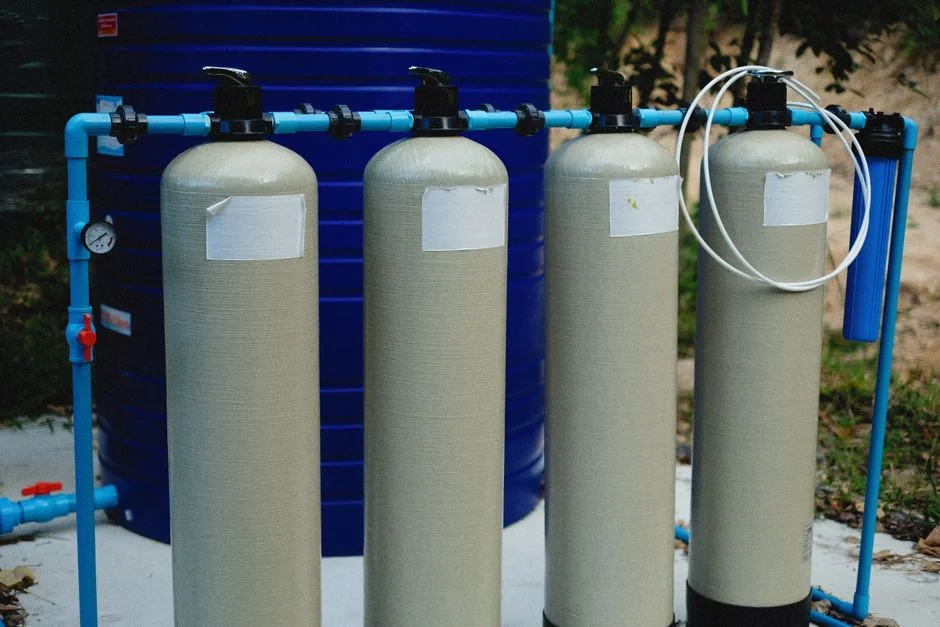
Designing a CETP removal train as four non-negotiable stages is the only defensible approach in 2026 for a mixed park with COD 800–6,000 mg/L. Stage 1 — Pre-treatment — pairs a rotary bar screen headworks (6 mm aperture) with grit removal, flow-equalization (8–24 h HRT depending on diurnal swing), and a DAF pre-treatment unit to strip oil, grease, and colloidal solids. Expected performance: COD reduction 15–30% and TSS reduction 60–80% (standard DAF benchmarks, HydropureWater field data 2026). This stage alone prevents the biological reactors from being overwhelmed by rags, grit, and free oil.
Stage 2 — Primary/anaerobic — uses a UASB or IC reactor when influent COD exceeds 2,000 mg/L consistently. Operating at mesophilic temperature (30–38 °C) with an organic loading rate of 5–15 kg COD/m³·day, the anaerobic stage delivers 60–80% COD reduction and produces biogas at 0.30–0.45 m³ per kg COD removed, which typically offsets 30–60% of the plant's thermal energy demand. The edible-fungi park retrofit (China Water & Wastewater, 2024) added UASB capacity specifically to absorb COD loads that had risen 35% over five years from new tenant connections.
Stage 3 — Biological — applies anoxic/oxic (A/O), AAO, or SBR depending on ammonia and TN targets. On anaerobic effluent, A/O and SBR remove a further 70–90% of COD and greater than 95% of BOD at mixed-liquor suspended solids of 3,000–5,000 mg/L. SBR is favored where footprint is constrained; A/O is favored where denitrification must reach TN <15 mg/L for GB 1A compliance. Stage 4 — Polishing — uses an MBR membrane bioreactor with submerged PVDF at 0.1–0.2 μm nominal pore size, or a Fenton/electro-Fenton step where the influent is recalcitrant (BOD/COD <0.25). The 2004 petrochemical EF study and the 2020 ScienceDirect EC/UL-EC review both confirm that Fenton and electrochemical polishing can knock another 40–70% off residual COD to reach <50 mg/L when biological treatment alone cannot.
Technology Selection: Which Train Fits Which Park
Selecting the right 2026 train comes down to two questions: where does the influent COD sit, and what discharge limit must the park meet. For high-strength parks with COD above 3,000 mg/L and BOD/COD above 0.4 — typical of chemical, pulp/paper, and concentrated food tenants — the answer is anaerobic + A/O + MBR, with expected effluent <50 mg/L COD and <10 mg/L BOD. The anaerobic stage carries 60–80% of the COD reduction, the A/O polishes BOD and ammonia, and the MBR guarantees the suspended-solids barrier required for GB 1A. This is the configuration most Chinese full-scale CETPs adopted between 2018 and 2025.
For mid-strength parks (COD 800–2,000 mg/L) dominated by food or pharma tenants with biodegradable influent, an SBR or A/O train alone is sufficient and anaerobic can be skipped unless the operator wants biogas. For textile and dye tenants pushing COD into the 1,500–4,000 mg/L range with refractory color and BOD/COD around 0.20, Fenton or electrochemical polishing must follow the biological step — per the 2020 EC/UL-EC concrete-effluent study and 2004 petrochemical EF data, the polishing step delivers 40–70% COD reduction on the recalcitrant fraction. For space-constrained park upgrades, PVDF flat-sheet MBR modules cut reactor footprint by roughly 60% versus conventional activated sludge at the same MLSS loading, and the consistent PLC-controlled chemical dosing upstream keeps membrane fouling manageable.
| Influent profile | Recommended train | Expected effluent COD | Footprint notes |
|---|---|---|---|
| COD >3,000 mg/L, BOD/COD >0.4 (chemical, food) | UASB/IC + A/O + MBR | <50 mg/L | Standard; biogas offsets 30–60% of heat |
| COD 800–2,000 mg/L, biodegradable (food, pharma) | SBR or A/O + MBR | <50 mg/L | Skip anaerobic; smallest reactor volume |
| COD 1,500–4,000 mg/L, refractory (textile, dye) | A/O + Fenton/EC polishing + MBR | <50 mg/L | Add chemical oxidation step |
| Space-constrained upgrade | MBR replacing CAS | <50 mg/L | ~60% footprint reduction vs CAS |
Sludge, Monitoring, and Cost Considerations for 2026
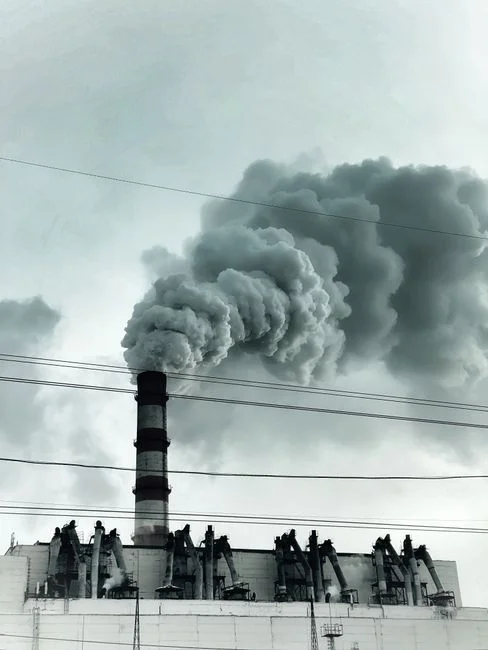
Sludge handling is the line item most CETP designers underestimate in 2026. Combined biological and chemical sludge production runs 0.3–0.6 kg dry solids per kg COD removed, which means a 5,000 m³/day CETP treating 2,000 mg/L COD will generate 3–6 tonnes DS/day. A plate-and-frame filter press dewatering the sludge to <65% moisture produces a cake that meets landfill disposal thresholds in most jurisdictions, and a well-designed high-efficiency sedimentation tank upstream thickens the sludge to 2–4% DS before pressing, cutting polymer consumption by roughly 20%.
Online monitoring is now standard rather than optional. UV254 correlation sensors calibrated against laboratory COD deliver ±5% accuracy across the 10–500 mg/L range and feed the aeration-control loop, which typically trims blower energy by 15–25% versus constant-DO setpoint control. For a 2026 CETP sized 500–10,000 m³/day, capital cost lands in the band of $220–$520 per m³/day of installed capacity (HydropureWater engineering estimates, 2026), and operating cost lands at $0.08–$0.22 per m³ treated. MBR configurations add approximately 15% to CAPEX versus CAS, but they cut sludge disposal cost by roughly 25% because of the higher MLSS and lower yield — for a comprehensive view of online BOD monitoring that supports compliance, that article walks through sensor selection and aeration loop tuning. The edible-fungi park retrofit (2024) demonstrated that biological-stage expansion alone, without polishing upgrades, lifted treatment capacity 35% at a marginal CAPEX of about $280 per m³/day.
| Cost / parameter | 2026 band | Notes |
|---|---|---|
| CAPEX (CETP, 500–10,000 m³/day) | $220–$520 per m³/day | Modular skid-mount reduces site work |
| OPEX | $0.08–$0.22 per m³ | Energy ~50%, chemicals ~20%, sludge ~15% |
| MBR CAPEX premium vs CAS | +~15% | Offset by ~25% lower sludge disposal cost |
| Sludge yield | 0.3–0.6 kg DS per kg COD removed | Filter press to <65% moisture |
| UV254 sensor accuracy | ±5% vs lab COD | Supports real-time aeration control |
Frequently Asked Questions
What is the realistic 2026 COD range for a mixed industrial park CETP influent? A defensible engineering envelope is COD 800–6,000 mg/L with BOD/COD 0.25–0.45. A 2024 edible-fungi park retrofit documented COD loads rising 35% over five years as new tenants connected, confirming that designs must be sized to the upper bound, not the average (China Water & Wastewater 40(22):73-77, 2024).
Which four stages make up a 2026 industrial park COD/BOD removal train? Pre-treatment (bar screen + DAF), anaerobic (UASB/IC) for COD >2,000 mg/L streams, biological (A/O or SBR), and polishing (MBR or Fenton/EC). Together these stages deliver 15–30% COD removal in pre-treatment, 60–80% in anaerobic, 70–90% in biological, and 40–70% in polishing on refractory residuals.
When is Fenton or electro-Fenton polishing required instead of MBR alone? When BOD/COD is below 0.25, indicating refractory organics from textile, dye, or solvent tenants. Per the 2004 petrochemical EF study and 2020 EC/UL-EC review, Fenton polishing delivers 40–70% additional COD reduction on the recalcitrant fraction to bring effluent below 50 mg/L.