What Is a Municipal Sewage Treatment Solution in 2026?
A municipal sewage treatment solution in 2026 is an integrated train of headworks, biological treatment (MBR, SBR, MBBR, or A²/O), clarification, disinfection, and sludge dewatering. It is sized to EPA NPDES, EU urban wastewater rules, or China GB 18918-2002 Class 1A. Typical CAPEX is $250–$1,800 per m³/day; MBR reaches COD ≤50 mg/L and TSS ≤5 mg/L.
Per the EPA municipal wastewater framing, municipal sewage is the combined collection from homes, businesses, and industries delivered through a sewer network to a central treatment works. The 2026 solution train moves influent through seven defined stages: rotary bar screening (3–10 mm aperture) → grit removal → biological treatment → secondary clarification or membrane separation → tertiary filtration or lamella sedimentation → disinfection (UV, chlorine, or ClO₂) → sludge thickening and mechanical dewatering to 18–28% dry solids.
Three shifts define the 2026 market versus the 2015 baseline still visible on EPA municipal wastewater materials: (1) MBR has displaced conventional activated sludge as the default for new builds under 20,000 m³/day, (2) automation layers (PLC plus SCADA with remote telemetry) are now standard on plants as small as 500 m³/day, and (3) water-reuse-ready effluent — turbidity ≤1 NTU and fecal coliform ≤200 CFU/100 mL — is being specified into more than 60% of new municipal tenders in arid regions. A true solution package includes the process design basis, mass-balance, equipment selection, controls architecture, and commissioning plan sized to the design flow and effluent permit — not just tanks and pumps delivered to site.
2026 Regulatory Discharge Limits: EPA, EU, and China Compared
EPA secondary treatment standards — 30-day average BOD ≤30 mg/L, TSS ≤30 mg/L, and minimum 85% removal — were codified at 40 CFR 133 and remain the federal floor for US municipal plants. According to 40 CFR § 133.102, those numeric floors are unchanged: BOD₅ 30-day average ≤30 mg/L (7-day ≤45 mg/L), TSS 30-day ≤30 mg/L (7-day ≤45 mg/L), and 85% minimum monthly removal, with optional CBOD₅ substitution at 25/40 mg/L. State-level NPDES permits routinely impose stricter nitrogen and phosphorus limits for impaired waters even though the federal secondary floor has not been rewritten.
The EU Urban Waste Water Treatment Directive (91/271/EEC) set the long-standing European secondary ceiling: BOD ≤25 mg/L, COD ≤125 mg/L, TSS ≤35 mg/L for plants serving more than 10,000 PE, with total phosphorus ≤2 mg/L and total nitrogen ≤15 mg/L for sensitive receiving waters. Earlier guidance under 91/271/EEC used those TP ≤2 mg/L and TN ≤15 mg/L sensitive-area values; Directive (EU) 2024/3019 (recast, OJ L 12.12.2024) keeps secondary BOD ≤25 mg/L, COD ≤125 mg/L and TSS ≤35 mg/L in Annex I Table 1, and sets tighter tertiary limits in Table 2 — TP 0.7 mg/L (10,000–150,000 p.e.) or 0.5 mg/L (≥150,000 p.e.), and TN 10 mg/L or 8 mg/L for the same bands — with phased deadlines through 2039–2045. The China GB 18918-2002 Class 1A standard — the strictest of three Chinese tiers — remains the de-facto benchmark for new municipal builds across Asia, the Middle East, and Africa where Chinese EPCs are active: COD ≤50 mg/L, BOD ≤10 mg/L, TSS ≤10 mg/L, NH₃-N ≤5 mg/L, TN ≤15 mg/L, TP ≤0.5 mg/L.
Class 1A has effectively become a 2026 export specification: any plant delivered by a Chinese OEM to a region without a binding local standard is typically warranted to Class 1A, and most EU tenders still accept Class 1A as evidence of performance at least as strict as the prior UWWTD sensitive-area envelope. Engineers sizing for EU projects after 2024 must also check whether the site falls under the 2024/3019 tertiary or quaternary (micropollutant) phase-in schedule, not only the 91/271/EEC table values shown below.
| Parameter | EPA 40 CFR 133 (Secondary) | EU UWWTD 91/271/EEC (>10,000 PE) | China GB 18918-2002 Class 1A |
|---|---|---|---|
| BOD (mg/L) | ≤30 (85% min. removal) | ≤25 | ≤10 |
| COD (mg/L) | — | ≤125 | ≤50 |
| TSS (mg/L) | ≤30 | ≤35 | ≤10 |
| NH₃-N (mg/L) | — | — | ≤5 (≤8 in winter) |
| TN (mg/L) | — | ≤15 (sensitive areas) | ≤15 |
| TP (mg/L) | — | ≤2 (sensitive areas) | ≤0.5 |
| Fecal coliform (CFU/100 mL) | — | — | ≤1,000 |
The Four Core Biological Processes: MBR, SBR, MBBR, and A²/O
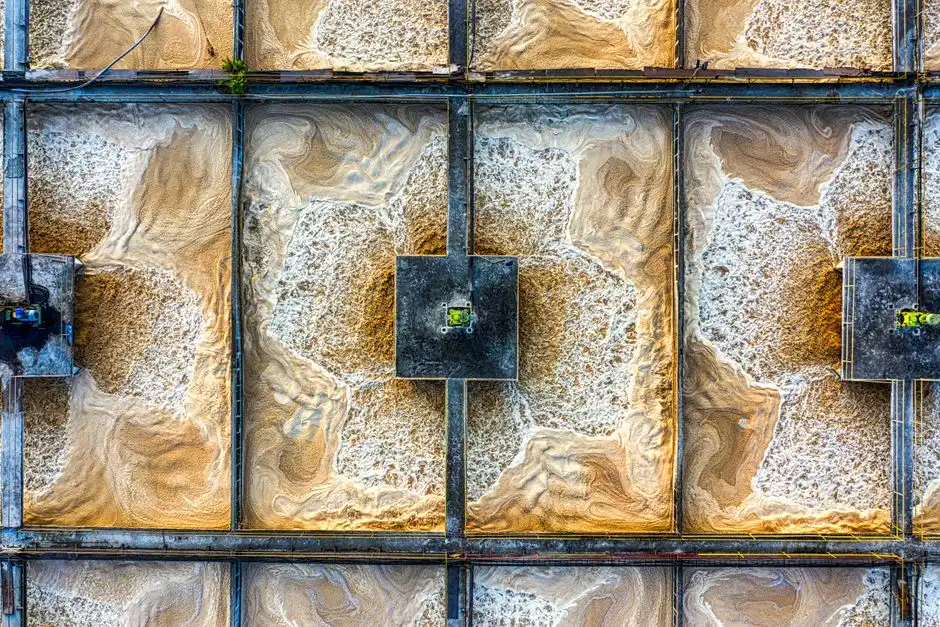
The biological reactor is the central technical decision in any municipal sewage works; the four dominant 2026 options are MBR, SBR, MBBR, and A²/O, each with distinct footprint, energy, and effluent signatures. MBR (Membrane Bioreactor) couples a suspended-growth activated-sludge basin with submerged PVDF flat-sheet or hollow-fiber membranes at 0.1–0.4 µm pore size, achieving effluent COD ≤50 mg/L, TSS ≤5 mg/L, and NH₃-N ≤1 mg/L in roughly 60% of the footprint required by an equivalent conventional activated-sludge (CAS) plant. MBR submerged membrane geometry delivers 10–20× lower pumping energy than external cross-flow designs, and a properly specified MBR integrated wastewater treatment system with PVDF flat-sheet MBR membrane modules covers the 10–2,000 m³/day reuse-grade municipal band where footprint or effluent quality drive the decision.
SBR (Sequencing Batch Reactor) runs fill–react–settle–decant in a single tank, eliminating the separate secondary clarifier and simplifying controls. Most plants we size in the 1,000–50,000 m³/day band with intermittent community flows land on SBR when footprint is flexible and the target is BOD ≤20 mg/L and TSS ≤20 mg/L. MBBR (Moving Bed Biofilm Reactor) suspends free-floating HDPE biofilm carriers (typically 500–700 m²/m³ specific surface area) in an aerated basin; MLSS in the carrier-filled zone can reach 8,000–12,000 mg/L, the system handles shock loads better than CAS, and it is the most retrofit-friendly option — an MBBR hybrid stage dropped into an existing aeration basin typically delivers 2–3× the capacity in the same footprint. A²/O (Anaerobic/Anoxic/Oxic) is the standard single-pass train for biological nitrogen and phosphorus removal: anaerobic zone releases TP, anoxic zone denitrifies, oxic zone nitrifies, and the recycle ratio controls TN to ≤15 mg/L with TP ≤0.5 mg/L — the configuration Chinese, EU, and most US permits require when biological P removal is mandated.
| Process | Footprint (m² per m³/day) | Energy (kWh per m³ treated) | Effluent BOD / TSS (mg/L) | Indicative CAPEX ($ per m³/day) | Best-fit flow band |
|---|---|---|---|---|---|
| MBR | 0.10–0.20 | 0.45–0.70 | ≤5 / ≤5 | $900–$1,800 | 10–2,000 m³/day (reuse-grade) |
| SBR | 0.18–0.30 | 0.30–0.45 | ≤20 / ≤20 | $400–$900 | 1,000–50,000 m³/day |
| MBBR | 0.15–0.25 | 0.28–0.42 | ≤20 / ≤30 (with clarifier) | $350–$750 | 500–25,000 m³/day (retrofit-friendly) |
| A²/O | 0.20–0.35 | 0.30–0.50 | ≤10 / ≤10 (with TP removal) | $300–$700 | 5,000–200,000 m³/day (BNR required) |
Process selection ultimately turns on three numbers: design flow, available footprint, and the permit's TN/TP limits. For a deeper head-to-head on biofilm options, see the MBBR vs IFAS comparison; for membrane operating-economics, the membrane replacement cost optimization reference is the practical follow-up.
The Supporting Equipment Stack: Screening, DAF, Disinfection, and Sludge
A working 2026 municipal sewage works includes the supporting equipment that wraps the biological reactor — the difference between a tank on a site and a commissioned plant discharging to permit. The headworks starts with a rotary mechanical bar screen at 3–10 mm aperture to protect downstream pumps and biology from rags and debris; the GX-series covers 4–300 m³/h across 13 model sizes and is the standard first stage on Chinese-OEM municipal plants. Pre-treatment then moves through grit removal and, where fats/oils/grease (FOG) are present, a DAF pre-treatment system — the DAF line covers 4–300 m³/h across 13 models and removes fine suspended solids, oil and grease, and colloidal matter that would otherwise overload the biological stage.
Tertiary clarification typically uses a lamella settler at 20–40 m²/h surface loading, which delivers 30% lower chemical consumption than conventional settling tanks; the high-efficiency sedimentation tank fits the same footprint envelope. Disinfection for reuse-grade effluent is increasingly specified as chlorine dioxide over UV or free chlorine: a ClO₂ disinfection generator in the 50 g/h to 20,000 g/h capacity band delivers 99.9% microbial kill and maintains a residual that resists regrowth in long distribution lines — a key advantage over UV, which provides no residual. The sludge line closes the loop: a plate-and-frame filter press in the 1–500 m² filtration area band dewaters thickened waste-activated sludge to 18–28% dry solids cake, meeting the typical ≥20% DS threshold for off-site landfill or incineration. For headworks screening, a rotary mechanical bar screen sized to peak flow is the first equipment item in the BoQ.
2026 Cost Benchmarks: CAPEX and OPEX per m³/day
Turnkey CAPEX for a 2026 municipal wastewater treatment plant runs $250–$1,800 per m³/day of treatment capacity. The lower end applies to SBR or A²/O at flows above 10,000 m³/day on flat, accessible sites; the upper end applies to MBR with reuse-grade disinfection and a full sludge dewatering line, typically on a constrained urban footprint. OPEX runs $0.18–$0.55 per m³ treated and is dominated by three line items: aeration energy at 45–60% of OPEX (the single largest cost in any aerobic plant), chemical dosing (ClO₂, polymer, P-precipitant) at 10–20%, and sludge hauling or further treatment at 10–15%.
MBR carries an OPEX premium of $0.05–$0.12 per m³ over CAS, driven by membrane aeration and periodic clean-in-place (CIP) chemicals, but this is partially offset by the elimination of separate clarifier and tertiary sand-filter OPEX. Small-package plants below 500 m³/day carry a 20–40% CAPEX premium per m³/day versus mid-scale plants at 5,000–20,000 m³/day — a relevant delta for village, resort, and remote-camp applications. Costs vary ±25% by region, with China-fabricated equipment typically 30–45% below EU/US-built equivalents at equivalent process performance (HydropureWater 2026 tender data).
| Capacity band | Typical process | CAPEX ($ per m³/day) | OPEX ($ per m³ treated) | Main CAPEX drivers |
|---|---|---|---|---|
| <500 m³/day | WSZ package / SBR / MBR package | $1,200–$1,800 | $0.40–$0.55 | Factory assembly, controls, civil works at small scale |
| 500–5,000 m³/day | A²/O, SBR, MBR | $600–$1,200 | $0.25–$0.45 | Civil basins, blower room, MBR cassette |
| 5,000–50,000 m³/day | A²/O, MBBR, MBR | $300–$700 | $0.20–$0.35 | Concrete basins, blower sizing, MV switchgear |
| >50,000 m³/day | A²/O, MBR (large) | $250–$450 | $0.18–$0.28 | Economy of scale, in-situ civil works |
How to Select the Right Solution: A 2026 Decision Framework
Four rules-of-thumb cover roughly 90% of 2026 municipal tenders and let an engineer pick a process in a single meeting without re-reading the article. The first decision is flow band: below 500 m³/day, the underground package sewage treatment plant in the 1–80 m³/h WSZ range fits residential subdivisions, schools, and remote sites; for the same flow band with a reuse-grade permit, specify an MBR package instead.
At 500–5,000 m³/day with biological P removal mandated, A²/O plus DAF pre-treatment and ClO₂ polishing meets GB 18918-2002 Class 1A and EU sensitive-area limits. Above 5,000 m³/day with strict reuse targets, MBR is the default: a flat-sheet MBR with lamella pre-stage and ClO₂ polishing covers GB 1A, EU sensitive-area, and most US Title 22 reuse envelopes. For retrofit of an existing CAS plant with a capacity constraint, drop an MBBR hybrid stage or an MBR cassette into the existing aeration basin to gain 2–3× capacity in the same footprint. Always confirm influent BOD/COD/TN/TP and the binding permit before locking in a process — selection driven by effluent limits alone, without influent characterization, is the most common 2026 design error (HydropureWater field data, 2026).
Use this selection checklist before freezing the process basis:
- Confirm design average and peak flow (m³/day) and diurnal peaking factor.
- List influent BOD, COD, TSS, TN, TP, and FOG with sampling dates and units.
- Write down the binding permit: EPA NPDES, EU 91/271/EEC or 2024/3019 phase, or GB Class 1A/1B.
- Measure available footprint (m²) and whether retrofit of existing basins is allowed.
- Decide reuse vs discharge — turbidity ≤1 NTU and residual disinfectant change the disinfection choice.
- Budget aeration energy (kWh per m³) and sludge cake hauling to ≥20% dry solids.
- Require PLC/SCADA with remote telemetry on plants from about 500 m³/day upward.
Who this is for: plant engineers, EPC contractors, and procurement managers specifying municipal sewage works from roughly 10 m³/day package plants to mid-scale BNR trains. Who should look elsewhere: buyers needing only industrial high-COD or hazardous wastewater packages, or pure-water RO/EDI trains without a sewage biology stage. Next step: send design flow, influent lab sheet, and the permit clause to request a sized process BoQ via request a municipal treatment quote.
Frequently Asked Questions
What does a municipal sewage treatment solution include?
A complete train includes headworks screening, grit removal, biological treatment, secondary clarification or membrane separation, tertiary filtration, disinfection, sludge thickening and dewatering, plus a PLC/SCADA control system. Every stage must be sized to the design flow and the binding effluent permit. Omitting headworks or sludge dewatering is the usual reason a “package” fails commissioning against Class 1A or NPDES limits.
How much does a municipal wastewater treatment plant cost in 2026?
Turnkey CAPEX runs $250–$1,800 per m³/day and OPEX runs $0.18–$0.55 per m³ treated, depending on process selection, capacity, and the reuse-grade or standard effluent target. Plants below 500 m³/day sit at the high end of CAPEX per m³/day. Aeration energy alone often accounts for 45–60% of OPEX on aerobic municipal trains.
MBR vs SBR — which is better for a small municipal plant?
SBR is the right pick for 1,000–5,000 m³/day where footprint is flexible and the effluent target is GB Class 1B or EU UWWTD baseline BOD ≤25 mg/L. MBR is the right pick below 2,000 m³/day with a reuse or strict Class 1A limit, where the smallest footprint and lowest TSS/turbidity drive the decision. Energy for MBR is typically 0.45–0.70 kWh per m³ treated versus 0.30–0.45 kWh per m³ for SBR under comparable loading.
Which discharge standard applies to a municipal plant in 2026?
EPA NPDES (40 CFR 133 secondary standards plus water-quality-based limits) applies in the US; EU plants follow 91/271/EEC secondary values and, where phased in, Directive (EU) 2024/3019 tertiary limits; China GB 18918-2002 Class 1A remains the common export warranty for Asia, the Middle East, and Africa. See the EU municipal sewage plant engineering guide and the Sindh municipal sewage engineering guide for worked regional examples.
Can a package plant meet municipal discharge limits?
Yes. WSZ underground package plants in the 1–80 m³/h band and properly sized MBR package systems both meet GB 18918-2002 Class 1A and EU UWWTD 91/271/EEC secondary limits when correctly matched to influent load and flow. Match the package hydraulic rating to peak flow, not only average flow, or clarifier and membrane flux will fail under diurnal peaks.