Why Entebbe Industrial Discharge Carries Lake Victoria-Level Stakes
Industrial wastewater treatment in Entebbe must comply with Uganda's National Environment (Standards for Discharge of Effluent into Water or on Land) Regulations, S.I. No. 5/1999, which set maximum permissible BOD at 50 mg/L, COD at 100 mg/L, and TSS at 100 mg/L for discharge into Lake Victoria's watershed. Typical 2026 treatment trains combine rotary bar screening, DAF flotation, A/O biological contact oxidation (WSZ or MBR), and chlorine dioxide disinfection, achieving 85-95% BOD and 92-97% TSS removal before discharge.
Entebbe is not a generic industrial site. Kansiime's 1999 study of natural wetland treatment, cited by 158 follow-on papers, documented that the Kampala-Jinja-Entebbe corridor discharges domestic sewage, industrial wastewater, and other effluents directly into the ecotones bordering Lake Victoria — the shallow transition zones where wetland meets open water and where nutrient assimilation either happens or fails. Twenty-seven years later, the corridor's industrial base has multiplied, but the hydrology has not changed. Every Entebbe discharge enters a trans-boundary watershed shared with Kenya and Tanzania, so compliance is governed as much by the East African Community environmental protocols as by the Uganda National Environment Management Authority (NEMA) gazette.
The regulatory pressure has tightened materially under the Lake Victoria Environmental Management Project (LVEMP), now in Phase III. Where a 2000-era discharge permit focused on BOD and TSS, a 2026 NEMA permit also requires total nitrogen ≤20 mg/L and total phosphorus ≤5 mg/L because nutrient loading — not just organic loading — drives the eutrophication, algal blooms (including toxic Microcystis), and fish-kill events that have closed sections of the shoreline since 2015. For a procurement lead, this changes the technology-selection question: BOD removal is no longer the only design target, and the choice between conventional activated sludge, A/O contact oxidation, and MBR is partly a question of how well each strips nitrogen and phosphorus under Uganda's ambient temperature regime of 21-28 °C.
Uganda NEMA Effluent Limits vs. Typical Entebbe Industrial Influent
The compliance question for any Entebbe plant reduces to a single table: what comes out of the process versus what S.I. No. 5/1999 allows to go into the lake. The thresholds most commonly cited in NEMA compliance audits for discharge into a watercourse are pH 6-9, BOD 50 mg/L, COD 100 mg/L, TSS 100 mg/L, oil & grease 10 mg/L, total nitrogen 20 mg/L, total phosphorus 5 mg/L, and fecal coliforms <10,000 CFU/100 mL. (These are the commonly cited S.I. No. 5/1999 thresholds — confirm against the current NEMA Uganda 2026 gazette before final design sign-off.) Discharging into the Lake Victoria basin triggers the water-course limit set, which is roughly 2× tighter on metals and nutrients than the on-land set.
| Parameter | NEMA S.I. 5/1999 limit (water course) | Brewery raw influent | Dairy raw influent | Fish processing raw influent | Agro-processing raw influent |
|---|---|---|---|---|---|
| pH | 6-9 | 5-7 | 6-8 | 6-8 | 4-9 |
| BOD (mg/L) | 50 | 1,500-4,000 | 800-2,500 | 2,000-6,000 | 500-5,000 |
| COD (mg/L) | 100 | 3,000-8,000 | 1,600-5,000 | 4,000-12,000 | 1,000-10,000 |
| TSS (mg/L) | 100 | 500-1,500 | 400-1,200 | 800-3,000 | 1,000-8,000 |
| Oil & grease (mg/L) | 10 | 50-300 | 100-500 | 200-1,000 | variable |
| Total N (mg/L) | 20 | 30-80 | 40-120 | 150-400 (ammonia-rich) | 20-200 |
| Total P (mg/L) | 5 | 10-30 | 15-50 | 20-60 | 5-80 |
The reduction ratios fall out directly. A brewery at 3,000 mg/L BOD needs 97-99% removal to land at 50 mg/L; a fish processor at 5,000 mg/L BOD needs 99%+ and faces an even harder constraint at 250 mg/L ammonia-nitrogen, which requires biological nitrification before the 20 mg/L TN ceiling. Dairy sits in the middle — 1,500 mg/L BOD is a 96.7% reduction, achievable with A/O contact oxidation plus DAF float, but phosphorus removal still demands chemical precipitation or an enhanced biological step. Agro-processing is the wide-range case: a coffee pulpery and a vegetable cannery look nothing alike, which is why a generic influent characterization is the single most common failure mode in Entebbe EPC designs.
Process Train Selection: Matching Treatment to Entebbe's Dominant Industries
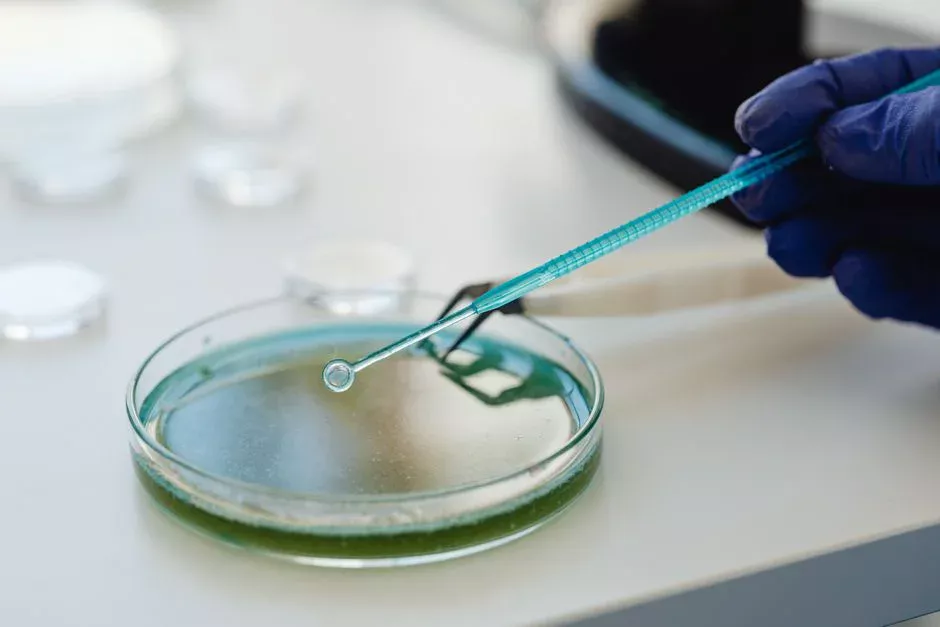
Process selection for an Entebbe plant follows a five-stage logic that is independent of industry: (1) screening, (2) equalization, (3) physical-chemical primary treatment, (4) biological secondary treatment, (5) disinfection. The art is matching the unit operations inside each stage to the influent signature. A GX series rotary bar screen at the headworks protects downstream pumps from the rags, fish offal, and fibrous debris that routinely blind submersible pumps in Entebbe's food and agro plants — a 5 mm aperture bar screen sized to peak flow is the minimum defensible choice.
Physical-chemical stage: the DAF system (13 standard models, 4-300 m³/h) handles the suspended-solids and emulsified-oil load that defines brewery, dairy, and fish-processing wastewater. DAF removes 50-80% of TSS and 60-90% of oil & grease in a single stage with a 10-20 mg/L coagulant dose, which collapses the load on the downstream biological step and prevents the sludge-bulking events that plague activated-sludge plants receiving raw dairy effluent. Where footprint is tight, a lamella clarifier at 20-40 m³/h surface loading can substitute or precede DAF for high-flow pre-sedimentation.
Biological stage: small facilities and trailer-mounted deployments typically use the WSZ underground package plant (1-80 m³/h) — an A/O contact-oxidation unit that ships pre-piped and pre-wired, installs in 8-12 weeks, and runs on a PLC with remote telemetry. For larger plants or sites where the effluent feeds a water-reuse loop (boiler feed, CIP rinse, irrigation), the MBR membrane bioreactor system (10-2,000 m³/day) is the better fit: a 60% smaller footprint than conventional activated sludge, <1 μm effluent turbidity, and consistent BOD <5 mg/L and TN <10 mg/L when operated at 8-12 kg COD/m³·d MLSS loading.
Disinfection: a ClO2 generator (50 g/h to 20,000 g/h) is the closing step, with documented compliance against the EPA, EU Drinking Water Directive 98/83/EC, and WHO guidelines for potable and reuse applications. ClO2 is preferred over chlorine at Entebbe's pH and temperature because it does not form trihalomethanes with the high protein and ammonia load typical of fish and dairy effluent.
| Industry | Headworks | Physical-chemical | Biological | Disinfection | Sludge handling |
|---|---|---|---|---|---|
| Brewery (50-200 m³/d) | GX bar screen, grit removal | DAF + equalization | WSZ A/O package or MBR (if reuse) | ClO2 | Belt press / plate filter press |
| Dairy (20-100 m³/d) | GX bar screen, fat trap | DAF with polyaluminum chloride | WSZ A/O or MBR | ClO2 | Belt press; high sludge volume |
| Fish processing (50-300 m³/d) | GX fine screen 3 mm, grit | DAF + protein recovery float | MBR (nitrification required) | ClO2 at 0.5-1.0 mg/L residual | Screw press; odorous sludge |
| Agro-processing (variable) | GX bar screen, sand separation | Lamella clarifier + DAF | MBR or SBR for variable load | ClO2 | Filter press for high-TSS sludge |
2026 CAPEX and OPEX Reality for Uganda Industrial WWTPs
Budget numbers for an Entebbe project in 2026 need three layers: ex-works equipment cost, inland delivery to Uganda, and lifetime operating cost. Skid-mounted, pre-wired systems sourced ex-works China for a 50 m³/day plant typically run USD 180,000-280,000; a 100 m³/day plant USD 280,000-450,000; a 200 m³/day plant USD 450,000-650,000. Containerized units are capped at roughly 200 m³/day per 40 ft ISO footprint and trade at a 10-15% premium over open skid for the faster 8-12 week install, while civil-built concrete basins drop CAPEX by 20-30% but extend the build to 6-9 months — a critical path item for facilities racing a NEMA consent deadline.
Inland delivery adds the East-Africa logistics premium that most Western vendor quotes silently omit: 10-18% above FOB for Mombasa port transit, customs clearance, Kampala-to-Entebbe road freight, and Uganda's 18% VAT. So the landed CAPEX for a 100 m³/day skid is closer to USD 320,000-530,000 once the container clears Entebbe. OPEX is dominated by power at 35-45%, chemicals 15-25%, labor 15-20%, sludge handling 10-15%, and membrane replacement 5-10% (cross-referenced in the industrial wastewater OPEX guide). For breweries or dairies that reuse the MBR permeate for CIP or boiler feed, the water offset typically repays the MBR CAPEX premium over a conventional A/O system in 2-4 years — a number to put in front of finance.
| Plant size | CAPEX ex-works (USD) | Land in Entebbe incl. VAT (USD) | Annual OPEX range (USD) | Typical delivery |
|---|---|---|---|---|
| 50 m³/day | 180,000-280,000 | 210,000-330,000 | 35,000-55,000 | 8-10 weeks |
| 100 m³/day | 280,000-450,000 | 320,000-530,000 | 60,000-95,000 | 10-12 weeks |
| 200 m³/day | 450,000-650,000 | 520,000-770,000 | 100,000-160,000 | 12-16 weeks |
Supplier Evaluation Checklist for an Entebbe Project
Walking into a vendor meeting without a vetting framework is how Entebbe buyers end up with a system sized for Guangzhou, not for a 28 °C tropical dairy. Use this checklist before signing a purchase order: ISO 9001 certification on the manufacturing scope (not just the company); at least one prior East-Africa reference project the supplier can name with a contactable end user; CE documentation and EPA-equivalent effluent performance data from a comparable influent; on-site commissioning with a qualified engineer, not a local subcontractor; PLC automation with remote monitoring accessible over a Uganda-friendly mobile network; spare parts inventory through a regional agent within 7-14 days; written performance warranty with liquidated-damages terms for non-compliance; and a hydraulic profile sized for peak wet-weather flow, not just average daily flow.
Red flags: any supplier that quotes without asking for a 7-day composite influent characterization or a jar-test on your actual wastewater; any supplier that ships a civil-build drawing set without a process guarantee; any quote in USD ex-works that does not separately enumerate Mombasa port, customs, and inland freight. A skid-mounted, pre-wired, factory-tested delivery model is the natural fit for Uganda's import logistics, because the equipment arrives in a sealed ISO container ready to bolt onto a prepared foundation — a concrete slab, a feed pipe, and a three-phase power drop. For a worked CAPEX example on a high-strength waste stream, see the filter press cost breakdown methodology, which walks through the same line-item logic.
Frequently Asked Questions
What are the NEMA effluent limits for discharge into Lake Victoria from an Entebbe industrial plant? The commonly cited S.I. No. 5/1999 thresholds for discharge into a watercourse are BOD 50 mg/L, COD 100 mg/L, TSS 100 mg/L, oil & grease 10 mg/L, total nitrogen 20 mg/L, total phosphorus 5 mg/L, pH 6-9, and fecal coliforms <10,000 CFU/100 mL (confirm against the current NEMA Uganda 2026 gazette before design sign-off).
How much does a 100 m³/day industrial wastewater plant cost in Uganda in 2026? Ex-works skid-mounted CAPEX is USD 280,000-450,000; landed in Entebbe including 18% VAT, customs, and Mombasa-to-Entebbe freight, USD 320,000-530,000, with annual OPEX of USD 60,000-95,000 (HydropureWater field data, 2026).
Does Uganda's standard apply to breweries and dairies the same way it applies to fish processors? Yes, S.I. No. 5/1999 applies uniformly to industrial discharge, but fish processors face a harder ammonia-nitrogen constraint (typically 150-400 mg/L raw) and usually require MBR or dedicated nitrification rather than a basic A/O package.
Is the East African Community standard different from NEMA Uganda? The EAC framework sets harmonization targets, but the legally binding limit in Uganda is S.I. No. 5/1999 as enforced by NEMA; for the Kenya analog, see the Kenya sulfide discharge standard reference.