Why Printing and Dyeing Mills Need Closed-Loop Water Recycling in 2026
A 200 m³/day printing and dyeing mill draws roughly 6,000 m³/month of freshwater and pays USD 0.40–1.50/m³ in discharge fees across the major textile hubs of India, Bangladesh, Vietnam, and Egypt — that is USD 2,400–9,000/month leaving the site before any production cost is recovered. The 2026 regulatory floor is tightening under all three major regimes a mill answers to: China GB 4287-2012 sets COD at ≤80 mg/L for direct discharge, the India CPCB color limit sits near 400 Hazen, and EU BAT-AEL caps COD at ≤125 mg/L. On top of compliance, H&M, Inditex, and ZARA have written ZLD or ≥50% water reuse clauses into 2026 supplier contracts, so a mill that does not recycle now loses bids as well as water. A correctly designed closed-loop train converts 70–90% of effluent into reuse water at turbidity <1 NTU, TDS <500 mg/L, and hardness <50 mg/L — quality that goes straight back into rinsing and dilution baths. For the engineer building a CAPEX request, the framing is straightforward: water is now a compliance risk, an ESG metric, and a financial line item that the recycle loop can cut by 60–85%. A full 2026 OPEX breakdown for printing and dyeing wastewater plants sits behind that number, and the 2026 India CPCB color discharge standards and treatment reference covers the regulatory detail.
Influent Characterization: What Makes Printing and Dyeing Wastewater Unique
Printing and dyeing wastewater (PDW) is not a municipal-strength stream with extra color bolted on — the salt load, refractory organics, and hourly swings defeat any generic municipal treatment train. Typical influent to the equalization basin runs COD 800–3,000 mg/L, BOD 200–800 mg/L, color 500–5,000 Pt-Co units, TSS 200–700 mg/L, TDS 5,000–15,000 mg/L, pH 8–11, and temperature 30–60°C. The salinity itself is the constraint that breaks biology: NaCl and Na₂SO₄ from dyeing-bath auxiliaries push conductivity above the 2% salinity threshold where nitrification collapses and most heterotrophic removal rates halve (HydropureWater field data, 2025-2026 commissioning logs). A second problem is the hourly composition swing — a single mill may move from reactive to disperse to vat dyes within a shift, so influent COD and color can vary by 2–4× between morning and afternoon batches. The third problem is the chemistry of the color bodies: azo dyes, anthraquinones, and phthalocyanines resist conventional aerobic biodegradation, which is why standalone bio-treatment consistently fails to meet the 400 Hazen color ceiling. The numbers below set the design envelope for everything that follows.
| Parameter | Typical PDW Influent Range | Design Basis (200 m³/day) | Constraint Driver |
|---|---|---|---|
| COD | 800–3,000 mg/L | 2,000 mg/L | Bio + AOP sizing |
| BOD | 200–800 mg/L | 500 mg/L | Aeration demand |
| Color | 500–5,000 Pt-Co | 2,500 Pt-Co | AOP / ozone dose |
| TSS | 200–700 mg/L | 400 mg/L | DAF loading rate |
| TDS | 5,000–15,000 mg/L | 8,000 mg/L | RO recovery, bleed |
| pH | 8–11 | 9.5 | Equalization + dosing |
| Temperature | 30–60°C | 45°C | UASB kinetics, MBR flux |
| Salinity (as NaCl) | 1.5–6% | 3% | MBR MLSS, nitrification |
Because influent swings dominate the design, equalization (8–12 h HRT) is not optional — it is the difference between a stable biological stage and a chronic recovery problem. The Egypt 2026 color discharge compliance guide documents the same characterization pattern across North African mills.
The Four-Stage Process Train: From Effluent to Reuse Water
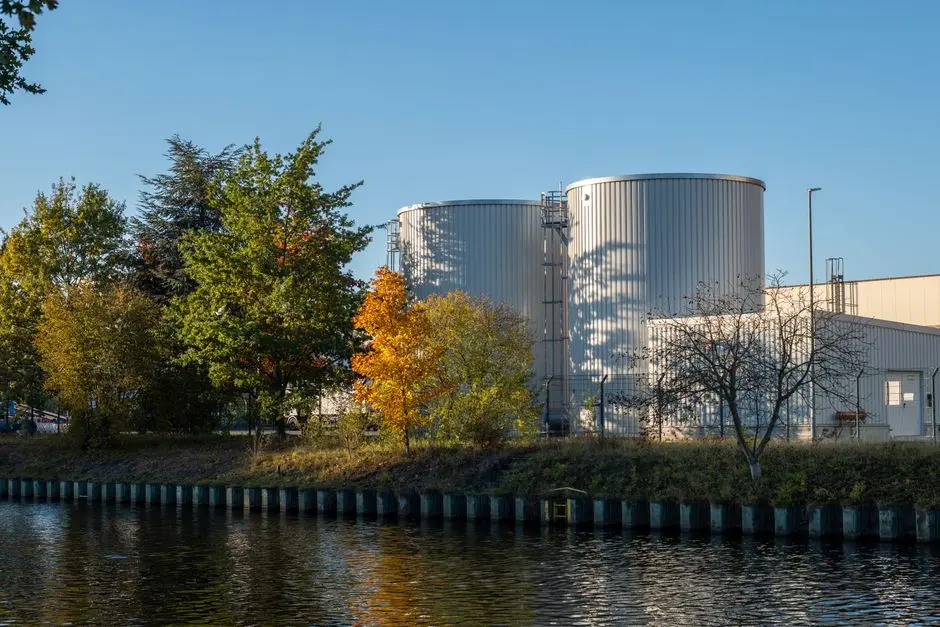
A 70–90% reuse rate is not a single technology's output — it is the sum of four stages, each with a quantified removal target that the engineer can defend in a P&ID review. Stage 1 is pretreatment: rotary bar screen at ≥5 mm aperture, 8–12 h flow equalization, and pH correction to 6.5–7.5 through a PLC-controlled chemical dosing system for pH and coagulant control. Stage 2 is primary physicochemical treatment via a DAF for textile effluent pretreatment, dosed with polyaluminum chloride (PAC 50–150 mg/L) and anionic flocculant — DAF alone takes out 60–80% of TSS, 30–50% of color, and 25–40% of COD before the biological stage sees the water, which keeps the bugs alive and the membranes clean. Stage 3 is secondary biological treatment, with an anaerobic reactor (UASB or IC, HRT 24–48 h) followed by an integrated MBR system for dyeing wastewater fitted with DF series PVDF flat-sheet MBR modules at 0.1 µm; combined anaerobic + MBR removes 60–85% of remaining COD and 50–70% of color, and the MBR permeate already runs <1 NTU turbidity. Stage 4 is tertiary polishing and reuse: ozone or AOP (Fenton, O₃/H₂O₂) destroys the residual color and refractory organics that biology leaves behind — 20–40% additional COD reduction and >95% color removal at this stage — and an industrial RO system for textile water reuse at 65–75% recovery polishes the stream to TDS <500 mg/L, suitable for rinsing and dilution baths.
The piece no competitor addresses is the salt-bleed mass balance. A closed loop that recycles 90% of permeate accumulates NaCl and Na₂SO₄ in the recirculating stream; without a controlled side-stream the conductivity climbs past 8,000 µS/cm inside weeks and RO recovery collapses. The standard practice is a 10–20% RO concentrate bleed to brine handling or evaporation, paired with a plate-and-frame filter press for PDW sludge dewatering to keep the solids side of the mass balance in check. Without the bleed, the system fails. With it, 80–95% reuse is sustained on a continuous basis.
| Stage | Technology | Target Parameter Removed | Removal Efficiency | Reuse-Water Quality After Stage |
|---|---|---|---|---|
| 1 — Pretreatment | Bar screen, equalization, pH correction | Solids ≥5 mm, pH, flow swings | pH 6.5–7.5, 8–12 h HRT buffer | Homogenized feed at neutral pH |
| 2 — Primary | DAF + PAC + anionic flocculant | TSS, color, COD | 60–80% TSS, 30–50% color, 25–40% COD | TSS <100 mg/L, color 1,200–1,800 Pt-Co |
| 3 — Secondary | UASB/IC + MBR (flat-sheet PVDF) | COD, BOD, color, turbidity | 60–85% COD, 50–70% color, >99% TSS | COD 150–300 mg/L, turbidity <1 NTU |
| 4 — Tertiary | Ozone/AOP + RO | Refractory color, residual COD, TDS | 20–40% COD, >95% color, 95–99% TDS rejection | COD <50 mg/L, TDS <500 mg/L, color <10 Pt-Co |
| Side-stream | 10–20% RO concentrate bleed + filter press | Accumulating salts, biosolids | Mass balance sustained | Stable conductivity, <60% cake moisture sludge |
Equipment Selection Matrix: Matching Technology to Plant Scale and Reuse Target
The right train depends on what the mill is trying to achieve: discharge compliance only, mid-range reuse, or full RO-grade recycling. A biological-only train (UASB + conventional activated sludge) delivers 60–70% reuse and meets the easier discharge limits, but it cannot produce RO-quality water and it struggles on the 400 Hazen color ceiling. An MBR-only train lifts reuse to 75–85% and produces near-reuse water at <1 NTU, but it does not remove the dissolved salts that accumulate in a recycle loop. The MBR + RO configuration is the 2026 default for any mill under buyer ZLD pressure: 85–95% reuse, dyeing-bath-grade permeate, and the only path that actually addresses salt buildup. On the anaerobic side, UASB is the lower-CAPEX option with a large footprint and 24–48 h HRT — fine for low-strength, steady streams. The IC reactor costs 30–50% more in CAPEX but takes one-third the footprint and runs at 4–8 h HRT, which is what high-strength, variable PDW needs. On the tertiary side, ozone gives the highest color removal but carries the highest OPEX (USD 0.08–0.15/m³ as O₃ cost alone); Fenton is the lowest CAPEX but produces the most sludge; UV/H₂O₂ AOP is the 2026 default because it cuts sludge volume by 60–70% versus Fenton at comparable color removal. The recommended default 200 m³/day train — rotary screen → equalization → DAF → UASB → MBR → ozone → RO → permeate tank, with plate-and-frame press for sludge — is the same architecture the Springer IoT+BPNN paper studies, and it is what HydropureWater ships as a packaged skid (HydropureWater field data, 2025-2026). A high-efficiency sedimentation tank can substitute for DAF on lower-TSS streams, and a multi-media filter for ultrapure water polishing is recommended upstream of RO when SDI creeps above 3.
| Configuration | Reuse Rate | CAPEX (200 m³/day, USD) | Footprint | Operator Skill | Best Fit |
|---|---|---|---|---|---|
| Biological-only (UASB + ASP) | 60–70% | 220,000–360,000 | Large | Standard | Discharge compliance, low reuse target |
| MBR-only (UASB + MBR) | 75–85% | 300,000–480,000 | Medium | Standard+ | Mid-range reuse, ≤2,000 µS/cm tolerance |
| MBR + RO (default 2026) | 85–95% | 380,000–720,000 | Medium | Advanced | ZLD-adjacent, dyeing-bath reuse, ≥50% buyer mandate |
2026 CAPEX, OPEX, and ROI: The Numbers Decision-Makers Need
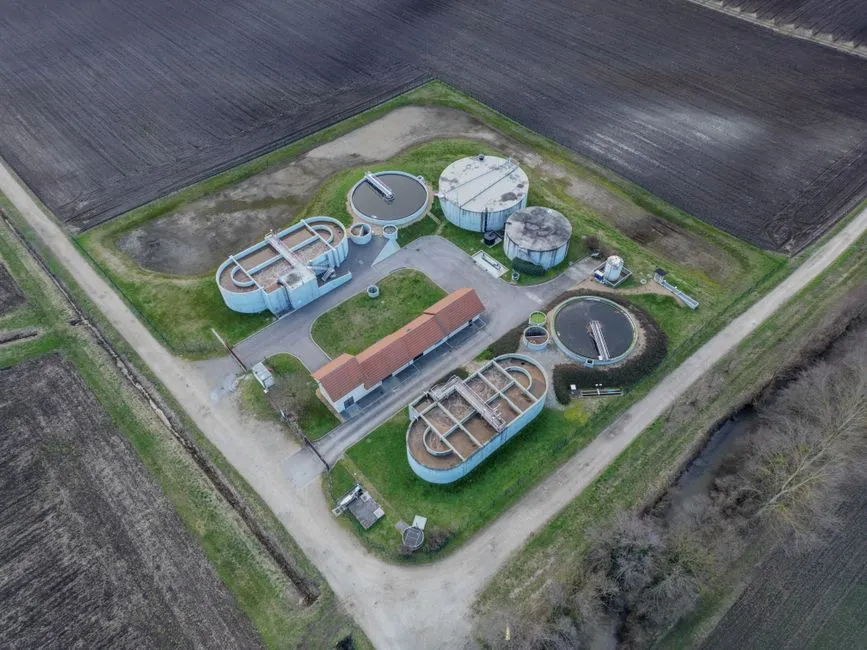
For a 200 m³/day closed-loop PDW reuse system, the 2026 CAPEX range is USD 380,000–720,000 FOB China, driven by automation level, materials of construction (SS304 versus SS316 for high-Cl⁻ streams), and the AOP selection (HydropureWater field data, 2026 quoting window). OPEX breaks down across five lines: energy at USD 0.10–0.25/m³ (the MBR aeration blower and RO high-pressure pump dominate), chemicals at USD 0.08–0.20/m³ (PAC, flocculant, pH reagents, H₂O₂/O₃), membrane replacement at USD 0.05–0.15/m³ (MBR modules on a 5–7 year life, RO membranes on 3–5 years), labor at USD 0.05–0.15/m³, and sludge handling at USD 0.05–0.10/m³ — total OPEX USD 0.35–0.85/m³ treated. At 200 m³/day and 80% reuse, annual savings are USD 70,000–140,000 from fresh-water cost reduction plus USD 25,000–80,000 from discharge-fee avoidance, for USD 95,000–220,000/yr combined. Simple payback is 2.5–4 years at freshwater tariffs above USD 1.20/m³, and drops below 2 years in water-stressed regions like Gujarat, Tamil Nadu, Egypt, and Jordan where industrial water is metered above USD 1.80/m³. The full OPEX line-item math is in the 2026 OPEX breakdown for printing and dyeing wastewater plants reference.
| Cost Line | Unit Cost (USD/m³) | Annual Cost at 200 m³/day (USD) | Notes |
|---|---|---|---|
| Energy (MBR + RO) | 0.10–0.25 | 7,300–18,250 | Aeration blower + HP pump dominate |
| Chemicals (PAC, floc, pH, AOP) | 0.08–0.20 | 5,840–14,600 | Driven by AOP selection |
| Membrane replacement | 0.05–0.15 | 3,650–10,950 | MBR 5–7 yr, RO 3–5 yr life |
| Labor | 0.05–0.15 | 3,650–10,950 | 2–3 operators/shift |
| Sludge handling | 0.05–0.10 | 3,650–7,300 | Filter press cake to off-site |
| Total OPEX | 0.35–0.85 | 25,500–62,000 | Excludes CAPEX finance |
IoT, SCADA, and Smart Monitoring for the Recycle Loop
The instrumentation layer that turns this train from a periodic-lab-sampled plant into a controlled recycle loop is concrete and off-the-shelf in 2026: inline pH, ORP, conductivity, turbidity, COD/TOC (UV-based proxy sensors), and dissolved-oxygen probes at each stage, all on 4–20 mA output to a central PLC. The PLC runs PID loops for chemical dosing, MLSS wasting, and RO recovery ratio, with a SCADA dashboard giving plant-level visibility into flow, conductivity drift, and salt-bleed rate. The Springer IoT+BPNN architecture for printing and dyeing wastewater (2022) is the academic reference point, but the practical 2026 finding is that commercial PLC+SCADA stacks now deliver about 80% of the value of a custom BPNN system at roughly 10% of the R&D cost — and they integrate with the existing CMMS. For engineers designing the control layer, the edge-computing architecture for real-time water process control guide covers the modern sensor-to-dashboard path, and the 2026 SCADA engineering guide for municipal wastewater plants with the SCADA-vs-PLC comparison for water treatment close out the control architecture.
Frequently Asked Questions
What reuse rate can a printing and dyeing wastewater recycling system achieve in 2026? A correctly designed closed-loop train hits 80–95% reuse on a 200 m³/day PDW stream; biological-only configurations cap at 60–70%, MBR-only at 75–85%, and MBR+RO reaches the 85–95% band needed for RO-grade dyeing-bath reuse.
How does the system handle salt buildup in the recycle loop? A controlled 10–20% RO concentrate bleed keeps recirculating-stream conductivity below 8,000 µS/cm; without this bleed, conductivity climbs past the threshold within weeks and RO recovery collapses, which is the single most common failure mode in closed-loop PDW reuse.
When is MBR sufficient without RO? MBR alone is sufficient when the reuse target is rinsing or boiler feed and TDS tolerance is above 1,000 mg/L; for dyeing-bath reuse where TDS must stay below 500 mg/L, RO is required downstream of the MBR.
What is the 2026 CAPEX for a 200 m³/day closed-loop PDW reuse system? USD 380,000–720,000 FOB China depending on automation, SS304 versus SS316 construction, and AOP selection, with OPEX of USD 0.35–0.85/m³ and a 2.5–4 year simple payback at freshwater tariffs above USD 1.20/m³.
Which 2026 discharge and reuse standards does the train meet? The MBR+RO configuration meets China GB 4287-2012 COD ≤80 mg/L, India CPCB color ~400 Hazen, and EU BAT-AEL COD ≤125 mg/L simultaneously on the permeate stream, with the 10–20% RO concentrate bleed sent to brine management or evaporation.