What the Color Discharge Limit in India Actually Means
The color discharge limit in India for inland surface water is 400 Pt-Co under Environment Protection Rules, 1986, Schedule VI Part A, unless a sector or Consent-to-Operate sets a tighter number. Textile CTOs commonly require 100–150 Pt-Co. CETP inlets often allow 200–400 Pt-Co. ZLD reuse streams are typically held to ≤50 Pt-Co.
A Karur-based cotton knitting unit failed its quarterly TNPCB grab sample last year on a single parameter: 620 Pt-Co against a consent order cap of 150. The EHS team had logged ADMI units internally. The lab reported "true color," while the inspector pulled an unfiltered "apparent color" sample. On the same wastewater, the two numbers differed by almost 4x. The unit's color discharge number is only as defensible as the unit, the filtration step, and the wavelength method behind it.
Pt-Co (platinum-cobalt) and Hazen units are the same scale. They trace to APHA Standard Methods 2120B: 1 mg/L of platinum as potassium hexachloroplatinate, with cobalt(II) chloride as a stabilizer, defines 1 Pt-Co unit. Indian labs default to IS 3025 Part 4: 2021, which mirrors APHA 2120. ADMI (American Dye Manufacturers Institute) is a tristimulus-filter method for dye-bearing streams where a single wavelength cannot capture the hue. For most reactive and azo dye effluents, roughly 500 Pt-Co ≈ 1,000 ADMI units. The ratio drifts as the chromophore mix changes, so never derive one from the other for compliance reporting.
Apparent color is measured on the unfiltered, unsettled sample — what an inspector actually sees in the stream. True color is read after centrifugation or 0.45 µm filtration, removing turbidity that biases the visual reading upward. SPCB consent orders almost always reference "true color" in Pt-Co, but the grab sample taken at the drain is apparent color. Demand both numbers, plus pH and residual chlorine, on every lab report.
The Regulatory Framework Behind Indian Color Discharge Limits
Environment Protection Rules, 1986, Schedule VI Part A set the general inland-surface-water color floor at 400 Hazen units (Pt-Co) for every industrial sector that lacks a tighter sector or project limit. That 400 Pt-Co figure is the legal ceiling above which no SPCB can write a looser consent. It is not the design target most dyeing plants actually meet.
Part B of Schedule VI covers 36 specific industry sectors with parameter lists that often override or tighten the Part A general standard. Textile and dyeing falls under Sector 26, pulp and paper under Sector 28, and distilleries (fermented) under Sector 33. Where a sector entry is silent on color, the 400 Pt-Co Part A value applies by default; where it is specified, the sector value governs. For the broader parameter set beyond color, see the companion note on india cpcb wastewater treatment guidlines.
Consent-to-Operate (CTO) under Section 25/26 of the Water Act, 1974 is where SPCBs — TNPCB, MPCB, KSPCB, GPCB, and others — set project-specific conditions. A dyeing unit applying for CTO in Tirupur or Erode will typically see a tighter cap. Direct inland discharge often lands at 100–150 Pt-Co. CETP inlet discharge is commonly capped near 200 Pt-Co, because the CETP cannot accept a member unit's full upstream color load. CETPs in Pali, Ludhiana, Tirupur, and Erode publish their own inlet norms. Non-compliance at the member unit triggers show-cause under the consent order, not just the Water Act.
Zero Liquid Discharge (ZLD) sites — mandated for textile units in Tamil Nadu and Gujarat — have no "discharge" outlet for color. SPCB consent still imposes a numeric color target on the final recovered-water or cooling-tower-makeup stream, typically ≤50 Pt-Co. That limit prevents evaporator fouling and allows downstream reuse without staining. Most plants we size for Tirupur dyeing trains run the inland-discharge consent at the lower end of the 100–150 Pt-Co band, not at the Schedule VI floor.
What are CPCB effluent discharge standards for color?
CPCB effluent discharge standards for color start at 400 Pt-Co under Schedule VI Part A for inland surface water when no sector or CTO value is tighter. Sector 26 textile entries and SPCB CTOs commonly displace that floor with 100–150 Pt-Co for direct discharge. Always read the unit's own consent order before sizing oxidation or polishing stages.
What CPCB textile dyeing color limits apply in Tiruppur?
CPCB textile dyeing color limits applied through TNPCB CTOs in Tiruppur and Erode typically sit at 150 Pt-Co for inland surface water and about 200 Pt-Co at CETP inlet. The Schedule VI 400 Pt-Co floor remains the legal outer bound, but local consent conditions govern day-to-day sampling. Design the ETP to the CTO number on the certificate, not to the national floor.
Color Limits by Industry Sector in India (2026 Snapshot)
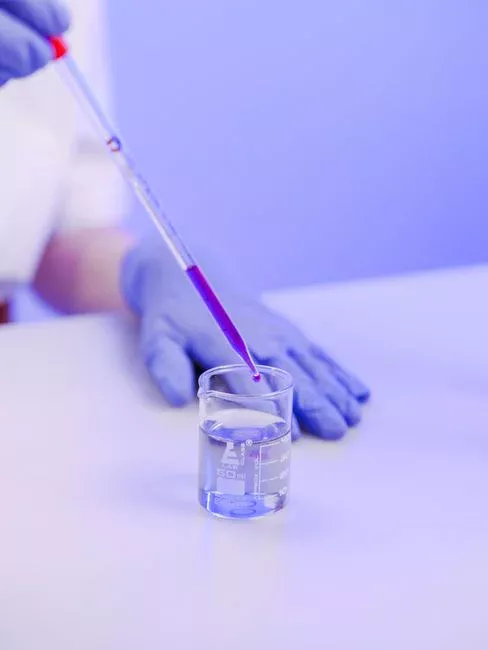
Industry color limits in India still rest on the CPCB Schedule VI floor, then tighten through SPCB CTOs and CETP inlet contracts. The table below consolidates that regulatory floor, the project-specific range commonly imposed by SPCBs, and the CETP/ZLD targets that Indian EHS teams are typically measured against. Always cross-check against the unit's own CTO; these are working values, not legal advice. Full stp and etp effluent standards in india cover BOD, COD, and TSS alongside color.
| Sector | Discharge Route | Pt-Co Limit | Typical SPCB / CETP Example |
|---|---|---|---|
| Textile / Dyeing (Schedule VI Sector 26) | Inland surface water | 400 (CPCB floor); 100–150 typical CTO | TNPCB Erode / Tirupur: 150; KSPCB: 100 |
| Textile / Dyeing | CETP inlet | 200–400 | Tirupur CETP: 200; Pali CETP: 400 |
| Pulp & Paper (Sector 28) | Inland surface water | 400 (CPCB floor); 200 common CTO | Brown-stock wash plants held to 200 |
| Distillery (Sector 33) | Inland surface water / ZLD | 400 (CPCB); ≤100 on MEE/VC condensate | Maharashtra: 100 on condensate |
| Dairy / Food processing | Inland surface water | 100–200 at SPCB discretion | Gujarat dairy CTOs: 100 |
| ZLD reuse stream (any sector) | Recycled to process / cooling | ≤50 internal target | TNPCB ZLD consent: 50 |
For a textile unit on the inland-discharge path, the realistic design number is 100 Pt-Co, not 400. The SPCB has the authority, and routinely exercises it, to push the floor down. The 400 Pt-Co number on Schedule VI is the ceiling above which no SPCB can write a consent. The number a unit is held to in practice is whatever the consent order says.
What CETP inlet color limits apply in India?
CETP inlet color limits in India commonly range from 200 Pt-Co (Tirupur) to 400 Pt-Co (Pali), set by the CETP operator and mirrored in member-unit CTOs. Exceeding the inlet norm triggers show-cause against the member consent, not only against the CETP. Equalize and pretreat color on site before sending flow to the common plant.
How Color Is Measured: APHA 2120, IS 3025, and the Three-Wavelength Method
Color measurement methods diverge when labs change filtration, wavelength, or visual versus instrumental scales on the same grab. Indian labs default to IS 3025 Part 4: 2021, which mirrors APHA 2120. The inspector's grab sample may have used a different procedure. Demand the method code on every report before you reopen the oxidation dose.
| Method | Instrument | Wavelengths / Standard | Typical Range | Best Use |
|---|---|---|---|---|
| APHA 2120B / IS 3025 Part 4 (visual Pt-Co) | 50 mL Nessler tube, visual comparison | Pt-Co standards 0–500 | 0–500 Pt-Co | Routine SPCB reporting, low-color effluents |
| Spectrophotometric ADMI (3-wavelength) | UV-Vis spectrophotometer | Absorbance at 436, 525, 620 nm → ADMI via tristimulus weighting | 0–2,000+ ADMI | Dye-bearing textile effluent, hue variation |
| Tristimulus filter method | Filter photometer with CIE XYZ filters | CIE XYZ weighting → ADMI directly | 0–1,500 ADMI | Field screening, multi-hue dye mixes |
| True color (filtered) vs. Apparent color (unfiltered) | Same as above, before/after 0.45 µm | Reported together | — | Dispute resolution with SPCB |
Three-wavelength ADMI is the method Indian textile labs use when the chromophore mix is unknown or varies lot-to-lot. Absorbance is read at 436 nm (yellow), 525 nm (red), and 620 nm (blue). CIE tristimulus weighting then produces an ADMI number that is more reproducible across hues than a single-wavelength reading. For compliance against a Pt-Co consent order, convert ADMI with the method-specific factor in the lab's SOP. That factor is not 2:1 universally; it ranges from roughly 1.5:1 to 2.5:1 depending on the dye class.
Always report pH and residual chlorine alongside the color number. Chlorination bleaches color. A sample that flashes 50 Pt-Co in the lab may revert to 300 Pt-Co at the drain once residual chlorine decays. The reverse is also true: a SPCB sample preserved with acid can shift hue and read higher than the in-stream value.
Treatment Engineering: Removing Color to Meet Indian Limits
Typical Indian textile dyeing influent arrives at the ETP at 2,000–5,000 Pt-Co and 800–2,000 mg/L COD. A standalone MBBR or HydropureWater MBR system removes 20–30% of color. Biology cuts COD and BOD well, but it is weak on azo, anthraquinone, and reactive dye chromophores that drive visible color. The numbers that follow are anchored to CPCB Schedule VI Sector 26 and to SPCB consent orders at 100–150 Pt-Co.
The defensible process train for a 100–150 Pt-Co inland-discharge consent is:
- Equalization + pH correction — neutralize to 6.5–7.5 and blend batch-to-batch variation. Dose via a HydropureWater automatic chemical dosing skid.
- Coagulation-flocculation + DAF — alum or PACl at 100–300 mg/L with anionic polymer. A HydropureWater DAF system typically delivers 60–80% color removal, taking 3,000 Pt-Co to ~600 Pt-Co. That step also removes suspended dye mass that fouls downstream membranes.
- Fenton oxidation — Fe²⁺ at 50–200 mg/L with H₂O₂ at 200–800 mg/L, pH 3.0–3.5, 30–60 min residence. This stage is the workhorse for azo and reactive dye chromophores. It delivers 80–95% decolorization and breaks aromatic rings that biology cannot touch.
- Biological polishing (MBBR or MBR) — bring COD and residual organics below 100 mg/L, residual color to 100–200 Pt-Co.
- Ozone-based AOP or activated carbon (PAC) — ozone at 1.5–3 g O₃ per g of residual color for the final polish to ≤100 Pt-Co, or PAC at 50–200 mg/L. For ZLD sites, RO concentrate is recycled upstream of the Fenton stage rather than discharged.
Capital and operating cost for a 500 m³/day dyeing ETP targeting 100 Pt-Co typically runs INR 4–7 crore capex and INR 35–55 per m³ opex. H₂O₂, FeSO₄, ozone power, and sludge disposal dominate that band (HydropureWater field data, 2026). For a sector-by-sector cost comparator and reuse-stream economics, the 2026 water reuse market outlook is a useful secondary read. For pre-treatment solids handling, the suspended-solids removal guide for industrial wastewater covers DAF and primary clarifier sizing in more detail.
Selection Checklist and Cost Drivers
Color-removal selection for Indian CTO compliance should lock these items before ordering skids:
- Consent route: inland discharge, CETP inlet, or ZLD reuse — each sets a different Pt-Co target.
- Method on the certificate: Pt-Co (IS 3025 Part 4: 2021) versus ADMI, plus true-color filtration requirement.
- Influent color band: 2,000–5,000 Pt-Co dye house versus <1,000 Pt-Co food or dairy streams.
- Oxidation choice: Fenton (H₂O₂ 200–800 mg/L) versus ozone (1.5–3 g O₃ per g residual color) for the chromophore class on site.
- Sludge and reagent opex: FeSO₄, peroxide, and hazardous-sludge haul often dominate the INR 35–55 per m³ band.
- Downstream reuse: ≤50 Pt-Co on recovered water if evaporators or cooling towers sit in the loop.
- Sampling protocol: dual true/apparent color, pH, and residual chlorine on every dispute-grade report.
Who this is for: EHS managers, EPC process leads, and procurement teams at textile, pulp, distillery, and dairy sites that must defend a numeric color CTO. Who should look elsewhere: municipal-only plants without industrial dye or lignin color — start with BOD/COD norms instead. Next step: share your CTO color clause, daily flow in m³/d, and current Pt-Co/ADMI pair. We can size equalization, DAF, and oxidation against the consent number via a color-compliance treatment inquiry. Regional equipment benchmarking for eastern India is covered in the sewage treatment equipment suppliers in Jharkhand guide.
Frequently Asked Questions
What is the difference between Pt-Co and ADMI color units in Indian effluent reporting?
Pt-Co (Hazen) is a visual comparison scale defined by 1 mg/L platinum as chloroplatinate, traceable to APHA 2120B and IS 3025 Part 4: 2021. ADMI is a tristimulus method for dye streams, read at 436, 525, and 620 nm. For most Indian textile effluents, about 500 Pt-Co ≈ 1,000 ADMI, with ratios from roughly 1.5:1 to 2.5:1 by dye class. Report the method with true and apparent color.
What is the color discharge limit for textile effluent in India?
400 Pt-Co is the CPCB Schedule VI Part A floor for inland surface water discharge, but TNPCB, KSPCB, and GPCB routinely impose 100–150 Pt-Co in the Consent-to-Operate. CETP inlet norms in Tirupur and Pali typically cap member units at 200–400 Pt-Co. Design and sample against the CTO figure, which overrides the national floor when it is tighter.
What color limit applies to a Zero Liquid Discharge (ZLD) site?
ZLD has no discharge outlet for color. SPCB consent still sets an internal target on recovered water or cooling-tower makeup, typically ≤50 Pt-Co, to prevent evaporator fouling and staining. Fenton plus RO polish is the standard train under TNPCB and GPCB ZLD consent conditions from 2025–2026.
Which lab method should an Indian SPCB-approved lab use to report effluent color?
IS 3025 Part 4: 2021, which mirrors APHA 2120, is the default reporting method for SPCB-facing color data in India. The lab should report apparent color, true color after 0.45 µm filtration, pH, and residual chlorine on the same report. A single Pt-Co number without the method code and filtration step is not defensible in a consent dispute.
How much does it cost to treat textile dye wastewater to 100 Pt-Co in India?
For a 500 m³/day ETP, indicative capex is INR 4–7 crore and opex is INR 35–55 per m³, dominated by Fenton reagents (H₂O₂, FeSO₄), ozone power, and sludge disposal. The biggest cost driver is whether the site targets direct discharge at 100–150 Pt-Co or ZLD reuse at ≤50 Pt-Co, which adds RO and MEE stages (HydropureWater field data, 2026).