What "Suspended Solids" Actually Means in an Industrial Process Train
Total Suspended Solids (TSS) is the mass of non-dissolved particles retained on a 1.5 μm glass-fiber filter dried at 103–105 °C, per Standard Methods 2540D. Volatile Suspended Solids (VSS) is the fraction lost on ignition at 550 °C — the organic component that drives biological oxygen demand. Total Dissolved Solids (TDS) passes through the filter and is not addressed by physical removal unit processes. Treating TSS as a single number is the first mistake in process selection: a stream at 1,500 mg/L TSS may be 90% settleable grit, 8% colloidal organics, and 2% supra-colloidal fibers — and each fraction responds to a different unit operation.
Industrial TSS breaks into three size bands that map directly to unit processes. Settleable solids (>100 μm) drop out in seconds under gravity and are handled in grit chambers or primary clarifiers. Supra-colloidal particles (1–100 μm) include most fibers, oil droplets, and biological flocs — the target window for dissolved air flotation and multi-media filtration. Colloidal solids (0.001–1 μm) carry surface charge, do not settle without coagulation, and are the fraction that fouls RO membranes and breaks UV disinfection. Typical influent TSS bands: food processing 200–2,000 mg/L; pulp & paper 1,000–5,000 mg/L; metal finishing 50–500 mg/L; textile 100–800 mg/L; refinery 30–400 mg/L (industry handbook ranges, 2025).
TSS removal is rarely about hitting a number on a single parameter. TSS shields BOD from bacterial oxidation, scatters UV light so disinfection dose must rise by 2–4×, fouls RO membranes within hours when SDI exceeds 3, and abrades pump impellers and valve seats — the oily wastewater treatment guide documents the same cascade for FOG-bearing streams. Getting the size fraction right at the head of the train is what makes every downstream stage work.
Primary Removal: Screening and Grit Removal at the Headworks
Coarse bar screens with 6–25 mm openings intercept rags, plastics, and fibrous debris and remove 5–15% of incoming TSS as a first defense; fine screens with 1–6 mm openings push that initial cut to 10–25% before any chemical or biological stage. Continuous-duty rotary mechanical bar screen units with stainless rake teeth and self-cleaning brush discharge handle headworks loads in food, textile, and pulp & paper plants where fibrous carry-over would otherwise rag downstream pumps within hours. Dual overload protection — a mechanical shear pin plus a VFD-controlled auto-reverse — prevents ragging when peak flows arrive with a slug of debris.
Vortex grit chambers and aerated grit basins target particles ≥210 μm (100 mesh) and capture 90–95% of incoming grit at hydraulic retention times of 30–60 s. Grit above 210 μm abrades DAF recycle pumps and scores MBR membrane fibers; removing it at the headworks extends bearing life on rotating equipment by a factor of 2–3. Screenings dewater to 10–20% dry solids; grit discharges at 60–70% dry solids — both fractions route to a plate-and-frame filter press for final cake handling.
Secondary Removal: DAF, Lamella, and Conventional Clarifiers Compared
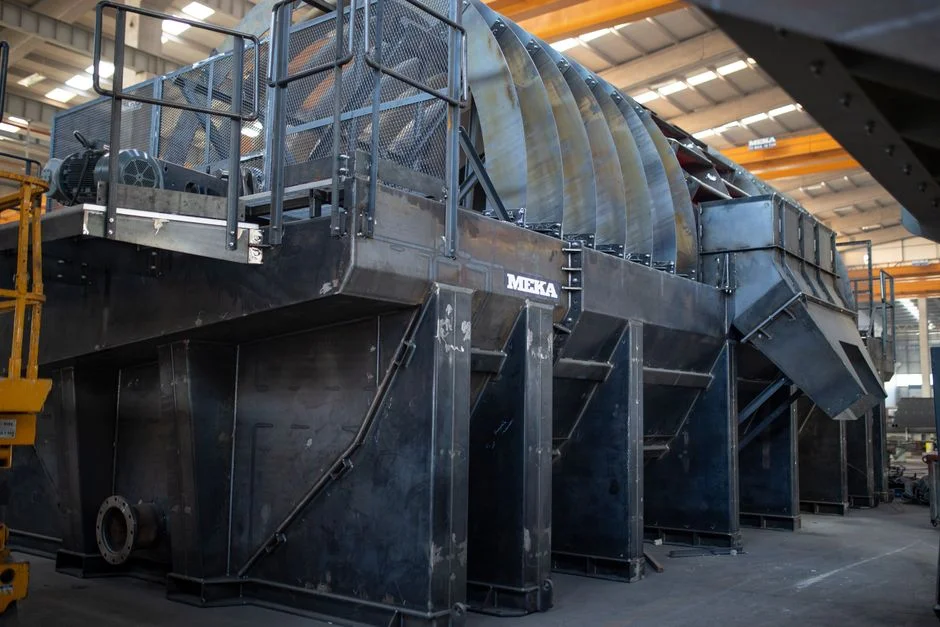
Dissolved air flotation (DAF), lamella clarification, and conventional gravity settling make up the three practical options for the 50–95% TSS cut between headworks and any biological or membrane stage. Each is optimized for a different particle-density and flow regime, and the selection is driven by influent character more than by CAPEX alone. An industrial DAF system saturates a side-stream recycle with air at 4–6 bar, then releases it through needle valves to generate 30–80 μm micro-bubbles that attach to TSS and float a sludge blanket to the surface in 10–20 minutes. Hydraulic loading runs 5–25 m/h and TSS removal lands at 80–95% on streams between 100 and 2,000 mg/L — the strongest performance on FOG, fibers, and low-density particles that defeat gravity settling (DAF operating data, 2025).
DAF is the proven primary clarifier in food processing (dairy, meat rendering, vegetable washing), pulp & paper (fiber recovery and pitch control), refinery desalter effluent, and any stream carrying emulsified oil. A lamella clarifier uses 60° inclined plates at 50–80 mm spacing to multiply the effective settling area, delivering 20–40 m/h surface loading versus 1–3 m/h for a conventional rectangular clarifier — a 60–80% footprint reduction. The trade-off is that lamella removes only settleable solids: 50–90% TSS on grit and metal hydroxides, but essentially zero on FOG and buoyant fibers. Conventional circular clarifiers remain cost-effective above 1,000 m³/h on low-solids streams, but the larger footprint and lower loading rate make them a poor fit for space-constrained industrial sites.
| Technology | Typical influent TSS | Removal efficiency | Hydraulic loading | Footprint (relative) | Best-fit industry |
|---|---|---|---|---|---|
| DAF (dissolved air flotation) | 100–2,000 mg/L | 80–95% | 5–25 m/h | Medium | Food, pulp & paper, refinery, meat rendering |
| Lamella (inclined plate) | 200–3,000 mg/L | 50–90% | 20–40 m/h | Small | Metal finishing, mining leachate, chemical |
| Conventional clarifier | <500 mg/L | 40–70% | 1–3 m/h | Large | Municipal, large-flow low-solids |
| Primary sedimentation tank | 500–2,000 mg/L | 50–70% | 1.5–3 m/h | Large | Pre-treatment for biological stage |
DAF floated sludge discharges at 3–5% dry solids; lamella underflow is 1–3%; conventional clarifier sludge is 0.5–2%. All three feed a plate-and-frame filter press for dewatering to 25–35% cake dryness, and the higher feed solids from DAF directly reduces press cycle time by 20–30% versus lamella underflow at the same plant throughput (per HydropureWater field data, 2025).
Tertiary Removal: Multi-Media Filtration and MBR Membrane Bioreactors
Multi-media filtration and membrane bioreactors (MBR) close the loop from secondary effluent to reuse-quality water. The two technologies target different points in the train, and a 2026 retrofit typically combines one with an existing primary/secondary stage. A multi-media filter stacks anthracite (0.8–1.2 mm, top layer for turbidity) over silica sand (0.45–0.55 mm) over garnet (0.2–0.3 mm) and polishes DAF or clarifier effluent to <5 mg/L TSS and Silt Density Index (SDI) below 3 — the standard pretreatment guard for downstream RO membranes. Backwash consumes 2–5% of throughput at 40–60 m/h and the media life is 3–5 years before anthracite attrition forces replacement.
An MBR membrane bioreactor integrates activated sludge with submerged 0.1 μm PVDF membranes and delivers consistent <5 mg/L TSS and <1 NTU turbidity in a single tank — the membrane replaces the secondary clarifier entirely and shrinks total plant footprint by about 60% versus conventional activated sludge with sedimentation. The flat-sheet MBR membrane module draws 10–20× less energy than external cross-flow designs and tolerates peak mixed-liquor suspended solids (MLSS) up to 12,000 mg/L, which keeps the biology at high SRT and stable nitrification. A 2023 MBHBR-MBR study (Springer conference proceedings) showed that adding a moving-bed biofilm carrier to the MBR tank enables simultaneous COD oxidation, nitrification, and denitrification without sacrificing the membrane's high TSS rejection.
Tertiary selection rule: if the discharge limit is ≤30 mg/L TSS, multi-media polishing after DAF or lamella is sufficient and the lowest CAPEX. For ≤10 mg/L or any reuse target, MBR is the more compact single-tank solution. For <1 mg/L — the feed spec for most RO trains and ZLD systems — MBR plus RO is the standard train. Detailed MBR effluent quality data is in the MBR effluent quality benchmark.
Selecting the Right Coagulant and Dosing Strategy
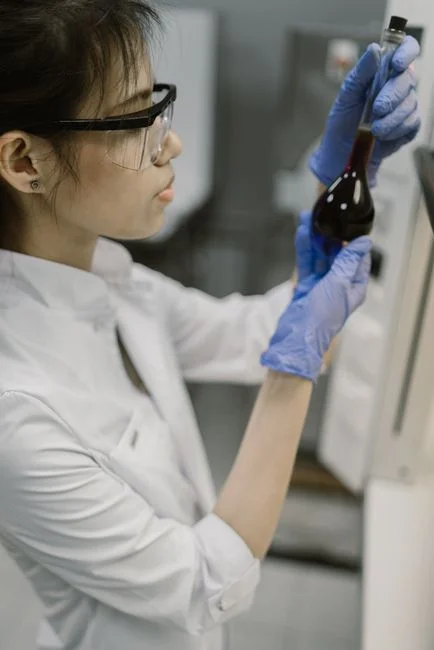
Coagulation is what converts the colloidal fraction — the 0.001–1 μm particles that defeat settling and flotation — into floc large enough to be captured by DAF micro-bubbles, lamella plates, or filter media. Polyaluminum chloride (PAC) at 5–50 mg/L is the workhorse for high-TSS industrial streams; ferric chloride at 10–60 mg/L is preferred when phosphate removal is also required; cationic polyacrylamide (CPAM) at 0.1–2 mg/L builds the bridging floc that DAF needs to float. A PLC-controlled coagulant dosing skid with streaming-current feedback holds charge neutralization within a ±5 mV band across influent swings of ±30% TSS, keeping removal efficiency within ±5% even when upstream production changes hourly (per HydropureWater chemical dosing spec, 2025).
Under-dosing leaves colloids in the overflow and shows up as turbidity breakthrough on the DAF or filter. Over-dosing raises sludge volume by 20–40% and increases downstream dewatering cost — the most common cause of an oversized filter press. Jar testing on a 1 L scale, with a 1-minute rapid mix then 15-minute slow mix then 5-minute settling, sets the dose window in a single morning before the skid is commissioned.
2026 Regulatory Limits: How Low Does the TSS Have to Go?
The 2026 regulatory picture splits into three regimes, and the applicable number is what fixes the technology choice upstream. China GB 18918-2002 sets a first-level discharge ceiling of 30 mg/L TSS and a tighter 1A ceiling of 10 mg/L for reuse-relevant discharges. The EU Urban Waste Water Treatment Directive 91/271/EEC requires ≤35 mg/L TSS (paired with BOD ≤25 mg/L) for agglomerations above 10,000 PE. US EPA categorical pretreatment standards under 40 CFR 430 (pulp & paper), 419 (petroleum refining), and 433 (metal finishing) routinely set 30–50 mg/L TSS monthly average limits for industrial users discharging to a POTW.
| Region / Standard | Reference | TSS limit | Applicability |
|---|---|---|---|
| China — Level 1B | GB 18918-2002 | ≤30 mg/L | Municipal WWTP discharge standard |
| China — Level 1A | GB 18918-2002 | ≤10 mg/L | Reuse-relevant, sensitive receiving waters |
| European Union | UWWTD 91/271/EEC | ≤35 mg/L | Agglomerations >10,000 PE |
| US EPA — pulp & paper | 40 CFR 430 | 30–50 mg/L monthly avg | Categorical pretreatment |
| US EPA — petroleum refining | 40 CFR 419 | 30–50 mg/L monthly avg | Categorical pretreatment |
| US EPA — metal finishing | 40 CFR 433 | 30–52 mg/L monthly avg | Categorical pretreatment |
| ZLD / RO feed target | Industry convention | <5 mg/L | Pre-RO protection, zero liquid discharge |
Projecting forward: a ZLD design needs <5 mg/L TSS before the RO train, which means the technology chain must include either an MBR or a multi-media polish on a low-TSS secondary effluent. The ultrafiltration system cost and sizing 2026 reference gives current CAPEX bands for the final UF/RO polish when reuse is the driver.
Frequently Asked Questions
What is the most common suspended solids removal method for industrial wastewater?
Primary screening plus DAF handles 80–95% of TSS at 100–2,000 mg/L influent across food, paper, and refinery streams, and is the dominant industrial configuration in 2026 because it also captures FOG and floatable fibers that gravity settling misses (per DAF operating data, 2025).
Which TSS removal technology is best for high-flow, space-constrained plants?
Lamella clarifiers deliver 20–40 m/h surface loading at 60–80% smaller footprint than rectangular clarifiers, making them the strongest fit when settleable solids dominate and FOG is low — typical in metal finishing and mining leachate trains.
When is MBR worth the CAPEX premium over a multi-media filter?
When the discharge target is ≤10 mg/L TSS or the water feeds a reuse system, MBR replaces the secondary clarifier entirely and shrinks plant footprint by ~60%, justifying the higher membrane cost versus a multi-media polish alone (per HydropureWater MBR product data, 2025).
What is the cheapest way to remove suspended solids to meet a 30 mg/L discharge limit?
Coarse screening plus a DAF with PAC coagulation typically hits ≤30 mg/L in one stage at the lowest combined CAPEX/OPEX for streams up to 2,000 mg/L TSS, with chemical cost at $0.02–0.05 per m³ treated (per industry dosing benchmarks, 2025).